

(1) Existing law, the Alcoholic Beverage Control Act, requires the Department of Alcoholic Beverage Control to administer the act and perform various duties relating to the issuance of alcoholic beverage licenses. Existing law provides for the licensure and regulation of winegrowers and craft distillers and establishes the privileges that a winegrower or craft distiller may exercise. Existing law authorizes a winegrower, among other things, to sell wine and brandy to any person holding a license authorizing the sale of wine or brandy. Existing law provides that a violation of the act for which another penalty or punishment is not specifically provided for in the act, is a crime, as specified. This bill would additionally authorize a winegrower to possess and transport brandy for the purpose of storing the brandy to age on the winegrower's premises. The bill would authorize a craft distiller to transport brandy to and from the premises of a licensed winegrower for the purpose of storing the brandy to age on the winegrower's premises. (2) Existing law authorizes a licensed craft distiller to manufacture and produce distilled spirits, subject to specified conditions, including that the licensee manufacture no more than 150,000 gallons of distilled spirits per fiscal year and sell no more than 2.25 liters of prepackaged containers of the licensee's spirits per day per consumer at its premises. This bill would authorize a licensed craft distiller to sell up to 4.5 liters of prepackaged containers of the licensee's spirits per day per consumer at its premises. (3) Existing law, until January 1, 2026, authorizes a licensed craft distiller to directly ship distilled spirits manufactured or produced by the licensee at its premises to a consumer if they comply with certain requirements, including not shipping more than 2.25 liters in any combination of prepackaged containers per day per consumer. This bill would authorize a qualifying out-of-state distiller, as defined, whose license is not suspended to directly ship distilled spirits manufactured or produced by the qualifying out-of-state distiller at its premises to a consumer if they comply with the above-described requirements. The bill would, in addition to the requirements described above, require a licensed craft distiller, or qualifying out-of-state distiller, to hold a current distilled spirits direct shipper permit issued by the department. The bill would require, in order to obtain and maintain a distilled spirits direct shipper permit, a licensed craft distiller, or qualifying out-of-state distiller, to, among other things, file an application for the permit with the department and pay specified fees. The bill would authorize the department to enforce the above-described provisions related to direct shipping through administrative proceedings, as provided. The bill would make the sale and shipment of distilled spirits directly to consumers without a permit a crime, as specified. By expanding the scope of a crime, the bill would impose a state-mandated local program. The bill would extend the operation of the above-described direct shipping provisions until January 1, 2027. (4) The California Constitution requires the state to reimburse local agencies and school districts for certain costs mandated by the state. Statutory provisions establish procedures for making that reimbursement. This bill would provide that no reimbursement is required by this act for a specified reason.
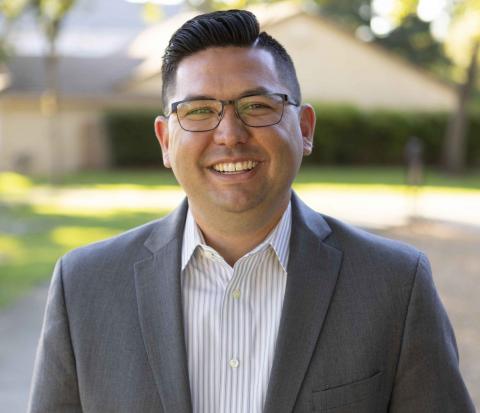
Asm. Joshua Hoover
Sponsored bills
Existing law requires the State Air Resources Board to adopt and implement motor vehicle fuel specifications for the control of air contaminants and sources of air pollution. Existing law prohibits the state board from adopting any regulation that establishes a specification for motor vehicle fuel unless that regulation, and a multimedia evaluation conducted by affected agencies and coordinated by the state board, are reviewed by the California Environmental Policy Council. This bill would, notwithstanding that prohibition, authorize blends of gasoline containing 10.5% to 15% ethanol by volume to be sold in the state for use as a transportation fuel until (1) the California Environmental Policy Council completes its review of those blends and (2) the state board either adopts a regulation establishing a specification for those blends or posts an assessment on its internet website demonstrating that it is not possible for a regulation establishing a specification for those blends to meet specified requirements. This bill would declare that it is to take effect immediately as an urgency statute.
Existing law, the legislative code of ethics, prohibits Members of the Legislature and legislative employees from having financial conflicts of interest and engaging in activities that are in substantial conflict with their official duties. This bill would prohibit Members of the Legislature from entering into, or requesting that another party enter into, a nondisclosure agreement relating to the drafting, negotiation, or discussion of proposed legislation. The bill would also make any nondisclosure agreement relating to the drafting, negotiation, or discussion of proposed legislation entered into after the effective date of this bill void and unenforceable. The bill would provide an exception for nondisclosure agreements, or portions thereof, that prevent only the disclosure of trade secrets, financial information, or proprietary information, as specified. A violation of the legislative code of ethics is punishable as a crime, as specified. By creating a new crime under the act, this bill would impose a state-mandated local program. The California Constitution requires the state to reimburse local agencies and school districts for certain costs mandated by the state. Statutory provisions establish procedures for making that reimbursement. This bill would provide that no reimbursement is required by this act for a specified reason.
This measure would designate November 1, 2025, as Fernando Valenzuela Day, to highlight the positive impact his legacy created in the Latino and Hispanic community.
This measure would recognize the importance of California Native American Day, celebrated this year on September 26, 2025, and the annual California Indian Cultural Awareness Conference, to the enhancement of awareness of California Indian culture.
This measure would honor the County of Sacramento's 175th anniversary, commend the county for its rich history, remarkable growth, and ongoing commitment to serving its people, and look forward to its continued success and prosperity.
This measure would declare the month of March to be March4Water Month in California and would encourage all Californians to participate in activities and programs during March4Water Month to promote awareness, education, and actions that prioritize water as a vital resource for the state's future.
Maddy summaryACR 95 designates June 21, 2025, as the International Day of Yoga in California. This ceremonial resolution formally recognizes the day for public awareness but has no legal effect or policy changes. It directly affects California residents by encouraging community observances of the international event. The measure is purely symbolic, with no funding, regulations, or new obligations for state agencies or individuals.
Maddy summaryACR 100 is a symbolic resolution recognizing August 15, 2025, as India's Independence Day in California. It urges all Californians to participate in celebrating India's independence on that date. This resolution does not create new laws or affect specific groups, but formally acknowledges the historical significance of India's independence day. It serves as a ceremonial gesture by the California legislature to honor this event.
Maddy summaryThis symbolic resolution encourages California public buildings (state, county, and municipal) to display the 9/11 Remembrance Flag annually on September 11. It allows public officials to accept donated flags for display but does not mandate their use. The resolution recognizes the flag's design and prior adoption by other states, emphasizing its role as a unifying symbol of remembrance. It has no binding legal effect beyond encouraging voluntary annual display.