

Existing law establishes the Department of Corrections and Rehabilitation (CDCR) to administer the state prison system under the direction of the Secretary of the Department of Corrections and Rehabilitation. Existing law authorizes the secretary to, under certain circumstances, enter into contracts to provide housing, sustenance, supervision, and services, as provided, or to provide health care services. This bill would require CDCR to disclose, for each new contract or contract renewal entered into by CDCR on or after January 1, 2027, for medical or mental health staffing, specified information, including, but not limited to, a description of the services provided by the contracted party, the total hours expected to be worked by contracted workers, and the total contract value. The bill would require CDCR to provide this disclosure to the exclusive bargaining representative of the affected bargaining unit at the time CDCR enters into or renews a contract as described above. The bill would require CDCR, beginning on March 1, 2028, and on or before March 1 of each year thereafter, to submit an annual report to the Legislature that contains the information required to be disclosed pursuant to these provisions. The bill would make related findings and declarations.
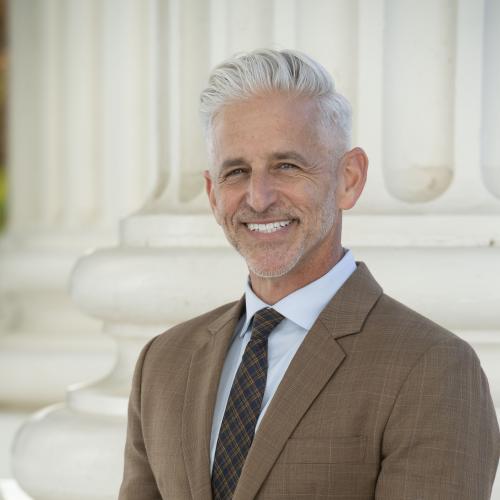
Asm. Josh Lowenthal
Sponsored bills
Existing unfair competition laws make various unfair competition practices unlawful, including any unlawful, unfair, or fraudulent business act or practice and unfair, deceptive, untrue, or misleading advertising. Existing law makes it unlawful for any person doing business in California and advertising to consumers in California to make any false or misleading advertising claim. Existing law makes a person who violates specified false advertising provisions liable for a civil penalty, as specified, and provides that a person who violates those false advertising provisions is guilty of a misdemeanor. Existing law makes it unlawful for healing arts licensees, as specified, to disseminate or cause to be disseminated any form of public communication containing a false, fraudulent, misleading, or deceptive statement, claim, or image in order to induce the provision of services or products in connection with their licensed professional practice or business. Existing law makes a violation of these provisions punishable as a misdemeanor and, in the case of a licensed person, provides that a violation constitutes unprofessional conduct and grounds for suspension or revocation of a license by the relevant board. This bill would require a person who creates or causes to be created an advertisement that includes a digital replica or synthetic performer depicted as a health care provider to promote the sale of a health-related consumer product or service to include a clear and conspicuous disclosure that the health care provider depicted in the advertisement was generated or substantially altered by artificial intelligence or that no human health care provider is depicted. The bill would also define terms for its purposes. This bill would provide that a violation of its provisions constitutes a violation of specified unfair competition and false advertising laws. By expanding the scope of a crime, this bill would impose a state-mandated local program. The bill would also authorize a natural person whose digital replica is used in an advertisement to bring a civil action to enforce these provisions. The bill would specify that a violation of the bill does not constitute a misdemeanor under provisions regulating healing arts licensees. The California Constitution requires the state to reimburse local agencies and school districts for certain costs mandated by the state. Statutory provisions establish procedures for making that reimbursement. This bill would provide that no reimbursement is required by this act for a specified reason.
Existing law, the California Uniform Controlled Substances Act, classifies controlled substances into 5 schedules and places the greatest restrictions and penalties on the use of substances placed in Schedule I. Existing law classifies, among others, psilocybin, ibogaine, and dimethyltryptamine as Schedule I substances, classifies ketamine as a Schedule III substance, and prohibits various actions related to those substances, including their sale, possession, transportation, manufacture, or cultivation. Existing law authorizes a person who is lawfully entitled to use specified controlled substances under applicable federal laws or regulations to obtain and use those substances for approved purposes in bona fide research, instruction, or analysis. This bill, the California Emerging Therapies Research Partnership Act, would establish the California Emerging Therapies Research Partnership Fund, a continuously appropriated fund, within the State Treasury, to be administered by the State Department of Health Care Services (department) and the Department of Veterans Affairs, to, among other things, issue grants to a University of California campus to serve as an anchor institution for a federally registered emerging therapies clinical trial. The bill would define "emerging therapies" for these purposes to mean psilocybin, ibogaine, 3,4-methylenedioxymethamphetamine, dimethyltryptamine, and ketamine when used in the context of a federally registered clinical trial, as specified. The bill would prohibit General Fund moneys from being deposited into the fund and would authorize the fund to receive federal grants, awards, and partnership payments and gifts, bequests, and philanthropic contributions made to the state, upon appropriation by the Legislature. The bill would prohibit the use of fund moneys for, among other things, purchasing, distributing, or administering a controlled substance. By creating a continuously appropriated fund, this bill would make an appropriation. This bill would require the California Health and Human Services Agency (agency) , in coordination with the department, the Department of Veterans Affairs, and the office of the President of the University of California, to submit a complete application for partnership designation to the federal Advanced Research Projects Agency for Health (ARPA-H) , as specified. The bill would require the department, within 90 days of receiving ARPA-H partnership designation, to execute a data-sharing memorandum of understanding with specified federal agencies to establish protocols for the sharing of deidentified, aggregated clinical trial outcome data. The bill would authorize specified legislative committees to request interim briefings from the agency on the status of the ARPA-H partnership application and would require the agency to respond to a request for briefing within 30 days. The bill would require the department to request that the University of California participate in specific activities. This bill would require the office of the President of the University of California to submit a readiness certification to the agency, the Department of Finance, and the Legislature, as specified. The bill would require the Department of Veterans Affairs to convene the California Veteran Emerging Therapies Research Advisory Council, with specified membership, to, among other things, serve as the primary advisory body to the department, the Department of Veterans Affairs, and the agency on matters relating to emerging therapies research for veterans and other priority populations. The bill would require the council to submit a needs assessment to the Department of Veterans Affairs, the agency, and the Legislature, as specified. The bill would require the agency to submit a federal readiness report to the Legislature and the Department of Finance, no later than January 1, 2028, that addresses, among other things, the status of California's ARPA-H partnership designation and the total amount of federal moneys received, as specified. This bill would provide that its provisions are severable.
Existing law requires the governing board of a school district, a county board of education, and the governing body of a charter school to, no later than July 1, 2026, develop and adopt, and update every 5 years, a policy to limit or prohibit the use by its pupils of smartphones while the pupils are at a schoolsite or while the pupils are under the supervision and control of an employee or employees of that local educational agency. Under existing law, a pupil shall not be prohibited from possessing or using a smartphone under specified circumstances, including, among others, when the possession or use of a smartphone is required in a pupil's individualized education program. This bill, commencing July 1, 2028, would require the above-described policy to continue to apply only to pupils in any of grades 9 to 12, inclusive. The bill would require the governing board of a school district, a county board of education, and the governing body of a charter school that serves pupils in transitional kindergarten, kindergarten, or grades 1 to 8, inclusive, to, no later than July 1, 2028, develop and adopt a policy that prohibits the use of smartphones by those pupils while the pupils are at a schoolsite or while the pupils are under the supervision and control of an employee or employees of that local educational agency, as provided. The bill, commencing July 1, 2028, would prohibit instruction provided to pupils in transitional kindergarten, kindergarten, and any of grades 1 to 8, inclusive, from requiring the use of a smartphone by a pupil. The bill, commencing January 1, 2027, would require (1) a pupil in any grade to also be allowed to possess or use a smartphone when the possession or use of a smartphone is required in a pupil's plan developed pursuant to the federal Rehabilitation Act of 1973 and (2) a policy adopted or updated pursuant to these provisions be included in a pupil handbook, if one is provided. By imposing additional duties on local educational agencies, the bill would constitute a state-mandated local program. This bill would require the State Department of Education, on or before January 1, 2029, to submit to the appropriate policy and fiscal committees of the Legislature, and post on their internet website, a report that contains (1) a description of the pupil smartphone policies of at least 30 selected local educational agencies that have provided consent to participate and that are representative of the demographic and geographic diversity of the state, including a copy of each policy, as provided, (2) the results of a survey of those local educational agencies, which the bill would require the department to conduct, and (3) recommended best practices for future local educational agency pupil smartphone use policies. The bill would authorize the department to collaborate with specified organizations with relevant expertise in preparing the report. The bill would repeal these provisions on January 1, 2033. The California Constitution requires the state to reimburse local agencies and school districts for certain costs mandated by the state. Statutory provisions establish procedures for making that reimbursement. This bill would provide that, if the Commission on State Mandates determines that the bill contains costs mandated by the state, reimbursement for those costs shall be made pursuant to the statutory provisions noted above.
(1) Existing law prohibits discrimination on the basis of various specified personal characteristics, including disability. Existing law imposes minimum statutory damages for construction-related accessibility claims if the violation of a construction-related accessibility standard denied the plaintiff full and equal access to the place of public accommodation on a particular occasion, as specified. Existing law provides that a plaintiff demonstrates that the plaintiff was deterred from accessing a place of public accommodation on a particular occasion only if both (1) the plaintiff had actual knowledge of a violation, as specified, and (2) the violation would have actually denied the plaintiff full and equal access, as specified. Existing law authorizes the assessment of statutory damages under these provisions based on each particular occasion that the plaintiff was denied full and equal access, as specified, not upon the number of violations of construction-related accessibility standards. Existing law prohibits a defendant from being liable for minimum statutory damages in a construction-related accessibility claim, with respect to a violation noted in a report by a certified access specialist (CASp) , for a period of 120 days following the date of the inspection if the defendant demonstrates compliance with each of specified requirements. Existing law includes in these specified requirements that the inspection predates the filing of the claim by, or receipt of a demand letter from, the plaintiff, as specified, and that the defendant was not on notice of the alleged violation before the CASp inspection. This bill would establish, until January 1, 2034, the Small Business Right to Cure Program and would prohibit a defendant who qualifies for the program from being liable for minimum statutory damages for any construction-related accessibility claim for a period of 6 years following a CASp report, as provided. To qualify for the program, the bill would require the defendant to demonstrate specified conditions, among others, that the defendant has posted, as provided, both the CASp inspection notice and a Notice of Participation in the Small Business Right to Cure Program, as defined. The bill would authorize the State Architect to develop, as specified, a form Notice of Participation in the Small Business Right to Cure Program, and would authorize a business to satisfy any requirement to provide the notice by providing a specified written statement until and unless the State Architect promulgates the form. The bill would require a public accommodation that participates in the program to make available specified documents for public inspection, including the CASp report that is the basis for the public accommodation asserting that it qualifies for the program. The bill would provide that no provision of the program applies under any of specified conditions, including that the plaintiff or prospective plaintiff alleges an intentional violation of any state or federal disability rights law, a violation related to policies, practices, or procedures, or seeks special damages that arise from physical personal injuries or damage to personal property. Existing law establishes the California Commission on Disability Access for purposes of developing recommendations to enable persons with disabilities to exercise their right to full and equal access to public facilities and facilitating business compliance with applicable state and federal laws and regulations. Existing law requires an attorney who sends or serves a complaint on the basis of one or more construction-related accessibility claims, as specified, to notify the commission, as provided, of specified information, including, among other requirements, the date of the judgment, settlement, or dismissal. Existing law requires the commission to make an annual report to the Legislature of tabulated data relating to the various types of construction-related physical access violations alleged in demand letters and complaints by January 31 of each year. This bill would, until January 1, 2034, additionally require an attorney to include in the above-described notification to the commission whether the defendant qualified for and used the Small Business Notice and Right to Cure Program. The bill would require the commission, beginning on or before July 1, 2027, and until January 1, 2034, to include in the above-described annual report information about the number of businesses that participate in the Small Business Notice and Right to Cure Program. (2) The Unfair Competition Law makes various practices unlawful and provides that a person who engages, has engaged, or proposes to engage in unfair competition is liable for a civil penalty, as specified. This bill would provide that a person who posts a specified notice, including a Notice of Participation in the Small Business Right to Cure Program on the premises of a place of public accommodation, or authorizes the document to remain posted on the premises, and knows or should know that the document is inauthentic, materially inaccurate, or that the place of public accommodation does not qualify for the applicable program or other limitation on liability provided by law shall be subject to enforcement under the Unfair Competition Law. (3) Existing law requires a property owner or lessor to state on every lease form or rental agreement whether the subject premises have undergone inspection by a CASp. Existing law provides that making repairs or modifications necessary to correct violations of construction-related accessibility standards that are noted in a CASp report is presumed to be the responsibility of the property owner or lessor unless otherwise mutually agreed upon by the commercial property owner or lessor and the lessee or tenant, as prescribed. This bill would extend the above-described presumption to include repairs or modifications necessary to correct violations of construction-related accessibility standards in the common area of a commercial property. In the event that a commercial property owner fails to comply with specified requirements in relation to certain lease agreements, the bill would make void and unenforceable an indemnity provision or contractual agreement that seeks to shift the financial responsibility for construction-related accessibility violations from the commercial property owner or lessor to the lessee or tenant within a lease for a commercial property.
Maddy summaryThis bill serves as a commemorative resolution to mark the 50th anniversary of the Surface Mining and Reclamation Act of 1975. It does not create new laws or alter existing regulations but instead formally acknowledges the milestone achievement of the original legislation. The measure is intended to honor the history of mining and land reclamation efforts established by the 1975 act.
This measure would acknowledge and celebrate 50 years of coastal protection and affirm the state's longstanding commitment to protecting its coastal waters, as specified.
Maddy summaryThis bill designates June 2026 as Men's Mental Health Month to raise awareness about mental health issues affecting men. The measure is a formal proclamation that does not change laws or allocate funding, but rather encourages public recognition of the topic. Once passed, it serves as an official declaration without imposing new requirements on individuals or organizations.
This measure would declare the month of June 2026 as Alzheimer's Disease and Brain Awareness Month, and would urge all Californians to commemorate the month of June 2026 as Alzheimer's Disease and Brain Awareness Month.
Maddy summaryThis bill designates June 23, 2026, as Social Media Harms Victim Remembrance Day in California. The measure requires the state to officially proclaim this date, creating a specific day for remembrance. It does not change laws or impose new requirements on individuals or organizations. The primary effect is to establish a formal date for commemoration within the state.