

The California Fair Employment and Housing Act makes specified employment practices unlawful, including the harassment of an employee directly by the employer or indirectly by agents of the employer with the employer's knowledge. Under existing law, the Civil Rights Department administers these provisions. Existing law requires a specified employer with 5 or more employees to, by January 1, 2021, provide at least 2 hours of classroom or other effective interactive training and education regarding sexual harassment to all supervisory employees and at least one hour of classroom or other effective interactive training and education regarding sexual harassment to all nonsupervisory employees in California and, after that date, once every 2 years. Existing law requires an employer to include prevention of abusive conduct as a component of that training and education. This bill would require, beginning on January 1, 2028, if a state agency provides any type of compensation, salary, or stipend to a state agency official of that agency, that all state agency officials of that agency receive training on responding to hate, as prescribed. The bill would define "state agency official" to mean a state elected official for that purpose. The bill would require at least one hour of training and education for a state agency official within the first 6 months of taking office or commencing employment, and every 2 years thereafter. The bill would authorize a state agency or an association of state agencies to offer one or more training courses, or sets of self-study materials with tests, to meet these requirements. The bill would authorize a state agency to develop its own training that meets the requirements or direct elected officials to complete a training developed by the department. The bill would require the department to develop or obtain an online training course on responding to hate and make the course available on its internet website. Existing law requires local agency officials, as defined, to receive sexual harassment prevention training and education if the local agency provides any type of compensation, salary, or stipend to those officials. Existing law requires the training and education to include practical examples aimed at instructing the local agency official in the prevention of sexual harassment, discrimination, and retaliation. This bill would additionally require, beginning on January 1, 2028, the above-described training and education to include for any elected local agency official, as a component of the training and education, anti-hate speech training, as described. The bill would authorize an elected local agency official to take a training developed for state agency officials pursuant to the bill to satisfy the anti-hate speech training requirement. By imposing new requirements on local agencies, this bill would impose a state-mandated local program. The California Constitution requires the state to reimburse local agencies and school districts for certain costs mandated by the state. Statutory provisions establish procedures for making that reimbursement. This bill would provide that, if the Commission on State Mandates determines that the bill contains costs mandated by the state, reimbursement for those costs shall be made pursuant to the statutory provisions noted above.
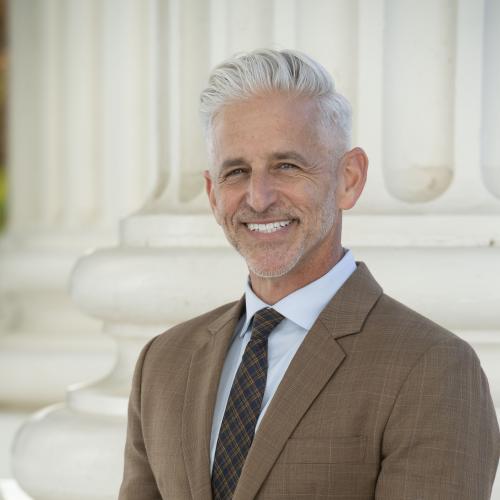
Rep. Josh Lowenthal
Sponsored bills
Existing law establishes various healing arts boards within the Department of Consumer Affairs that license and regulate various healing arts licensees. Existing laws, including the Licensed Marriage and Family Therapist Act, the Educational Psychologist Practice Act, the Clinical Social Worker Practice Act, and the Licensed Professional Clinical Counselor Act, make a violation of those acts a crime. Existing law regulates the use of artificial intelligence, as defined. Existing law requires a health facility, clinic, physician's office, or office of a group practice that uses generative artificial intelligence to generate written or verbal patient communications pertaining to patient clinical information to ensure those communications include a disclaimer that indicates to the patient that a communication was generated by artificial intelligence and instructions describing how a patient may contact a human health care provider, employee, or other appropriate person. This bill would regulate the use of artificial intelligence in connection with providing or facilitating psychotherapy services, as defined. The bill, among other things, would authorize an individual, corporation, or entity that provides or facilitates psychotherapy services to use artificial intelligence tools or systems only to assist in providing administrative or supplementary support in psychotherapy services, as specified. The bill would prohibit an individual, corporation, or entity from using artificial intelligence to record or transcribe psychotherapeutic communications or sessions or to triage or screen a person for the need for psychotherapy services unless the patient or client or their authorized representative is informed that artificial intelligence will be used and the purpose of the artificial intelligence tool or system, and the patient or client or their authorized representative provides consent, as specified. The bill would prohibit an individual, corporation, or entity from advertising or otherwise purporting to offer psychotherapy services when the services are provided through the use of companion chatbots. The bill would prohibit an individual, corporation, or entity from allowing artificial intelligence to perform certain acts, including making therapeutic decisions or detecting emotions or mental states, as specified, without review and approval by a licensed professional. The bill would make a violation of the bill's provisions subject to the jurisdiction of the appropriate health care professional licensing board or enforcement agency, as specified, and would authorize those boards and enforcement entities to pursue any remedies authorized by law. Existing law, the Confidentiality of Medical Information Act, generally restricts the persons and entities to whom, and the purposes for which, a health care provider, health care service plan, or contractor may release a patient's medical information. The Confidentiality of Medical Information Act additionally imposes certain disclosure requirements for the release of medical information that specifically relates to the patient's participation in outpatient treatment with a psychotherapist. In this regard, the act prohibits a health care provider, health care service plan, or contractor from releasing that information to persons or entities who have requested that information and who are otherwise authorized by specified laws to receive that information, unless the requester makes certain written disclosures to the patient and to the provider of health care, health care service plan, or contractor, as specified. Those disclosures include, among other things, the specific intended uses of the information, and the length of time during which the information will be kept before being destroyed or disposed of, as specified. Existing law makes a violation of those provisions that result in economic loss or personal injury to a patient punishable as a misdemeanor. This bill would require the use of artificial intelligence in patient or client records for psychotherapy services to comply with the confidentiality requirements of the above-described provision of the Confidentiality of Medical Information Act and would prohibit a company or entity from sharing, selling, storing, or training their models on any data obtained from psychotherapy in a manner inconsistent with any applicable law. By expanding the scope of existing crimes, the bill would impose a state-mandated local program. The California Constitution requires the state to reimburse local agencies and school districts for certain costs mandated by the state. Statutory provisions establish procedures for making that reimbursement. This bill would provide that no reimbursement is required by this act for a specified reason.
Existing law requires, on or before September 1, 2024, the Department of Technology, within the Government Operations Agency, to conduct, in coordination with other interagency bodies as it deems appropriate, a comprehensive inventory of all high-risk automated decision systems that have been proposed for use, development, or procurement by, or are being used, developed, or procured by, any state agency. Existing law requires the department to annually submit a report of that comprehensive inventory to the Assembly Committee on Privacy and Consumer Protection and the Senate Committee on Governmental Organization. Existing law, the Transparency in Frontier Artificial Intelligence Act, among other things related to ensuring the safety of certain artificial intelligence models, requires a large frontier developer to write, implement, and clearly and conspicuously publish on its internet website a frontier AI framework that applies to the large frontier developer's frontier models and describes how the large frontier developer approaches, among other things, incorporating national standards, international standards, and industry-consensus best practices into its frontier AI framework. This bill would require, on or before January 1, 2028, the Government Operations Agency to take certain actions related to the selection and regulation of certain entities, defined as "independent verification organizations," designated by the agency as having demonstrated expertise in assessing the risks posed by an AI system or model and identifying the metrics and methodologies that form the basis for that assessment. The bill would require the agency to convene working groups to solicit stakeholder input in the identification of standards and the development and revision of procedures and criteria, as specified. The bill would require the agency to provide a report to the Legislature on the findings of the working groups and would require a designated IVO to submit annually, and no sooner than 12 months after initial designation as an IVO, to the agency and Legislature a report, as specified.
(1) The California Integrated Waste Management Act of 1989, administered by the Department of Resources Recycling and Recovery (CalRecycle) , generally regulates the disposal, management, and recycling of solid waste, as defined. The act authorizes CalRecycle to certify a local enforcement agency and requires CalRecycle and certified local enforcement agencies to perform specified functions with regard to the regulation of solid waste management, including issuing and enforcing solid waste facility permits. The act prohibits a person from operating a solid waste facility without a solid waste facilities permit, as provided. The California Global Warming Solutions Act of 2006 charges the State Air Resources Board with monitoring and regulating sources of emissions of greenhouse gases that cause global warming in order to reduce emission of greenhouse gases. The act requires the state board to adopt rules and regulations to achieve the maximum technologically feasible and cost-effective greenhouse gas emissions reductions, as provided. This bill would require the owner or operator of a solid waste landfill, as defined, to, among other things, notify the Department of Resources Recycling and Recovery if a subsurface elevated temperature event occurs. The bill would define "subsurface elevated temperature event" to mean an event where subsurface gas or waste temperatures at a solid waste landfill persistently exceed 131 degrees Fahrenheit over a substantial area and meets other performance criteria, as determined by the department. The bill would authorize the department to require the owner or operator of a solid waste landfill experiencing a subsurface elevated temperature event to create a corrective action plan that includes, but is not limited to, a cost assessment for fully implementing the corrective action plan. The bill would authorize the department or a local enforcement agency to impose an administrative civil penalty of $100,000 per day for failing to comply with these requirements, as provided. The bill would require all penalties collected to be deposited into the Landfill Subsurface Fire Mitigation Community Fund, which the bill would create in the State Treasury. The bill would continuously appropriate moneys in the fund to the California Alternative Energy and Advanced Transportation Financing Authority, to be paid to counties in which a subsurface elevated temperature event occurred to mitigate harm to a person or community affected by a subsurface elevated temperature event and to be paid to the authority for its costs of implementation. The bill would require the authority to develop guidelines for dispersing these funds, as specified. The bill would authorize the department to become the enforcement agency for a solid waste landfill experiencing a subsurface elevated temperature event, as specified. This bill would authorize the Secretary for Environmental Protection to select and coordinate a multiagency coordination group to investigate and provide recommendations on how to achieve resolution of a subsurface elevated temperature event, as specified. The bill would require a local health department to initiate community health needs assessments to identify and collect information regarding the effects of a subsurface elevated temperature event on an affected community and to share the findings, as provided. By requiring a local health department and a local air pollution control district to perform additional duties, the bill would impose a state-mandated local program. The bill would, upon request by a multiagency coordination group, require the owner or operator of a solid waste landfill that experiences a subsurface elevated temperature event to implement an air monitoring and sampling plan, as specified. The bill would require the owner and operator of a solid waste landfill that experiences a subsurface elevated temperature event to reimburse the members of a multiagency coordination group and the local health department for all reasonable and necessary expenses incurred, as specified. The bill would authorize the department to adopt regulations to implement and enforce them as emergency regulations, as specified. (2) This bill would declare its provisions to be severable. (3) The California Constitution requires the state to reimburse local agencies and school districts for certain costs mandated by the state. Statutory provisions establish procedures for making that reimbursement. This bill would provide that no reimbursement is required by this act for a specified reason.
Existing law, the Davis-Stirling Common Interest Development Act, governs the management and operation of common interest developments. Existing law limits the authority of the governing documents, as defined, to regulate the use of a member's separate interest. This bill would prohibit the governing documents from imposing restrictions on a member's use of public streets, except as specified. Existing law requires that a common interest development be managed by an association and requires that the association levy assessments to fulfill its obligations. Existing law provides that assessments of the association, late charges, reasonable costs of collection, attorney's fees, and interest, as specified, are a debt of a member at the time the assessment or other sums are levied. Existing law requires that an association provide a member making a payment a receipt, upon request, that indicates the date of payment and the person who received it and to provide a mailing address for overnight payment of assessments in the annual statement. This bill would require the association to notify the members through individual notice by either electronic delivery or first-class mail, evidenced by a certificate of mailing, as specified, if the person or entity authorized to receive payment of assessments on behalf of the association changes, within 60 days of the change. The bill would require the association, if a member fails to make the next 2 consecutive assessment payments following the individual notice, to send a notice by certified mail with return receipt requested to that member, except as specified. The bill would require the association to maintain records confirming that individual notices were distributed. Existing law provides that assessments, including the costs of collection, late charges, and interest, are a lien on the member's separate interest when the association records a notice of delinquent assessment and follows a specified process, including providing the owner of record a specified notice, at least 30 days prior to recording a lien upon the separate interest. Existing law requires that an association that fails to comply with these procedures recommence the required notice process, prior to recording a lien, and bear the cost of recommencing the notice process. The bill would make the association liable to the member for specified fees if the association fails to comply with these procedures. If the association fails to comply with these procedures, as specified, and the failure is the 3rd failure within a 5-year period, the bill would make the board liable to the member for a civil penalty of $1,000 and would require it to notify members by general notice of its failure to comply.
Existing law generally regulates artificial intelligence, including companion chatbots, as defined. Existing law requires an operator, as defined, to prevent a companion chatbot on its companion chatbot platform from engaging with users unless the operator maintains a protocol for preventing the production of suicidal ideation, suicide, or self-harm content to the user. Existing law requires an operator, for a user the operator knows is a minor, to take certain prescribed action, including disclosing to the user that the user is interacting with artificial intelligence. This bill would delete those provisions imposing requirements on an operator if the operator knows the user is a minor. The Digital Age Assurance Act requires a person who owns, maintains, or controls a software application, as defined, to request age bracket data sent by a real-time secure application programming interface or operating system with respect to a particular user from an operating system provider or a covered application store when the application is downloaded and launched. This bill would require an operator, as defined, of a companion chatbot to, beginning July 1, 2027, before making a new or substantially modified companion chatbot available to users in the state, do various things with respect to child safety, including perform and document a comprehensive risk assessment related to the design, configuration, and operation of the companion chatbot with respect to minor users that contains, among other things, a summary of the results of any evaluation of each covered harm, as defined, pertaining to the companion chatbot. The bill would require an operator to submit to independent child safety audits of its compliance with the bill, as specified. The bill would require an auditor to produce a report that describes whether the operator has established and adhered to policies and practices to comply with the bill that includes, among other things, the signature of the lead auditor certifying the results of the audit under penalty of perjury. By expanding the scope of the crime of perjury, this bill would impose a state-mandated local program. The bill would authorize the Attorney General to, for cause, request and obtain a copy of an AI child safety audit report from the operator and would make a child safety audit report submitted to the Attorney General confidential. This bill would authorize certain public prosecutors to bring a civil action to enforce the bill's provisions, as specified, and would authorize a child who suffers an actual harm as a result of a violation of this chapter, or a parent or guardian acting on behalf of that child, to bring a civil action against the operator, as specified. Existing constitutional provisions require that a statute that limits the right of access to the meetings of public bodies or the writings of public officials and agencies be adopted with findings demonstrating the interest protected by the limitation and the need for protecting that interest. This bill would make legislative findings to that effect. The California Constitution requires the state to reimburse local agencies and school districts for certain costs mandated by the state. Statutory provisions establish procedures for making that reimbursement. This bill would provide that no reimbursement is required by this act for a specified reason.
Existing law declares that it is the policy of the state to afford all persons in public schools, regardless of specified characteristics, including race or ethnicity, equal rights and opportunities in the educational institutions of the state, and states that the purpose of related existing law is to prohibit acts that are contrary to that policy and to provide remedies. Existing law defines "race or ethnicity" to include ancestry, color, ethnic group identification, and ethnic background. This bill would define ethnicity to include Jewish identity. Existing law specifies certain requirements relative to state agencies, boards, and commissions that directly or by contract collect demographic data as to the ancestry or ethnic origin of Californians, including the requirement to use separate collection categories and tabulations for each major Asian group and each major Pacific Islander group, as specified. Existing law requires these state agencies to include the demographic data in every demographic report on ancestry or ethnic origins of Californians by the state agency published or released on or after July 1, 2012. Existing law further requires these state agencies to make the collected data available to the public pursuant to state and federal law, except for personal identifying information, which existing law deems confidential. This bill would require a state agency that directly or by contract collects demographic data as to the ancestry or ethnic origin of Californians to use a separate collection category and tabulation for Jewish ancestry or ethnicity, as specified and subject to a certain exception. The bill would require these state agencies to include the demographic data in every demographic report on ancestry or ethnic origins of Californians by the state agency published on or after January 1, 2030. The bill would further require these state agencies to make the collected data available to the public pursuant to state and federal law. The bill would prohibit state agencies from disclosing personal identifying information about any person whose demographic data is collected, and would require those agencies to apply deidentification and privacy protection methods to that data. The bill would limit the purposes for which state agencies can use the demographic data collected under these provisions. The bill would exempt any state agency administering a multiyear grant program with an established end date that began collecting demographic data prior to January 1, 2029, from being required to include or use the demographic category described above for interim or final reports. Existing law requires the Department of Corrections and Rehabilitation to collect voluntary self-identification information pertaining to race or ethnic origin of people admitted, in custody, and released and paroled, including, but not limited to, specified races and ethnic origins. Existing law requires the Department of Corrections and Rehabilitation, based on that voluntary self-identification information, to prepare and publish monthly demographic data pertaining to the race or ethnic origin of people admitted, in custody, and released and paroled, disaggregated by the same race and ethnicity categories used by the department for the purpose of voluntary self-identification information. Existing law requires the data, except for personally identifying information, which existing law deems confidential, to be publicly available on the Department of Corrections and Rehabilitation's internet website via the Offender Data Points dashboard. This bill would include Jewish among those specified races and ethnic origins for self-identification. Existing law requires the Employment Development Department, in the administration of existing law relating to disability compensation, to collect demographic data for individuals who claim disability benefits or family temporary disability insurance benefits, including race and ethnicity data and sexual orientation and gender identity data, as prescribed. Existing law requires the Employment Development Department to develop and make available online a public-facing dashboard that publishes disaggregated demographic data pertaining to program participation by individuals and is updated on at least a quarterly basis. Existing law requires the Employment Development Department to implement these requirements by July 1, 2026. This bill would require the Employment Development Department to collect data on Jewish ancestry or ethnicity for these purposes in accordance with specified demographic data collection requirements for state agencies added by the bill. This bill would become operative on January 1, 2029. Existing constitutional provisions require that a statute that limits the right of access to the meetings of public bodies or the writings of public officials and agencies be adopted with findings demonstrating the interest protected by the limitation and the need for protecting that interest. This bill would make legislative findings to that effect.
The California Constitution provides that people have the right of access to information concerning the conduct of the people's business. Various provisions of existing law, including the California Public Records Act, the Legislative Open Records Act, the Bagley-Keene Open Meeting Act, and the Ralph M. Brown Act, provide, with some exceptions, for public access to government records and meetings of government bodies. Among those acts, the California Public Records Act defines "person" to include any natural person, corporation, partnership, limited liability company, firm, or association. Existing law, the Administrative Procedure Act, governs, among other things, the procedures for the adoption, amendment, or repeal of regulations by state agencies and for the review of those regulatory actions by the Office of Administrative Law. Existing law, the California Environmental Quality Act (CEQA) , requires a lead agency, as defined, to prepare, or cause to be prepared, and certify the completion of an environmental impact report on a project that it proposes to carry out or approve that may have a significant effect on the environment or to adopt a negative declaration if it finds that the project will not have that effect. CEQA defines "person" to include any person, firm, association, organization, partnership, business, trust, corporation, limited liability company, company, district, county, city and county, city, town, and, among other things, the state. Existing law, the California Coastal Act of 1976, establishes the California Coastal Commission and prescribes procedures for the preparation, approval, and certification of local coastal programs that regulate development in the coastal zone, as defined, in jurisdictions that have a certified local coastal program. This bill would specify that, for purposes of the California Public Records Act, the Bagley-Keene Open Meeting Act, the Ralph M. Brown Act, the Legislative Open Records Act, the Administrative Procedure Act, the California Coastal Act of 1976, and CEQA, "person," "interested person," "participant," "member of the public," as applicable, and any other similar terms under each act referring to those who may engage with governmental agencies, do not include artificial intelligence, as defined, systems, autonomous agents, or robots, whether physical or digital. The bill would authorize governmental agencies to use a disclosure verification tool to determine if artificial intelligence is present. The bill would make findings and declarations related to these provisions. The bill would prohibit a person from knowingly using artificial intelligence to falsely represent that a natural person appeared before, submitted information to, or otherwise engaged with a governmental agency. The California Constitution requires local agencies, for the purpose of ensuring public access to the meetings of public bodies and the writings of public officials and agencies, to comply with a statutory enactment that amends or enacts laws relating to public records or open meetings and contains findings demonstrating that the enactment furthers the constitutional requirements relating to this purpose. This bill would make legislative findings to that effect.
Existing law regulates various businesses to preserve and regulate competition and prohibit unfair practices, among other purposes. Existing law imposes various business practice restrictions on a food delivery platform, defined as an online business that acts as an intermediary between consumers and multiple food facilities to submit food orders from a consumer to a participating food facility, and to arrange for the delivery of the order from the food facility to the consumer. Existing law prohibits a food delivery platform from arranging the delivery of an order from a food facility without first obtaining an agreement with the food facility expressly authorizing the platform to take orders and deliver meals, as prescribed. This bill would prohibit a person from selling or transferring, or facilitating the sale or transfer of, a reservation for a restaurant, as defined, for an amount higher than that person paid to acquire the reservation, except as specified. The bill would authorize the Attorney General, any county counsel or city attorney, and an individual or entity who suffers actual harm as a result of a violation of the act to recover specified civil penalties. The bill would require a civil penalty recovered by the Attorney General pursuant to the act to be deposited in the Public Rights Law Enforcement Special Fund.
Existing law provides that everyone is responsible not only for the result of their willful acts but also for an injury occasioned to another by their want of ordinary care or skill in the management of their property or person. This bill would, until January 1, 2035, make a social media platform, as defined, liable for specified damages if the social media platform fails to exercise ordinary care or skill by causing injury to a child.