This measure would recognize the significance of Vesak Day to people of Buddhist faith and extend sincere best wishes to the state's Buddhist community in celebrating Vesak Day.
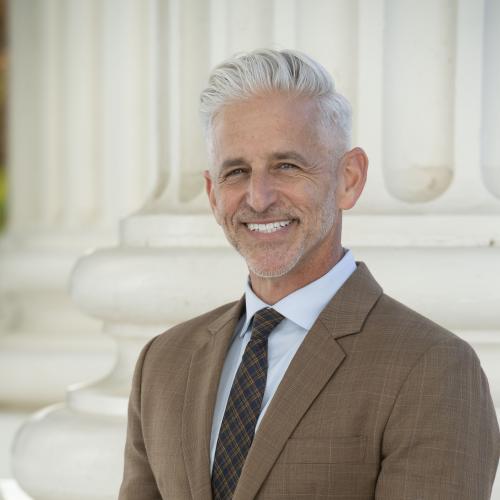
Asm. Josh Lowenthal
Sponsored bills
Maddy summaryThis House Resolution recognizes May 17, 2026, as the International Day Against Homophobia, Biphobia, Interphobia, and Transphobia within the California Legislature. The measure formally acknowledges the ongoing discrimination faced by LGBTQ+ individuals globally and reaffirms the state's commitment to equality and civil rights. By adopting this resolution, the Assembly encourages all Californians to support inclusive practices and stand against hate toward the LGBTQ+ community.
Existing law requires that every individual with exceptional needs, as defined, who is eligible, be provided with educational instruction, services, or both, at no cost to their parent or guardian or, as appropriate, to them. Under existing law, a free appropriate public education is required to be made available to individuals with exceptional needs in accordance with specified federal regulations adopted pursuant to the federal Individuals with Disabilities Education Act. Existing law requires the State Department of Education to investigate a complaint alleging a violation of the act and to issue a written decision within 60 days of the complaint being filed, as provided. This bill would require the department, on or before January 1, 2030, to create, or contract to create, and maintain a publicly available online aggregate database of all complaints that the department receives on and after July 1, 2027, that allege a violation of the federal law described above. The bill would require the database to include specified data for each complaint, including, among other things, the total number of complaints the department investigated disaggregated by school district, county office of education, or charter school. After the database has been created, the bill would require the department to ensure that the data required to be included in the database is updated and published on or before December 31 of each year.
Existing law establishes the Medi-Cal program, which is administered by the State Department of Health Care Services and under which qualified low-income individuals receive health care services under fee-for-service or managed care delivery systems. The Medi-Cal program is in part governed by, and funded pursuant to, federal Medicaid program provisions. Existing law sets forth various provisions relating to the department determining capitation rates for Medi-Cal managed care plans using actuarial methods and a certain methodology that considers, among other factors, utilization and cost data. Relative to these provisions of existing law, in 2023, the department entered into a multi-party settlement agreement for Medi-Cal managed care procurement for plan years beginning January 1, 2024, with specified Medi-Cal managed care plans and certain subcontracting plans. This bill would authorize a subcontracting plan subject to the above-described agreement to request a review of the Medi-Cal managed care rates paid by the primary plan for a particular rating period, as specified. The bill would require the department to direct an independent, qualified actuarial consultant to review those rates upon a showing by the subcontracting plan that certain conditions have occurred or are likely to occur, including, among others, a medical loss ratio in excess of 93% for the preceding 12-month period. If the department determines that the rates paid by the primary plan to the subcontracting plan for a particular rating period are not actuarially sound, the bill would require the department to order a revision of those rates, as specified. The bill would make any failure by the department to comply with these provisions reviewable and subject to appeal at the request of the subcontracting plan through a notice of dispute pursuant to the terms of the Medi-Cal managed care contract. The bill would require these disputes to be concluded and resolved within 120 calendar days of the initial request. The bill would authorize the department to implement, interpret, or make specific these provisions through the use of all-county letters, plan letters, plan bulletins, amendments to the state Medi-Cal managed care contract, or similar instructions without taking any further regulatory action.
Existing law, the California Uniform Controlled Substances Act, classifies controlled substances into 5 designated schedules, with the most restrictive limitations generally placed on controlled substances classified in Schedule I, and the least restrictive limitations generally placed on controlled substances in Schedule V. Existing law creates the Research Advisory Panel, as specified, to conduct hearings on, and in other ways study, research projects concerning controlled substances. Existing law authorizes the panel to approve research projects that have been registered with the Attorney General concerning the nature and effects of cannabis or hallucinogenic drugs and the treatment of abuse of controlled substances. Existing law authorizes a person who, under federal law, is entitled to use controlled substances for the purpose of research, instruction, or analysis to lawfully obtain and use those controlled substances upon approval by the panel, as specified. This bill, the California Veterans' Right to Try Act, would, until January 1, 2032, authorize the Research Advisory Panel to submit an investigational new drug application to the United States Food and Drug Administration requesting approval for a clinical trial of Schedule I or Schedule II controlled substances to study the administration and efficacy of those compounds among a patient pool comprised exclusively of veteran subjects with comorbidities that commonly overlap with the incidence of suicidality among veterans. This bill would make technical changes and would make related findings and declarations.
The California Consumer Privacy Act of 2018 (CCPA) grants a consumer various rights with respect to personal information, as defined, that is collected or sold by a business, as defined, including the right to request that a business that collects personal information about the consumer disclose to the consumer certain information about that personal information, including the categories of personal information it has collected about that consumer and the specific pieces of personal information it has collected about that consumer. This bill, the Digital Choice Act, would require a social media company or a person that makes an artificial intelligence model available to a third party for use, modification, copying, or combination with other software, defined as a deployer, to allow a consumer to request a copy of the consumer's personal information, contextual data, and social graph and would require the social media company or deployer to respond to that request within five business days in a format that is, among other things, portable to the extent technically feasible. The bill would define "contextual data" to mean information provided by a user to an artificial intelligence model and any context or derivative data associated with the user's interactions with the artificial intelligence model, as specified, and any model-generated or inferred data linked to or generated from those interactions. The bill would define "social graph" to mean data that represents a person's connections and interactions within a social media platform, as specified. This bill would require, among other things, a social media company to implement a transparent, third-party-accessible interoperability interface that allows a user to choose to share a covered user's social graph or user-selected parts of the social graph to a social media platform designated by the user and enable a third party to, with the user's permission, access a social graph created by the user and be notified when a new or updated social graph is available, as prescribed. The bill would require a deployer to implement a third-party-accessible interoperability interface to allow a user to share the user's contextual data directly with other artificial intelligence models as the user designates and enable those artificial intelligence models to be notified when new or updated data is available, as prescribed. This bill would authorize the Attorney General to adopt specified regulations, as provided, and require the Attorney General to enforce the bill's provisions by bringing an administrative action, as specified.

Maddy summaryThis bill designates the week of May 17 to May 24, 2026, as National Public Works Week throughout California to honor the contributions of public works professionals. It directly affects engineers, managers, and employees in government and the private sector who maintain essential infrastructure like transportation systems, water supplies, and public buildings. The resolution requests that the Governor issue a proclamation encouraging the public to observe the week with educational programs and activities that highlight the importance of these workers.
Existing law prohibits the touching of an intimate part, as defined, of another person if the touching is against the will of the person touched and is for the specific purpose of sexual arousal, sexual gratification, or sexual abuse. Existing law makes a physician and surgeon, psychotherapist, or alcohol and drug abuse counselor who engages in specified sexual acts or sexual contact with a patient or client guilty of sexual exploitation and makes a violation of those provisions a crime, except as specified, punishable as a misdemeanor or a felony. This bill would make a member of the clergy, as defined, who engages in specified sexual acts or contact with a current or former patient, client, or member of the congregation, as specified, guilty of sexual exploitation by a member of the clergy. The bill would specify that consent is not a defense to a violation of that provision and would make the crime punishable as a misdemeanor or a felony. By creating a new crime, this bill would impose a state-mandated local program. The California Constitution requires the state to reimburse local agencies and school districts for certain costs mandated by the state. Statutory provisions establish procedures for making that reimbursement. This bill would provide that no reimbursement is required by this act for a specified reason.
Existing law establishes the Division of Labor Standards Enforcement within the Department of Industrial Relations. Existing law authorizes the division, which is headed by the Labor Commissioner, to enforce the Labor Code and all labor laws of the state, the enforcement of which is not specifically vested in any other officer, board, or commission. This bill would prohibit an employer from using a worker's personal information, as defined, to train an artificial intelligence system to replicate, automate, or replace a worker's job, and would prohibit an employer from selling, disclosing, or otherwise providing access to a worker's personal information to a third party for the purpose of training an artificial intelligence system to replicate, automate, or replace a worker's job. The bill would prohibit a vendor providing services to an employer under a contract from providing access to the personal information of an employer's worker to a third party or using the personal information of an employer's worker to train artificial intelligence, as specified. The bill would require a contract between an employer and vendor to include a requirement that the vendor implement and maintain reasonable security procedures to protect the worker's personal information from, among other things, unauthorized or illegal access. The bill would define terms for these provisions, including "employer" and "personal information." The bill would require the Labor Commissioner and authorize a public prosecutor to enforce these provisions. The bill would authorize a worker, or their exclusive representative, who suffered a violation of these provisions to bring a civil action for damages, injunctive relief, punitive damages, and attorney's fees and costs. The bill would establish a statutory penalty for a violation of these provisions of up to $500 for each violation. The bill would include findings that changes proposed by this bill address a matter of statewide concern rather than a municipal affair and, therefore, apply to all cities, including charter cities.
Maddy summaryThis bill designates April 2026 as Second Chance Month in California to raise awareness about opportunities for individuals reentering society after incarceration. The measure is a ceremonial proclamation that does not alter laws, allocate funding, or change government operations. Its primary purpose is to encourage public recognition of the challenges faced by formerly incarcerated people and to highlight available support resources during that specific month.