

Existing federal law, the Indian Gaming Regulatory Act of 1988, provides for the negotiation and execution of tribal-state gaming compacts for the purpose of authorizing certain types of gaming on Indian lands within a state. The California Constitution authorizes the Governor to negotiate and conclude tribal-state gaming compacts, subject to ratification by the Legislature. Existing law expressly ratifies a number of tribal-state gaming compacts, and amendments of tribal-state gaming compacts, between the State of California and specified Indian tribes. The California Environmental Quality Act (CEQA) requires a lead agency to prepare, or cause to be prepared, and certify the completion of, an environmental impact report on a project, as defined, that it proposes to carry out or approve that may have a significant effect on the environment, as defined, or to adopt a negative declaration if it finds that the project will not have that effect. This bill would ratify the amendment to the tribal-state gaming compact entered into between the State of California and the Yuhaaviatam of San Manuel Nation executed on June 23, 2026. The bill would provide that, in deference to tribal sovereignty, certain actions related to that amended compact are not projects for purposes of CEQA. This bill would declare that it is to take effect immediately as an urgency statute.
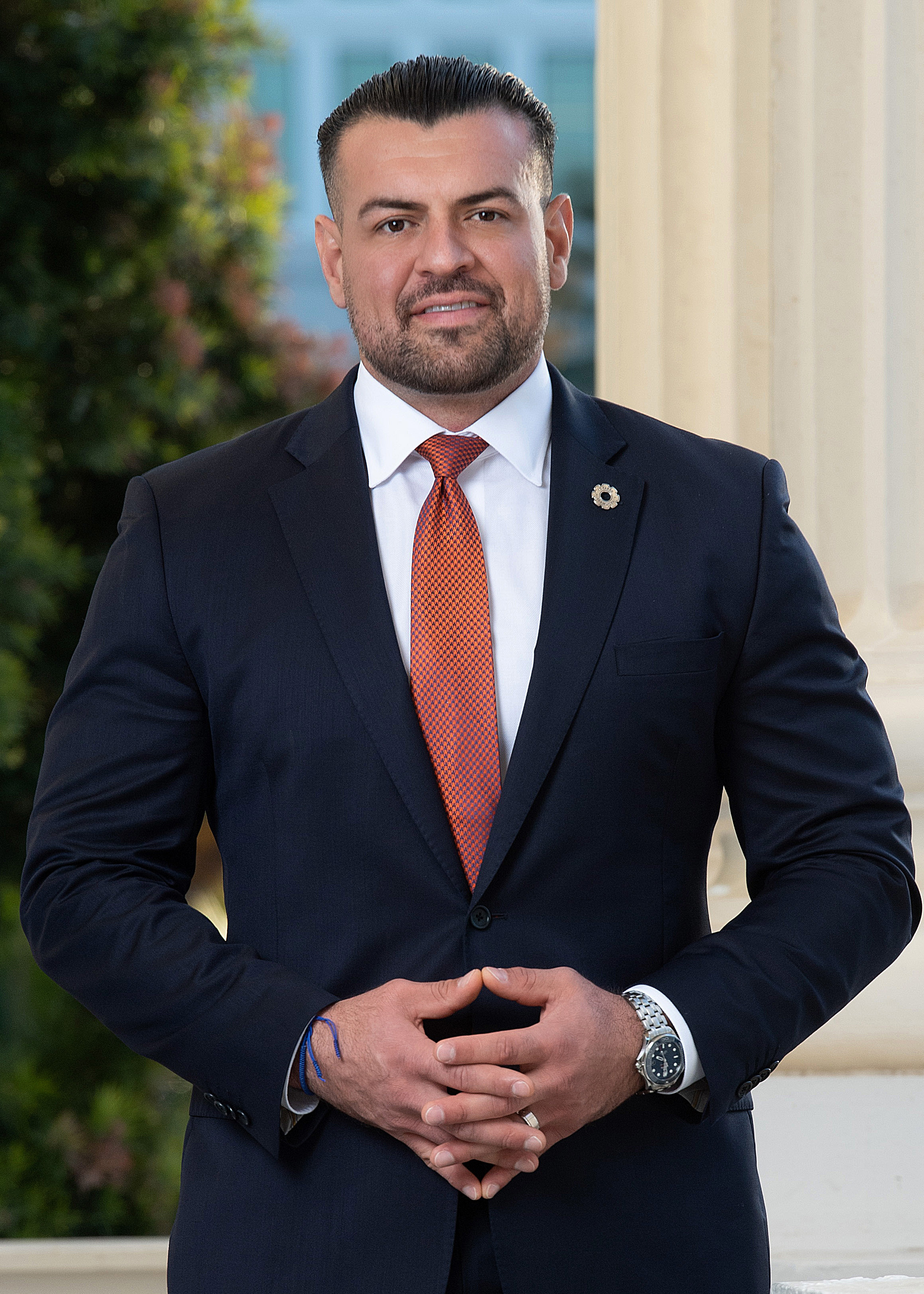
Asm. Avelino Valencia
Sponsored bills
Existing law requires the governing board of each school district to have general control of, and be responsible for, all aspects of the interscholastic athletic policies, programs, and activities in its school district, as provided, and requires the governing board of a school district to ensure that all interscholastic policies, programs, and activities in the school district are in compliance with state and federal law. Existing law authorizes the governing board of a school district to enter into associations or consortia with other governing boards for purposes of governing regional or statewide interscholastic athletics, as provided. Existing law describes the California Interscholastic Federation (CIF) as a voluntary organization that consists of school and school-related personnel with responsibility for administering interscholastic athletic activities in secondary schools and states the intent of the Legislature that the CIF, in consultation with the State Department of Education, implement specified policies relating to interscholastic athletics. Existing law, the 1998 California High School Coaching Education and Training Program, declares the intent of the Legislature to establish a California High School Coaching Education and Training Program, to be administered by school districts with an emphasis on specific components, including, among other components, sports psychology. Existing law requires every high school sports coach to complete, at their own expense, a coaching education program that meets the guidelines established by the California High School Coaching Education and Training Program. This bill would require specified trainings for coaches described in AB 1665 of the 2025–26 Regular Session to cover specified mental-health related topics, including, among other topics, trauma-informed care, as provided, and strategies of creating a positive team culture, as provided. The bill would require the department, on or before September 1, 2027, to identify existing training or develop a model youth athletics behavioral and mental health training, as specified, for persons who serve as coaches in youth sports organizations, both for recreational leagues and competitive or club leagues. The bill would require the department to post the training on its internet website and work with local partners to disseminate the training to appropriate youth athletic leagues, youth coaching entities, and relevant statewide organizations and associations. This bill would incorporate additional changes to Section 35179.1 of the Education Code proposed by AB 1665 to be operative only if this bill and AB 1665 are enacted and this bill is enacted last. This bill would make the operation of its provisions contingent upon the enactment of AB 1665 of the 2025–26 Regular Session.
Existing law generally regulates the business of renting passenger vehicles to the public. The law prohibits a rental company from taking various actions, including requiring the purchase of a damage waiver, optional insurance, or another optional good or service, and using electronic surveillance technology to track a renter in order to impose fines or surcharges relating to the renter's use of a rental vehicle. This bill would require any privately owned vehicle rented by, or furnished to, any federal, state, or local law enforcement agency for the use of detaining, arresting, or transporting persons who have violated, or are suspected of having violated, any law, to display a temporary decal displaying the agency name and logo, as specified. The bill would authorize certain attorneys, including the Attorney General, to pursue a civil action against the entity renting the vehicle from the private owner for failure to comply with these provisions. The bill would require the rental car contract to include a term that compliance with state law is mandatory. The bill would exempt privately owned vehicles rented or otherwise furnished or loaned to a law enforcement agency for specified purposes and rental car contracts entered into prior to January 1, 2027, from these provisions. The bill would make related findings and declarations.
Existing law requires the Commission on Teacher Credentialing to establish standards and procedures for the issuance and renewal of credentials, certificates, and permits. Under existing regulations, the requirements for the initial issuance of an emergency career substitute teaching permit include, among other requirements, verification by an employer that the applicant has completed at least 90 days of substitute teaching in each of the 3 years immediately preceding the date of the application either in the school district or, if the county office of education assigns substitute teachers, in one or more school districts in the county, as provided. This bill would require the commission to accept, as an alternative to verification of 90 days of substitute teaching described above, verification that the substitute teacher has received at least 5 hours of professional development, an orientation training, and an assigned teaching mentor program, as provided. The bill would authorize a holder of an emergency career substitute teaching permit who was issued the permit based on the alternatives pursuant to these provisions to serve up to 70 cumulative days in a single classroom, including for special education teachers. The bill would require, the first time a permitholder who was issued a permit issued pursuant to these provisions has their permit renewed, the permitholder to provide verification of 30 hours of professional development, as provided. The bill would require a permit issued or renewed pursuant to these provisions to be valid for 12 months. The bill would require a local educational agency to follow specified procedures before assigning a substitute who holds a career substitute permit and to annually report specified information to its governing board or governing body and additional information to the Commission on Teacher Credentialing related to those assignments.
Existing law, the California Consumer Privacy Act of 2018, grants a consumer various rights with respect to personal information that is collected or sold by a business, as defined, including the right to direct a business that sells or shares personal information about the consumer to third parties not to sell or share the consumer's personal information, as specified. Existing law, beginning January 1, 2027, prohibits a business from developing or maintaining a browser, as defined, that does not include functionality configurable by a consumer that enables the browser to send an opt-out preference signal, as defined, to businesses with which the consumer interacts through the browser, as prescribed. This bill would prohibit an operating system or an application from undoing a user's affirmative configuration of a user's privacy setting without the user's consent, except as specified. The bill would define "privacy setting" to mean any user-configurable option within an application's privacy, or similarly labeled, menu that governs the application's collection, use, sharing, disclosure, retention, or processing of the user's personal information.
Existing law prohibits a state officer or employee from engaging in any employment, activity, or enterprise that is clearly inconsistent, incompatible, in conflict with, or inimical to their duties. Existing law also prohibits specified local agency officers or employees from engaging in any employment, activity, or enterprise for compensation that is inconsistent, incompatible, or in conflict with, or inimical to, their duties, as specified. This bill would prohibit a public officer or public employee, as those terms are defined, from issuing a meme coin. The bill would prohibit a digital asset service provider, as defined, from listing for sale on behalf of, or for purchase by, a California resident a meme coin issued on or after January 1, 2027, that is offered by, or in partnership with, a federal public official or a state or local public officer. This bill would authorize the Attorney General, a district attorney, city attorney, or county counsel to enforce these prohibitions by filing a civil action, as specified.
Existing law establishes the Medi-Cal program, administered by the State Department of Health Care Services, under which health care services are provided to qualified, low-income persons. The Medi-Cal program is, in part, governed and funded by federal Medicaid program provisions. Existing law authorizes a county board of supervisors to establish a commission to negotiate an exclusive contract with the department to provide, or arrange for the provision of, health care services under the Medi-Cal program. Pursuant to the authority described above, the County of Orange established a commission and existing law established the governance of that commission, known as the Orange County Health Authority or CalOptima, to provide health care services under the Medi-Cal program. Existing law prescribes who can serve on the 10-member governing body of the commission and requires each member to serve a 4-year term, except as described. This bill, for terms commencing after January 1, 2027, would impose one-, 2-, and 4-year terms of office, as specified. The bill would also prohibit specified voting members from serving more than two consecutive terms and from serving in that capacity for more than 10 consecutive years. The bill would require the governing body of the Orange County Health Authority to authorize and pay for an independent external audit of its governance procedures and practices, including the roles and responsibilities of the governing body, executive leadership, and staff, among others. The bill would require the audit to be completed by July 1, 2027, and would require that a copy of the report be provided to the Legislature and made public. Because this bill would impose a unique requirement on how services are provided on a local government and would require additional duties of county authorities, the bill would impose a state-mandated local program. This bill would make legislative findings and declarations as to the necessity of a special statute for County of Orange. Existing constitutional provisions require that a statute that limits the right of access to the meetings of public bodies or the writings of public officials and agencies be adopted with findings demonstrating the interest protected by the limitation and the need for protecting that interest. This bill would make legislative findings to that effect. The California Constitution requires the state to reimburse local agencies and school districts for certain costs mandated by the state. Statutory provisions establish procedures for making that reimbursement. This bill would provide that no reimbursement is required by this act for a specified reason.
Existing law, the California Youth Football Act, requires a youth sports organization that conducts a tackle football program to comply with certain requirements, including, among other things, not conducting more than 2 full-contact practices per week during the preseason and regular season, not holding a full-contact practice during the off-season, and having each football helmet reconditioned and recertified every other year, as specified. This bill would require a youth tackle football league, youth sports organization that conducts a tackle football program, or coach of a youth sports organization to allow youth tackle football participants to use safety equipment, including soft-shell add-ons on football helmets. The bill would authorize a court to grant injunctive relief to remedy a violation or threatened violation of this requirement, and would entitle a prevailing plaintiff who obtains injunctive relief to reasonable attorney's fees and costs. This bill would prohibit the warranty or safety certification of a football helmet put into play on or after January 1, 2027, with a soft-shell add-on from being voided because of the use of the soft-shell add-on with the football helmet unless certain conditions are met. The bill would state the intent of the Legislature to ensure that youth football organizations continue to have access to commercially available football helmets, including reconditioned football helmets, and that the attachment of a soft-shell helmet add-on does not, by itself, result in the loss of an otherwise applicable manufacturer warranty or certification designation.
The Digital Financial Assets Law (DFAL) generally regulates digital financial asset business activity, including by prohibiting a covered person from taking certain actions with digital financial assets if that asset is a stablecoin, as defined and prescribed. The DFAL requires, among other charges, an applicant for a license to include a nonrefundable fee with an application, as specified. This bill would authorize the Department of Financial Protection and Innovation to adopt regulations to allow specified payments required under the DFAL to be made with stablecoins, as specified. This bill would become operative on July 1, 2027, and sunset its provisions on January 1, 2032.
(1) Existing law, the Teachers' Retirement Law, establishes the State Teachers' Retirement System (STRS) and creates the Defined Benefit Program of the State Teachers' Retirement Plan, which provides a defined benefit to members of the program, based on final compensation, credited service, and age at retirement, subject to certain variations. STRS is administered by the Teachers' Retirement Board. Existing law also creates the Cash Balance Benefit Program, which is administered by the board, to provide a retirement plan for the benefit of participating employees who provide creditable service for less than 50% of full time. Existing law requires certain board members to receive $100 for attendance at board and committee meetings. This bill would increase that rate to $320. (2) Existing law, the Public Employees' Retirement Law (PERL) , creates the Public Employees' Retirement System (PERS) for the purpose of providing pension benefits to state employees and employees of contracting agencies and prescribes the rights and duties of members of the system and their beneficiaries. Existing law vests management and control of PERS in its board of administration. Existing law authorizes certain board members to receive $100 for attendance at a meeting of the board or committee thereof, as prescribed. This bill would increase that rate to $320. (3) Existing law, the County Employees Retirement Law of 1937, authorizes counties to establish retirement systems pursuant to its provisions in order to provide pension benefits to county, city, and district employees and their beneficiaries. Existing law sets forth the membership composition for boards of retirement and boards of investment, as specified. Existing law authorizes the board of supervisors for counties for which these provisions apply to provide that certain members of these boards shall receive compensation at a rate of not more than $100 for a meeting or for a meeting of a committee authorized by the entire board. This bill would authorize the above-described compensation rate to be increased by the board of retirement to not more than $320 per meeting, and would provide that this provision would not be operative in any county until it is publicly noticed and adopted by a majority vote of the board of supervisors, as specified. Existing law, applicable to Los Angeles County, authorizes the board of supervisors to provide compensation to certain members of the board of retirement and board of investments at a rate of not more than $100 for a board or committee meeting, subject to certain limits. This bill would authorize the above-described compensation rate to be increased by the board of retirement or board of investments to a rate of not more than $320 per meeting. The bill would prohibit this provision from becoming operative until it is publicly noticed and adopted by a majority vote of the board of supervisors, as specified.