

Existing law, the California Youth Football Act, requires a youth sports organization that conducts a tackle football program to comply with certain requirements, including, among other things, not conducting more than 2 full-contact practices per week during the preseason and regular season, not holding a full-contact practice during the off-season, and having each football helmet reconditioned and recertified every other year, as specified. This bill would require a youth tackle football league, youth sports organization that conducts a tackle football program, or coach of a youth sports organization to allow youth tackle football participants to use safety equipment, including soft-shell add-ons on football helmets. The bill would authorize a court to grant injunctive relief to remedy a violation or threatened violation of this requirement, and would entitle a prevailing plaintiff who obtains injunctive relief to reasonable attorney's fees and costs. This bill would prohibit the warranty or safety certification of a football helmet put into play on or after January 1, 2027, with a soft-shell add-on from being voided because of the use of the soft-shell add-on with the football helmet unless certain conditions are met. The bill would state the intent of the Legislature to ensure that youth football organizations continue to have access to commercially available football helmets, including reconditioned football helmets, and that the attachment of a soft-shell helmet add-on does not, by itself, result in the loss of an otherwise applicable manufacturer warranty or certification designation.
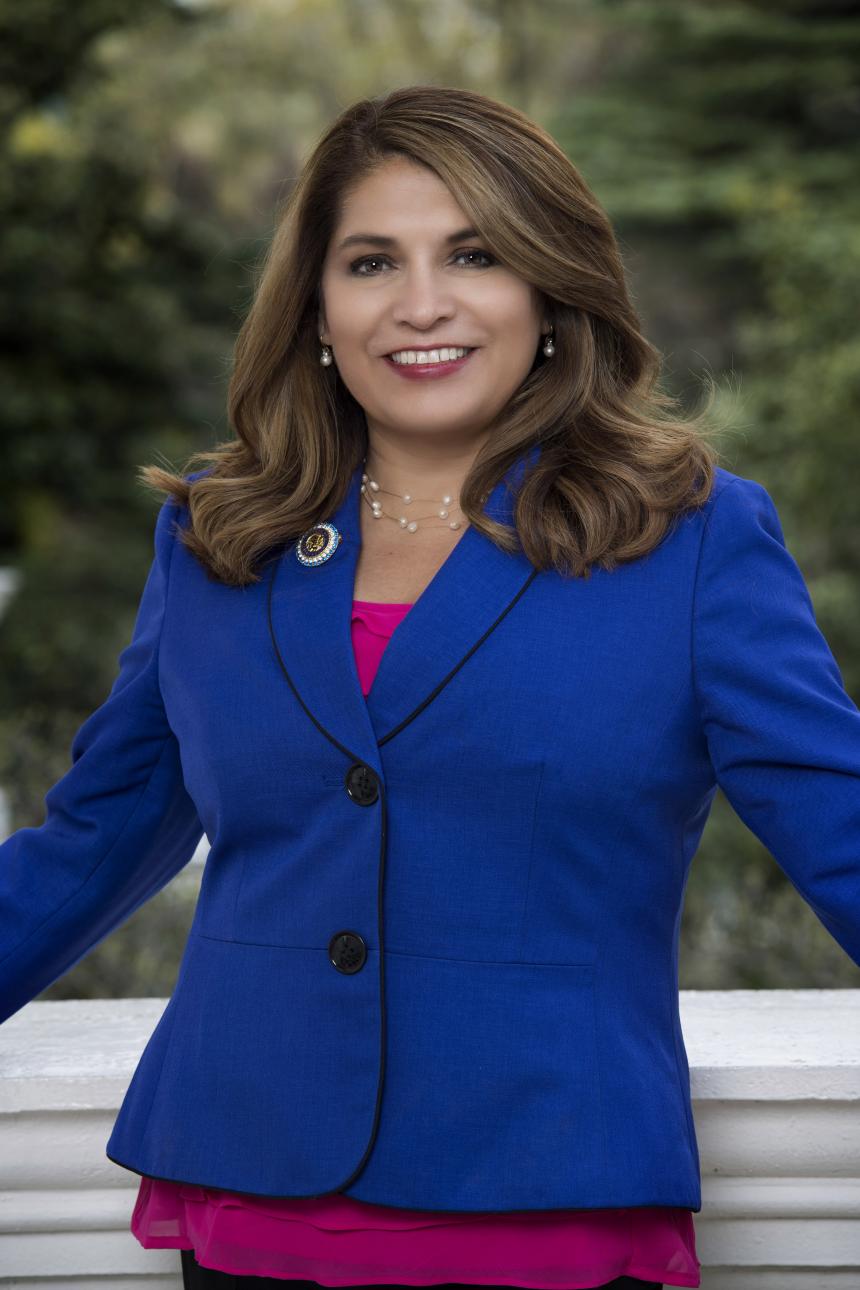
Asm. Sharon Quirk-Silva
Sponsored bills
Existing law authorizes an unmarried person who is under 18 years of age to marry upon obtaining a court order granting permission and the written consent of at least one of the parents or the guardian of each underage party to the marriage, as specified. Existing law requires the court, if it considers it necessary, as part of the court order granting permission to marry, to require the parties to the prospective marriage of a minor to participate in premarital counseling, as specified. Existing law provides that 2 unmarried, unrelated adults who have chosen to share one another's lives in an intimate and committed relationship of mutual caring may establish a domestic partnership by filing a declaration with the Secretary of State, if certain requirements are met. Existing law provides that a person under 18 years of age who, together with the person with whom the person proposes to establish a domestic partnership, meets the requirements for a domestic partnership other than the requirement of being at least 18 years of age, is capable of consenting to and establishing a domestic partnership upon obtaining a court order granting permission to the underage person or persons to establish a domestic partnership. Under existing law, registered domestic partners have the same rights, protections, and benefits as spouses. This bill would repeal the authorization for a person under 18 years of age to be issued a marriage license or to establish a domestic partnership, thereby prohibiting a person under 18 years of age from being issued a marriage license or from establishing a domestic partnership. The bill would make conforming changes. Existing law requires the State Registrar to create a document, no later than March 1, 2020, concerning marriage certificates in which one or both of the parties were minors at the time of solemnization of the marriage. Existing law requires the State Registrar to update that document annually, as specified. Existing law requires the local registrar to submit specified information for the purposes of that report. This bill would repeal those provisions.
The Housing Authorities Law establishes a housing authority within each county and city and authorizes the authority to, among other things, prepare, carry out, acquire, lease, and operate housing projects and housing developments for persons of low income, as provided. This bill would, unless required by federal law, and except as specified, prohibit a housing authority or other covered housing provider, as defined, from establishing or implementing any rules, policies, or procedures that impose term limits or work requirements, as defined, as a condition of eligibility for any covered housing or that impact the amount of the rent subsidy or assistance provided to covered housing tenants. The bill would, however, permit a covered housing provider to establish or implement a voluntary employment or job training program if specified conditions apply. The bill would provide that its provisions do not limit or alter the operation of specified federal housing programs and requirements.
Existing law, the Reproductive Privacy Act, declares as contrary to the public policy of this state a law of another state that authorizes a person to bring a civil action against a person or entity that engages in certain activities relating to obtaining or performing an abortion. Existing law prohibits the state from applying an out-of-state law to a case or controversy in state court or enforcing or satisfying a civil judgment under the out-of-state law. This bill would specify that the protections applicable to persons who engage in legally protected health care activity, as defined, apply to a person who previously has undertaken one or more acts or omissions while in another United States jurisdiction to aid or encourage, or attempt to aid or encourage, any person in the exercise and enjoyment, or attempted exercise and enjoyment, of rights to reproductive health care services or gender affirming health care services if the acts or omissions were permissible under the laws of the jurisdiction in which the person was located at the time of the acts or omissions. Existing law prohibits a state or local law enforcement agency or officer from knowingly arresting or knowingly participating in the arrest of any person for performing, supporting, or aiding in the performance of legally protected health care activity, if the health care activity is lawful in this state. Existing law prohibits a state or local public agency from cooperating with or providing information to an individual or agency from another state or a federal law enforcement agency, as specified, regarding a legally protected health care activity that is lawful in this state. Under existing law, the Governor may surrender, on demand of executive authority of any other state, any person in this state charged in the other state, as specified, with committing an act in this state, or in a 3rd state, intentionally resulting in a crime in the state whose executive authority is making the demand. This bill would prohibit the Governor from recognizing a request for extradition of a person subject to criminal liability based on the alleged provision or receipt of, assistance in the provision or receipt of, material support for, or in any theory of vicarious, joint, several, or conspiracy liability for any legally protected health care activity, except as specified.
Existing law prohibits the consideration of a person as a candidate for, and provides that the person is not eligible to be elected to, any state or local elective office if the person has been convicted of a felony involving accepting or giving, or offering to give, any bribe, the embezzlement of public money, extortion or theft of public money, perjury, or conspiracy to commit any of those crimes. This bill would additionally prohibit the consideration of a person as a candidate for, and provide that the person is not eligible to be elected to, any state or local elective office if they have been convicted of a felony involving sexual assault or human trafficking, as defined.
Existing law establishes the Board of Behavioral Sciences within the Department of Consumer Affairs and requires the board to regulate licensees and registrants under the Licensed Marriage and Family Therapist Act (LMFTA) , the Educational Psychologist Practice Act (EPPA) , the Clinical Social Worker Practice Act (CSWPA) , and the Licensed Professional Clinical Counselor Act (LPCCA) . Existing law makes a violation of those acts a crime. The LMFTA, the CSWPA, and the LPCCA each contain varying provisions limiting their application to the practice of certain medical and other behavioral science professionals, attorneys, and certain religious personnel, including priests, rabbis, and ministers of the gospel of any religious denomination. This bill would revise and recast those provisions to, among other things, exempt a religious official of any denomination, including those specified above and imams, when providing faith-based counseling services as part of their regular professional duties for an established and legally recognizable faith-based entity if certain criteria are met. The bill would also exempt attorneys and physicians who provide counseling services as part of their professional practice from the LMFTA and the LPCCA. Existing law establishes examination and experiential requirements under the LMFTA, the EPPA, the CSWPA, and the LPCCA to qualify for licensure or registration under those acts and requires an applicant for licensure or registration to have passed certain examinations or obtain specified experience within a certain timeline for it to be accepted by the board. In this regard, existing law generally requires the applicant to gain the required experience no more than 6 years before the board receives the application. For licensed educational psychologists, the EPPA authorizes the board to accept a passing score on a written examination administered by the board for a period of 7 years from the date the examination was taken. Under the LMFTA, the CSWPA, and the LPCCA, registrants and applicants for licensure, registration, or a subsequent registration number are required to pass a California law and ethics examination. The LMFTA, the CSWPA, and the LPCCA require an applicant for licensure to pass a clinical examination within 7 years from the initial attempt, unless the applicant obtains a passing score on the current version of the California law and ethics examination. This bill, instead, would require applicants for licensure under the LMFTA, the EPPA, the CSWPA, and the LPCCA, to obtain the relevant experience and to pass the relevant examination within 7 years preceding the date on which the board receives the application. The bill would require those applicants and registrants under the LMFTA, the CSWPA, and the LPCCA who submit applications to the board on and after January 1, 2030, to have passed the California law and ethics examination no more than 7 years before the board receives the application, as specified. Existing law authorizes an associate marriage and family therapist registration, an associate clinical social worker registration, or an associate professional clinical counselor registration to be renewed a maximum of 5 times and prohibits a registration from being renewed beyond 6 years from the last day of the month of issuance. Existing law authorizes an applicant to apply for a subsequent registration number when no renewals are possible if certain requirements are met. Existing law prohibits an applicant who is issued a subsequent associate registration number from being employed or volunteering in a private practice. This bill would increase the maximum number of renewals for those registrations to 6 and would extend the renewal deadline to 7 years from the last day of the month of issuance. The bill would authorize an applicant applying for or holding a subsequent associate registration number to request a 2-year hardship extension of the subsequent associate registration number to allow them to be employed or volunteer at one private practice or professional corporation employer, subject to specified conditions and requirements, including signing an application under penalty of perjury. By expanding the crime of perjury, the bill would impose a state-mandated local program. Existing law requires an associate marriage and family therapist or a marriage and family therapist trainee to disclose to a client or patient that they are unlicensed and to provide specified information to the client or patient. Existing law requires a social work applicant or registrant and a clinical counselor trainee, applicant, or associate to inform each client or patient that they are unlicensed and under supervision, as specified. This bill would instead require a marriage and family therapist applicant or registrant, a social work applicant, registrant, intern, or trainee, or a clinical counselor applicant, associate, or trainee, in addition to disclosing to a client or patient that they are unlicensed and under supervision, to provide the name of their employer or the entity for which they volunteer. Existing law establishes a $20 fee for rescoring a written examination under the LMFTA, the EPPA, the CSWPA, and the LPCCA. This bill would delete that fee. This bill would delete obsolete provisions and make other technical and nonsubstantive changes. This bill would incorporate additional changes to Section 4980.41 of the Business and Professions Code proposed by SB 1445 to be operative only if this bill and SB 1445 are enacted and this bill is enacted last. The California Constitution requires the state to reimburse local agencies and school districts for certain costs mandated by the state. Statutory provisions establish procedures for making that reimbursement. This bill would provide that no reimbursement is required by this act for a specified reason.
Maddy summaryCalifornia Assembly Resolution 140 designates August 2026 as Children's Get Offline and Get Outdoors Month to promote awareness of the benefits of screen-free play for child development. The resolution cites research linking excessive social media use and reduced free play time to increased rates of anxiety, depression, and other behavioral issues among teenagers. It encourages families and communities to support unstructured outdoor activities and highlights ongoing federal efforts to protect children's mental health through technology guardrails.
This measure would urge President Donald J. Trump to avoid raising the cost of living for American consumers by rescinding the tariffs that he has imposed since taking office in January 2025 and refunding the American people for the costs passed on to them by his tariffs. The measure would also urge the United States Congress to enact a joint resolution to rescind President Trump's tariffs and to oppose all future unilateral and arbitrary tariff increases imposed by President Trump.
Existing law, the Child Care and Development Services Act, administered by the State Department of Social Services, establishes a system of childcare and development services for children up to 13 years of age, which includes various programs and services, including, among others, general childcare and development programs and migrant childcare and development programs. Existing law, the Uniform Electronic Transactions Act (UETA) , provides that a record or signature may not be denied legal effect or enforceability solely because it is in electronic form. This bill would specify that a signature required by the Child Care and Development Services Act may be satisfied by use of an electronic signature in compliance with the UETA. The bill would authorize documents with an electronic signature to be created and stored in an electronic format in compliance with the UETA, and would authorize the department to adopt regulations to implement these provisions. Existing law, the Early Education Act, requires the Superintendent of Public Instruction to, among other things, provide an inclusive and cost-effective preschool program. The Early Education Act and the Child Care and Development Services Act authorize contractors operating or providing services under the acts to use digital signatures that comply with state and federal standards, including specified state regulations. This bill would instead condition the authority of contractors operating under the Early Education Act and the Child Care and Development Services Act to use an electronic signature on compliance with the UETA.
Maddy summaryCalifornia Assembly Resolution 137 formally recognizes the Diwali festival scheduled for November 8, 2026, and encourages state residents to participate in the celebration. The resolution highlights the cultural significance of the holiday for Indian Americans and South Asian communities, noting its themes of unity, joy, and the triumph of light over darkness. It also acknowledges that California previously designated Diwali as an official state holiday in 2025. This measure serves as a commemorative statement rather than a law with new regulatory or financial provisions.