

(1) Existing law, the 21st Century High School After School Safety and Enrichment for Teens program, referred to as High School ASSETs program, provides for the establishment of a high school after-school program that consists of an academic assistance element and an enrichment element. In selecting grantees to participate in the program, existing law requires the State Department of Education to consider specified criteria and requires an applicant to certify in the application, among other things, the inclusion of a nutritional snack and a physical activity element. This bill instead would require an applicant to certify in the application, among other things, the inclusion of a nutritional snack, meal, or both, and a physical activity element. (2) Existing law, the After School Education and Safety Program Act of 2002, enacted by initiative statute, establishes the After School Education and Safety Program to serve pupils in kindergarten and grades 1 to 9, inclusive, and requires an entity that applies to operate a program to agree that snacks made available by the program conform to specified nutrition standards. The act requires an applicant to certify in the application, among other things, the inclusion of a nutritional snack. This bill would also require an entity that applies to operate a program to agree that meals made available by the program conform to specified federal nutrition standards. The bill instead would require an applicant to certify in the application, among other things, the inclusion of a nutritional snack, meal, or both. The act authorizes the Legislature to amend certain of its provisions to further its purposes by majority vote of each house. This bill would set forth a legislative finding and declaration that the bill's provisions further the purposes of the act. (3) Existing law requires a minimum of 50% of the items offered for sale each schoolday during regular school hours, as specified, be selected from a specified list including, among others, milk and dairy products and nonconfection grain products. This bill would repeal these provisions. (4) Existing law authorizes the governing board of any school district to establish cafeterias in the schools under its jurisdiction and authorizes the moneys received for the sale of food or for any services performed by the cafeterias to be paid into the county treasury to the credit of the cafeteria fund of the particular school district. Existing law requires the cafeteria fund to be used only for those expenditures authorized by the governing board of a school district as necessary for the operation of school cafeterias, including, but not limited to, expenditures for the lease or purchase of additional cafeteria equipment for the central food processing plant. Existing law authorizes the governing board of a school district to also make expenditures from the cafeteria fund for the construction, alteration, or improvement of a central food processing plant, for the installation of additional cafeteria equipment for the central food processing plant, and for the lease or purchase of vehicles used primarily in connection with the central food processing plant. Existing law also authorizes the governing board of a school district to authorize the establishment of one or more cafeteria revolving accounts whenever a cafeteria fund is operated. This bill would instead include as an authorized expenditure of the cafeteria fund expenditures for the lease or purchase of additional equipment for the kitchen or central food processing plant. The bill would instead authorize the governing board of a school district to make expenditures from the cafeteria fund for the purchase and installation of additional preparation, cooking, or service equipment for a kitchen or central food processing plant, including necessary alterations as specified, and for the lease or purchase of vehicles used solely in connection with the kitchen or central food processing plant. The bill would repeal the authority of the governing board of a school district to create one or more cafeteria revolving accounts. (5) Existing law requires the cost of housing and equipping cafeterias to be a charge against the funds of the school district except that the governing board of a school district is authorized to make the cost of the lease or purchase of additional cafeteria equipment for a central food processing plant, and of vending machines and their installation and housing, a charge against cafeteria funds if the governing board of the school district deems it necessary. Existing law also authorizes the governing board of a school district, if school district funds are expended for the lease or purchase of additional cafeteria equipment for a central food processing plant, or for the lease, purchase, installation, or housing of vending machines, to reimburse school district funds from cafeteria funds within 5 years after the expenditure. This bill would instead require the cost of providing adequate housing for cafeterias, including, but not limited to, kitchen facilities, to be a charge against the funds of the school district. The bill would require the cost of the lease or purchase of cafeteria equipment and of vending machines and their installation and housing to be a charge against cafeteria funds. However, the governing board of a school district would be authorized to make the cost of the lease or purchase of cafeteria equipment for a kitchen or central food processing plant a charge against the funds of the school district if the governing board of the school district deems it necessary. The bill would also authorize the governing board of the school district, if school district funds are expended for the lease or purchase of kitchen equipment, or for the lease, purchase, installation, or housing of vending machines, as specified, to reimburse school district funds from cafeteria funds during the same fiscal year. The bill would require the governing board of a school district to only approve reimbursement for vending machines if specified conditions apply. Existing law authorizes the governing board of a school district to make the cost of maintenance of the physical plant used in connection with cafeterias, the cost of replacement of equipment, and the cost of telephone charges, water, electricity, gas, coal, wood, fuel oil, and garbage disposal a charge against the funds of the school district. This bill would instead authorize the governing board of a school district to make the cost of maintenance of kitchen facilities and the cost of replacement or maintenance of kitchen equipment a charge against cafeteria funds, and would add the costs of providing drinking water in the cafeteria a charge against cafeteria funds. (6) Existing law, the Pupil Nutrition, Health, and Achievement Act of 2001, requires each elementary school to sell only certain foods to a pupil during the schoolday, except for food items sold as part of a school fundraising event, if the items are sold by pupils of the school and the sale of those items either takes place away from school premises or takes place at least 12 hour after the end of the schoolday. Existing law defines "sold" and "full meal" for purposes of those provisions. This bill would instead make those provisions applicable from 12 hour before the start of the schoolday to 12 hour after the schoolday, and would include individually sold dairy or whole grain foods among the list of foods that may be sold. The bill would revise the requirements for the sale of food at school fundraising events by deleting the requirement that the items be sold by pupils. The bill would also revise the definition of "sold" and "full meal" for purposes of those provisions. (7) Existing law, and excluding food served as part of a United States Department of Agriculture (USDA) meal program, requires snacks and entrée items sold to a pupil in middle, junior, or high school to meet specified nutritional standards, and requires entrée items to also be categorized as entrée items in the School Breakfast Program or National School Lunch Program. Existing law authorizes the sale of food items that do not comply with these provisions in specific circumstances, including, but not limited to, if the sale of those items occurs during a school-sponsored pupil activity after the end of the schoolday. This bill would apply these restrictions to the sale of snacks and entrées to a pupil in middle school or high school from 12 hour before the start of the schoolday to 12 hour after the schoolday, and would remove the requirement that entrée items be categorized as entrée items in the School Breakfast Program or National School Lunch Program. The bill would also repeal the authority of a middle school or high school to permit the sale of food items that do not comply with the specified nutritional standards if the sale of those items occurs during a school-sponsored pupil activity after the end of the schoolday. (8) Existing law requires beverages that are sold to a pupil at an elementary school to meet specified nutritional standards, unless the school authorizes the items to be sold by pupils of the school as part of a fundraising event, and the sale of those items either takes place away from school premises or takes place 12 hour or more after the end of the schoolday. This bill would delete 2%-fat milk from the specified nutritional standards and would delete the provision requiring the items to be sold by pupils of the school. (9) Existing law requires that only beverages that meet specified nutritional standards may be sold to a pupil at a middle or junior high school from 12 hour before the start of the schoolday to 12 hour after the end of the schoolday. Existing law authorizes a middle or junior high school to permit the sale of beverages that do not meet the specified nutritional standards as part of a school event if the sale of those items occurs during a school-sponsored event and takes place at the location of the event at least 12 hour after the end of the schoolday and vending machines, pupil stores, and cafeterias are used later then 12 hour after the end of the schoolday. This bill would delete 2%-fat milk from the specified nutritional standards and would require that only beverages that meet the same specified nutritional standards may be sold to a pupil at a high school for 12 hour before the start of the schoolday to 12 hour after the end of the schoolday. The bill would also authorize a middle school or high school to permit the sale of beverages that do not meet specified nutritional standards as part of a school event if either the sale of those items takes place away from the premises of the school or the sale of those items takes place on school premises at least 12 hour after the end of the schoolday. (10) Existing law prohibits a school or school district, during school hours and 12 hour before and after school hours, through a vending machine or school food service establishment, as defined, from making available to pupils enrolled in kindergarten, or grades 1 to 12, inclusive, food containing artificial trans fat, as defined, or use food containing artificial trans fat in the preparation of a food item served to those pupils unless the food is provided as part of a USDA meal program. This bill would instead prohibit a school or school district, from 12 hour before the start of the schoolday to 12 hour after the end of the schoolday, from selling to pupils enrolled in kindergarten, or grades 1 to 12, inclusive, food containing artificial trans fat, as defined, unless the food is provided as part of a USDA meal program. (11) Existing law requires the State Department of Education to establish a 3-year pilot program related to the Pupil Nutrition, Health, and Achievement Act of 2001, commencing in the fall of the 2002–03 school year, in which a total of not less than 10 high schools, middle schools, or any combination of high schools and middle schools that apply are selected to participate. This bill would repeal the provisions related to the pilot program. (12) Existing law authorizes the Superintendent of Public Instruction to monitor school districts for compliance with the Pupil Nutrition, Health, and Achievement Act of 2001, and requires each school district so monitored to report to the Superintendent in the coordinated review effort regarding the extent of the school district's compliance. Existing law requires a school district found to be noncompliant with certain provisions of that act to adopt a corrective action plan, as specified. This bill would repeal those provisions and require that compliance with the act be monitored by the State Department of Education in conformity with the USDA's administrative review process, as specified. (13) This bill would also make conforming and nonsubstantive changes to these provisions.
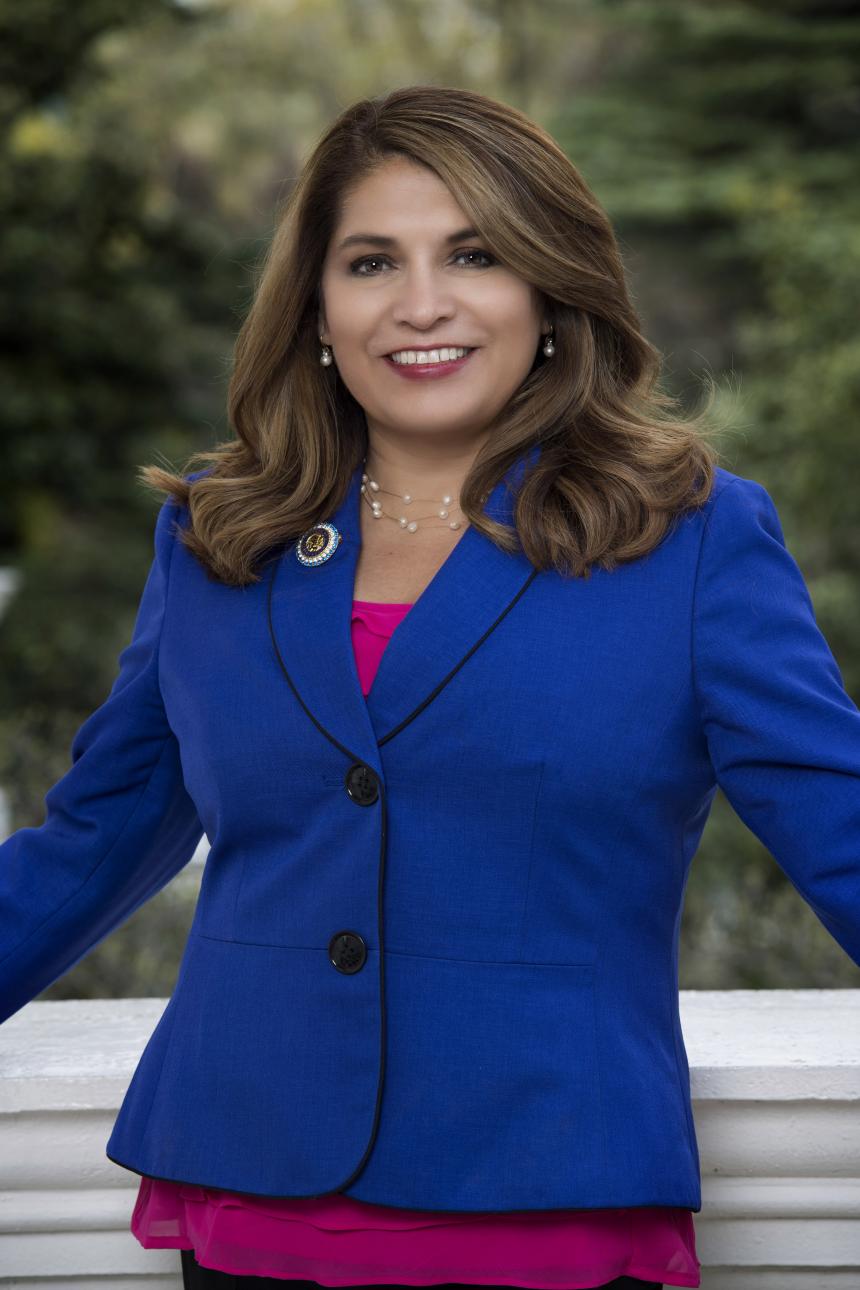
Asm. Sharon Quirk-Silva
Sponsored bills
(1) Existing law, the Political Reform Act of 1974, regulates conflicts of interests of public officials and requires that public officials file, with specified filing officers, periodic statements of economic interests disclosing certain information regarding income, investments, and other financial data. Existing law authorizes agencies to permit the electronic filing of statements of economic interests, in accordance with regulations adopted by the Fair Political Practices Commission. This bill would authorize the Commission to develop and operate an online system for filing statements of economic interests meeting specified requirements. With certain exceptions, filers would be authorized to use the online system to meet requirements imposed by the act. (2) The Political Reform Act of 1974, an initiative measure, provides that the Legislature may amend the act to further the act's purposes upon a 23 vote of each house and compliance with specified procedural requirements. This bill would declare that it furthers the purposes of the act. (3) This bill would declare that it is to take effect immediately as an urgency statute.
Existing law authorizes the Supreme Court to admit an applicant as an attorney at law in all the courts of the state, upon certification by the examining committee of the State Bar of California that the applicant has fulfilled the requirements for admission to practice law, as specified. This bill would additionally authorize the Supreme Court to admit to the practice of law an applicant who is not lawfully present in the United States, upon certification by the committee that the applicant has fulfilled those requirements for admission, as specified.
Existing law, the State Bar Act, provides for the licensure and regulation of attorneys by the State Bar of California, a public corporation. This bill would make it a violation of specified provisions of law relating to the unauthorized practice of law for any person who is not an attorney to literally translate from English into another language the phrases "notary public," "notary," "licensed," "attorney," "lawyer," or any other terms that imply that the person is an attorney. The bill would prescribe penalties, not to exceed $1,000 per day for each violation, for a person who violates these provisions. The bill would authorize these penalties to be allocated to a specified fund for purposes of providing free legal services related to immigration reform act services to clients of limited means, or to a fund for the purposes of mitigating unpaid claims of injured immigrant clients, as specified, as directed by the Board of Trustees of the State Bar. The bill would require the Board of Trustees of the State Bar to annually report any collection and expenditure of these moneys to the Assembly and Senate Committees on Judiciary. This bill would require, when a contract for legal services is required in writing pursuant to specified provisions of law, that an attorney providing immigration reform act services, as defined, provide a written notice informing the client that he or she may report complaints to specified entities. The bill would make these provisions operative when the State Bar posts the form and specified translations of the form on its Internet Web site, but no later than 45 days after the effective date of the bill. Existing law provides for the regulation of a person engaged in the business or acting in the capacity of an immigration consultant, and provides that a violation of these provisions is a crime. Existing law requires an immigration consultant to provide a client with a written contract containing specified information prior to providing services. Existing law requires an immigration consultant to file a bond of $50,000 with the Secretary of State in accordance with specified provisions of law. This bill would, commencing July 1, 2014, increase the amount of this bond to $100,000. The bill would require that the written contract contain additional information relating to an explanation of the purpose of each service to be performed. The bill would require an immigration consultant to establish a client trust account and to deposit in this account any funds received from the client prior to performing immigration reform act services, as defined, for that client, and would impose certain requirements relating to the expenditure of funds from this trust account. The bill would prohibit an attorney or an immigration consultant from demanding or accepting the advance payment of any funds from a person before the enactment of an immigration reform act, as defined, and would require any funds received after the effective date of this bill, but before the enactment of an immigration reform act, to be refunded to the client promptly, but no later than 30 days after the receipt of any funds. The bill would require any funds that were received before the effective date of the bill for services not rendered before the effective date of the bill to be either refunded to the client or deposited in a client trust fund in accordance with specified provisions. The bill would prescribe penalties, not to exceed $1,000 per day for each violation, for immigration consultants who violate these provisions. Existing law prohibits an immigration consultant from literally translating the phrase "notary public" into Spanish. This bill would provide that a violation of these provisions constitutes a violation of specified provisions of law relating to the unauthorized practice of law. The bill also would prescribe penalties, not to exceed $1,000 per day for each violation, for immigration consultants who violate these provisions. Because a violation of these provisions by an immigration consultant would be a crime, this bill would impose a state-mandated local program. The California Constitution requires the state to reimburse local agencies and school districts for certain costs mandated by the state. Statutory provisions establish procedures for making that reimbursement. This bill would provide that no reimbursement is required by this act for a specified reason. This bill would declare that it is to take effect immediately as an urgency statute.
Under existing law, a person who, in good faith and not for compensation, renders emergency medical or nonmedical care or assistance at the scene of an emergency is not liable for civil damages resulting from any act or omission, except as specified. Existing law further provides that a person who has completed a basic cardiopulmonary resuscitation course that complies with specified standards, and who in good faith renders emergency cardiopulmonary resuscitation at the scene of an emergency is not liable for any civil damages as a result of any act or omission, except as specified. Existing law provides that a health care provider, including any licensed clinic, health dispensary, or health facility, is not liable for professional negligence or malpractice for any occurrence or result solely on the basis that the occurrence or result was caused by the natural course of a disease or condition, or was the natural or expected result of reasonable treatment rendered for the disease or condition. This bill would prohibit an employer from having a policy of prohibiting an employee from providing voluntary emergency medical services, including, but not limited to, cardiopulmonary resuscitation, in response to a medical emergency, except as specified. The bill would state that these provisions do not impose any express or implied duty on an employer to train its employees regarding emergency medical services or cardiopulmonary resuscitation.
Existing law requires that application for a vote by mail voter's ballot be made in writing to the elections official having jurisdiction over the election during a specified period prior to the election, subject to specified exceptions. This bill would create an additional exception to this requirement by authorizing a local elections official to offer a voter the ability to apply for a vote by mail voter's ballot by telephone. The bill would require a telephone applicant for a vote by mail voter's ballot to provide specified information to the elections official. The bill would prohibit a person from applying for a vote by mail voter's ballot by telephone using the name of, or on behalf of, another person.
Under existing law, the State Department of Social Services licenses foster families, and the department and each county provide assistance to foster parents of low-income children under the Aid to Families with Dependent Children-Foster Care (AFDC-FC) program. Existing law requires the department to develop a program, to be administered by the department and county social services departments, for the establishment of foster care homes for children with special health care needs with foster parents trained by health care professionals pursuant to the discharge plan of the facility releasing the child being placed in, or currently in, foster care. Existing law requires each county department of social services to develop a specified plan for foster care placement of children with special health care needs. This bill would clarify that a medically fragile child, as defined, meets the definition of a child with special health care needs for the purposes of these provisions. The bill would require that, when determining the placement of a foster child who is medically fragile, priority consideration be given to placement with a foster parent who is an individual nurse provider, as defined, who provides health services under the federal Early and Periodic Screening, Diagnosis and Treatment program, but that this priority consideration be subordinate to the preference granted to a relative of the child, in accordance with federal law.
This measure would honor the California Council on Science and Technology for 25 years of service and unbiased advice to the State of California.
This measure would urge the Congress of the United States to enact President Barack Obama's budget proposal to increase funding for preschool and early learning. This measure would also urge the Superintendent of Public Instruction to prepare a plan for making California competitive for future increases in federal funding to preschool and early learning programs.
This measure would designate December 4, 2013, as Keeping Kids in School and Out of Court Day.