

School nutrition.
Summary
(1) Existing law, the 21st Century High School After School Safety and Enrichment for Teens program, referred to as High School ASSETs program, provides for the establishment of a high school after-school program that consists of an academic assistance element and an enrichment element. In selecting grantees to participate in the program, existing law requires the State Department of Education to consider specified criteria and requires an applicant to certify in the application, among other things, the inclusion of a nutritional snack and a physical activity element. This bill instead would require an applicant to certify in the application, among other things, the inclusion of a nutritional snack, meal, or both, and a physical activity element. (2) Existing law, the After School Education and Safety Program Act of 2002, enacted by initiative statute, establishes the After School Education and Safety Program to serve pupils in kindergarten and grades 1 to 9, inclusive, and requires an entity that applies to operate a program to agree that snacks made available by the program conform to specified nutrition standards. The act requires an applicant to certify in the application, among other things, the inclusion of a nutritional snack. This bill would also require an entity that applies to operate a program to agree that meals made available by the program conform to specified federal nutrition standards. The bill instead would require an applicant to certify in the application, among other things, the inclusion of a nutritional snack, meal, or both. The act authorizes the Legislature to amend certain of its provisions to further its purposes by majority vote of each house. This bill would set forth a legislative finding and declaration that the bill's provisions further the purposes of the act. (3) Existing law requires a minimum of 50% of the items offered for sale each schoolday during regular school hours, as specified, be selected from a specified list including, among others, milk and dairy products and nonconfection grain products. This bill would repeal these provisions. (4) Existing law authorizes the governing board of any school district to establish cafeterias in the schools under its jurisdiction and authorizes the moneys received for the sale of food or for any services performed by the cafeterias to be paid into the county treasury to the credit of the cafeteria fund of the particular school district. Existing law requires the cafeteria fund to be used only for those expenditures authorized by the governing board of a school district as necessary for the operation of school cafeterias, including, but not limited to, expenditures for the lease or purchase of additional cafeteria equipment for the central food processing plant. Existing law authorizes the governing board of a school district to also make expenditures from the cafeteria fund for the construction, alteration, or improvement of a central food processing plant, for the installation of additional cafeteria equipment for the central food processing plant, and for the lease or purchase of vehicles used primarily in connection with the central food processing plant. Existing law also authorizes the governing board of a school district to authorize the establishment of one or more cafeteria revolving accounts whenever a cafeteria fund is operated. This bill would instead include as an authorized expenditure of the cafeteria fund expenditures for the lease or purchase of additional equipment for the kitchen or central food processing plant. The bill would instead authorize the governing board of a school district to make expenditures from the cafeteria fund for the purchase and installation of additional preparation, cooking, or service equipment for a kitchen or central food processing plant, including necessary alterations as specified, and for the lease or purchase of vehicles used solely in connection with the kitchen or central food processing plant. The bill would repeal the authority of the governing board of a school district to create one or more cafeteria revolving accounts. (5) Existing law requires the cost of housing and equipping cafeterias to be a charge against the funds of the school district except that the governing board of a school district is authorized to make the cost of the lease or purchase of additional cafeteria equipment for a central food processing plant, and of vending machines and their installation and housing, a charge against cafeteria funds if the governing board of the school district deems it necessary. Existing law also authorizes the governing board of a school district, if school district funds are expended for the lease or purchase of additional cafeteria equipment for a central food processing plant, or for the lease, purchase, installation, or housing of vending machines, to reimburse school district funds from cafeteria funds within 5 years after the expenditure. This bill would instead require the cost of providing adequate housing for cafeterias, including, but not limited to, kitchen facilities, to be a charge against the funds of the school district. The bill would require the cost of the lease or purchase of cafeteria equipment and of vending machines and their installation and housing to be a charge against cafeteria funds. However, the governing board of a school district would be authorized to make the cost of the lease or purchase of cafeteria equipment for a kitchen or central food processing plant a charge against the funds of the school district if the governing board of the school district deems it necessary. The bill would also authorize the governing board of the school district, if school district funds are expended for the lease or purchase of kitchen equipment, or for the lease, purchase, installation, or housing of vending machines, as specified, to reimburse school district funds from cafeteria funds during the same fiscal year. The bill would require the governing board of a school district to only approve reimbursement for vending machines if specified conditions apply. Existing law authorizes the governing board of a school district to make the cost of maintenance of the physical plant used in connection with cafeterias, the cost of replacement of equipment, and the cost of telephone charges, water, electricity, gas, coal, wood, fuel oil, and garbage disposal a charge against the funds of the school district. This bill would instead authorize the governing board of a school district to make the cost of maintenance of kitchen facilities and the cost of replacement or maintenance of kitchen equipment a charge against cafeteria funds, and would add the costs of providing drinking water in the cafeteria a charge against cafeteria funds. (6) Existing law, the Pupil Nutrition, Health, and Achievement Act of 2001, requires each elementary school to sell only certain foods to a pupil during the schoolday, except for food items sold as part of a school fundraising event, if the items are sold by pupils of the school and the sale of those items either takes place away from school premises or takes place at least 12 hour after the end of the schoolday. Existing law defines "sold" and "full meal" for purposes of those provisions. This bill would instead make those provisions applicable from 12 hour before the start of the schoolday to 12 hour after the schoolday, and would include individually sold dairy or whole grain foods among the list of foods that may be sold. The bill would revise the requirements for the sale of food at school fundraising events by deleting the requirement that the items be sold by pupils. The bill would also revise the definition of "sold" and "full meal" for purposes of those provisions. (7) Existing law, and excluding food served as part of a United States Department of Agriculture (USDA) meal program, requires snacks and entrée items sold to a pupil in middle, junior, or high school to meet specified nutritional standards, and requires entrée items to also be categorized as entrée items in the School Breakfast Program or National School Lunch Program. Existing law authorizes the sale of food items that do not comply with these provisions in specific circumstances, including, but not limited to, if the sale of those items occurs during a school-sponsored pupil activity after the end of the schoolday. This bill would apply these restrictions to the sale of snacks and entrées to a pupil in middle school or high school from 12 hour before the start of the schoolday to 12 hour after the schoolday, and would remove the requirement that entrée items be categorized as entrée items in the School Breakfast Program or National School Lunch Program. The bill would also repeal the authority of a middle school or high school to permit the sale of food items that do not comply with the specified nutritional standards if the sale of those items occurs during a school-sponsored pupil activity after the end of the schoolday. (8) Existing law requires beverages that are sold to a pupil at an elementary school to meet specified nutritional standards, unless the school authorizes the items to be sold by pupils of the school as part of a fundraising event, and the sale of those items either takes place away from school premises or takes place 12 hour or more after the end of the schoolday. This bill would delete 2%-fat milk from the specified nutritional standards and would delete the provision requiring the items to be sold by pupils of the school. (9) Existing law requires that only beverages that meet specified nutritional standards may be sold to a pupil at a middle or junior high school from 12 hour before the start of the schoolday to 12 hour after the end of the schoolday. Existing law authorizes a middle or junior high school to permit the sale of beverages that do not meet the specified nutritional standards as part of a school event if the sale of those items occurs during a school-sponsored event and takes place at the location of the event at least 12 hour after the end of the schoolday and vending machines, pupil stores, and cafeterias are used later then 12 hour after the end of the schoolday. This bill would delete 2%-fat milk from the specified nutritional standards and would require that only beverages that meet the same specified nutritional standards may be sold to a pupil at a high school for 12 hour before the start of the schoolday to 12 hour after the end of the schoolday. The bill would also authorize a middle school or high school to permit the sale of beverages that do not meet specified nutritional standards as part of a school event if either the sale of those items takes place away from the premises of the school or the sale of those items takes place on school premises at least 12 hour after the end of the schoolday. (10) Existing law prohibits a school or school district, during school hours and 12 hour before and after school hours, through a vending machine or school food service establishment, as defined, from making available to pupils enrolled in kindergarten, or grades 1 to 12, inclusive, food containing artificial trans fat, as defined, or use food containing artificial trans fat in the preparation of a food item served to those pupils unless the food is provided as part of a USDA meal program. This bill would instead prohibit a school or school district, from 12 hour before the start of the schoolday to 12 hour after the end of the schoolday, from selling to pupils enrolled in kindergarten, or grades 1 to 12, inclusive, food containing artificial trans fat, as defined, unless the food is provided as part of a USDA meal program. (11) Existing law requires the State Department of Education to establish a 3-year pilot program related to the Pupil Nutrition, Health, and Achievement Act of 2001, commencing in the fall of the 2002–03 school year, in which a total of not less than 10 high schools, middle schools, or any combination of high schools and middle schools that apply are selected to participate. This bill would repeal the provisions related to the pilot program. (12) Existing law authorizes the Superintendent of Public Instruction to monitor school districts for compliance with the Pupil Nutrition, Health, and Achievement Act of 2001, and requires each school district so monitored to report to the Superintendent in the coordinated review effort regarding the extent of the school district's compliance. Existing law requires a school district found to be noncompliant with certain provisions of that act to adopt a corrective action plan, as specified. This bill would repeal those provisions and require that compliance with the act be monitored by the State Department of Education in conformity with the USDA's administrative review process, as specified. (13) This bill would also make conforming and nonsubstantive changes to these provisions.
Bill status
signed
all 5 stages cleared
Introduction
Feb 2013
Committee Review
Sep 2013
Assembly Passage
May 2013
Senate Passage
Sep 2013
Signed into Law
Oct 2013
Introduced Feb 20, 2013
Signed Oct 10, 2013
Floor votes · Senate Sep 9, 2013 · Assembly May 28, 2013
How they voted
35–0
Passed
Total votes 35
Sep 9, 2013
D
Democratic25
100% Yea
R
Republican10
100% Yea
Vote distribution
All Yea
All Nay
Mixed
No data
Full legislative history
Actions timeline
Total actions
37
Key actions
14
Committee
17
Amendments
5
Oct 10, 2013
Signed into law
Approved by the Governor.
legislature
Sep 10, 2013
Lower · Passed
Senate amendments concurred in. To Engrossing and Enrolling. (Ayes 75. Noes 1. Page 3107.).
lower
Sep 9, 2013
Senate · Passed
Senate Vote: pass (35-0)
senate
Sep 9, 2013
Introduced
In Assembly. Concurrence in Senate amendments pending. May be considered on or after September 11 pursuant to Assembly Rule 77.
lower
Aug 30, 2013
Upper · Passed
From committee: Do pass. (Ayes 7. Noes 0.) (August 30).
upper
Aug 13, 2013
Upper · Passed
In committee: Placed on APPR. suspense file.
upper
Jul 10, 2013
Upper · Passed
Read second time and amended. Re-referred to Com. on APPR.
upper
Jul 9, 2013
Upper · Passed
From committee: Do pass as amended and re-refer to Com. on APPR. (Ayes 9. Noes 0.) (July 3).
upper
Jun 25, 2013
Introduced
From committee chair, with author's amendments: Amend, and re-refer to committee. Read second time, amended, and re-referred to Com. on HEALTH.
upper
Jun 19, 2013
Upper · Passed
From committee: Do pass and re-refer to Com. on HEALTH. (Ayes 9. Noes 0.) (June 19). Re-referred to Com. on HEALTH.
upper
Jun 6, 2013
Committee
Referred to Coms. on ED. and HEALTH.
upper
May 28, 2013
Assembly · Passed
Assembly Vote: pass (57-3-4)
assembly
May 24, 2013
Lower · Passed
From committee: Do pass. (Ayes 15. Noes 2.) (May 24).
lower
May 24, 2013
Committee
In committee: Set, first hearing. Referred to APPR. suspense file.
lower
May 16, 2013
Committee
Re-referred to Com. on APPR.
lower
May 15, 2013
Introduced
From committee chair, with author's amendments: Amend, and re-refer to Com. on APPR. Read second time and amended.
lower
May 8, 2013
Committee
Re-referred to Com. on APPR.
lower
May 6, 2013
Lower · Passed
From committee: Do pass as amended and re-refer to Com. on APPR. (Ayes 18. Noes 1.) (April 30).
lower
Apr 24, 2013
Committee
Re-referred to Com. on HEALTH.
lower
Apr 22, 2013
Lower · Passed
From committee: Do pass as amended and re-refer to Com. on HEALTH. (Ayes 6. Noes 0.) (April 17).
lower
Apr 11, 2013
Committee
Re-referred to Com. on ED.
lower
Apr 10, 2013
Introduced
From committee chair, with author's amendments: Amend, and re-refer to Com. on ED. Read second time and amended.
lower
Apr 3, 2013
Lower · Passed
In committee: Set, first hearing. Hearing canceled at the request of author.
lower
Mar 4, 2013
Committee
Referred to Coms. on ED. and HEALTH.
lower
Feb 21, 2013
Lower · Passed
From printer. May be heard in committee March 23.
lower
1 primary · 2 co-sponsors
Sponsors
Role
Legislator
Party
State
District
P

Nancy Skinner
DDemocratic
Co
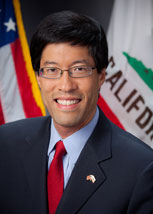
Richard Pan
DDemocratic
Co

Sharon Quirk-Silva
DDemocratic
Ask Maddy
·
AI policy assistant
Ask Maddy about AB 626
Scope: CA
Hi! I can help you understand AB 626. What would you like to know?
Try one of these
i
Maddy answers using official bill text and legislative records. Always verify before sharing.
Sources cited inline