Maddy summaryCalifornia House Resolution 84 formally condemns a social media post by President Donald Trump that depicted former President Barack Obama and former First Lady Michelle Obama as apes, characterizing the imagery as racist dehumanization. The resolution calls on the President to issue a public apology to the Obamas and Black Americans nationwide for promoting this content. It also urges all elected officials, regardless of party affiliation, to reject the use of dehumanizing imagery against Black communities. Finally, the Assembly reaffirms its commitment to advancing policies that confront systemic racism and protect civil rights within the state.
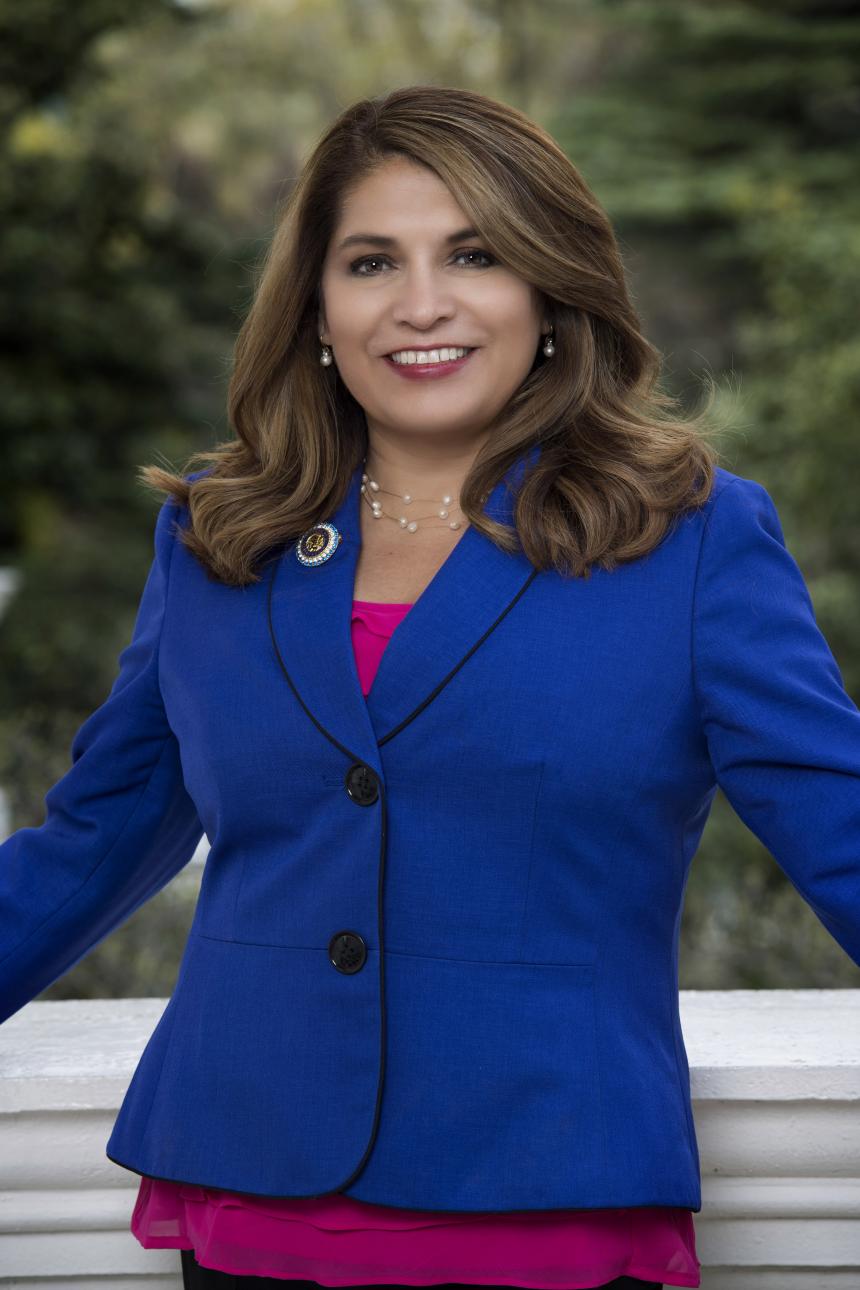
Asm. Sharon Quirk-Silva
Sponsored bills
Maddy summaryThis bill designates February 2026 as Unclaimed Property Month in California to raise awareness about state-held financial assets. It encourages residents to check the state Controller's website to claim unclaimed funds such as uncashed checks and insurance proceeds. The resolution does not change any laws or policies but serves as a public awareness campaign to help people locate and claim their abandoned property. It directs the Assembly Chief Clerk to distribute copies of the resolution for public distribution.
Maddy summaryThis House Resolution declares January 2026 as School Board Recognition Month to honor the nearly 5,000 school board members across California's 1,000 school districts and county offices of education. The resolution recognizes these locally elected officials for their work in guiding public education and serving diverse communities, emphasizing their role in ensuring students' academic, social-emotional, and health needs are met. It calls on community members to join in acknowledging the dedication of school board members and collaborate to improve the education system. The bill has no operational effect beyond this symbolic recognition and does not change any laws or policies.
Maddy summaryThis House Resolution formally recognizes the importance of affordable homeownership for California families, particularly those with lower incomes, and highlights how nonprofit-led programs help build generational wealth and reduce economic disparities. The document emphasizes that existing state programs like CalHome support the construction and preservation of affordable homes through competitive funding to cities, counties, indigenous communities, and nonprofit builders such as Habitat for Humanity. While the resolution does not create new laws or funding, it serves as an official acknowledgment of homeownership's role in improving educational outcomes, health, civic participation, and neighborhood stability. The text also notes California's significant housing deficit and racial wealth gaps as context for why expanding affordable ownership opportunities is a priority for state policy.
Existing law, the Mobilehome Residency Law, prescribes various terms and conditions of tenancies in mobilehome parks. The law defines "mobilehome park" for these purposes to mean an area of land where 2 or more mobilehome sites are rented, or held out for rent, to accommodate mobilehomes used for human habitation. The law caps the amount by which management of a qualified mobilehome park may increase the gross rental rate for a tenancy over the course of any 12-month period. The cap is the lower of 5% of the lowest gross rental rate charge for a tenancy at any time during the preceding 12 months or 3% of that amount plus the percentage change in the cost of living. Under that law, a mobilehome park is subject to that cap if it is located within and governed by the jurisdictions of 2 or more incorporated cities. This bill would instead make any mobilehome park subject to that cap. The bill would make conforming changes related to these provisions.
The Donahoe Higher Education Act establishes the California Community Colleges under the administration of the Board of Governors of the California Community Colleges, the California State University under the administration of the Trustees of the California State University, and the University of California under the administration of the Regents of the University of California as the 3 segments of public postsecondary education in the state. A provision of the act requires each of the 3 segments of public postsecondary education to have as a fundamental policy the maintenance of a healthy and expanded student transfer system. The act applies to the University of California only to the extent that the regents, by appropriate resolution, make it applicable. This bill would require the California State University, before September 1, 2026, to establish specific goals for the adequate representation of community college transfer students in each discipline, program, or major at the system level, and where feasible, at each campus, and would require the California State University to report on its internet website various ratios of community college transfer students to other undergraduates in its system, as provided. The bill would request the University of California, before September 1, 2026, to establish a formal process for identifying the specific disciplines, programs, or majors where capacity increases for community college transfer students at individual campuses would be most valuable and would request the University of California to prioritize those areas for future capacity increases.
Existing law grants the Department of Corrections and Rehabilitation authority to operate the state prison system and gives the department jurisdiction over various state prisons and other institutions. Existing law requires the department to make college programs available at every state prison and requires that these programs be provided by the California Community Colleges, the California State University, or the University of California, or other accredited, nonprofit colleges or universities. This bill would require the department, on or before January 1, 2028, and annually thereafter, to report to the Legislature information related to the amount of space available for academic and vocational education, including the amount of the deficit or surplus of space at each prison.
Existing law gives a judge discretion when deciding various matters in a criminal proceeding, including, among other things, issuing bail or releasing a defendant on their own recognizance, accepting a diversion or deferred entry of judgment agreement, and imposing sentences and granting probation. This bill would, when a court is exercising its discretion with regard to these matters, make a rebuttable presumption against detention and incarceration of a pregnant or postpartum defendant, as defined, if the defendant provides the court and district attorney with notice of the defendant's status as a pregnant or postpartum defendant at each applicable stage of the proceedings. The bill would require a court that decides to detain or incarcerate a defendant after this consideration to make specific findings on the record that the risk to public safety or any other factor the court is required to consider is substantial enough to outweigh the risk of incarceration, as specified. The bill would authorize a person who may be pregnant or postpartum and who is arrested or in custody in a county jail to request a pregnancy test upon or following admission to the county jail and would require the county jail to provide a pregnancy test upon request and allow the person to take the pregnancy test within 24 hours after the request. The bill would require a county jail to keep a record of specified information, including the total number of incarcerated pregnant people at that county jail. By imposing additional duties on county jails, this bill would impose a state-mandated local program. The bill would authorize a pregnant or postpartum defendant to request a stay of execution of their sentence by filing a written request to the court if the pregnant or postpartum defendant is detained or incarcerated in a county jail for any period of time through the end of the pregnancy or the postpartum period, except as specified. The bill would require the court to apply the rebuttable presumption above when considering whether to grant that stay of execution. The bill would authorize a court to order a stay of execution of the sentence for any period of time through the end of the pregnancy or the postpartum period. The California Constitution requires the state to reimburse local agencies and school districts for certain costs mandated by the state. Statutory provisions establish procedures for making that reimbursement. This bill would provide that, if the Commission on State Mandates determines that the bill contains costs mandated by the state, reimbursement for those costs shall be made pursuant to the statutory provisions noted above.

Existing law requires the State Board of Education to adopt statewide academically rigorous content standards in the core curriculum areas of reading, writing, mathematics, history/social science, and science, as specified. Existing law requires the Instructional Quality Commission to, among other things, recommend curriculum frameworks to the state board and develop criteria for evaluating instructional materials. This bill would require the state board to, on or before January 1, 2028, develop and adopt academically rigorous content standards for ethnic studies instruction in high school. The bill would require the commission, on or before January 1, 2028, to review and recommend to the state board curriculum frameworks and instructional materials for ethnic studies instruction in high school, as specified. The bill would require the state board to provide the commission with evaluation criteria to use in providing its review and recommendations. The bill would state the intent of the Legislature to enact subsequent legislation to establish an advisory committee with a majority of the advisory committee's members being experts in African American studies, Asian American and Pacific Islander studies, Native American studies, and Latino and Chicanx studies, to provide input to the state board on proposed content standards and to the commission on proposed curriculum frameworks and instructional materials for ethnic studies instruction in high school. Existing law requires a pupil to complete designated coursework while in grades 9 to 12, inclusive, in order to receive a diploma of graduation from high school. These graduation requirements include, commencing for pupils graduating in the 2029–30 school year, the completion of a one-semester course in ethnic studies meeting specified requirements. Under existing law, the requirement to complete an ethnic studies course may be fulfilled by the completion of, among others, a course based on the model curriculum developed by the Instructional Quality Commission, an ethnic studies course taught as part of a course that has been approved as meeting the A–G requirements of the University of California and the California State University, or a locally developed ethnic studies course approved by the governing board of a school district or the governing body of a charter school. Existing law requires the curriculum, instruction, and instructional materials for these ethnic studies courses to meet specified requirements, including that they not reflect or promote any bias, bigotry, or discrimination against any person or group of persons on the basis of certain characteristics. Existing law makes these provisions relating to ethnic studies courses operative only upon an appropriation of funds by the Legislature for purposes of these provisions. This bill would require the curriculum, instruction, and instructional materials for any high school ethnic studies course, including ethnic studies courses meeting high school graduation requirements, to meet the above-described requirements, and would require the curriculum, instruction, and instructional materials for all high school ethnic studies courses to additionally, among other things, foster multicultural respect and understanding and focus on the domestic experience and stories of historically marginalized peoples in American society. To the extent that the bill would impose new duties on local educational agencies, the bill would impose a state-mandated local program. The bill would require a school district, county office of education, or charter school to provide, on or before June 30, 2026, the State Department of Education with a copy of all curricula, instruction, and instructional materials in ethnic studies that schools offer or plan to offer to pupils in any of grades 9 to 12, inclusive, and the adoption calendar for curricula, instruction, and instructional materials in ethnic studies proposed for adoption by the governing board or body of the local educational agency for instruction to these pupils. The bill would require a local educational agency that does not have an ethnic studies course in place for its pupils in any of grades 9 to 12, inclusive, on or before June 30, 2026, to provide the department with a copy of all curricula, instruction, and instructional materials in ethnic studies that its schools seek to adopt at least 60 days before being first presented at a public meeting of the governing board or body of the local educational agency for instruction to these pupils. The bill would require the department to post the information received pursuant to these requirements on its internet website. To the extent that the bill would impose new duties on local educational agencies, it would impose a state-mandated local program. The bill would require the department to monitor compliance with the requirements of this bill as part of its annual compliance monitoring of state and federal programs and to provide a report to the relevant policy and fiscal committees of the Legislature summarizing the data collected through compliance monitoring, as specified. The California Constitution requires the state to reimburse local agencies and school districts for certain costs mandated by the state. Statutory provisions establish procedures for making that reimbursement. This bill would provide that, if the Commission on State Mandates determines that the bill contains costs mandated by the state, reimbursement for those costs shall be made pursuant to the statutory provisions noted above.

The California Constitution authorizes the development, construction, or acquisition of developments composed of urban or rural dwellings, apartments, or other living accommodations for persons of low income financed in whole or in part by the federal government or a state public body, or to which the federal government or a state public body extends assistance, if a majority of the qualified electors of the city, town, or county in which the housing is proposed to be located approves the project by voting in favor thereof, as specified. This measure, the Housing Opportunities Made Equal (HOME) Act, would create an account in the General Fund into which, beginning in the 2027–28 fiscal year, and each fiscal year thereafter until September 30, 2036, a sum would be transferred from the General Fund equal to or greater than 5% of the estimated amount of General Fund revenues for that fiscal year, as specified. The measure would require the moneys in the account to be appropriated by the Legislature to the Business, Consumer Services, and Housing Agency, and would authorize that agency to expend the moneys to fund prescribed matters related to homelessness and affordable housing, including housing and services to prevent and end homelessness. This measure would require the agency to develop a 10-year investment strategy, with input from stakeholders, that demonstrates how moneys in the account will be used to produce affordable housing and end homelessness through specific performance measures and benchmarks. On or before October 1 of each year, and until October 1, 2036, the measure would require the agency to annually report to the Legislature on its progress in meeting those performance measures and benchmarks.