

(1) Existing law exempts a student, other than a nonimmigrant alien, as defined, from paying nonresident tuition at the California State University and the California Community Colleges if the student has a total of 3 or more years of full-time attendance in specified California schools, or attainment of equivalent credits earned while in those schools, or the student completes 3 or more years of full-time high school coursework in California and a total of 3 or more years of attendance in California elementary schools and California secondary schools. Existing law also requires, for students transferring from campuses of the California Community Colleges, that the student graduate from a California high school or attain the equivalent, attain an associate degree from a campus of the California Community Colleges, or fulfill minimum transfer requirements established for the University of California or the California State University. This bill would reduce to 2 years the duration of full-time attendance or attainment of equivalent credits that would be required for the exemption from nonresident tuition at the institutions referenced above. The bill would request the Regents of the University of California to enact exemptions from requirements to pay nonresident tuition for its students that are equivalent to those that would be applicable to students of the California Community Colleges and the California State University pursuant to this bill. Because the bill would impose new duties on community college districts with respect to determining eligibility for exemptions from paying nonresident tuition, the bill would constitute a state-mandated local program. (2) The California Constitution requires the state to reimburse local agencies and school districts for certain costs mandated by the state. Statutory provisions establish procedures for making that reimbursement. This bill would provide that, if the Commission on State Mandates determines that the bill contains costs mandated by the state, reimbursement for those costs shall be made pursuant to the statutory provisions noted above.
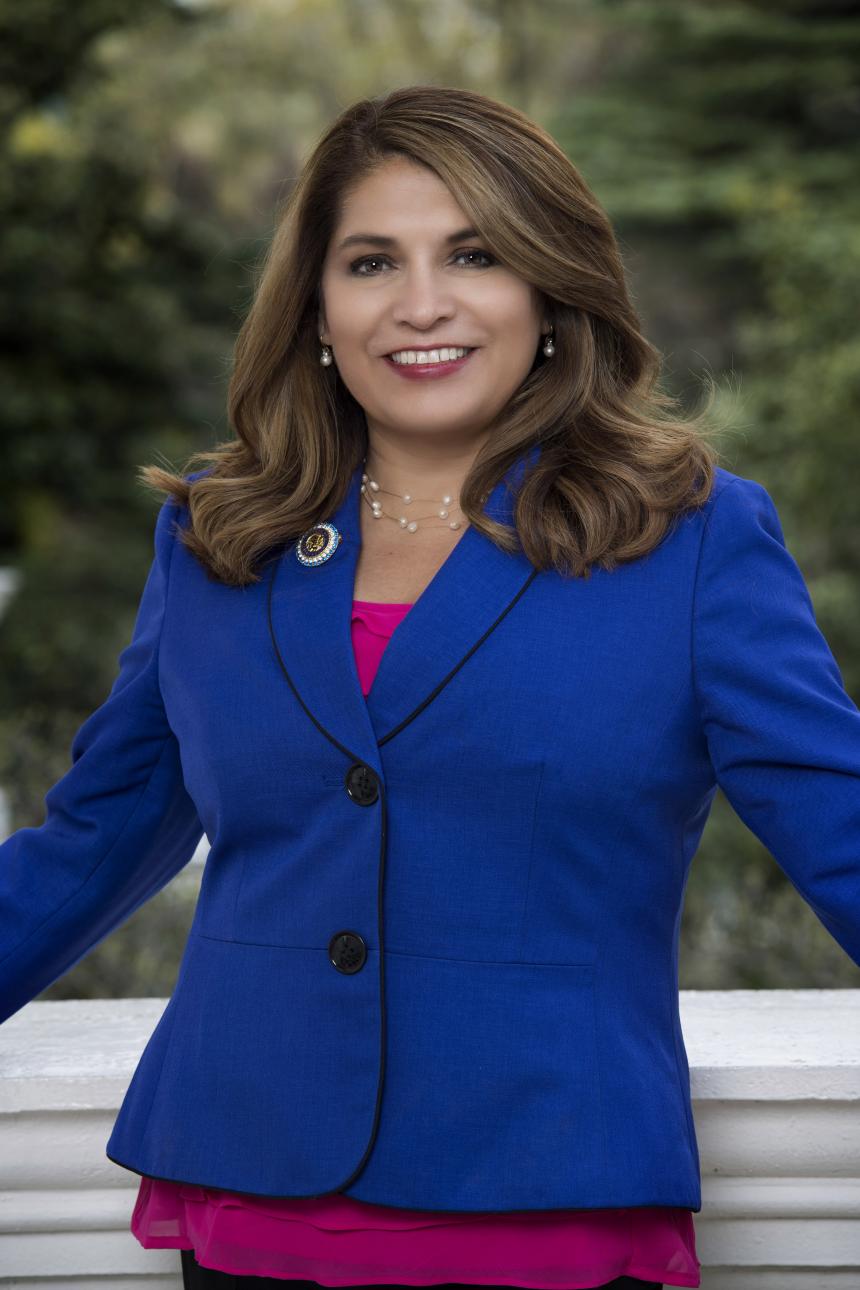
Asm. Sharon Quirk-Silva
Sponsored bills
Existing law prohibits members of the Legislature, and state, county, district, judicial district, and city officers or employees, from being financially interested in a contract, as specified, made by them in their official capacity or by any body or board of which they are members, subject to specified exceptions. Existing law prohibits an officer or employee from being deemed to have an interest in a contract if the person's interest is one of certain types. This bill would prohibit an officer or employee from being deemed interested in a contract, as described above, if the interest is that of an engineer, geologist, architect, landscape architect, land surveyor, or planner, performing specified services on a project, including preliminary design and preconstruction services, when proposing to perform services on a subsequent portion or phase of the project, if the work product for prior phases is publicly available. This exception to being deemed interested in a contract would not apply to a design-build contract for a public works project. The bill would provide that these provisions do not limit public agencies from establishing more restrictive conflict of interest requirements applicable to these services.
Existing law provides that the Department of Transportation has full possession and control of the state highway system, including associated property. Existing law authorizes the department to lease certain property, including the area above or below a state highway, and certain property held for future highway purposes, to public agencies under specified terms and conditions. Existing law also authorizes the department to lease airspace under a freeway, or real property acquired for highway purposes, located in various cities and counties, that is not excess property, to specified entities for certain purposes, including for purposes of an emergency shelter or feeding program, subject to certain conditions. Existing law authorizes the creation of the Orange County Housing Finance Trust, a joint powers authority, for the purposes of funding housing specifically assisting the homeless population and persons and families of extremely low, very low, and low income within the County of Orange, as specified. This bill would authorize the department to lease airspace under a freeway, or real property acquired for highway purposes, in the County of Orange, that is not excess property, to a city located in the County of Orange, the County of Orange, a political subdivision of the state whose jurisdiction is located in the County of Orange, or another state agency for purposes of an emergency shelter or feeding program, subject to certain conditions. The bill would specifically authorize the Orange County Housing Finance Trust to enter into these leases.
(1) Existing law, the California Beverage Container Recycling and Litter Reduction Act, requires the Department of Resources Recycling and Recovery to annually designate convenience zones and requires that at least one certified recycling center that meets certain requirements be located within every convenience zone. Existing law authorizes the department to grant a convenience zone an exemption from certain redemption requirements, including certain dealer and recycling center redemption requirements, based on certain factors. Existing law limits the total number of exemptions that may be granted to 35% of the total number of convenience zones identified as having one or more of those factors applicable. This bill would increase the total number of exemptions that may be granted to 50% of the number identified as eligible. The bill would require the department to review exemptions every 5 years to determine if each exemption still meets the prescribed exemption criteria. (2) The act requires dealers within a convenience zone where no recycling location has been established, or within a convenience zone that is unserved for 60 days and not exempt from convenience zone requirements, to submit an affidavit to the department stating that the dealer has met specified standards for redemption, including, among others, that the dealer is redeeming all empty beverage container types at all open cash registers or at one designated location on the dealer's premises, during all hours that the dealer is open for business. If the dealer does not submit that affidavit, existing law requires the dealer to pay $100 per day to the department, for deposit in the California Beverage Container Recycling Fund, a continuously appropriated fund described in (3) , until a recycling location is established or until the dealer meets the standards for redemption specified in the affidavit provision. This bill would revise these convenience zone redemption duties and exempt from those duties dealers with gross annual sales of less than $2,000,000 and dealers that are not supermarkets and that have less than 5,000 square feet of interior retail space. The bill, until January 1, 2022, would also exempt certain other dealers from these requirements. (3) The act establishes the California Beverage Container Recycling Fund and, except for administrative costs, continuously appropriates moneys in the fund to the department for specified purposes, including the amount necessary to pay handling fees to certain types of recyclers to provide an incentive for the redemption of empty beverage containers in convenience zones. This bill would require the department to offer a handling fee payment from the fund to certain certified recyclers within unserved convenience zones. The bill would make an appropriation by changing the terms and conditions under which the department is authorized to make payments from a continuously appropriated fund. The bill, until July 1, 2022, would require the handling fee to be set at the rate in effect on July 1, 2015. The bill would authorize the department, until July 1, 2022, to annually expend $3,000,000 from the fund for specified supplemental handling fee payments to low-volume recycling centers. By authorizing the expenditure of a continuously appropriated fund for new purposes, this bill would make an appropriation. The bill would require the department to develop and submit to the Legislature recommended revisions to the handling fee provisions, as specified. (4) The act also continuously appropriates from the California Beverage Container Recycling Fund $10,500,000 annually for payments to cities and counties for beverage container recycling and litter cleanup activities. The act authorizes the department to withhold those payments to any city, county, or city and county that has restricted or prohibited the siting of a supermarket site, as provided. This bill would require the department, on or before July 1, 2020, to convene a public hearing, as specified, for purposes of discussing and receiving public testimony on the development of guidelines for evaluating the circumstances that might prompt the department to withhold beverage container recycling and litter cleanup activities payments to any city, county, or city and county that has restricted or prohibited the siting of a supermarket site. (5) The act requires the department to pay a market development payment to a reclaimer, as defined, for empty plastic beverage containers that have been collected for recycling in the state, and that the reclaimer washes and processes into flake, pellet, sheet, or any other form that is then usable as input for the manufacture of new plastic products, as defined, by product manufacturers in the state. The act also requires the department to pay a market development payment to a product manufacturer, as defined, for plastic flake, pellet, sheet, or any other form of plastic purchased from a reclaimer and used by that product manufacturer to manufacture a plastic product in the state. The act makes these provisions inoperative on July 1, 2022. This bill would delay the inoperative date of these provisions from July 1, 2022, to July 1, 2023. The act authorizes the department, for the 2019–20 fiscal year to the 2021–22 fiscal year, inclusive, to expend up to $10,000,000 each fiscal year from the fund for market development payments to reclaimers and product manufacturers. This bill would additionally authorize the department to expend up to $10,000,000 from the fund for those purposes for the 2022–23 fiscal year, thereby making an appropriation. (6) Under the act, the department is required to calculate a processing fee for each beverage container with a specified scrap value, which is required to be paid by beverage manufacturers for each beverage container sold or transferred to a distributor or dealer. The department is required to calculate the processing fee in a specified manner, so that the processing fee generally equals 65% of the processing payment that the department is required to pay to processors if the scrap value of the container having a refund value pursuant to the act is less than the cost of recycling. The department is required to determine the statewide weighted average cost to recycle each beverage container type by conducting a survey, as specified. The department is required to establish a processing fee account in the continuously appropriated California Beverage Container Recycling Fund for each material type and to deposit processing fees and other amounts in the applicable account. This bill would, for purposes of calculating processing payments, require the department, until January 1, 2022, to use the actual cost of recycling that was in effect on December 30, 2015, adjusted as specified. The bill would make an appropriation by changing the terms and conditions under which the department is authorized to make payments from a continuously appropriated fund. The bill would provide that the processing fees established by the department between the effective date of the bill and December 31, 2019, inclusive, shall not be higher than they would be absent these new provisions. The bill would require the department to suspend usage of surveys and calculations of recycling costs until at least January 1, 2021, and would authorize the department to redirect any contract funds for cost surveys and calculations to provide for a specified assessment and to utilize any contract funds available for the development of amendments to be recommended to the Legislature regarding specified provisions of the act. (7) This bill would declare that it is to take effect immediately as an urgency statute.
Existing law requires certain transportation planning agencies to prepare and adopt a regional transportation plan directed at achieving a coordinated and balanced regional transportation system. Existing law requires the regional transportation plan to include, if the transportation planning agency is also a metropolitan planning organization, a sustainable communities strategy. Existing law requires the sustainable communities strategy to, among other things, identify areas within the region sufficient to house an 8-year projection of the regional housing need for the region, as specified. Existing law requires the State Air Resources Board, on or before September 1, 2018, and every 4 years thereafter, to prepare a report that assesses progress made by each metropolitan planning organization in meeting the regional greenhouse gas emission reduction targets set by the state board. Existing law requires each transportation planning agency to adopt and submit to the California Transportation Commission and the Department of Transportation an updated regional transportation plan every 4 or 5 years, as specified. This bill would require each sustainable communities strategy to also identify areas within the region sufficient to house an 8-year projection of the emergency shelter needs for the region, as specified. For the 5th and each subsequent update to the sustainable communities strategy, the bill would require the metropolitan planning organization to, among other things, (1) identify the region's progress in the development of housing and emergency shelters in the areas within the region that were identified, in the prior sustainable communities strategy, as sufficient to house the 8-year projection of the region's regional housing and emergency shelter needs, and (2) determine whether the development will successfully meet the 8-year projection. By imposing new requirements on local agencies, the bill would impose a state-mandated local program. The bill would require the state board's report, as described above, to include data-supported metrics that identify housing and emergency shelter developments related to the 8-year projection of the regional housing and emergency shelter needs that was assumed in the prior sustainable communities strategy, and the physical location of housing and emergency shelters identified in the most recently submitted sustainable communities strategy update. The California Constitution requires the state to reimburse local agencies and school districts for certain costs mandated by the state. Statutory provisions establish procedures for making that reimbursement. This bill would provide that, if the Commission on State Mandates determines that the bill contains costs mandated by the state, reimbursement for those costs shall be made pursuant to the statutory provisions noted above.
Existing law vests in the State Department of Developmental Services jurisdiction over various state hospitals, referred to as developmental centers, for the provision of care to persons with developmental disabilities. Existing law prohibits the admission of a person to a developmental center except under certain circumstances, including when the person is experiencing an acute crisis and is committed by a court to the acute crisis center at the Fairview Developmental Center or the Sonoma Developmental Center. Existing law requires the State Department of Developmental Services, on or before October 1, 2015, to submit to the Legislature a plan or plans to close one or more developmental centers, as provided. This bill would require the California Health and Human Services Agency, in consultation with specified stakeholders, to, upon the closure of the Fairview Developmental Center, operate at the site of the former Fairview Developmental Center a temporary housing program for individuals with severe mental illness who are experiencing homelessness. The bill would require the program to accommodate up to 200 individuals and provide program participants with access to housing and onsite services, as specified. The bill would require the intake process for the program to prioritize the needs of individuals with severe mental illness who have experienced or are experiencing chronic homelessness. The bill would require the development of a plan to quickly transition the site of the former Fairview Developmental Center to use by the program upon the closure of the developmental center. The bill would require the plan to be submitted to the fiscal and relevant policy committees of the Legislature and include specified components, including, among others, a description of any maintenance or construction needed to convert the site for its new use. The bill would require the program to cease operation on December 31, 2025, and would repeal these provisions on January 1, 2026.
Existing law establishes the Office of Farm to Fork within the Department of Food and Agriculture, and requires the office, to the extent that resources are available, to work with various entities, including, among others, the agricultural industry and other organizations involved in promoting food access, to increase the amount of agricultural products available to underserved communities and schools in the state. This bill would create the California Organic-to-School Pilot Program, to be administered by the Secretary of Food and Agriculture, through the Office of Farm to Fork. The bill would require the secretary to expend moneys allocated for the program to provide grants for school food authorities to purchase California organic food products for school meals, as specified. The bill would require the secretary to consult with the State Department of Education to determine the recipients and amounts of grants awarded under the program. The bill would require a school food authority that receives a grant under the program to submit a report to the secretary containing specified information and would require the secretary to report to the Legislature on the outcomes of the program. The bill would make the implementation of its provisions contingent on a one-time appropriation being made for its purposes by the Legislature in the annual Budget Act or another statute.
The California Global Warming Solutions Act of 2006 establishes the State Air Resources Board as the state agency responsible for monitoring and regulating sources emitting greenhouse gases. The act requires the state board to approve a statewide greenhouse gas emissions limit equivalent to the statewide greenhouse gas emissions level in 1990 to be achieved by 2020 and to ensure that statewide greenhouse gas emissions are reduced to at least 40% below the 1990 level by 2030. Pursuant to the act, the state board has adopted the Low-Carbon Fuel Standard regulations. This bill would require the state board to amend the Low-Carbon Fuel Standard regulations to consider the attainment of standards under the federal Clean Air Act, consider specified climate goals, complement existing oxides of nitrogen reductions programs to ensure value-added support to meet 2023 and 2031 federal nonattainment deadlines, and apply performance-based metrics.
Existing law establishes various programs, including, among others, the Emergency Housing and Assistance Program, to provide assistance to homeless persons. Existing law also establishes the Homeless Coordinating and Financing Council to, among other things, create a statewide data system or warehouse that collects local data through homeless management information systems, with the ultimate goal of matching data on homelessness programs to programs impacting homeless recipients of state programs, as specified. This bill would establish the California Flexible Housing Subsidy Pool Program within the Department of Housing and Community Development for the purpose of making grants available to applicants, defined to include a city, county, city and county, or continuum of care, for eligible activities including, among other things, rental assistance, operating subsidies in new and existing affordable or supportive housing units, and specified outreach services. The bill would continuously appropriate $450,000,000 from the General Fund every fiscal year to the department for purposes of the program, and set forth how these funds must be allocated. The bill would require the department to, on or before January 1, 2023, and every year thereafter, evaluate the outcomes of the program and report the outcomes to the Senate Committee on Housing and the Assembly Committee on Housing and Community Development. The bill would also require the Homeless Coordinating and Financing Council to work with the department to create a California Funder's Collaborative that would, among other things, establish a process for incorporating private contributions into state programs to create local innovations, establish pilot programs, or evaluate programs.
Existing law establishes within the Department of Housing and Community Development the California Housing Finance Agency and provides that the primary purpose of the agency is to meet the housing needs of persons and families of low or moderate income. Existing law requires the California Housing Finance Agency administer the Roberti-Greene Home Purchase Assistance Program, to provide home purchase assistance to low- and moderate-income homebuyers to qualify for the purchase of owner-occupied homes. Existing law authorizes the agency, pursuant to specified objectives, to create its own home purchase assistance programs, home purchase assistance products, or both, on terms and conditions as the agency deems prudent. Existing law requires the agency to provide to the Legislature and the Legislative Analyst an annual report containing information concerning all units produced, assisted, or insured using agency funds. This bill would require the Legislative Analyst to conduct a study, and present the findings thereof to the Legislature, to inform the creation of a low-interest loan program for first responders. The bill would require the report to be submitted on or before January 1, 2024. The bill would require the report to include a recommendation as to which state department is best suited to administer the program, an estimation of the amount of funding that would be necessary to conduct the program, and recommendations for qualifications for participation in the program.