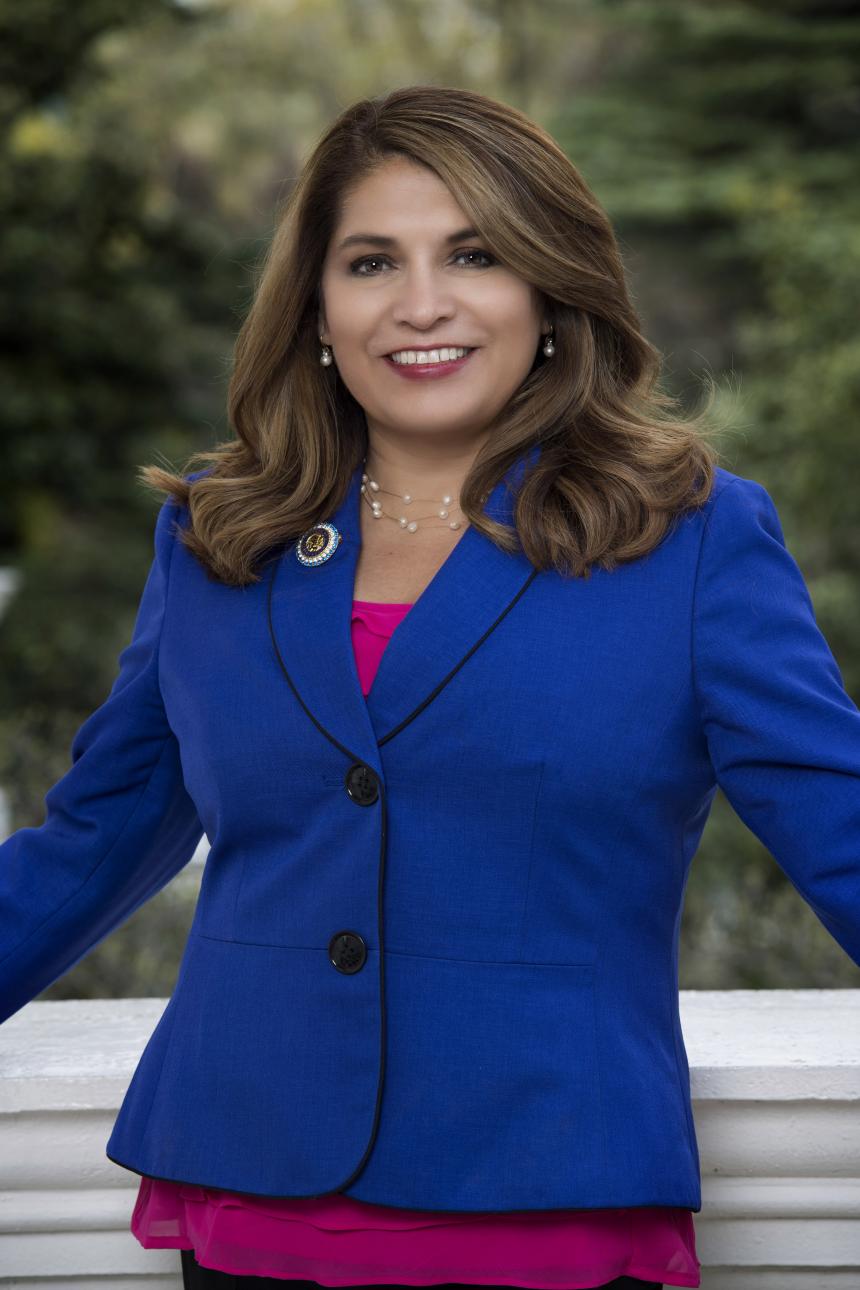
Photo of Sharon Quirk-Silva
D California Assembly · District 67

Asm. Sharon Quirk-Silva

Compare
Total votes
25,250
all sessions
Attendance
94%
1,303 missed
Near the chamber average
With party
98%
of cast votes
Higher than 76% of chamber peers
Bipartisan score
1%
crosses aisle rarely
Lower than 78% of chamber peers
Sponsored
2,398
bills & resolutions
Near the chamber average
Committees
15
assignments
2,398 bills and resolutions

Sponsored bills

Total
2,398
Primary
286
Co-sponsor
2,112
Matching
2,398
matching current filters
Co-sponsor ACR 118
In committee · California Assembly · Co-sponsor
Relative to Orange County Sheriff Sandra Hutchens Memorial Highway.

This measure would designate a specified portion of State Route 57 in the Cities of Orange and Anaheim as the Orange County Sheriff Sandra Hutchens Memorial Highway. The measure would request that the Department of Transportation determine the cost of appropriate signs showing this special designation and, upon receiving donations from nonstate sources covering that cost, erect those signs.

In committee Jan 14, 2022 1 co-sponsor
Co-sponsor SB 628
Signed into law · California Senate · Co-sponsor
California Creative Workforce Act of 2021.

Existing law establishes the California Workforce Development Board, which assists the Governor in the development, oversight, and continuous improvement of California's workforce investment system. The board reports to the Secretary of the Labor and Workforce Development Agency. Existing law creates various workforce development programs, including the Breaking Barriers to Employment Initiative and the Social Entrepreneurs for Economic Development Initiative. Existing law establishes an Arts Council in state government to, among other things, promote the employment of artists and those skilled in crafts in both the public and private sector. This bill would enact the California Creative Workforce Act of 2021, to be operative upon appropriation by the Legislature of sufficient funding for its purposes. The purpose of the act would be to establish creative arts workforce development as a state priority and to promote employment and "earn and learn," as defined, job training opportunities for creative workers, among other things. The bill would require the Arts Council, in collaboration with the California Workforce Development Board, to design the program pursuant to specified objectives. The bill would require the council to consult with local government, community nonprofit organizations, and educational institutions, among others, in this effort. The bill would require the council to adopt criteria, guidelines, and policies for the program, which would be exempt from the Administrative Procedure Act, and would make this information available to the public. The bill would require the Arts Council, in consultation with the California Workforce Development Board, to oversee and administer the grant program, to be operated and implemented locally or regionally by program grantees. The bill would require the council to specify and set aside funds to be awarded to grantees for earn and learn job training employment opportunities for students who have enrolled or completed a program in the arts, low-income or unemployed creative workers, and others with demonstrated interest in creative work in their communities. Among other things, the bill would require job training employment opportunities for a creative worker to be for no less than 12 months and no more than 24 months and to pay a living wage. The bill would also require the council to specify and set aside funds to be awarded to grantees to create equitable opportunities for career exploration and participation in creative work for individuals and communities who have faced barriers to participation and employment in creative work for specified reasons. The bill would require the council, in consultation with the board, to develop and implement a plan for grant program evaluation and to specify the data to be collected to evaluate program efficacy. The bill would make conforming changes in provisions relating to the council.

Signed into law Oct 9, 2021 1 co-sponsor
Co-sponsor SB 314
Signed into law · California Senate · Co-sponsor
Alcoholic beverages.

(1) The Alcoholic Beverage Control Act contains various provisions regulating the application for, the issuance of, the suspension of, and the conditions imposed upon alcoholic beverage licenses by the Department of Alcoholic Beverage Control. Existing law generally provides that a violation of the Alcoholic Beverage Control Act is a misdemeanor. Existing law authorizes the issuance of a caterer's permit, upon application to the department, to a licensee under an on-sale general license, an on-sale beer and wine license, a club license, or a veterans' club license, that authorizes the holder of the permit to sell alcoholic beverages at specified locations and events, including, among others, conventions, sporting events, and trade exhibits. Under existing law, licensees are required to first obtain consent from the department for sales of alcoholic beverages at each event in the form of a catering or event authorization. The department, pursuant to its powers and in furtherance of emergency declarations and orders of the Governor under the California Emergency Services Act regarding the spread of the COVID-19 virus, has prescribed temporary relief measures to suspend certain legal restrictions relating to, among other things, the expansion of a licensed footprint, sales of alcoholic beverages to-go, and delivery privileges. This bill would prohibit the issuance of a catering authorization for use at any one premises for more than 36 events in one calendar year, except as specified. This bill would authorize the department, for a period of 365 days following the end of the state of emergency proclaimed by the Governor on March 4, 2020, in response to the COVID-19 pandemic, to permit licensees to exercise license privileges in an expanded license area authorized pursuant to a COVID-19 Temporary Catering Authorization approved in accordance with the Fourth Notice of Regulatory Relief issued by the department, as specified. The bill would also authorize the department to extend the period of time during which the COVID-19 Temporary Catering Authorization is valid beyond 365 days if the licensee has filed a pending application with the department for the permanent expansion of their premises before the 365-day time period expires. The bill would make these provisions effective only until July 1, 2024, and repeal them as of that date. (2) Existing law, with exceptions, prohibits a licensee from having, upon the licensed premises, any alcoholic beverages other than the alcoholic beverage that the licensee is authorized to sell at the premises under their license, and makes a violation of this prohibition punishable as a misdemeanor. This bill would, as an exception to that prohibition, authorize a licensed manufacturer to share a common licensed area with multiple licensed retailers, subject to specified provisions, including, but not limited to, that (A) a licensee sharing the common licensed area with a licensed manufacturer is prohibited from selling or serving any alcoholic beverages that are manufactured, produced, bottled, processed, imported, rectified, distributed, represented, or sold by the manufacturer, as provided, (B) the licensed manufacturer may, in connection with the operation of the shared common area only, advertise or promote the common licensed area, provided that each retailer pays its pro rata share of the costs of such advertising or promotion, as specified, (C) no thing of value may be given or furnished by the manufacturer to the retailers, except as specified, (D) the manufacturer may have on the area of its licensed premises that encompass the shared common licensed area alcoholic beverages that would not otherwise be permitted on the manufacturer's licensed premises, as provided, (E) all licensees sharing the common licensed area are required to hold the same license type retailers, (F) all licensees holding licenses within the shared common licensed area are jointly responsible for compliance with all laws that may subject their license to discipline, and (G) the manufacturer maintains records necessary to establish its compliance, as specified. (3) This bill would declare that it is to take effect immediately as an urgency statute.


Signed into law Oct 8, 2021 1 co-sponsor
Co-sponsor SB 14
Signed into law · California Senate · Co-sponsor
Pupil health: school employee and pupil training: excused absences: youth mental and behavioral health.

(1) Existing law, notwithstanding the requirement that each person between 6 and 18 years of age who is not otherwise exempted is subject to compulsory full-time education, requires a pupil to be excused from school for specified types of absences, including, among others, if the absence was due to the pupil's illness. This bill would include, within the meaning of an absence due to a pupil's illness, an absence for the benefit of the pupil's mental or behavioral health. The bill would require the State Board of Education to update its illness verification regulations, as necessary, to account for including a pupil's absence for the benefit of the pupil's mental or behavioral health within the scope of this provision. To the extent this bill would impose additional duties on local educational entities, the bill would impose a state-mandated local program. (2) Existing law requires the governing board of a school district to give diligent care to the health and physical development of pupils and authorizes the governing board of a school district to employ properly certified persons for the work. Existing law requires a school of a school district or county office of education and a charter school to notify pupils and parents or guardians of pupils no less than twice during the school year on how to initiate access to available pupil mental health services on campus or in the community, or both, as provided. This bill, contingent on an appropriation made for these purposes, would require the State Department of Education, on or before January 1, 2023, to recommend best practices and identify evidence-based, as defined, and evidence-informed, as defined, training programs for schools to address youth behavioral health, including, but not necessarily limited to, staff and pupil training, as specified. The bill would define a local educational agency for purposes of these provisions to mean a county office of education, school district, state special school, or charter school that serves pupils in any of grades 7 to 12, inclusive. (3) This bill would incorporate additional changes to Section 48205 of the Education Code proposed by AB 516 to be operative only if this bill and AB 516 are enacted and this bill is enacted last. (4) The California Constitution requires the state to reimburse local agencies and school districts for certain costs mandated by the state. Statutory provisions establish procedures for making that reimbursement. This bill would provide that, if the Commission on State Mandates determines that the bill contains costs mandated by the state, reimbursement for those costs shall be made pursuant to the statutory provisions noted above. (5) This bill would declare that it is to take effect immediately as an urgency statute.
Signed into law Oct 8, 2021 1 co-sponsor
Co-sponsor AB 367
Signed into law · California Assembly · Co-sponsor
Menstrual products.

Existing law requires a public school maintaining any combination of classes from grade 6 to grade 12, inclusive, that meets a 40% pupil poverty threshold specified in federal law, to stock 50% of the school's restrooms with feminine hygiene products, and prohibits a public school from charging for any menstrual products provided to pupils. This bill would enact the Menstrual Equity for All Act of 2021, which would require a public school, as provided, maintaining any combination of classes from grades 6 to 12, inclusive, to stock the school's restrooms with an adequate supply of free menstrual products, as defined, available and accessible, free of cost, in all women's restrooms and all-gender restrooms, and in at least one men's restroom, at all times, and to post a designated notice, on or before the start of the 2022–23 school year, as prescribed. This bill would require the California State University and each community college district, and would encourage the Regents of the University of California and private universities, colleges, and institutions of higher learning, to stock an adequate supply of menstrual products, available and accessible, free of cost, at no fewer than one designated and accessible central location on each campus and to post a designated notice, as provided. By imposing additional requirements on public schools and community college districts, this bill would impose a state-mandated local program. The California Constitution requires the state to reimburse local agencies and school districts for certain costs mandated by the state. Statutory provisions establish procedures for making that reimbursement. This bill would provide that, if the Commission on State Mandates determines that the bill contains costs mandated by the state, reimbursement for those costs shall be made pursuant to the statutory provisions noted above.

Signed into law Oct 8, 2021 1 co-sponsor
Co-sponsor AB 438
Signed into law · California Assembly · Co-sponsor
School employees: classified employees: layoff notice and hearing.

Under existing law, classified employees of school districts and community college districts subject to layoff as a result of the expiration of a specially funded program at the end of a school year are required to be given written notice on or before April 29 informing them of certain rights. Existing law also requires that notice be given not less than 60 days before the effective layoff date if the termination date of a specially funded program is other than June 30, or if classified employees are subject to layoff as a result of a bona fide reduction or elimination of a service performed by a department. This bill instead would revise and recast provisions relating to the layoff of classified employees of school districts and community college districts to require certain notices and opportunities for a hearing when a permanent classified employee's services will not be required for the ensuing year due to lack of work or lack of funds. The bill would, for the purposes of specified notice and hearing rights, define "permanent classified employee" to include both an employee who was permanent at the time the notice or right to a hearing was required and an employee who became permanent after the date of the required notice. The bill would express the intent of the Legislature in enacting the bill to provide permanent classified school employees and those who become permanent classified school employees with the same rights to notice and hearing with respect to layoffs as are provided to certificated employees of school districts, including teachers and administrators, and academic employees of community college districts. If classified positions must be eliminated as a result of the expiration of a specially funded program, the bill would require written notice of the layoff date and certain rights be given to the classified employees not less than 60 days before the effective layoff date. If, after January 1, 2021, the Legislature provides certificated or academic employees with any additional rights to notice or hearing as to layoffs, the bill would require the respective permanent classified employees, as described, to be afforded the same rights by the school district or community college district, as applicable. To the extent school districts and community college districts are required to perform additional duties, the bill would impose a state-mandated local program. The California Constitution requires the state to reimburse local agencies and school districts for certain costs mandated by the state. Statutory provisions establish procedures for making that reimbursement. This bill would provide that, if the Commission on State Mandates determines that the bill contains costs mandated by the state, reimbursement for those costs shall be made pursuant to the statutory provisions noted above.

Signed into law Oct 8, 2021 1 co-sponsor
Co-sponsor AB 1057
Signed into law · California Assembly · Co-sponsor
Firearms.

Existing law generally regulates the transfer and possession of firearms. Existing law defines a firearm as a device, designed to be used as a weapon, from which a projectile is expelled through a barrel by force of an explosion or other form of combustion. Existing law also defines a firearm precursor part as a component of a firearm that is necessary to build or assemble a firearm and is either an unfinished handgun frame or an unfinished receiver, as specified. Existing law authorizes an immediate family member of a person or a law enforcement officer to request that a court, after notice and a hearing, issue a gun violence restraining order against that person, prohibiting the subject of the petition from having in their custody or control, or owning, purchasing, possessing, or receiving, a firearm or ammunition, as specified. Under existing law, a violation of a gun violence restraining order is a crime. Existing law permits a person to seek a restraining order to protect against domestic violence, as specified. Existing law prohibits a person subject to that restraining order from owning, possessing, purchasing, or receiving a firearm, and makes a violation of that prohibition a crime. The bill would, on and after July 1, 2022, define a firearm, for the purpose of the specified gun violence and domestic violence restraining order provisions, to include a frame or receiver of the weapon or a firearm precursor part. By expanding the scope of existing crimes, this bill would impose a state-mandated local program. The California Constitution requires the state to reimburse local agencies and school districts for certain costs mandated by the state. Statutory provisions establish procedures for making that reimbursement. This bill would provide that no reimbursement is required by this act for a specified reason.

Signed into law Oct 8, 2021 1 co-sponsor
Co-sponsor AB 14
Signed into law · California Assembly · Co-sponsor
Communications: California Advanced Services Fund: deaf and disabled telecommunications program: surcharges.

(1) Under existing law, the Public Utilities Commission has regulatory authority over public utilities, including telephone corporations. Existing law requires the commission to develop, implement, and administer the California Advanced Services Fund (CASF) to encourage deployment of high-quality advanced communications services to all Californians that will promote economic growth, job creation, and the substantial social benefits of advanced information and communications technologies. Existing law authorizes the commission to impose a surcharge to collect $330,000,000 for deposit into the CASF beginning January 1, 2018, and continuing through the 2022 calendar year. Existing law specifies the amount of surcharge revenues to be deposited into each account within the CASF, subject to appropriation by the Legislature. This bill would authorize the commission to impose the surcharge to fund the CASF until December 31, 2032, as specified. Existing law requires the commission, until April 1, 2023, to annually report specified information to the Legislature, including the remaining unserved areas in the state, the status of the CASF balance, and the projected amount to be collected in each year. This bill would require the commission to report that information in perpetuity. This bill would authorize the commission to require each internet service provider, as defined, to report specified information regarding each free, low-cost, income-qualified, or affordable internet service plan advertised by the provider. (2) Existing law requires the commission to require interconnected Voice over Internet Protocol service providers to collect and remit surcharges on their California intrastate revenues in support of specified public purpose program funds. Existing law authorizes those providers to use certain methodologies to identify their intrastate revenues subject to the surcharge. This bill would repeal that authorization to use those methodologies. (3) Existing law establishes the deaf and disabled telecommunications program and requires the commission to establish a rate recovery mechanism through a surcharge not to exceed 12 of 1% uniformly applied to a subscriber's intrastate telephone service, other than one-way radio paging service and universal telephone service, until January 1, 2025, to allow providers of equipment and service pursuant to that program to recover their costs as they are incurred. This bill would revise those requirements to instead require the commission to administer a surcharge to collect revenues of up to $100,000,000 per year until January 1, 2025, subject to annual appropriation of moneys by the Legislature, to allow providers of equipment and service pursuant to the deaf and disabled telecommunications program to recover their costs as they are incurred. (4) Under existing law, a violation of the Public Utilities Act or any order, decision, rule, direction, demand, or requirement of the commission is a crime. Because certain of the above provisions would be part of the act and a violation of a commission action implementing this bill's requirements would be a crime, the bill would impose a state-mandated local program. The California Constitution requires the state to reimburse local agencies and school districts for certain costs mandated by the state. Statutory provisions establish procedures for making that reimbursement. This bill would provide that no reimbursement is required by this act for a specified reason. (5) This bill would become effective only if SB 4 of the 2021–22 Regular Session is enacted and takes effect on or before January 1, 2022. (6) This bill would declare that it is to take effect immediately as an urgency statute.

Signed into law Oct 8, 2021 1 co-sponsor
Primary AB 638
Signed into law · California Assembly · Lead sponsor
Mental Health Services Act: early intervention and prevention programs.

Existing law, the Mental Health Services Act (MHSA) , an initiative measure enacted by the voters as Proposition 63 at the November 2, 2004, statewide general election, establishes the continuously appropriated Mental Health Services Fund to fund various county mental health programs and requires counties to spend those funds on mental health services, as specified. The MHSA requires counties to establish a program designed to prevent mental illnesses from becoming severe and disabling and authorizes counties to use funds designated for prevention and early intervention to broaden the provision of those community-based mental health services by adding prevention and early intervention services or activities. Existing law authorizes the MHSA to be amended by a 23 vote of the Legislature if the amendments are consistent with, and further the purposes of, the MHSA. This bill would amend the MHSA by including in the prevention and early intervention services authorized to be provided, prevention and early intervention strategies that address mental health needs, substance misuse or substance use disorders, or needs relating to cooccurring mental health and substance use services. By authorizing a new use for continuously appropriated funds, this bill would make an appropriation. The bill would state the finding and declaration of the Legislature that this change is consistent with, and furthers the intent of, the MHSA.

Signed into law Oct 6, 2021 0 co-sponsors
Co-sponsor AB 469
Signed into law · California Assembly · Co-sponsor
Pupil instruction: financial aid applications.

Existing law requires a school district, county office of education, or charter school to ensure that a grade 12 pupil who has not opted out, as specified, completes and submits a Free Application for Federal Student Aid or, if the pupil is exempt from paying nonresident tuition under existing law, completes and submits a form for purposes of the California Dream Act. Existing law requires the Student Aid Commission, on or before July 1, 2022, to adopt regulations that include, but are not limited to, model opt-out forms and acceptable use policies for the purpose of providing guidance on applicable state laws. Existing law requires the school district, county office of education, or charter school to exempt a pupil or the pupil's parent or legal guardian from completing a form if the local educational agency determines the pupil is unable to complete the form, and prohibits a pupil's ability to graduate from being affected by a pupil's failure to fill out a form. This bill would require, on or before September 1, 2022, and each year thereafter, the commission and the State Department of Education to facilitate the completion of the Free Application for Federal Student Aid and the form established for purposes of the California Dream Act, by requiring the department to share the current school year's roster of pupils with the commission, and requiring the commission to match data on pupil completion of financial aid forms, as specified.

Signed into law Oct 6, 2021 1 co-sponsor
Showing 1,211 to 1,220 of 2,398 bills