

Existing law, the California Suicide Prevention Act of 2000, allows the State Department of Health Care Services, contingent upon appropriation, to establish and implement a suicide prevention, education, and gatekeeper training program to reduce the severity, duration, and incidence of suicidal behaviors. Existing law authorizes the State Department of Public Health to establish the Office of Suicide Prevention to, among other things, convene experts and stakeholders, including, but not limited to, stakeholders representing populations with high rates of suicide, to encourage collaboration and coordination of resources for suicide prevention. This bill would require the department to establish an Ending Military Suicide Task Force to systematically reduce military suicides and to develop a plan to eliminate all military suicides in the state, as specified. Commencing June 1, 2023, the bill would require the task force to submit a specified report to the Governor and the Legislature on the state of veteran suicide prevention, as specified, including, among other things, an analysis of the plans, activities, strategies, and programs undertaken pursuant to the task force's recommendations and their effects on reducing military suicides in the state.
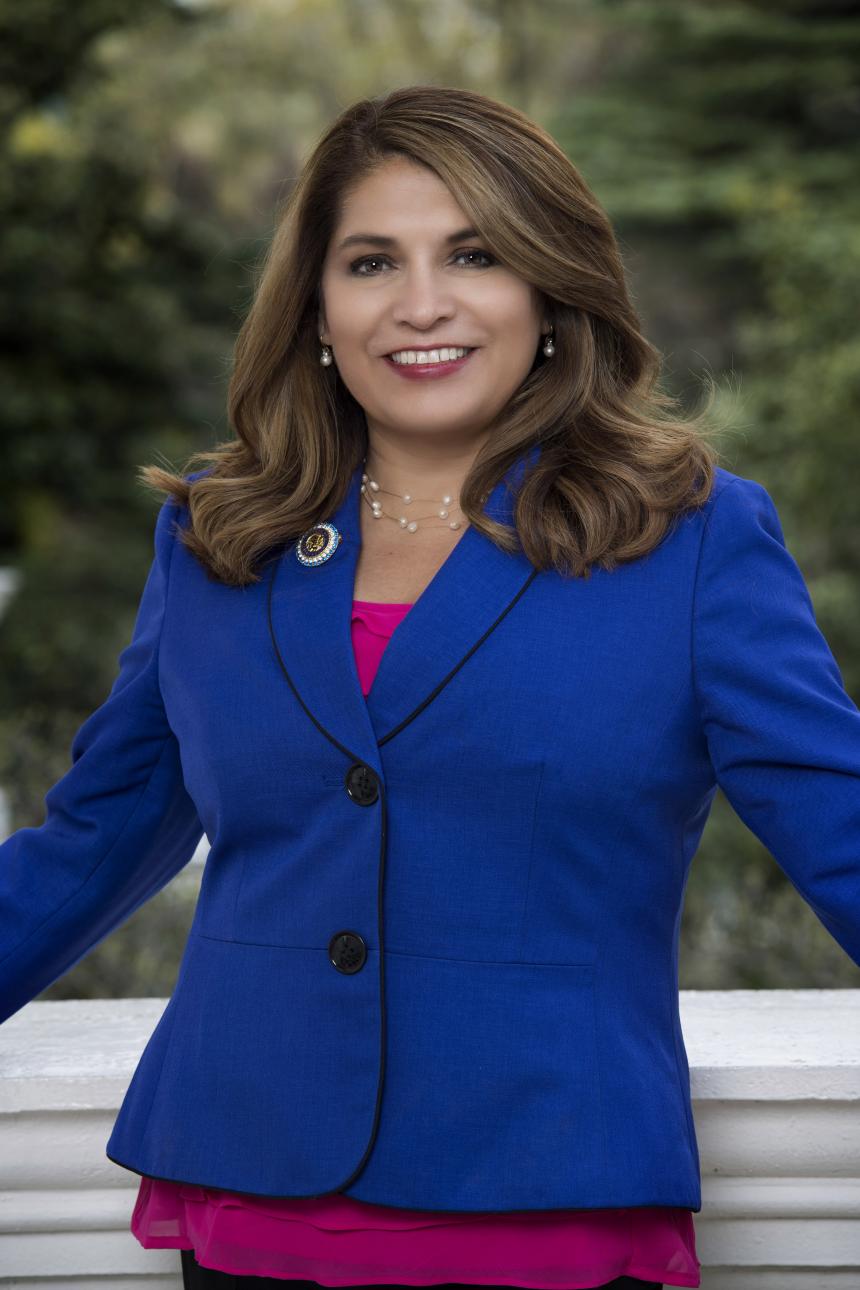
Asm. Sharon Quirk-Silva
Sponsored bills
Existing law establishes a public school financing system that requires state funding for county superintendents of schools, school districts, and charter schools to be calculated pursuant to a local control funding formula, as specified. Existing law requires funding pursuant to the local control funding formula to include, in addition to a base grant, supplemental and concentration grant add-ons that are based on the percentage of pupils who are English learners, foster youth, or eligible for free or reduced-price meals, as specified, served by the county superintendent of schools, school district, or charter school. Existing law requires the State Board of Education to adopt regulations that govern the expenditure of funds apportioned pursuant to the supplemental and concentration grant add-ons. This bill would require each school district, county office of education, and charter school to identify unspent supplemental and concentration grant funds by annually reconciling and reporting to the State Department of Education its estimated and actual spending of those moneys. The bill would require unspent funds identified pursuant to these provisions to continue to be required to be expended to increase and improve services for unduplicated pupils, and would require each local educational agency to report the amounts of unspent funds identified in its local control and accountability plan. By imposing additional duties on local educational agencies, the bill would impose a state-mandated local program. The California Constitution requires the state to reimburse local agencies and school districts for certain costs mandated by the state. Statutory provisions establish procedures for making that reimbursement. This bill would provide that, if the Commission on State Mandates determines that the bill contains costs mandated by the state, reimbursement for those costs shall be made pursuant to the statutory provisions noted above.
Existing law, the California Emergency Services Act, authorizes the Governor to declare a state of emergency during conditions of disaster or extreme peril to persons or property, including epidemics. Pursuant to this authority, on March 4, 2020, the Governor declared a state of emergency relating to the novel coronavirus 2019 (COVID-19) pandemic. On August 28, 2020, the executive branch implemented a 4-tier "Blueprint for a Safer Economy," which identifies a county's COVID-19 risk level for business operations on a scale from widespread risk to minimal risk. On October 20, 2020, the State Department of Public Health and the Division of Occupational Safety and Health issued a guidance document, "COVID-19 INDUSTRY GUIDANCE: Amusement Parks and Theme Parks," which authorizes a small amusement park to operate at limited capacity when its county is in the moderate tier, and authorizes any other amusement park to operate at 25% capacity when its county is in the minimal tier. This bill would express the intent of the Legislature that the executive branch adjust the "COVID-19 INDUSTRY GUIDANCE: Amusement Parks and Theme Parks" document and place all amusement parks, regardless of size, within the moderate risk tier, rather than the minimal risk tier. If the executive branch takes those actions, the bill would require the Department of Industrial Relations to administer a competitive grant for amusement parks to be used by amusement parks to purchase personal protective equipment for their employees. The bill would appropriate $500,000 from the General Fund for the grant program. The bill would also make related findings and declarations.
Existing law, as amended by the Californians Against Sexual Exploitation Act, an initiative measure enacted by the approval of Proposition 35 at the November 6, 2012, statewide general election (CASE Act) , proscribes the crime of human trafficking, a felony. The CASE Act makes a person who causes, induces, or persuades, or attempts to cause, induce, or persuade, a person who is a minor at the time of commission of the offense to engage in a commercial sex act with the intent to effect or maintain a violation of specified other offenses, including child pornography and extortion, guilty of human trafficking, a felony. Existing law makes that crime punishable by imprisonment in the state prison for 5, 8, or 12 years and a fine of not more than $500,000, or, if the offense involves force, fear, fraud, deceit, coercion, violence, duress, menace, or threat of unlawful injury to the victim or another person, 15 years to life and a fine of not more than $500,000. The Legislature may amend the CASE Act by a statute passed in each house by a majority vote. This bill would expand the scope of that crime by making a person who causes, induces, or persuades, or attempts to cause, induce, or persuade, an adult, whom the person reasonably believes to be a minor at the time of commission of the offense, to engage in a commercial sex act with the intent to effect or maintain a violation of specified other offenses, including child pornography and extortion, guilty of human trafficking and subject to the penalties described above. By changing the definition of a crime, the bill would impose a state-mandated local program. The California Constitution requires the state to reimburse local agencies and school districts for certain costs mandated by the state. Statutory provisions establish procedures for making that reimbursement. This bill would provide that no reimbursement is required by this act for a specified reason. The bill would declare that its provisions further the objectives of the CASE Act.
Existing law requires the Department of Technology to improve the governance and implementation of information technology by standardizing reporting relationships, roles, and responsibilities for setting information technology priorities. Existing law requires the Public Utilities Commission to develop, implement, and administer the California Advanced Services Fund program to encourage deployment of high-quality advanced communications services to all Californians. Existing law provides that the goal of the program is to, no later than December 31, 2022, approve funding for infrastructure projects that will provide broadband access to no less than 98% of California households, as provided. This bill would enact the Broadband for All Act of 2022, which, if approved by the voters, would authorize the issuance of bonds in the amount of $10,000,000,000 pursuant to the State General Obligation Bond Law to support the 2022 Broadband for All Program that would be administered by the department for purposes of providing financial assistance for projects to deploy broadband infrastructure and broadband internet access services. The bill would provide for the submission of the bond act to the voters at the November 8, 2022, statewide general election.
Existing law establishes the Department of Housing and Community Development in the Business, Consumer Services, and Housing Agency and makes the department responsible for administering various housing programs throughout the state, including, among others, the Multifamily Housing Program, the Housing for a Healthy California Program, and the California Emergency Solutions Grants Program. This bill would establish the Reentry Housing and Workforce Development Program. The bill would require the department, on or before July 1, 2022, to take specified actions to, upon appropriation by the Legislature, provide grants to applicants, as defined, for innovative or evidence-based housing, housing-based services, and employment interventions to allow people with recent histories of incarceration to exit homelessness and remain stably housed. The bill would require the department to establish a process, in collaboration with the Department of Corrections and Rehabilitation and with counties in which recipients are operating, for referral of participants, in accordance with certain guidelines and procedures. The bill would require the department to score applicants to the program competitively according to specified criteria. The bill would require recipients of funds from the program to use those funds for, among other things, long-term rental assistance in permanent housing, incentives to landlords, and innovative or evidence-based services to assist participants in accessing permanent supportive housing. The bill would require the department to distribute funds allocated by executing contracts with awarded entities for a term of 5 years, subject to automatic renewal. The bill would require a recipient of the program to submit an annual report to the department. The bill would require the department to hire an independent evaluator to assess outcomes from the program and would require the department to submit that analysis to specified committees of the Legislature.
(1) The Child Care and Developmental Services Act, administered by the State Department of Education, provides for a comprehensive, coordinated, and cost-effective system of childcare and development services for children from infancy to 13 years of age and their parents, including a full range of supervision, health, and support services through full- and part-time programs, which includes general childcare programs, family childcare home education network programs, and the California state preschool program. Existing law, commencing July 1, 2021, transfers responsibility for the administration of specified childcare and development services programs from the State Department of Education to the State Department of Social Services. Existing law requires statutory references to the Superintendent of Public Instruction, for purposes of the programs transferred to the State Department of Social Services on July 1, 2021, to instead be construed to mean the State Department of Social Services. The act prohibits a contracting agency, as part of the state preschool program, from expelling or unenrolling a child because of a child's behavior, except as provided. Existing law requires the State Department of Social Services to consider, in determining whether to issue a citation or impose a civil penalty to a state preschool program, whether the program is in the process of complying with the above law relating to expulsion or unenrollment. This bill would revise and recast the above provisions relating to the expulsion or unenrollment of a child from the state preschool program and would include a general childcare and development program and family childcare home education network program as part of those provisions, as provided. The bill would also establish requirements for the use of suspensions in the programs described above. The bill would require these programs to maintain records on expulsion and suspension, as provided. The bill would require, no later than January 1, 2024, and annually thereafter, the State Department of Education and the State Department of Social Services to collect and publish aggregate data on this information, as provided. The bill would require those departments, on or before July 1, 2022, to issue guidance for programs, within their respective jurisdictions, on implementing these requirements. The bill would also require those departments to collaborate to create guidelines for offering additional support and additional staff training for programs with exceptionally high numbers of suspension and expulsion, as specified. The bill would also prohibit the State Department of Social Services from issuing a citation or imposing a civil penalty to a child daycare facility if the facility is complying with specified standards. (2) The California Child Day Care Facilities Act generally requires the State Department of Social Services to license, inspect, and regulate various types of child daycare facilities, defined to include, among others, family daycare homes and daycare centers. A person who willfully or repeatedly violates any provision of the act or any rule or regulation promulgated under the act is guilty of a crime. The bill would also require a licensed child daycare facility, as specified, to utilize positive, age-appropriate behavior management strategies, as specified, and would require those licensed child daycare facilities to develop guidelines for expulsion and suspension. The bill would require, on or before July 1, 2022, the State Department of Social Services to issue guidance to implement those requirements. By expanding the scope of an existing crime, the bill would impose a state-mandated local program. (3) Existing law requires the cost to a childcare provider agency of providing an early childhood mental health consultation service, as defined, to be reimbursable if certain requirements are met, including that the consultation service is provided on a schedule of sufficient and consistent frequency and that is supervised and provided by specified mental health professionals. This bill would update the definition of mental health consultation service, revise the requirements relating to the nature and frequency of the consultation service provided, and expand the types of mental health care professionals who can provide the consultation service, as specified. The bill would require, among other things relating to the consultants, the contracting agency to ensure, within the first 30 days upon hire or start of consultation service, that a consultant have specified training. Existing law requires, in order to reflect the additional expense of serving children who meet specified criteria, the provider agency's reported child days of enrollment for these children be multiplied by specified adjustment factors. Existing law requires the adjustment factor for specified children who are served in the state preschool program, in general childcare and development programs, or in a family childcare home education network setting funded by a general childcare and development program, where early childhood mental health consultation services are provided, to be 1.05. This bill would increase that adjustment factor to 1.1. (4) The California Constitution requires the state to reimburse local agencies and school districts for certain costs mandated by the state. Statutory provisions establish procedures for making that reimbursement. This bill would provide that no reimbursement is required by this act for a specified reason.
Existing law defines "hate crime" as a criminal act committed, in whole or in part, because of actual or perceived characteristics of the victim, including, among other things, race, religion, disability, and sexual orientation. Existing law provides punishments for hate crimes that range from misdemeanors with specified penalties to felonies with additional terms of one to 3 years in state prison, depending on the underlying criminal act and other circumstances. This bill would require the Board of State and Community Corrections to establish a hate crimes task force. The bill would authorize local law enforcement agencies to participate in the task force through regional task forces, as specified. The bill would require the board to, upon appropriation by the Legislature, administer grants to law enforcement agencies that participate in the regional hate crime task forces. The bill would require funds allocated to the regional task forces to be expended with the goal of reducing hate crimes, identifying suspects engaging in hate crimes, identifying interregional movement of offenders, coordinating enforcement efforts, and promoting law enforcement training and best practices to reduce the incidence of hate crimes. The bill would require the regional task forces to report specified information to the board, and would require the board to compile that information and report it to the Legislature, as specified.
Existing law establishes the Office of Small Business Advocate within the Governor's Office of Business and Economic Development for the purpose of advocating for the causes of small business and to provide small businesses with the information they need to survive in the marketplace. This bill, the Keep California Working Act, would establish the Keep California Working Grant Program. The act would require the Small Business Advocate to administer the program and award grants, as specified, to small businesses and nonprofit entities that meet specified criteria, including that the entity has experienced economic hardship resulting from the COVID-19 pandemic. The act would specify that grant money awarded pursuant to the program may be used only for specified purposes, including payroll costs, health care benefits, paid sick, medical, or family leave, and insurance premiums. The act would appropriate $2.6 billion dollars to the Office of Small Business Advocate for those purposes. The Personal Income Tax Law and the Corporation Tax Law, in conformity with federal income tax law, generally define "gross income" as income from whatever source derived, except as specifically excluded, and provide various exclusions from gross income. This bill would exclude from gross income, for state income tax purposes, the amount of a grant awarded pursuant to the Keep California Working Grant Program. Existing law requires a bill authorizing a new tax expenditure to contain, among other things, specific goals, purposes, and objectives that the tax expenditure will achieve, detailed performance indicators, and data collection requirements. The bill also would include additional information required for a bill authorizing a new tax expenditure. This bill would declare that it is to take effect immediately as an urgency statute.