

Existing law, the Veterans' Bond Act of 2008, as approved by the voters, authorizes the issuance of bonds in the amount of $900,000,000, pursuant to the State General Obligation Bond Law, for purposes of financing the Cal-Vet program for farm, home, and mobilehome purchase assistance for veterans. This bill would amend the Veterans' Bond Act of 2008 to reduce the amount of bonds that are authorized to be issued under the act from $900,000,000 to $300,000,000. The bill would enact the Veterans Housing and Homeless Prevention Bond Act of 2014 (the bond act) to authorize the issuance of bonds in the amount of $600,000,000, as specified, for expenditure by the California Housing Finance Agency, the Department of Housing and Community Development, and the Department of Veterans Affairs to provide multifamily housing to veterans pursuant to the Veterans Housing and Homeless Prevention Act of 2014 (VHHPA) , also enacted by the bill. The bill would authorize the Legislature to amend the provisions of the bond act, by majority vote, for specified purposes. The bill would impose a specified reporting requirement on the Department of Housing and Community Development to evaluate, in collaboration with the Department of Veterans Affairs, any program established by the former pursuant to the VHHPA. The bill would authorize the Department of Housing and Community Development to provide specified assistance to veterans. The bill would provide for submission of a specified section to the voters at the June 3, 2014, statewide primary election, as specified. This bill would declare that it is to take effect immediately as an urgency statute.
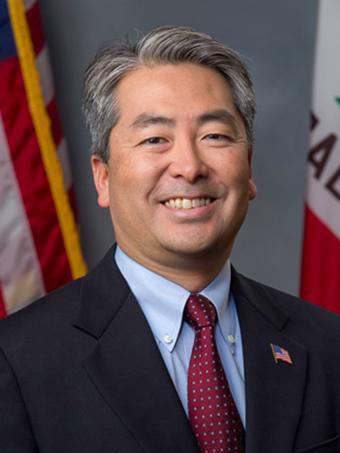
Sponsored bills
Under existing law, the Public Utilities Commission has regulatory authority over public utilities, including electrical corporations, as defined. The existing definition of an electrical corporation excludes a corporation or person employing cogeneration, as defined, technology or producing electricity from other than a conventional power source for certain purposes. Existing law places certain limitations upon gas rates and surcharges charged cogenerators. Existing law prohibits placing alternative fuel capability requirements upon gas customers that use gas for purposes of cogeneration. Existing law authorizes the commission and the State Air Resources Board to treat advanced electrical distributed generation technology, as defined, as cogeneration, and makes certain existing limitations upon gas rates and surcharges charged cogenerators applicable to an advanced electrical distributed generation technology. Existing law makes the prohibition upon placing alternative fuel capability requirements upon gas customers that use gas for purposes of cogeneration applicable to a generator using advanced electrical distributed generation technology. These provisions do not apply to an advanced electrical distributed generation technology that is first operational at a site on and after January 1, 2014. This bill would make the above-described authority, limitations, and prohibitions inapplicable to an advanced electrical distributed generation technology that is first operational at a site on and after January 1, 2016, rather than January 1, 2014. This bill would declare that it is to take effect immediately as an urgency statute.
Existing law vests with the State Lands Commission control over specified state lands, including tidelands and submerged lands. Existing law grants to various local entities the right, title, and interest of the state in and to certain tidelands and submerged lands in trust generally for purposes of commerce, navigation, and fisheries, and for other public trust purposes. This bill would provide that addressing the impacts of sea level rise for all of its legislatively granted public trust lands shall be among the management priorities of a local trustee, as defined. The bill would require a local trustee whose gross public trust revenues average over $250,000 annually between January 1, 2009, and January 1, 2014, to prepare and submit to the commission, no later than July 1, 2019, except as provided, an assessment of how it proposes to address sea level rise. The bill would permit, but not require, a local trustee whose gross public trust revenues are $250,000 or less to prepare and submit to the commission an assessment. The bill would require a local trustee to consider and use relevant information from specified reports on sea level rise in preparing the assessment and would permit a trustee that has already completed an assessment on the impacts of sea level rise to submit that assessment to the commission. The bill would require that the commission make those assessments available to the public on its Internet Web site, and send electronic copies to certain other public entities. By adding to the duties of local agencies that are local trustees of granted public trust lands, this bill would impose a state-mandated local program. The California Constitution requires the state to reimburse local agencies and school districts for certain costs mandated by the state. Statutory provisions establish procedures for making that reimbursement. This bill would provide that no reimbursement is required by this act for a specified reason.
(1) The existing Safe Drinking Water and Toxic Enforcement Act of 1986 (Proposition 65) prohibits any person, in the course of doing business, from knowingly and intentionally exposing any individual to a chemical known to the state to cause cancer or reproductive toxicity without giving a specified warning, or from knowingly discharging or releasing such a chemical into water or any source of drinking water, except as specified. The act imposes civil penalties of not more than $2,500 per day upon persons who violate those prohibitions, and provides for the enforcement of those prohibitions by the Attorney General, a district attorney, or specified city attorneys or prosecutors, and by any person in the public interest. The act requires any person bringing an action in the public interest, or any private person filing an action in which a violation of the act is alleged, to notify the Attorney General, the district attorney, city attorney, or prosecutor in whose jurisdiction the violation is alleged to have occurred, and the alleged violator that such an action has been filed. This bill would require a person filing an enforcement action in the public interest for certain specified exposures to provide a notice in a specified proof of compliance form. The bill would prohibit an enforcement action from being filed by that person, and would prohibit the recovery of certain payments or reimbursements, if the notice to the alleged violator alleges a failure to provide a clear and reasonable warning for those specified exposures and, within 14 days after receiving the notice, the alleged violator corrects the alleged violation, pays a civil penalty in the amount of $500 per facility or premises, and notifies the person bringing the action that the violation has been corrected pursuant to the specified proof of compliance form. The bill would specify that the alleged violator may correct the violation, pay the civil penalty, and serve a correction notice on the person who served notice of the violation only one time for a violation arising from the same exposure in the same facility or on the same premises. The bill would require the Judicial Council, on April 1, 2019, and at each 5-year interval thereafter, to adjust that civil penalty, as specified. (2) Proposition 65 provides that it may be amended by a statute, passed in each house by 23 vote, to further its purposes. This bill would find and declare that it furthers the purposes of Proposition 65 and would make other findings regarding the purposes of the bill. The bill would declare that a specified provision of the bill is independent and severable from the other changes made by this bill. (3) This bill would declare that it is to take effect immediately as an urgency statute.
Under existing law, the Public Utilities Commission has regulatory authority over public utilities, including electrical corporations, as defined. The Public Utilities Act authorizes the commission to ascertain and fix just and reasonable standards, classifications, regulations, practices, measurements, or service to be furnished, imposed, observed, and followed by specified public utilities, including all electrical corporations. If the commission finds after a hearing that the rules, practices, equipment, appliances, facilities, or service of any public utility, or of the methods of manufacture, distribution, transmission, storage, or supply employed by the public utility, are unjust, unreasonable, unsafe, improper, inadequate, or insufficient, the act requires that the commission determine and, by order or rule, fix the rules, practices, equipment, appliances, facilities, service, or methods to be observed, furnished, constructed, enforced, or employed. Under existing law, a violation of the Public Utilities Act or any order, decision, rule, direction, demand, or requirement of the commission is a crime. This bill would require the commission to require an electrical corporation to include in annual reliability reports, required by a specified decision of the commission, that are due after July 1, 2014, information on the reliability of service to end use customers that identifies the frequency and duration of interruptions in services and indicates areas with both the most frequent and longest outages, using local areas determined by the commission. The bill would require the commission to use the information to require cost-effective remediation of reliability deficiencies if the report, or more than one report, identifies repeated deficiencies in the same local area and would authorize the commission to suspend this requirement upon specified findings. The bill would require the electrical corporations to conspicuously post their annual reports on their Internet Web site. Because a violation of any order, decision, rule, direction, demand, or requirement of the commission is a crime, this bill would impose a state-mandated local program by expanding the definition of a crime. The California Constitution requires the state to reimburse local agencies and school districts for certain costs mandated by the state. Statutory provisions establish procedures for making that reimbursement. This bill would provide that no reimbursement is required by this act for a specified reason.
This measure would honor the California Council on Science and Technology for 25 years of service and unbiased advice to the State of California.
This measure would urge the Congress of the United States to enact President Barack Obama's budget proposal to increase funding for preschool and early learning. This measure would also urge the Superintendent of Public Instruction to prepare a plan for making California competitive for future increases in federal funding to preschool and early learning programs.
This measure would designate December 4, 2013, as Keeping Kids in School and Out of Court Day.
This measure would proclaim October 5, 2013, as California Firefighters Memorial Day.
This measure would recognize September 2013 as Hmong History Month, urge all citizens to join in celebrating the accomplishments of the Hmong people during Hmong History Month, and encourage the people of California to recognize the many talents, achievements, and contributions that the Hmong people make to their communities.