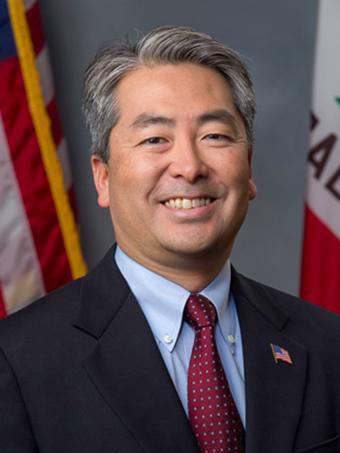
Signed into law
·
California Senate
·
Co-sponsor
Oil and gas: well stimulation.
(1) Under existing law, the Division of Oil, Gas, and Geothermal Resources in the Department of Conservation, or the division, regulates the drilling, operation, maintenance, and abandonment of oil and gas wells in the state. The State Oil and Gas Supervisor, or supervisor, supervises the drilling, operation, maintenance, and abandonment of wells and the operation, maintenance, and removal or abandonment of tanks and facilities related to oil and gas production within an oil and gas field regarding safety and environmental damage. Existing law requires an operator of a well, before commencing the work of drilling the well, to obtain approval from the supervisor or district deputy. Existing law requires the owner or operator of a well to keep, or cause to be kept, a careful and accurate log, core record, and history of the drilling of the well. Within 60 days after the date of cessation of drilling, rework, or abandonment operations, the owner or operator is required to file with the district deputy certain information, including the history of work performed. Under existing law, a person who violates any prohibition specific to the regulation of oil or gas operations is guilty of a misdemeanor. This bill would define, among other things, the terms well stimulation treatment, hydraulic fracturing, and hydraulic fracturing fluid. The bill would require the Secretary of the Natural Resources Agency, on or before January 1, 2015, to cause to be conducted, and completed, an independent scientific study on well stimulation treatments, including acid well stimulation and hydraulic fracturing treatments. The bill would require an owner or operator of a well to record and include all data on acid treatments and well stimulation treatments, as specified. The bill would require the division, in consultation with the Department of Toxic Substances Control, the State Air Resources Board, the State Water Resources Control Board, the Department of Resources Recycling and Recovery, and any local air districts and regional water quality control boards in areas where well stimulation treatments may occur, on or before January 1, 2015, to adopt rules and regulations specific to well stimulation, including governing the construction of wells and well casings and full disclosure of the composition and disposition of well stimulation fluids, and would authorize the division to allow well stimulation treatments if specific conditions are met. The bill would require an operator to apply for a permit, as specified, with the supervisor or district deputy, prior to performing a well stimulation treatment of a well and would prohibit the operator from either conducting a new well stimulation treatment or repeating a well stimulation treatment without a valid, approved permit. The bill would prohibit the approval of a permit application that is incomplete. The bill would require the division, within 5 business days of issuing a permit to commence a well stimulation treatment, to provide a copy to specific boards and entities and to post the permit on a publicly accessible portion of its Internet Web site. The bill would provide that the well stimulation treatment permit expires one year from the date that a permit is issued. The bill would require the division to perform random periodic spot check inspections during well stimulation treatments, as specified. The bill would require the Secretary of the Natural Resources Agency to notify various legislative committees on the progress of the independent scientific study on well stimulation and related activities, as specified, until the study is completed and peer reviewed by independent scientific experts. The bill would require the operator to provide a copy of the approved well stimulation treatment permit to specified tenants and property owners at least 30 days prior to commencing a well stimulation treatment. The bill would require the operator to provide notice to the division at least 72 hours prior to the actual start of a well stimulation treatment in order for the division to witness the treatment. The bill would require the supplier, as defined, of the well stimulation treatment to provide to the operator, within 30 days following the conclusion of the treatment, certain information regarding the well stimulation fluid. The bill would require the operator, within 60 days of the cessation of a well stimulation treatment, to post or cause to have posted on an Internet Web site accessible to the public specified information on the well stimulation fluid, as specified. The bill would require the division to commence a process to develop an Internet Web site for operators to report specific information related to well stimulation treatments and would require the Internet Web site to be operational no later than January 1, 2016. The bill would authorize the division to direct reporting to an alternative Internet Web site, as prescribed, and would require the division to obtain the data reported to the alternative Internet Web site and make it available to the public, as specified. The bill would provide that where the division shares jurisdiction over a well with a federal entity, the division's rules and regulations apply in addition to all applicable federal law and regulations. The bill would require a supplier claiming trade secret protection for the chemical composition of additives used in a well stimulation treatment to disclose the composition to the division, in conjunction with a well stimulation treatment permit application, as specified, but would, with certain exceptions, prohibit those with access to the trade secret from disclosing it. Because this bill would create a new crime, it would impose a state-mandated local program. (2) Under existing law, a person who violates certain statutes or regulations relating to oil and gas well operations is subject to a civil penalty not to exceed $25,000 for each violation. This bill would make persons who violate specified provisions relating to well stimulation treatments subject to a civil penalty of not less than $10,000 and not to exceed $25,000 per day per violation. (3) Existing law imposes an annual charge upon each person operating or owning an interest in an oil or gas well in respect to the production of the well which charge is payable to the Treasurer for deposit into the Oil, Gas, and Geothermal Administrative Fund. Existing law further requires that specific moneys from charges levied, assessed, and collected upon the properties of every person operating or owning an interest in the production of a well to be used exclusively, upon appropriation, for the support and maintenance of the department charged with the supervision of oil and gas operations. This bill would allow the moneys described above to be used for all costs associated with (A) well stimulation treatments, including scientific studies required to evaluate the treatment, inspections, and any air and water quality sampling, monitoring, and testing performed by public entities, and (B) the costs of the State Water Resources Control Board and the regional water quality control boards in carrying out specific responsibilities relating to well stimulation and groundwater monitoring, as specified. This bill would require the supervisor, on or before January 1, 2016, and annually thereafter, to transmit to the Legislature and make available publicly a comprehensive report on well stimulation in the exploration and production of oil and gas resources in the state. (4) Existing law, the Groundwater Quality Monitoring Act of 2001, requires the State Water Resources Control Board to integrate existing monitoring programs and design new program elements, as necessary, to establish a comprehensive monitoring program capable of assessing each groundwater basin in the state through direct and other statistically reliable sampling approaches. This bill would require the state board, on or before July 1, 2015, to develop a groundwater monitoring model criteria, as specified, to be implemented either on a well-by-well basis or on a regional scale, on how to conduct appropriate monitoring on individual oil and gas wells subject to a well stimulation treatment in order to protect all waters designated for beneficial uses and prioritize the monitoring of groundwater that is or has the potential to be a source of drinking water. (5) The California Constitution requires the state to reimburse local agencies and school districts for certain costs mandated by the state. Statutory provisions establish procedures for making that reimbursement. This bill would provide that no reimbursement is required by this act for a specified reason.