

Existing law provides that the State of California recognizes and accepts responsibility for the harms and atrocities committed by the state in promoting, facilitating, enforcing, and permitting chattel slavery and apologizes for perpetuating the harms African Americans have faced, as specified. Existing law requires a plaque memorializing this apology to be publicly and conspicuously installed and maintained in the State Capitol Building. This bill, the Rowena Mae Ramos Act, would provide that the State of California recognizes and accepts responsibility for all of the harms and atrocities committed by its representatives who promoted, permitted, facilitated, and enforced policies of violence against California Native Americans. The bill would further provide that the State of California apologizes for perpetuating the harms experienced by California Native Americans as a result of policies enacted, sanctioned, or tolerated by the Legislature. The bill would require a plaque memorializing this apology to be publicly and conspicuously installed and maintained in the State Capitol Building. The bill would impose specified duties on the Department of General Services and the Joint Rules Committee relating to the installation and maintenance of the plaque. The bill would authorize the Department of General Services and the Joint Rules Committee to receive money from grants and private donations and would continuously appropriate those funds for this purpose, as specified. The bill would require the Legislature to prepare the formal apology and would request it be signed by specified state leaders. The bill would require the Secretary of State to submit a final copy of this formal apology to the State Archives, where it would be available for viewing by the general public in perpetuity. The bill would include related legislative findings.
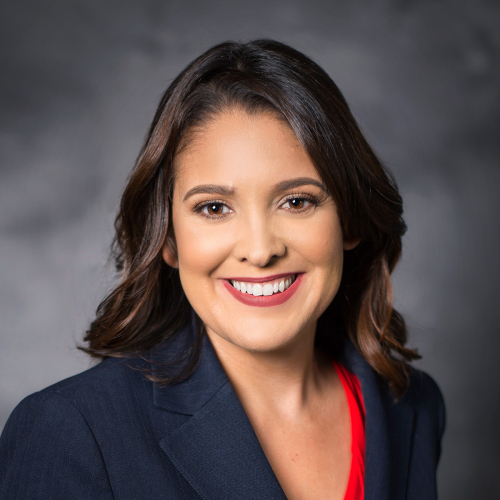
Asm. Blanca Pacheco
Sponsored bills
The Donahoe Higher Education Act sets forth, among other things, the missions and functions of California's public and independent segments of higher education and their respective institutions of higher education. The act requests the Regents of the University of California, and requires the Trustees of the California State University, to require each campus in their respective segments to grant students the right to reenroll in their baccalaureate degree program after withdrawing or stopping out, if the student was in good academic standing with the university. This bill, commencing with the 2027–28 academic year, would require a campus of the University of California, the California State University, or the California Community Colleges, a private postsecondary educational institution, or an independent institution of higher education to adopt a written policy to allow a student to take a voluntary medical leave of absence for a period to be determined by the postsecondary educational institution, or for a period of up to one academic year, whichever is longer. The bill would prohibit the leave of absence policy from, among other things, requiring a student who takes a medical leave of absence to submit an official notice of withdrawal to the postsecondary educational institution. The bill would require a postsecondary educational institution, among other things, to post the medical leave of absence policy on the institution's internet website and notify students and faculty of the location of the posted policy on its internet website by sending an email at the beginning of each academic semester or term. These provisions would apply to the University of California only to the extent that the regents, by appropriate resolution, make them applicable. By imposing additional duties on community college districts, the bill would impose a state-mandated local program. The California Constitution requires the state to reimburse local agencies and school districts for certain costs mandated by the state. Statutory provisions establish procedures for making that reimbursement. This bill would provide that, if the Commission on State Mandates determines that the bill contains costs mandated by the state, reimbursement for those costs shall be made pursuant to the statutory provisions noted above.
Existing law requires the governing board of a school district to have general control of, and be responsible for, all aspects of the interscholastic athletic policies, programs, and activities in its school district, as provided, and requires the governing board of a school district to ensure that all interscholastic policies, programs, and activities in the school district comply with state and federal law. Existing law authorizes the governing board of a school district to enter into associations or consortia with other governing boards for purposes of governing regional or statewide interscholastic athletics, as provided. Existing law describes the California Interscholastic Federation (CIF) as a voluntary organization that consists of school and school-related personnel with responsibility for administering interscholastic athletic activities in secondary schools and states the intent of the Legislature that the CIF, in consultation with the State Department of Education, implement specified policies relating to interscholastic athletics. Existing law, the 1998 California High School Coaching Education and Training Program, declares the intent of the Legislature to establish a California High School Coaching Education and Training Program, to be administered by school districts with an emphasis on specific components, including, among other components, sports psychology. Existing law requires every high school sports coach to complete, at their own expense, a coaching education program that meets the guidelines established by the California High School Coaching Education and Training Program. This bill would add a component on mental health training, as specified, to the list of components to be emphasized by the 1998 California High School Coaching Education and Training Program. The bill, commencing with the 2027–28 school year, would require a person who serves as a coach in an interscholastic athletic program at a high school, including a private school, that is a member of the California Interscholastic Federation to complete an initial training, and a subsequent training every 2 years, on mental health, as provided. The bill, commencing with the 2027–28 school year, would also require a school district, county office of education, or charter school that elects to offer an athletic program, other than an interscholastic athletic program, to ensure that the athletic program's coaches complete an initial training, and a subsequent training every 2 years, that covers sudden cardiac arrest, as provided, and youth athletics behavioral and mental health training, as provided. This bill would incorporate additional changes to Section 35179.1 of the Education Code proposed by AB 1626 to be operative only if this bill and AB 1626 are enacted and this bill is enacted last. This bill would make the operation of its provisions contingent upon the enactment of AB 1626 of the 2025–26 Regular Session.
Existing law authorizes an unmarried person who is under 18 years of age to marry upon obtaining a court order granting permission and the written consent of at least one of the parents or the guardian of each underage party to the marriage, as specified. Existing law requires the court, if it considers it necessary, as part of the court order granting permission to marry, to require the parties to the prospective marriage of a minor to participate in premarital counseling, as specified. Existing law provides that 2 unmarried, unrelated adults who have chosen to share one another's lives in an intimate and committed relationship of mutual caring may establish a domestic partnership by filing a declaration with the Secretary of State, if certain requirements are met. Existing law provides that a person under 18 years of age who, together with the person with whom the person proposes to establish a domestic partnership, meets the requirements for a domestic partnership other than the requirement of being at least 18 years of age, is capable of consenting to and establishing a domestic partnership upon obtaining a court order granting permission to the underage person or persons to establish a domestic partnership. Under existing law, registered domestic partners have the same rights, protections, and benefits as spouses. This bill would repeal the authorization for a person under 18 years of age to be issued a marriage license or to establish a domestic partnership, thereby prohibiting a person under 18 years of age from being issued a marriage license or from establishing a domestic partnership. The bill would make conforming changes. Existing law requires the State Registrar to create a document, no later than March 1, 2020, concerning marriage certificates in which one or both of the parties were minors at the time of solemnization of the marriage. Existing law requires the State Registrar to update that document annually, as specified. Existing law requires the local registrar to submit specified information for the purposes of that report. This bill would repeal those provisions.
The California Constitution confers the right to vote on a United States citizen who is 18 years of age and a resident of this state, except as specified. The California Constitution requires candidates for congressional and state elective offices in California to be selected via a voter-nominated primary election at which all voters may vote for any candidate without regard to the political party preference disclosed by the candidate or the voter. The top two vote-getters at a voter-nominated primary election for a congressional or state elective office, regardless of party preference, are nominated to compete in the ensuing general election. The California Constitution requires the Legislature to provide for partisan elections for presidential candidates, and political party and party central committees, including an open presidential primary whereby the candidates on the ballot are those found by the Secretary of State to be recognized candidates throughout the nation or throughout California for the office of President of the United States. This measure would prohibit an eligible voter from being excluded from meaningful participation at any integral stage of any publicly funded election, including a primary election, on any basis, including political party preference.
The Outdoor Advertising Act regulates placement of advertising displays adjacent to and within specified distances of highways that are part of the national system of interstate and defense highways and federal-aid highways. The act prohibits a person, as defined, from placing an advertising display within the areas affected by the act without a permit. The act prohibits the Department of Transportation from denying or delaying the acceptance of a permit application for a new advertising display along a portion of a new alignment of an interstate or primary highway on the basis that the highway project has not been accepted as complete if the section of highway is open to the use of the public for vehicular travel within 1,000 feet of the location specified in the permit application. This bill would also prohibit the department from denying or delaying the review, processing, or determination of a permit application described above. The act prohibits, except as provided, placing or maintaining an advertising display on property adjacent to a portion of a freeway that has a specified coverage area of landscaping or trees at the same or elevated grade of the main-traveled way, as provided. The act authorizes removal of an advertising display that violates that prohibition, as provided. This bill would instead authorize the removal with payment of compensation, or relocation without payment of compensation, of an advertising display that violates that prohibition, as specified. The act does not prohibit a local governmental entity from entering into an agreement to relocate an advertising display for any purpose. The act requires the department to issue a permit without any additional consideration for a display that is being placed pursuant to a relocation agreement with another governmental entity, as provided. This bill would instead not prohibit any governmental entity from entering into a relocation agreement and would require the department to issue a permit, without any additional consideration and without requiring a local entity or state agency to pay compensation, for a display that is being placed pursuant to a relocation agreement with another governmental entity, as specified.
Existing law subjects a person between 12 and 17 years of age, inclusive, who commits a crime, and a person under 12 years of age who commits specified crimes, to the jurisdiction of the juvenile court, which may adjudge that person to be a ward of the court. Under existing law, as added by the Gang Violence and Juvenile Crime Prevention Act of 1998, approved as Proposition 21 at the March 7, 2000, statewide primary election, a minor may be eligible for deferred entry of judgment if certain circumstances apply, including, among others, that the minor has not previously been declared to be a ward of the court for the commission of a felony offense. Existing law requires, once eligibility is established, the court to determine whether the minor is suitable for deferred entry of judgment and would benefit from education, treatment, and rehabilitation efforts. This bill would require the court to consider whether the minor is charged with an offense of carrying a loaded firearm, as specified, when evaluating suitability of the minor for deferred entry of judgment.
Existing law, the California Public Records Act, requires each state or local agency, upon a request for a copy of records that reasonably describes an identifiable record or records, to make the records promptly available to any person upon payment of fees covering direct costs of duplication, or a statutory fee if applicable, except with respect to public records exempt from disclosure by express provisions of law. Existing law requires each agency, within 10 days of a request for a copy of records, to determine whether the request seeks copies of disclosable public records in possession of the agency and to promptly notify the person of the determination and the reasons therefor. Existing law authorizes that time limit to be extended by no more than 14 days under unusual circumstances, as defined. This bill would instead require each agency to determine whether the request seeks copies of disclosable public records in possession of the agency and to promptly notify the person as described above within 10 business days of a request for a copy of records. The bill would instead authorize the time period for each agency to respond to be extended by no more than 14 business days. The California Constitution requires local agencies, for the purpose of ensuring public access to the meetings of public bodies and the writings of public officials and agencies, to comply with a statutory enactment that amends or enacts laws relating to public records or open meetings and contains findings demonstrating that the enactment furthers the constitutional requirements relating to this purpose. This bill would make legislative findings to that effect. Existing constitutional provisions require that a statute that limits the right of access to the meetings of public bodies or the writings of public officials and agencies be adopted with findings demonstrating the interest protected by the limitation and the need for protecting that interest. This bill would make legislative findings to that effect.
Existing law provides that a trustee's sale of property under a power of sale contained in a deed of trust or mortgage on real property containing one to 4 residential units is not final until the earliest of various time periods. Existing law provides specified eligible bidders, defined to include eligible tenant buyers, prospective owner-occupants, and eligible nonprofit corporations with certain attributes, various rights in connection with those sales, and sets forth procedures for eligible bidders to submit bids after those sales. Existing law authorizes the Attorney General, a county counsel, a city attorney, or a district attorney to bring an action to enforce these provisions as specified. This bill would instead provide that a trustee's sale of eligible property, as defined, is not final until the earliest of various time periods. The bill would change the term "eligible tenant buyer" to "eligible tenant bidder," and would redefine the term "eligible bidder" to remove prospective owner-occupants and to mean an eligible tenant bidder or an eligible community bidder, as defined. The bill would add an additional attribute to the eligible nonprofit corporations portion of "eligible community bidder." The bill would authorize the persons described above to seek a civil penalty to enforce these provisions, as specified. The bill would make conforming changes.
Existing law generally regulates classes of insurance, including automobile liability insurance. Existing law prohibits classifying a private passenger motor vehicle as a commercial vehicle, for-hire vehicle, permissive use vehicle, or livery solely because its owner allows it to be shared, if specified criteria are met. In the event of a loss or injury that occurs during any time period when the vehicle is under the operation and control of a person other than the vehicle owner, existing law requires the personal vehicle sharing program to assume all liability of the owner and is considered the owner of the vehicle for all purposes. Existing law requires a personal vehicle sharing program to provide insurance coverages for the vehicle and operator at a minimum of $45,000 for bodily injury or death for one person, $90,000 for bodily injury or death for all persons, and $15,000 for property damage, and, on and after January 1, 2031, to provide liability coverage at least 3 times the minimum insurance requirements for private passenger vehicles. This bill would, instead of requiring a personal vehicle sharing program to assume all liability of the owner, require the program to assume liability of the owner for bodily injury or property damage to injured third parties resulting from personal vehicle sharing in amounts stated in the personal vehicle sharing program agreement, and not less than $250,000 for bodily injury or death for one person, $500,000 for bodily injury or death for all persons, and $100,000 for property damage. The bill would make these provisions inapplicable if the vehicle owner acts in concert with a shared vehicle driver who fails to return the shared vehicle pursuant to the terms of the personal vehicle sharing program agreement.