

Existing law authorizes the Board of Governors of the California Community Colleges, in consultation with the California State University and the University of California, to authorize the establishment of community college district baccalaureate degree programs, as provided. Existing law requires a governing board of a community college district that is seeking authorization to offer a baccalaureate degree program to submit specified information for review by the Chancellor of the California Community Colleges and approval by the Board of Governors of the California Community Colleges. Beginning January 1, 2028, this bill would additionally require, among other things, a community college district to submit information relating to a determination of unmet current or future projected workforce need and consultation with the California State University and the University of California regarding collaborative approaches to meeting regional workforce needs. The bill would require this information to be submitted for review by the Chancellor of the California Community Colleges and the Chancellor of the California State University, and approval by the Board of Governors of the California Community Colleges. Existing law requires the Chancellor of Community Colleges to ensure, for the application and review process for community college districts to participate in the baccalaureate degree program, that only 15 baccalaureate degree programs are approved during each application period and that the total number of baccalaureate degree programs offered by a community college district, at any time, does not exceed 25% of the total number of associate degree programs offered, among other things. This bill would instead prohibit a community college district from submitting more than 3 applications during an academic year and would require a community college district offering a baccalaureate degree program to not displace enrollment opportunities for students seeking associate degrees, associate degrees for transfer, certificates, or noncredit instruction, and maintain access to lower division instructional offerings. Existing law requires the Chancellor of the California Community Colleges to consult with and seek feedback from the Chancellor of the California State University, the President of the University of California, and the President of the Association of Independent California Colleges and Universities on proposed baccalaureate degree programs, as specified. Existing law authorizes the California State University and the University of California to assess whether proposed baccalaureate degree programs are duplicative of existing baccalaureate programs offered by state universities. If the California State University or the University of California believes there is program duplication, existing law requires them to submit written objections with supporting evidence to the Chancellor of the California Community Colleges within 30 working days of receipt of the proposal, and requires the Chancellor of the California Community Colleges, within 30 working days after receiving the written objections, to convene with the applicant and the segment or segments that raised an objection to collaborate and establish a written agreement before the program is approved. This bill would instead require written objections with supporting evidence to be submitted to the Chancellor of the California Community Colleges within 45 working days of receipt of the proposal, except as provided, and would require the Chancellor of the California Community Colleges to provide the application to the Secretary of Labor and Workforce Development within 30 working days, as specified. Upon receipt of a written objection filed by the California State University, the bill would instead require the Secretary of Labor and Workforce Development to determine if the proposed baccalaureate degree program addresses an unmet current or projected future workforce need and if the capacity of the substantially similar academic program of the California State University is sufficient to meet the regional workforce needs, as specified. This bill would require the Chancellor of the California Community Colleges to report annually to the Legislature, no later than March 1, on the status of all baccalaureate degree programs approved under these provisions, as provided. This bill would incorporate additional changes to Section 78042 of the Education Code proposed by SB 960 to be operative only if this bill and SB 960 are enacted and this bill is enacted last. This bill would make the operation of its provisions contingent upon the enactment of SB 960 of the 2025–26 Regular Session.
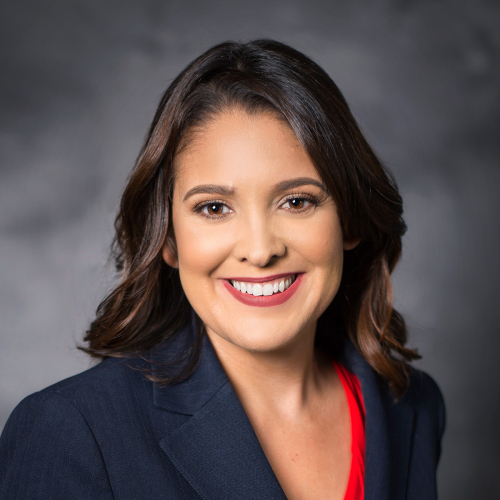
Asm. Blanca Pacheco
Sponsored bills
Existing law establishes the California Community Colleges, the California State University, the University of California, independent institutions of higher education, and private postsecondary educational institutions as the segments of postsecondary education in the state. This bill, which would be known as Sarah Shulze's Law, would require each campus of the California State University, each community college of a community college district, and each private postsecondary educational institution and independent institution of higher education that receives state financial assistance, and would request each campus of the University of California, to require a person who serves as a coach or trainer in an athletic program, as a condition of the person's employment or volunteer service, to complete a student mental health training on or before July 1, 2028, and every 2 years thereafter. The bill would require the training, at a minimum, to cover suicide prevention education and would authorize the training to be provided by an entity that offers free, online, or other types of training courses. By imposing new duties on community college districts, the bill would impose a state-mandated local program. The California Constitution requires the state to reimburse local agencies and school districts for certain costs mandated by the state. Statutory provisions establish procedures for making that reimbursement. This bill would provide that, if the Commission on State Mandates determines that the bill contains costs mandated by the state, reimbursement for those costs shall be made pursuant to the statutory provisions noted above.
Existing law establishes the California Community Colleges, under the administration of the Board of Governors of the California Community Colleges, as one of the segments of public postsecondary education in this state. Existing law establishes community college districts throughout the state and authorizes them to operate campuses and provide instruction. Existing law authorizes the governing board of a community college district to enter into a College and Career Access Pathways (CCAP) partnership with the governing board of a school district, a county office of education, or the governing body of a charter school for the purpose of offering or expanding dual enrollment opportunities for pupils who may not already be college bound or who are underrepresented in higher education, as provided. Existing law authorizes the office of the Chancellor of the California Community Colleges to establish the Rising Scholars Network to enter into agreements with community colleges to provide additional funds for services in support of postsecondary education for justice-involved students, as defined. This bill, the Juvenile Justice Education Access and Equity Act, would authorize a home community college district, as defined, or a college that is part of the home community college district, to enter into an instructional services agreement with a county probation department to provide academic or career technical education courses at a juvenile justice facility operated by the county probation department. The bill would authorize a community college district outside of the home community college district, or a college that is part of that district outside of the home district, to enter into an instructional services agreement with a county probation department if the home community college district has declined or failed to take action on a request by the county probation department to either (1) enter into an instructional services agreement or (2) approve the community college district outside of the home community college district, or a college that is part of that district outside of the home district, to enter into an instructional services agreement. The bill would prohibit the home community college district and colleges that are part of that district from prohibiting, blocking, or otherwise interfering with the ability of the community college outside of the home community college district, or a college that is part of that district outside of the home district, to provide instruction at the juvenile justice facility, as provided.
(1) Existing law, the California Fair Employment and Housing Act (FEHA) , establishes the Civil Rights Department to enforce civil rights laws with respect to housing and employment, as prescribed. The FEHA recognizes and declares to be a civil right the opportunity to seek, obtain, and hold employment and housing without discrimination because of a specified characteristic. The FEHA makes certain discriminatory practices based on those characteristics unlawful. The FEHA also declares that its purpose is to provide effective remedies that will eliminate these discriminatory practices. The FEHA defines terms used in connection with unlawful practices. These include "sex," which includes pregnancy or medical conditions related to pregnancy, childbirth or medical conditions related to childbirth, and breastfeeding or medical conditions related to breastfeeding. This bill would include perimenopause, menopause, or postmenopause or other related medical conditions within the above definition of sex. The FEHA separately defines the term "medical condition" to mean either a health impairment related to or associated with a diagnosis of cancer or a record or history of cancer or specified genetic characteristics. The Unruh Civil Rights Act (Unruh Act) establishes that all persons within the jurisdiction of the state are free and equal and, regardless of their sex, race, color, religion, ancestry, national origin, disability, medical condition, genetic information, marital status, sexual orientation, citizenship, primary language, or immigration status are entitled to the full and equal accommodations, advantages, facilities, privileges, or services in all business establishments, as prescribed. The Unruh Act defines "sex" to include, among other things, pregnancy, childbirth, or medical conditions related to pregnancy or childbirth. This bill would provide that "medical condition" as used in the definition of "sex" in FEHA and the Unruh Act includes, but is not limited to, the conditions included in the definition of "medical condition" in FEHA. (2) Existing law requires the Civil Rights Department to provide a poster on discrimination in employment to an employer or a member of the public upon request. Existing law requires the poster to be available at each office of the department and requires each employer to post the poster in a prominent and accessible location in the workplace, as prescribed. This bill would require the department, on or before July 1, 2027, to update the poster to notify people of their rights and protections in regard to perimenopause, menopause, postmenopause, or related medical conditions. (3) This bill would incorporate additional changes to Section 51 of the Civil Code proposed by AB 2563 to be operative only if this bill and AB 2563 are enacted and this bill is enacted last. This bill would incorporate additional changes to Section 12926 of the Government Code proposed by AB 2563 to be operative only if this bill and AB 2563 are enacted and this bill is enacted last.
Existing law establishes the Judges' Retirement System II, which is administered by the Board of Administration of the Public Employees' Retirement System, and provides pension and other benefits to judges who are members. Existing law authorizes a judge to elect one of 4 optional retirement payment plans, with variations, in lieu of receiving the maximum retirement allowance for their life alone. The optional plans provide for a reduced allowance payable to the judge for life and a payment or allowance payable to their surviving spouse, as specified. Under existing law, the 100 Percent Beneficiary Option 2 with Benefit Allowance Increase consists of the right to have a retirement allowance paid to the judge until the judge's death and thereafter to have the same monthly allowance paid to the judge's surviving spouse for life, as provided, and the 50 Percent Beneficiary Option 3 with Benefit Allowance Increase consists of the right to have a retirement allowance paid to the judge until the judge's death and thereafter to have12 of the monthly allowance paid to the judge's surviving spouse for life, as provided. This bill would authorize a judge who retires on or after January 1, 2027, to elect to be subject to alternative provisions governing those 4 optional retirement payment plans described above, which would allow a judge to designate a beneficiary, which may or may not include their spouse, to receive the payment or allowance after the judge's death. A designation of a beneficiary under these alternative provisions would be subject to the community property rights of the judge's spouse. The bill would provide that under these alternative provisions, for the 100 Percent Beneficiary Option 2 with Benefit Allowance Increase and the 50 Percent Beneficiary Option 3 with Benefit Allowance Increase, if a nonspouse beneficiary waives entitlement to the allowance, the judge's allowance shall be adjusted effective the first day of the month following the receipt of the waiver to reflect the benefit that would have been paid had the judge not selected an optional settlement. The bill would provide that these two optional retirement payment plans shall not result in additional cost to the employer. Existing law authorizes the surviving spouse of a judge who died in office, had attained the minimum age for service retirement, with a minimum of 20 years of service, and met other requirements to receive an allowance that is equal to the amount that the judge would have received if the judge had been retired from service on the date of death, as specified. This bill would remove the requirement that the judge have had a minimum of 20 years of service in order to receive this surviving spouse allowance. Existing law authorizes the surviving spouse of a retired judge who was receiving a retirement allowance pursuant to specified provisions to receive a monthly allowance equal to 50% of the deceased judge's unmodified monthly retirement allowance, as provided. Under this bill, the surviving spouse of a retired judge who elected to be subject to the alternative provisions described above governing the 4 optional retirement payment plans would receive this surviving spouse allowance only if the spouse was married to the judge continuously from the date of the judge's retirement until the date of the judge's death. This bill would make other related and technical changes.
Existing law defines sexual battery as the touching of any intimate part of another person, if the touching is against the will of the person touched and for the purpose of sexual arousal, gratification, or abuse. A violation of this provision is punishable as a misdemeanor. This bill would make a violation of the above provision punishable as a misdemeanor or a felony if the person entered an inhabited dwelling house or trailer coach, as defined, or the inhabited portion of any other building without consent and committed sexual battery while in the dwelling house, trailer coach, or inhabited portion of any other building. By creating a new crime, this bill would impose a state-mandated local program. The bill would make other technical, conforming changes. The California Constitution requires the state to reimburse local agencies and school districts for certain costs mandated by the state. Statutory provisions establish procedures for making that reimbursement. This bill would provide that no reimbursement is required by this act for a specified reason.
The California Constitution provides that people have the right of access to information concerning the conduct of the people's business. Various provisions of existing law, including the California Public Records Act, the Legislative Open Records Act, the Bagley-Keene Open Meeting Act, and the Ralph M. Brown Act, provide, with some exceptions, for public access to government records and meetings of government bodies. Among those acts, the California Public Records Act defines "person" to include any natural person, corporation, partnership, limited liability company, firm, or association. Existing law, the Administrative Procedure Act, governs, among other things, the procedures for the adoption, amendment, or repeal of regulations by state agencies and for the review of those regulatory actions by the Office of Administrative Law. Existing law, the California Environmental Quality Act (CEQA) , requires a lead agency, as defined, to prepare, or cause to be prepared, and certify the completion of an environmental impact report on a project that it proposes to carry out or approve that may have a significant effect on the environment or to adopt a negative declaration if it finds that the project will not have that effect. CEQA defines "person" to include any person, firm, association, organization, partnership, business, trust, corporation, limited liability company, company, district, county, city and county, city, town, and, among other things, the state. Existing law, the California Coastal Act of 1976, establishes the California Coastal Commission and prescribes procedures for the preparation, approval, and certification of local coastal programs that regulate development in the coastal zone, as defined, in jurisdictions that have a certified local coastal program. This bill would specify that, for purposes of the California Public Records Act, the Bagley-Keene Open Meeting Act, the Ralph M. Brown Act, the Legislative Open Records Act, the Administrative Procedure Act, the California Coastal Act of 1976, and CEQA, "person," "interested person," "participant," "member of the public," as applicable, and any other similar terms under each act referring to those who may engage with governmental agencies, do not include artificial intelligence, as defined, systems, autonomous agents, or robots, whether physical or digital. The bill would authorize governmental agencies to use a disclosure verification tool to determine if artificial intelligence is present. The bill would make findings and declarations related to these provisions. The bill would prohibit a person from knowingly using artificial intelligence to falsely represent that a natural person appeared before, submitted information to, or otherwise engaged with a governmental agency. The California Constitution requires local agencies, for the purpose of ensuring public access to the meetings of public bodies and the writings of public officials and agencies, to comply with a statutory enactment that amends or enacts laws relating to public records or open meetings and contains findings demonstrating that the enactment furthers the constitutional requirements relating to this purpose. This bill would make legislative findings to that effect.
Existing law imposes taxes upon income and real property, and taxes upon certain transactions and excise taxes. The Fee Collection Procedures Law provides procedures for the collection of certain fees and surcharges and is administered by the California Department of Tax and Fee Administration (CDTFA) . Under existing law, a violation of the Fee Collection Procedures Law is a crime. This bill would, beginning July 1, 2028, establish the Private Detention Facility Tax Law, which would impose an annual tax on each private detention facility operator, as defined, equal to 25% of the operator's gross income, as defined, for the prior fiscal year, as defined. The bill would establish the Due Process for All Fund in the State Treasury, except as provided, and would require all revenues collected, less refunds and reimbursement to the CDTFA, be deposited into the fund. In the event that Assembly Bill 2465 is enacted, the bill would instead require all revenues be deposited into the Due Process for All Fund as established by that bill. The bill would direct moneys in the fund, upon appropriation by the Legislature, be used for immigration-related services. The bill would require the CDTFA to administer and collect the tax pursuant to the Fee Collection Procedures Law. By expanding the application of the crimes associated with the Fee Collection Procedures Law, the bill would impose a state-mandated local program. This bill would include a change in state statute that would result in a taxpayer paying a higher tax within the meaning of Section 3 of Article XIIIA of the California Constitution, and thus would require for passage the approval of 23 of the membership of each house of the Legislature. The California Constitution requires the state to reimburse local agencies and school districts for certain costs mandated by the state. Statutory provisions establish procedures for making that reimbursement. This bill would provide that no reimbursement is required by this act for a specified reason. This bill would take effect immediately as a tax levy.
Existing law regulates various businesses to preserve and regulate competition and prohibit unfair practices, among other purposes. Existing law imposes various business practice restrictions on a food delivery platform, defined as an online business that acts as an intermediary between consumers and multiple food facilities to submit food orders from a consumer to a participating food facility, and to arrange for the delivery of the order from the food facility to the consumer. Existing law prohibits a food delivery platform from arranging the delivery of an order from a food facility without first obtaining an agreement with the food facility expressly authorizing the platform to take orders and deliver meals, as prescribed. This bill would prohibit a person from selling or transferring, or facilitating the sale or transfer of, a reservation for a restaurant, as defined, for an amount higher than that person paid to acquire the reservation, except as specified. The bill would authorize the Attorney General, any county counsel or city attorney, and an individual or entity who suffers actual harm as a result of a violation of the act to recover specified civil penalties. The bill would require a civil penalty recovered by the Attorney General pursuant to the act to be deposited in the Public Rights Law Enforcement Special Fund.
Maddy summaryThis bill designates September 2026 as Childhood Cancer Awareness Month. It directly affects state agencies and organizations by encouraging them to recognize this specific month for awareness activities. The measure does not change laws or allocate funding but serves as a formal commemorative resolution.