

Existing law requires the State Department of Public Health, subject to an appropriation in the Budget Act of 2016, to award funding to local health departments, local governmental agencies, or on a competitive basis to other organizations, as specified, to support or establish programs that provide naloxone or another opioid antagonist to first responders and at-risk opioid users through programs that serve at-risk drug users. Existing law exempts from civil liability a person who, in good faith and not for compensation, renders emergency medical or nonmedical care or assistance at the scene of an emergency other than an act or omission constituting gross negligence or willful or wanton misconduct, as provided. This bill would require each stadium, concert venue, and amusement park to maintain unexpired doses of naloxone hydrochloride or any other opioid antagonist on its premises at all times, and to ensure that at least 2 employees are aware of the location of the naloxone hydrochloride or other opioid antagonist. The bill would exempt from civil or criminal liability a person who, in good faith, administers naloxone hydrochloride or another opioid antagonist by nasal spray or auto-injector on the premises of a stadium, concert venue, or amusement park, other than an act or omission constituting gross negligence or willful or wanton misconduct, except as specified. The bill would exempt from civil or criminal liability a stadium, concert venue, or amusement park, or its employees, or an entity that owns, occupies, or operates a stadium, concert venue, or amusement park, or its employees, for the administration of naloxone hydrochloride or another opioid antagonist, or the failure to administer naloxone hydrochloride or another opioid antagonist, on the premises of the stadium, concert venue, or amusement park, as provided.
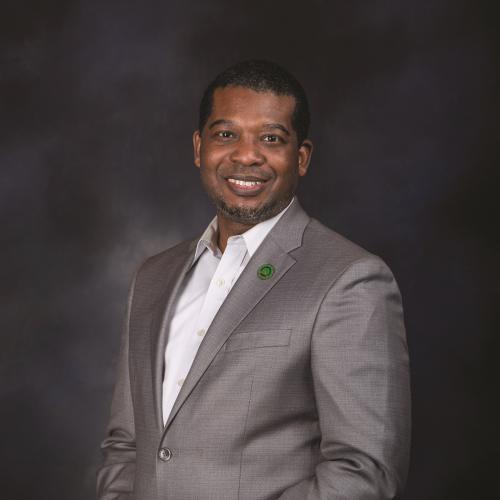
Asm. Corey Jackson
Sponsored bills
Existing law establishes the New Motor Vehicle Board in the Department of Motor Vehicles, and requires the board to hear and decide certain protests presented by a motor vehicle franchisee in regard to a dispute with the vehicle manufacturer. Existing law prohibits a franchisor from engaging in specified proscribed business practices. A violation of the Vehicle Code is punishable as an infraction. This bill would prohibit additional acts, including allocating vehicles and parts inconsistent with specified standards. Existing law prohibits a licensed manufacturer, manufacturer branch, distributor, distributor branch, or affiliate from engaging in specified proscribed business practices, including establishing or maintaining a performance standard, sales objective, or program for measuring a dealer's sales, service, or customer service performance, unless specified requirements are satisfied. A violation of the Vehicle Code is punishable as an infraction. This bill would prohibit additional acts, including exercising a right of first refusal in bad faith and implementing or modifying a vehicle reservation system for the sale or lease of motor vehicles that does not comply with specified requirements. This bill would additionally provide that a licensed manufacturer, manufacturer branch, distributor, distributor branch, or affiliate is not unlawfully competing with a franchise by providing an update or repair of motor vehicle software over-the-air at no cost or by creating a new line of motor vehicles and using new or existing franchisees to sell and service those vehicles. The bill would also declare the severability of its provisions. Because a violation of these new provisions would be punishable as a crime, the bill would impose a state-mandated local program. The bill includes legislative findings and declarations and would make other conforming changes. The California Constitution requires the state to reimburse local agencies and school districts for certain costs mandated by the state. Statutory provisions establish procedures for making that reimbursement. This bill would provide that no reimbursement is required by this act for a specified reason.
Existing law establishes a system of public elementary and secondary schools in this state, and provides for their governance. Existing law establishes county boards of education and school districts throughout the state to administer the public elementary and secondary schools within their respective jurisdictions. Existing law requires county boards of education and the governing board of each school district to prescribe and enforce rules not inconsistent with state law for their own government. Existing law requires a petition to establish a charter school to include, among other things, a reasonably comprehensive description of the governance structure of the charter school. Existing law requires county boards of education, school district governing boards, and, commencing July 1, 2023, the governing body of a charter school or of an entity managing multiple charter schools to appoint at least one high school pupil as a pupil member of the board or body, as applicable, in response to a petition from high school pupils requesting the appointment of one or more pupil members. Existing law authorizes the members of city or county boards of education or the governing boards of school districts to receive compensation, as provided. Existing law, on an annual basis, authorizes the county board of education or school district governing board to increase the compensation of individual board members beyond these limits in an amount not to exceed 5% based on the present monthly rate of compensation. Existing law authorizes any member who does not attend all meetings held in any month to receive, as compensation for their services, an amount not greater than the maximum amount allowed by law divided by the number of meetings held, and multiplied by the number of meetings actually attended. Existing law also authorizes an absent member to be paid for any meeting if the county board of education or school district governing board, by resolution, makes specified findings. Existing law does not entitle a pupil member of a county board of education, school district governing board, or governing body of a charter school or of an entity managing multiple charter schools to compensation pursuant to these provisions, except that the county board of education, the school district governing board, or the governing body of a charter school or of an entity managing multiple charter schools may award a pupil member elective course credit, as provided. This bill would revise and recast provisions related to the compensation of regular members and pupil members, as defined, of county boards of education, school district governing boards, and governing bodies of charter schools and of entities managing multiple charter schools. The bill would authorize the county board of education, the governing board of a school district, and the governing body of a charter school or of an entity managing multiple charter schools to award a pupil member elective course credit or monthly financial compensation, or both, as provided. For county boards of education and school district governing boards, the bill would authorize a pupil member to also receive partial monthly compensation, as described above, and would authorize an absent pupil member or an absent regular member to be paid for any meeting if the county board of education or school district governing board, by resolution, makes specified findings. This bill would incorporate additional changes to Section 1000 of the Education Code proposed by AB 417 to be operative only if this bill and AB 417 are enacted and this bill is enacted last.
Existing law, until January 1, 2024, increases the smog abatement fee on certain vehicles by a specified amount and requires the revenues generated by the increase to be deposited in the Air Quality Improvement Fund and the Alternative and Renewable Fuel and Vehicle Technology Fund. Existing law, until January 1, 2024, increases vehicle registration fees and certain service fees for identification plates by specified amounts. Existing law requires the revenue generated by the increase in those fees to be deposited in the Alternative and Renewable Fuel and Vehicle Technology Fund and either the Air Quality Improvement Fund or the Enhanced Fleet Modernization Subaccount, as provided. This bill would extend the increases in those charges to July 1, 2035. Existing law, until January 1, 2024, prohibits the State Air Resources Board from enforcing any element of its clean fuels outlet regulations or other regulation that requires or has the effect of requiring suppliers, as defined, to construct, operate, or provide funding for the construction or operation of publicly available hydrogen-fueling stations. Existing law, until January 1, 2024, requires the state board to aggregate and make available certain information regarding projected leases and sales of, and the registration of, hydrogen-fueled vehicles, to evaluate, based on that information, the need for additional publicly available hydrogen-fueling stations for the actual and projected number of hydrogen-fueled vehicles, the geographic areas where fuel will be needed, and station coverage, and to report the finding of the evaluation to the State Energy Resources Conservation and Development Commission (Energy Commission) . Existing law, until January 1, 2024, requires the Energy Commission to annually allocate $20,000,000 to fund the number of publicly available hydrogen-fueling stations identified by the state board, not to exceed 20% of the moneys appropriated by the Legislature from the Alternative and Renewable Fuel and Vehicle Technology Fund, until at least 100 publicly available hydrogen-fueling stations are operating in the state. This bill would extend the above-described provisions to July 1, 2035, and would repeal them as of January 1, 2036. The bill would require the annual allocation described above to instead be no less than 15% of the moneys appropriated by the Legislature from the Alternative and Renewable Fuel and Vehicle Technology Fund from revenues attributable to specified sources, would require the commission to make that allocation only until July 1, 2030, and would impose other specified requirements. The bill would also delete the requirements that the hydrogen-fueling stations be publicly available and that there be at least 100 hydrogen-fueling stations operating in the state. Existing law creates the Enhanced Fleet Modernization Program to provide compensation for the retirement and replacement of passenger vehicles and light-duty and medium-duty trucks that are high polluters. Existing law requires the Bureau of Automotive Repair to administer the program and the state board to adopt the guidelines for the program. Existing law requires the guidelines to ensure vehicle replacement or a mobility option be an option for all motor vehicle owners and may be in addition to compensation for vehicles retired. This bill would require the guidelines to ensure each replacement vehicle in the program be either a plug-in hybrid or zero-emission vehicle unless the state board makes a specified determination regarding either the availability of vehicles or the availability of charging and refueling capabilities in consultation with the Energy Commission, as specified. Existing law establishes the Air Quality Improvement Program under the administration of the State Air Resources Board for the purpose of funding air quality improvement projects relating to fuel and vehicle technologies. The primary purpose of the program is to fund projects to reduce criteria air pollutants, improve air quality, and provide funding for research to determine and improve the air quality impacts of alternative transportation fuels and vehicles, vessels, and equipment technologies. This bill would instead provide that the purpose of the program is to fund air quality improvement projects relating to zero-emission fuel and vehicle technologies and that the primary purpose of the program is to fund projects to reduce criteria air pollutants in the logistics, goods movement, off-road, warehouse, and port sectors, improve air quality in nonattainment basins, with a priority for projects located in the areas of extreme nonattainment, and improve the air quality impacts of zero-emission transportation fuels and vehicles, vessels, and equipment technologies. The bill would also revise the list of the types of projects eligible for funding under the program. Existing law establishes the Clean Transportation Program that is administered by the Energy Commission to provide financial assistance to develop and deploy innovative technologies that transform California's fuel and vehicle types to help attain the state's climate change policies with an emphasis on the development and deployment of technology and alternative and renewable fuels in the marketplace. Existing law authorizes the Energy Commission to make a single source or sole source award for applied research. This bill would revise and recast the Clean Transportation Program to, among other things, change the emphasis of the program to the development and deployment of zero-emission technology and fuels in the marketplace where feasible and near-zero-emission technology and fuels elsewhere. The bill would require certain information regarding electric vehicle charging infrastructure and hydrogen-fueling infrastructure funded by the program to be reported to the Energy Commission. The bill would additionally authorize the Energy Commission to make a single source or sole source award to public or nonpublic entities that manage a United States Department of Energy national laboratory. The bill would require the Energy Commission, on and after January 1, 2025, to expend at least 50% of the moneys appropriated to the program on programs and projects that directly benefit or serve residents of disadvantaged and low-income communities and low-income Californians. The bill would require the Energy Commission, for any hydrogen application scoring under the program, to provide preference to applicants with the least carbon-intensive proposed fuel, as specified. The bill would also require the Energy Commission, by January 1, 2026, in consultation with the State Air Resources Board and the Department of Motor Vehicles, to propose to the Legislature alternative funding methodologies or fee structures for funding zero-emission vehicle infrastructure for light-, medium-, and heavy-duty vehicles. The bill would require the proposal to include an assessment of the economic equity of the alternatives. Existing law requires the Energy Commission, in consultation with the Public Utilities Commission, to develop uptime recordkeeping and reporting standards for electric vehicle chargers and charging stations by January 1, 2024, that only apply to electric vehicle chargers and charging stations installed on or after January 1, 2024, and that received an incentive from a state agency or through a charge on ratepayers. Existing law authorizes the Energy Commission, in consultation with the Public Utilities Commission, to adopt tools to increase charging station uptime and to include incentives, as specified. Existing law repeals these provisions on January 1, 2035. This bill would require the Energy Commission, by January 1, 2025, to set standards for how these stations shall notify customers about the availability and accessibility of publicly available charging infrastructure. This bill also would require, rather than authorize, the Energy Commission to adopt tools to increase charging station uptime. This bill would declare that it is to take effect immediately as an urgency statute.
Existing law provides for various memorials and monuments within the State Capitol Building and on the State Capitol grounds. Existing law prescribes various duties of the Department of General Services in connection with the development and maintenance of the State Capitol Building and grounds. This bill would authorize a nonprofit organization that represents blind veterans, in consultation with the Department of General Services, to plan, construct, and maintain a braille American flag to serve as a monument to the blind veterans of California and the United States in the State Capitol Building. The bill would specify duties for the Department of General Services in connection with the planning, construction, and maintenance of the monument. The bill would prohibit the construction of the monument until the Joint Rules Committee of the California Legislature approves and adopts a plan for the monument and the committee and the Department of Finance determine that sufficient private funding is available to construct and maintain the monument.
Existing law, the California Uniform Controlled Substances Act, classifies controlled substances into 5 schedules and places the greatest restrictions and penalties on the use of those substances placed in Schedule I. Existing law restricts the prescription, furnishing, possession, sale, and use of controlled substances and makes a violation of those laws a crime, except as specified. Existing law, if one of specified changes in federal law regarding the controlled substance cannabidiol occurs, deems a physician, pharmacist, or other healing arts licensee who prescribes, furnishes, or dispenses a product composed of cannabidiol, in accordance with federal law, to be in compliance with state law governing those acts and provides that, upon the effective date of one of those changes in federal law, the prescription, furnishing, dispensing, transfer, transportation, possession, or use of that product in accordance with federal law is for a legitimate medical purpose and is authorized pursuant to state law. This bill, if one of specified changes in federal law regarding controlled substances occurs, would deem a physician, pharmacist, or other authorized healing arts licensee who prescribes, furnishes, or dispenses a product composed of one of these substances, in accordance with federal law, to be in compliance with state law governing those acts. The bill would also provide that upon the effective date of one of those changes in federal law regarding these substances, the prescription, furnishing, dispensing, transfer, transportation, possession, or use of that product in accordance with federal law is for a legitimate medical purpose and is authorized pursuant to state law.
(1) Existing law, the Safe Place to Learn Act, requires the State Department of Education, as part of its regular monitoring and review of a local educational agency, to assess whether the local educational agency has, among other things, adopted a policy that prohibits discrimination, harassment, intimidation, and bullying based on specified protected characteristics. This bill would require that policy to include a statement that the policy applies to all acts of the governing board or body of the local educational agency, the superintendent of the school district, and the county superintendent of schools in enacting policies and procedures that govern the local educational agency. Because this provision would impose an additional requirement on local educational agency officials, the bill would create a state-mandated local program. The bill would require the department, no later than July 1, 2025, to develop guidance and public educational materials to ensure that all Californians can access information about educational laws and policies that safeguard the right to an accurate and inclusive curriculum. (2) Existing law requires, as a condition of receipt of specified funds for instructional materials, the governing board of a school district to take specified actions, including holding a public hearing or hearings and making a determination, through a resolution, as to whether each pupil in each school in the school district has sufficient textbooks and instructional materials aligned to specified content standards. Upon a determination that there are insufficient textbooks or instructional materials, existing law requires the governing board to take action, as provided, to ensure that each pupil has sufficient textbooks or instructional materials within 2 months of the beginning of the school year in which the determination is made. If the county superintendent determines that a school does not have sufficient textbooks or instructional materials in accordance with this public hearing process, existing law requires the county superintendent to provide the school district with the opportunity to remedy the deficiency. If the deficiency is not remedied, existing law requires the county superintendent to request the department, with approval by the State Board of Education, to purchase textbooks or instructional materials for the school, as provided. If a governing board of a school district makes the above-described determination, by resolution, that there are insufficient textbooks or instructional materials, this bill would require the governing board to submit a copy of that resolution to the county superintendent of schools no later than 3 business days after the governing board hearing. (3) Existing law requires a school district to use its uniform complaint process to help identify and resolve any deficiencies related to, among other things, instructional materials, and to report summarized data on unresolved complaints to the county superintendent of schools. Existing law requires a complaint under these provisions to be filed with the principal of the school or the principal's designee. Existing law requires the principal or the designee of the district superintendent to make all reasonable efforts to investigate any problem within their authority and to remedy a valid complaint within a reasonable time period, as specified. Existing law authorizes the complainant to appeal to the Superintendent of Public Instruction and requires the Superintendent to provide a written report to the state board describing the basis for the complaint and, as appropriate, a proposed remedy. This bill would authorize a complaint that more than one pupil does not have sufficient textbooks or instructional materials, as a result of an act or omission by the governing board of a school district, to be filed directly with the Superintendent. The bill would authorize the Superintendent to directly intervene without waiting for the principal or the designee of the district superintendent to investigate. (4) Existing law requires the governing board of each local educational agency to either provide for an audit of its books and accounts or make arrangements with the county superintendent to provide for that audit. Existing law requires the auditor's report to include, among other things, a summary of audit exceptions and requires each county superintendent to review audit exceptions related to, among other things, inventory of equipment and the use of instructional materials program funds. This bill would require a county superintendent of schools to take a range of actions if the county superintendent determines that there are insufficient textbooks or instructional materials pursuant to (A) the receipt of the above-described resolution related to insufficient textbooks or instructional materials from the governing board of a school district, (B) the receipt of the above-described report of an unresolved complaint related to instructional materials, or (C) the receipt of the above-described report related to an audit exception related to the inventory of equipment and the use of instructional materials program funds, as provided. The bill would require the county superintendent, upon making this determination, to provide the school district with the opportunity to remedy the deficiency by no later than the 2nd month of the school term. If the deficiency is not remedied, the bill would require the department to purchase textbooks or instructional materials for the school, as specified. The bill would require the funds necessary for the purchase to be considered a loan to the school district and, unless the loan is repaid based upon an agreed-upon schedule with the Superintendent, would require the Controller to deduct the amount of the loan from the school district's next principal apportionment or other apportionment of state funds. By imposing new duties on county superintendents of schools and county offices of education, the bill would impose a state-mandated local program. (5) Existing law establishes a public school financing system that requires state funding for school districts, county offices of education, and charter schools to be calculated pursuant to a local control funding formula, as specified. This bill would reduce a school district's local control funding formula allocation by a specified amount if the Superintendent determines the school district has not provided sufficient textbooks or instructional materials pursuant to these provisions. (6) Existing law requires instruction in social sciences to include a study of the role and contributions of men and women and culturally and racially diverse groups, including, among others, Mexican Americans and lesbian, gay, bisexual, and transgender Americans, and members of other ethnic and cultural groups. This bill would revise the list of the above-described groups to instead require instruction in social sciences to include a study of the role and contributions of, among others, people of all genders, Latino Americans, LGBTQ+ Americans, and members of other ethnic, cultural, religious, and socioeconomic status groups. By imposing new obligations on local educational agencies, the bill would create a state-mandated local program. (7) Existing law prescribes substantive requirements and particular processes that the State Board of Education, the Instructional Quality Commission, local educational agencies, and the Superintendent of Public Instruction are required to follow when adopting or evaluating instructional materials, as defined. Existing law requires governing boards of school districts, when adopting instructional materials for use in the schools, to include materials that accurately portray the cultural and racial diversity of our society, including the contributions of both men and women and the role and contributions of culturally and racially diverse groups, including, among others, Mexican Americans, lesbian, gay, bisexual, and transgender Americans, and members of other ethnic and cultural groups. Existing law requires the state board to comply with those requirements related to the accurate portrayal of cultural and racial diversity when reviewing and adopting or recommending for adoption submitted basic instructional materials. Existing law also requires the governing board of each school district maintaining one or more high schools to comply with those requirements related to the accurate portrayal of racial and cultural diversity when adopting instructional materials for use in the high schools under its control. This bill would revise the list of the above-described culturally and racially diverse groups to instead include materials that accurately portray the contributions of people of all genders and the role and contributions of Latino Americans, LGBTQ+ Americans, and other ethnic, cultural, religious, and socioeconomic status groups. By imposing new obligations on local educational agencies, the bill would impose a state-mandated local program. The bill would require the department, no later than July 1, 2025, to issue guidance related to how to help school districts, county offices of education, charter schools, and school personnel manage conversations about race and gender, and how to review instructional materials to ensure that they represent diverse perspectives and are culturally relevant. The bill would prohibit the governing board of a school district, a county board of education, or the governing body of a charter school from refusing to approve or prohibiting the use of any textbook, instructional material, or other curriculum or any book or other resource in a school library on the basis that it includes a study of the role and contributions of any individual or group consistent with the above-described requirements relating to instruction in social sciences and the adoption of instructional materials that accurately portray the cultural and racial diversity of our society. The bill would also prohibit the governing board of a school district or a county board of education from prohibiting the continued use of an appropriately adopted textbook, instructional material, or curriculum on the basis that it contains inclusive and diverse perspectives. By imposing new obligations on local educational agencies, the bill would create a state-mandated local program. (8) The California Constitution requires the state to reimburse local agencies and school districts for certain costs mandated by the state. Statutory provisions establish procedures for making that reimbursement. This bill would provide that, if the Commission on State Mandates determines that the bill contains costs mandated by the state, reimbursement for those costs shall be made pursuant to the statutory provisions noted above. (9) This bill would declare that it is to take effect immediately as an urgency statute.
Existing law requires the State Department of Education to develop resources or, as appropriate, update existing resources for in-service training on schoolsite and community resources for the support of lesbian, gay, bisexual, transgender, queer, and questioning (LGBTQ) pupils, and strategies to increase support for LGBTQ pupils and thereby improve overall school climate. Existing law requires those resources to be designed for use in schools operated by a school district or county office of education and charter schools serving pupils in grades 7 to 12, inclusive. This bill would require the Superintendent of Public Instruction, on or before July 1, 2024, to convene an advisory task force to identify the needs of lesbian, gay, bisexual, transgender, queer, questioning, and plus (LGBTQ+) pupils and to make recommendations to assist in implementing supportive policies and initiatives to address LGBTQ+ pupil education and well-being, as provided. The bill would require advisory task force members to be selected by the Superintendent, as provided. The bill would require the advisory task force to, on or before January 1, 2026, report their findings and recommendations to the Legislature, the Superintendent, and the Governor.
Existing law requires every restroom of every public and private school maintaining any combination of classes from kindergarten to grade 12, inclusive, to be maintained and cleaned regularly, fully operational, and stocked at all times with toilet paper, soap, and paper towels or functional hand dryers, and kept open during school hours when pupils are not in classes. Existing law requires that a sufficient number of restrooms be kept open during school hours when pupils are in classes. Existing law authorizes a school to temporarily close a restroom as necessary for pupil safety or as necessary to repair the facility. This bill would revise the conditions under which a restroom is authorized to be temporarily closed to instead be as necessary (1) for a documented pupil safety concern, (2) for an immediate threat to pupil safety, or (3) to repair the facility. The bill would require, on or before July 1, 2026, each school district, county office of education, and charter school, including charter schools operating in a school district facility, maintaining any combination of classes from grades 1 to 12, inclusive, to provide and maintain at least one all-gender restroom for voluntary pupil use at each of its schoolsites that meet specified criteria. The bill would require the all-gender restroom to meet certain requirements, including, among other things, that it has signage identifying the bathroom facility as being open to all genders and is unlocked, unobstructed, and easily accessible by any pupil. The bill would require the local educational agency to designate a staff member to serve as a point of contact for these purposes and to post a notice regarding these requirements in a prominent and conspicuous location outside at least one all-gender restroom. The bill would require these requirements to be subject to compliance review, as specified. By imposing additional requirements on local educational agencies, the bill would impose a state-mandated local program. The bill would authorize a local educational agency to use an existing restroom to satisfy these requirements, as provided. The bill would require the State Department of Education to post on its internet website guidance for implementation of these provisions. Existing law, the Leroy F. Greene School Facilities Act of 1998 (the Greene Act) , requires the State Allocation Board to allocate to applicant school districts prescribed per-unhoused-pupil state funding for the construction and modernization of school facilities, including hardship funding, and supplemental funding for site development and acquisition. This bill would require the governing board of a school district, a county board of education, or the governing body of a charter school that applies for state funding pursuant to the Greene Act for a school modernization project to include, as part of the modernization project, an all-gender restroom designed exclusively for pupil use for specified schoolsites, as provided. The bill would provide that these provisions apply only to those projects that are submitted for approval on or after July 1, 2026. The California Constitution requires the state to reimburse local agencies and school districts for certain costs mandated by the state. Statutory provisions establish procedures for making that reimbursement. This bill would provide that, if the Commission on State Mandates determines that the bill contains costs mandated by the state, reimbursement for those costs shall be made pursuant to the statutory provisions noted above.
Existing law requires law enforcement agencies, departments, or entities to consider specified best practices regarding the downloading and storage of body-worn camera data, including prohibiting agency personnel from uploading recorded data onto public and social media internet websites, when establishing policies and procedures for the implementation and operation of a body-worn camera system. Existing law prohibits a police department or sheriff's office from sharing, on social media, booking photos of an individual arrested on suspicion of committing a nonviolent crime, as defined, unless specified circumstances exist. Existing law requires a police department or sheriff's office that shares, on social media, a booking photo of an individual arrested for the suspected commission of a nonviolent crime to remove the information from its social media page, upon request, unless the same specified circumstances exist. Existing law also requires a police department or sheriff's office to remove the booking photo of a person who has committed any other crime from social media if the individual's record has been sealed, the individual's conviction has been dismissed, expunged, pardoned, or eradicated, the individual has been issued a certificate of rehabilitation, the individual is found not guilty of committing the crime for which they were arrested, or the individual was ultimately not charged with the crime or the charges were dismissed. With respect to an individual who has been arrested for any crime, this bill would require a police department or sheriff's office, upon posting a booking photo on social media, to use the name and pronouns given by the individual arrested. The bill would authorize a police department or sheriff's office to use other legal names or known aliases of an individual in limited specified circumstances. This bill would also require that a police department or sheriff's office remove any booking photo shared on social media after 14 days unless specified circumstances exist. Because the bill would impose higher duties on local law enforcement, it would impose a state-mandated local program. The California Constitution requires the state to reimburse local agencies and school districts for certain costs mandated by the state. Statutory provisions establish procedures for making that reimbursement. This bill would provide that, if the Commission on State Mandates determines that the bill contains costs mandated by the state, reimbursement for those costs shall be made pursuant to the statutory provisions noted above.