

Existing law establishes the Department of Housing and Community Development and sets forth its powers and duties. Existing law creates a housing authority in each county or city, which functions upon the adoption of a specified resolution by the relevant governing body. Existing law authorizes these housing authorities, within their jurisdictions, to construct, reconstruct, improve, alter, or repair all or part of any housing project. Existing law establishes various programs that provide housing assistance. This bill would enact the Social Housing Act and would create the California Housing Authority as an independent state body, the mission of which would be to ensure that social housing developments that are produced and acquired align with the goals of eliminating the gap between housing production and regional housing needs assessment targets and preserving affordable housing. The bill would prescribe a definition of social housing that would describe, in addition to housing owned by the authority, housing owned by other entities, as specified, provided that all social housing developed or authorized by the authority would be owned by the authority. This bill would prescribe the composition of the California Housing Authority Board, which would govern the authority, and which would be composed of appointed members and members who would be elected by residents of social housing developments, as specified. The bill would set forth the powers and duties of the authority and the board. The bill would require the authority to seek to achieve revenue neutrality, as defined, and would require the authority to seek to recuperate the cost of development and operations over the life of its properties through mechanisms that maximize the number of Californians who can be housed without experiencing rent burden. This bill would require the authority to prioritize the development of specified property, including vacant parcels and parcels near transit, and would establish a process for the annual determination of required social housing units. Under the bill, social housing would accommodate a mix of household income ranges and would provide specified protections for residents, who would participate in the operation and management of the units in which they reside. This bill would require the California Housing Authority to employ 2 leasing models in social housing developments, referred to as the rental model and the ownership model, and would set forth the characteristics of both models. Under the ownership model, the authority would extend a 99-year lease, in the form of a limited equity arrangement, as defined, to individuals who commit to a minimum 5-year term of residence, and would authorize the authority to act as a lender for residents. The bill would specify how the units may be sold and transferred. The bill would establish eligibility requirements for social housing residents and would provide for the selection of residents by lottery, as specified, providing that people who may have been displaced from a property as part of its development would be granted a preference for occupancy. The bill, among other things, would require the authority to accept a local jurisdiction's preference for a project parcel if specified conditions are met. This bill would establish the Social Housing Revolving Loan Fund within the State Treasury to provide, upon appropriation by the Legislature, zero-interest loans for the purposes of constructing housing to accommodate a mix of household incomes. The bill would declare the intent of the Legislature to enact subsequent legislation to provide financing for the activities of the authority through the issuance of general obligation bonds. The bill would authorize the authority to issue revenue bonds, as specified. The bill would require the board to provide for regular audits of the authority's accounts and records, as specified. The bill would also require the authority to prepare and submit specified reporting information regarding its business plan and progress to the Legislature on an annual basis.
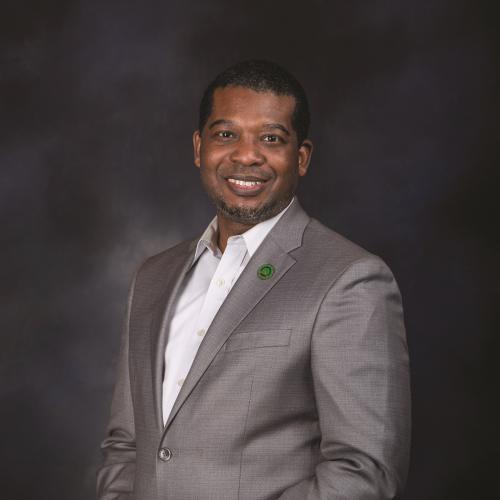
Asm. Corey Jackson
Sponsored bills
Existing law establishes homeless youth emergency service pilot projects in the City of Los Angeles and the City and County of San Francisco providing services to homeless minors, including food and access to an overnight shelter and counseling to address immediate emotional crises or problems. Existing law also requires similar programs to be established in the Counties of San Diego and Santa Clara, and all of these programs to be operated by an agency in accordance with a grant award agreement with the Office of Emergency Services. Existing law requires the Governor to create the California Interagency Council on Homelessness and specifies the duties of the council. Existing law requires agencies and departments administering state programs to collaborate with the council to adopt guidelines and regulations to incorporate core components of Housing First, which include, among other things, a tenant screening process that accepts applicants regardless of sobriety, not rejecting applicants based on poor credit or financial history, and prohibiting participation in services or program compliance from being a requirement for permanent housing. This bill, until January 1, 2029, and upon appropriation by the Legislature for these purposes, would require the Department of Housing and Community Development to establish the Unicorn Homes Transitional Housing for Homeless LGBTQ+ Youth Program, to be administered by local community-based organizations that provide a majority of its services to the LGBTQ+ community. The bill would require the department to fund community-based organizations in up to 5 selected counties that provide transitional housing for LGBTQ+ youth, 18 to 24 years of age, inclusive, experiencing homelessness due to family rejection, with the ultimate goal of reunification with the youth's original family. The bill would require the community-based organization to place eligible youth with volunteer host families who meet specified criteria, pursuant to the results of a background check, and who are able to provide crisis intervention with a trauma-informed approach, as defined, to their care. The bill would also require the program to comply with the existing core components of Housing First. The bill would require each community-based organization to prepare and submit an annual report to the department, with the first report due on or before December 1, 2026, and a final report due on or before June 30, 2028, which would be required to include specified information, including the number of times the organization was contacted by youths, how many of those contacts became participants in the program, and how many of those initial contacts became repeat contacts. The bill would also require the department to compile the annual reports into a final report, to be submitted to the Legislature on or before December 31, 2028.
Existing law defines "disabled veteran" for purposes of the Vehicle Code as, among other things, a person who, as a result of injury or disease suffered while on active service with the Armed Forces of the United States, has a disability that has been rated at 100% by the Department of Veterans Affairs. Existing law also defines a "disabled veteran" as a veteran who is unable to move without the aid of an assistant device. This bill would instead define a disabled veteran as a veteran who cannot walk without the use of an assistant device. The bill would expand the definition of "disabled veteran" to include a veteran who cannot walk 200 feet without stopping to rest, a veteran who is severely limited in the ability to walk because of an arthritic, neurological, or orthopedic condition, or a veteran who has visual acuity of 20/200 or less, among other conditions, as specified.
Existing law vests the Public Utilities Commission with regulatory authority over public utilities, including telephone corporations. Pursuant to authority delegated by the Federal Communications Commission to state regulatory bodies and its existing statutory authority, the Public Utilities Commission has established procedures for implementing 2-1-1 dialing in California to connect people to social services and aid in times of disaster. Existing law, until January 1, 2023, authorized the commission, if it determined that doing so was an appropriate use of funds collected from ratepayers, to expend up to $1,500,000 from the California Teleconnect Fund Administrative Committee Fund to help close 2-1-1 service gaps in counties lacking access to disaster preparedness, response, and recovery information and referral services, where technically feasible, through available 2-1-1 service. Existing law establishes the Office of Planning and Research (OPR) within the Governor's office to provide long-range planning and research and to serve as the comprehensive state planning agency. This bill would, upon appropriation, require the OPR to establish and convene the 2-1-1 Strategic Advisory Committee. The bill would require the committee to be composed of specified members, including directors of specified state agencies or their designees, representatives of community-based organizations that represent specified vulnerable populations, a member of the public with lived experience in utilizing 2-1-1 services, and city or county officials with knowledge or experience with local 2-1-1 programs and services. The bill would require the committee to, among other things, identify and establish an ongoing funding source for statewide 2-1-1 infrastructure and operations, and recommend policies and priorities to encourage the development of California's 2-1-1 infrastructure. The bill would require the committee's meetings to be open to the public.
Existing federal law provides for the federal Supplemental Nutrition Assistance Program (SNAP) , known in California as CalFresh, under which supplemental nutrition assistance benefits allocated to the state by the federal government are distributed to eligible individuals by each county. Under existing law, the Supplemental Security Income/State Supplementary Program for the Aged, Blind, and Disabled (SSI/SSP) is, pursuant to contract, administered by the federal government and the department. This program provides cash assistance to low-income aged, blind, and disabled persons. Existing law requires the department to also establish the California Food Assistance Program (CFAP) to provide nutrition benefits to households that are ineligible for CalFresh benefits solely due to their immigration status, as specified. Existing law requires that CFAP benefits be equivalent to SNAP benefits. Under existing law, operative on the date that the department notifies the Legislature that the Statewide Automated Welfare System can perform the necessary automation for this purpose, an individual 55 years of age or older is eligible for CFAP benefits, subject to an appropriation. Existing law generally requires the federal and state laws and regulations governing the SSI/SSP program to also govern the Cash Assistance Program for Immigrants (CAPI) . This bill would require, on or before January 1, 2026, and on an annual basis thereafter, the State Department of Social Services to create a system to automatically enroll and to enroll in the CalFresh program and the CFAP qualifying individuals who meet the eligibility requirements of the SSI/SSP and those who meet the eligibility requirements of the CAPI, as specified. The bill would require, commencing January 1, 2026, or after the automatic enrollment process takes effect, whichever is sooner, the department to require county eligibility workers to regularly contact qualifying individuals who meet those requirements to notify them of their estimated potential benefit, including through notice by mail. The bill would also require the department to require county eligibility workers to conduct interviews and assist individuals with applying for those benefits for the purpose of establishing eligibility for benefits. The bill would require the department to collaborate with county agencies to effectuate these provisions, including after the automatic enrollment process takes effect. The bill would require the department, on or before July 1, 2025, to seek any waiver from the United States Department of Agriculture necessary to implement these requirements. By imposing additional duties on counties implementing those programs, the bill would impose a state-mandated local program. The California Constitution requires the state to reimburse local agencies and school districts for certain costs mandated by the state. Statutory provisions establish procedures for making that reimbursement. This bill would provide that, if the Commission on State Mandates determines that the bill contains costs mandated by the state, reimbursement for those costs shall be made pursuant to the statutory provisions noted above.
Maddy summaryThis bill designates October 2024 as Menopause Awareness Month in California to highlight the health and societal impacts of menopause on women. It acknowledges that millions of women face symptoms that can affect their daily lives and work, noting that women of color are at higher risk for complications like premature menopause and heart disease. The resolution encourages the state to provide better health information and services to support women's well-being before, during, and after this transition. While the text outlines these goals, the bill itself is a formal recognition rather than a law that creates new funding or mandates specific programs.
The Personal Income Tax Law allows various credits against the taxes imposed by that law, including a young child tax credit to a qualified taxpayer in a specified amount multiplied by the earned income tax credit adjustment factor, as provided. That law also allows a payment from the continuously appropriated Tax Relief and Refund Account for an amount in excess of tax liability. Existing law defines "qualified taxpayer" for this purpose to include an eligible individual, as defined, who has a qualifying child, defined to be a child younger than 6 years of age as of the last day of the taxable year, and who meets other specified criteria. Under existing law, the young child tax credit phases out by reducing the amount of the credit by $20 for each $100, or fraction thereof, that the taxpayer's earned income, as defined, exceeds a specified amount. This bill, for taxable years beginning on or after January 1, 2025, and before January 1, 2030, would instead define a "qualifying child" to mean a child younger than 18 years of age as of the last day of the taxable year. The bill would also require the Franchise Tax Board, for taxable years beginning on or after January 1, 2025, and before January 1, 2030, to recalculate the phaseout provisions for the young child tax credit such that the credit reaches $0 as earned income reaches $50,000. By increasing the payments from the Tax Relief and Refund Account, a continuously appropriated fund, the bill would make an appropriation. Existing law requires any bill authorizing a new tax expenditure to contain, among other things, specific goals that the tax expenditure will achieve, detailed performance indicators, and data collection requirements. This bill would include additional information required for any bill authorizing a new tax expenditure.
Existing law provides for the county-administered In-Home Supportive Services (IHSS) program, under which qualified aged, blind, and disabled persons are provided with services in order to permit them to remain in their own homes and avoid institutionalization. Existing law establishes the Medi-Cal program, which is administered by the State Department of Health Care Services, under which qualified low-income individuals receive health care services. Existing law authorizes certain Medi-Cal recipients to receive waiver personal care services in order to permit them to remain in their own homes. Existing law permits services to be provided under the IHSS program either through the employment of individual providers, a contract between the county and an entity for the provision of services, the creation by the county of a public authority, or a contract between the county and a nonprofit consortium. This bill would require the department, by March 1, 2025, or when the Case Management Information and Payrolling System (CMIPS) can implement the necessary automation changes, whichever is later, to develop and issue guidance, in consultation with specified entities, to ensure that individuals without satisfactory immigration status, as defined, are able to receive IHSS benefits using a provider of their choice, including a provider who is related to the 5th degree to the recipient, as specified, and who has, or is in the process of obtaining, an individual taxpayer identification number. The bill would require the department, by January 1, 2025, and in consultation with specified stakeholders, to develop recommendations to enable any recipient of services to select a related provider of their choice, as specified. Existing law requires a county to investigate the background of a person who seeks to become a supportive services provider or is already providing those services, and who is not listed on the registry of a public authority or nonprofit consortium. Existing law requires that investigation to include criminal background checks conducted by the Department of Justice, as prescribed. Existing law requires the county to deny or terminate an individual's request to provide IHSS upon notice from the Department of Justice that the person has a conviction for any specified offense. This bill would exempt a person who meets the requirements to be a related provider of IHSS, as described above, or who is related to the 5th degree to the IHSS recipient from those criminal background check requirements, but would require the person to attest to any convictions for the specified offenses. The bill would prohibit a person with a conviction for any of those offenses from providing IHSS. Under existing law, a new applicant to provide in-home supportive services, or a person whose application has been denied on the basis of a conviction and for whom an appeal of that denial is pending, is ineligible to provide or receive payment for providing supportive services for 10 years following a conviction for, or incarceration following a conviction for, specified felony offenses. Existing law permits a recipient who wishes to employ a provider applicant who has been convicted of one of the specified offenses to submit to the county an individual waiver of the exclusion provided for in those provisions. This bill would require a person who meets the requirements to be a related provider of IHSS, as described above, or who is related to the 5th degree to the IHSS recipient to attest to any convictions for an offense subject to the 10-year exclusion. The bill would permit a recipient of IHSS who wishes to employ a related provider applicant who has been convicted of an eligible offense to submit to the county an individual waiver of that exclusion. To the extent that these provisions would increase duties of counties administering the IHSS program, the bill would impose a state-mandated local program. The California Constitution requires the state to reimburse local agencies and school districts for certain costs mandated by the state. Statutory provisions establish procedures for making that reimbursement. This bill would provide that, if the Commission on State Mandates determines that the bill contains costs mandated by the state, reimbursement for those costs shall be made pursuant to the statutory provisions noted above.
Existing federal law, the federal Patient Protection and Affordable Care Act (PPACA) , requires each state to establish an American Health Benefit Exchange to facilitate the purchase of qualified health benefit plans by qualified individuals and qualified small employers. PPACA defines a "qualified health plan" as a plan that, among other requirements, provides an essential health benefits package. Existing state law creates the California Health Benefit Exchange, also known as Covered California, to facilitate the enrollment of qualified individuals and qualified small employers in qualified health plans as required under PPACA. Existing law, the Knox-Keene Health Care Service Plan Act of 1975 (Knox-Keene) , provides for the licensure and regulation of health care service plans by the Department of Managed Health Care. Existing law provides for the regulation of health insurers by the Department of Insurance. Existing law provides for the Medi-Cal program, which is administered by the State Department of Health Care Services, under which qualified low-income individuals receive health care services. The Medi-Cal program is, in part, governed and funded by federal Medicaid program provisions. This bill, the California Guaranteed Health Care for All Act, would create the California Guaranteed Health Care for All program, or CalCare, to provide comprehensive universal single-payer health care coverage and a health care cost control system for the benefit of all residents of the state. Under the bill, CalCare would be a health care service plan subject to Knox-Keene. The bill, among other things, would provide that CalCare cover a wide range of medical benefits and other services and would incorporate the health care benefits and standards of other existing federal and state provisions, including the federal Children's Health Insurance Program, Medi-Cal, ancillary health care or social services covered by regional centers for persons with developmental disabilities, Knox-Keene, and the federal Medicare Program. The bill would make specified persons eligible to enroll as CalCare members during the implementation period, and would provide for automatic enrollment. The bill would require the board to seek all necessary waivers, approvals, and agreements to allow various existing federal health care payments to be paid to CalCare, which would then assume responsibility for all benefits and services previously paid for with those funds. This bill would create the CalCare Board to govern CalCare, made up of 9 voting members with demonstrated and acknowledged expertise in health care, and appointed as provided, plus the Secretary of California Health and Human Services or their designee as a nonvoting, ex officio member. The bill would provide the board with all the powers and duties necessary to establish CalCare, including determining when individuals may start enrolling into CalCare, employing necessary staff, negotiating pricing for covered pharmaceuticals and medical supplies, establishing a prescription drug formulary, and negotiating and entering into necessary contracts. The bill would require the board, on or before July 1 of an unspecified year, to conduct and deliver a fiscal analysis to determine whether or not CalCare may be implemented and if revenue is more likely than not to pay for program costs, as specified. The bill would establish an Advisory Commission on Long-Term Services and Supports to advise the board on matters of policy related to long-term services and supports. The bill would require the board to convene a CalCare Public Advisory Committee to advise the board on all matters of policy for CalCare, an Advisory Committee on Public Employees' Retirement System Health Benefits to provide recommendations related to public employee retiree health benefits, and a CalCare Health Workforce Working Group to provide the board with input on issues related to health care workforce education, recruitment, and retention. The bill would establish an Office of Health Equity within CalCare and under the direction of the Director of the Department of Health Care Access and Information to ensure health equity under the program and other health programs of the California Health and Human Services Agency and to support the board through specified actions. This bill would provide for the participation of health care providers in CalCare, including the requirements of a participation agreement between a health care provider and the board, provide for payment for health care items and services, and specify program participation standards. The bill would prohibit a participating provider from discriminating against a person by, among other things, reducing or denying a person's benefits under CalCare because of a specified characteristic, status, or condition of the person. This bill would prohibit a participating provider from billing or entering into a private contract with an individual eligible for CalCare benefits regarding a covered benefit, but would authorize contracting for a health care item or service that is not a covered benefit if specified criteria are met. The bill would authorize health care providers to collectively negotiate fee-for-service rates of payment for health care items and services using a third-party representative, as provided. The bill would require the board to annually determine an institutional provider's global budget, to be used to cover operating expenses related to covered health care items and services for that fiscal year, and would authorize payments under the global budget. This bill would state the intent of the Legislature to enact legislation that would develop a revenue plan, taking into consideration anticipated federal revenue available for CalCare. The bill would create the CalCare Trust Fund in the State Treasury, as a continuously appropriated fund, consisting of any federal and state moneys received for the purposes of the act. The bill would specify uses for moneys in the CalCare budget, including special projects for which not-for-profit or governmental entities may apply. Because the bill would create a continuously appropriated fund, it would make an appropriation. This bill would prohibit specified provisions of this act from becoming operative until the Secretary of California Health and Human Services gives written notice to the Secretary of the Senate and the Chief Clerk of the Assembly that the CalCare Trust Fund has the revenues to fund the costs of implementing the act. The California Health and Human Services Agency would be required to publish a copy of the notice on its internet website. Existing constitutional provisions require that a statute that limits the right of access to the meetings of public bodies or the writings of public officials and agencies be adopted with findings demonstrating the interest protected by the limitation and the need for protecting that interest. This bill would make legislative findings to that effect.
Existing law establishes the California Housing Finance Agency within the Department of Housing and Community Development, and authorizes the agency to, among other things, make loans to finance affordable housing, including residential structures, housing developments, multifamily rental housing, special needs housing, and other forms of housing, as specified. This bill would establish the California Affordable and Foster Youth Housing Finance Innovation Program and would require the agency to issue credit instruments, as defined, to qualified housing sponsors, as defined, for the construction, acquisition, and renovation of qualified projects, as defined. For all dwelling units in a qualified project that are reserved for specified tenants, the bill would require the qualified housing sponsor to, upon request of the agency, verify each tenant that satisfies specified provisions is either a current or former foster youth or a low-income household and would prohibit the qualified housing sponsor from charging such tenants a rent that exceeds the fair market rent, as specified. The bill would set forth the requirements for the agency to administer the program including, among other requirements, to provide to an applicant a written notice informing the applicant whether the agency has approved or disapproved the application, and if disapproved, the reason for the disapproval, as specified. The bill would require the agency to issue loan guarantees for qualified loans made by financial institutions to qualified housing sponsors for the construction, acquisition, and renovation of qualified projects. The bill would also require the agency to enter into agreements to make lines of credit available, as specified, to obligors in the form of direct loans to be made by the agency for a qualified project. The bill would prohibit a credit instrument issued under these provisions from obligating the General Fund and would require a secured loan guarantee, secured loan, or line of credit issued under these provisions be exclusively secured by moneys in the California Housing Finance Fund from specified revenue sources. The bill would also make related findings and declarations.