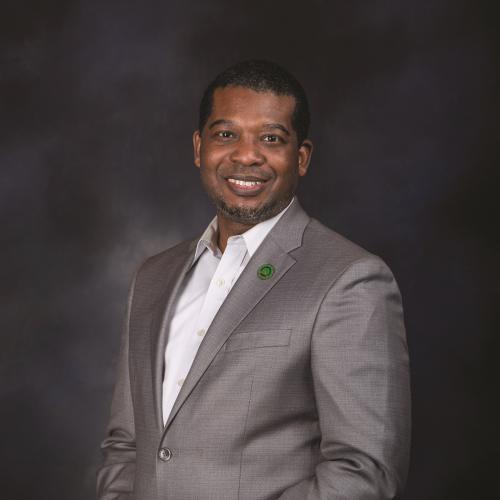
In committee
·
California Senate
·
Co-sponsor
The Regulated Psychedelic Facilitators Act and the Regulated Psychedelic-Assisted Therapy Act.
(1) Existing law provides for the regulation of various professions and vocations by boards established under the jurisdiction of the Department of Consumer Affairs in the Business, Consumer Services, and Housing Agency. Existing law, the California Uniform Controlled Substances Act, classifies controlled substances into 5 schedules, and places the greatest restrictions and penalties on the use of those substances placed in Schedule I. Existing law classifies dimethyltryptamine, mescaline, 3,4-methylenedioxymethamphetamine (MDMA) , ibogaine, psilocybin, and psilocyn as Schedule I substances, and prohibits various actions related to those substances, including their sale, possession, transportation, manufacture, or cultivation. (2) This bill would enact the Regulated Psychedelic Facilitators Act, which would establish the Board of Regulated Psychedelic Facilitators in the Department of Consumer Affairs to license and regulate psychedelic facilitators, as defined. The bill would require the board to be appointed, as specified, by April 1, 2025. The bill would require the board to establish educational, training, and other qualifications and requirements for obtaining a license as a regulated psychedelic facilitator and would establish conditions of licensure. The bill would require the board to establish fees for the reasonable regulatory costs to the board to administer the act. The bill would require the board to begin accepting license applications by April 1, 2026. The bill would make a license subject to renewal every 2 years. The bill would create the Regulated Psychedelic Facilitators Fund in the State Treasury, would require all funds received pursuant to the act to be credited to the fund, and would make moneys in the fund available to the board for the act's purposes upon appropriation by the Legislature. The bill would require the board, consistent with recommendations made by the Regulated Psychedelic Substances Advisory Committee, which would be created by the bill, to adopt regulations, on or before January 1, 2026, governing the safe provision of regulated psychedelic facilitation, including regulations governing the scope of practice for regulated psychedelic facilitators and recordkeeping requirements, provided the recordkeeping does not result in the disclosure of personally identifiable information of participants. The bill would require the board to determine which schools and programs meet the requirements of the act and to adopt regulations governing the requirements and process for approving schools and programs related to the provision of psychedelic facilitation training. The bill would authorize the board to charge a reasonable fee for the inspection or approval of schools or programs. The bill would make a violation of the act a misdemeanor and subject a licenseholder's license to suspension or revocation. The bill would make a violation of specified acts subject to discipline or denial of a license by the board in accordance with specified procedures. By creating a new crime, the bill would impose a state-mandated local program. The bill would make specified practices unfair business practices, including a person without a license holding themselves out as a regulated psychedelic facilitator. The bill would authorize a local government to reasonably regulate the time, place, and manner of regulated psychedelic facilitation within its boundaries. (3) This bill would enact the Regulated Psychedelic-Assisted Therapy Act to establish a comprehensive system to control and regulate the production, distribution, transportation, storage, processing, manufacturing, testing, quality control, and sale of regulated psychedelic substances for use in conjunction with psychedelic facilitation, as defined, the provision of psychedelic facilitation, the approval of locations where regulated psychedelic facilitation may take place, and the collection and publication of data on the implementation and outcomes of the act. The bill would define "regulated psychedelic substances" to include dimethyltryptamine; mescaline; 3,4-methylenedioxymethamphetamine (MDMA) ; psilocybin; psilocyn; and spores or mycelium capable of producing mushrooms that contain psilocybin or psilocyn. The bill would establish the Division of Regulated Psychedelic-Assisted Therapy, to be under the supervision and control of a director appointed by the Governor, in the Business, Consumer Services, and Housing Agency to administer and enforce the act. The bill would require the division to take specified actions to carry out its duties under the act, including conducting investigations and employing peace officers. The bill would grant to specified personnel the authority of peace officers while engaged in investigating the laws administered by the division or commencing criminal prosecution arising from investigations, as specified. The bill would require the division, no later than April 1, 2025, to convene a Regulated Psychedelic Substances Expert Oversight Committee, to be appointed by the Governor, to advise the division and the Board of Regulated Psychedelic Facilitators on the development of standards and regulations that include best practices and guidelines that protect public health and safety. The bill would require the oversight committee, commencing on January 1, 2026, to publish an annual public report that includes, among other things, the oversight committee's recommendations to the division and the board and whether those recommendations were implemented. The bill would require the division to adopt regulations, consistent with the recommendations of the oversight committee, for the administration and enforcement of laws regulating regulated psychedelic substances and services, including regulations that establish categories of licensure and registration. The bill would require the division, no later than April 1, 2026, to begin to accept and process applications for licensure. The bill would authorize the division to collect fees in connection with activities it regulates. The bill would create the Regulated Psychedelic-Assisted Therapy Fund within the State Treasury, and would allocate the funds, upon appropriation by the Legislature, to the division for the purposes of implementing, administering, and enforcing the act. The bill would also create the Psychedelic Substances Public Education and Harm Reduction Fund, to be available to the Office of Community Partnerships and Strategic Communications, upon appropriation by the Legislature, to award grants for public education and harm reduction relating to psychedelic substances. The bill would authorize the division to accept moneys from private sources to supplement state funds, which may be appropriated by the Legislature to the fund. The bill would make a violation of the act a misdemeanor. By creating a new crime, the bill would impose a state-mandated local program. The bill would require the division to work with state and local enforcement agencies to implement, administer, and enforce the division's rules and regulations. (4) Existing law provides that a physician and surgeon, psychotherapist, or alcohol and drug abuse counselor who engages in specified sexual conduct with a patient or client or certain former patients or clients is guilty of sexual exploitation and prescribes specified criminal penalties for acts of sexual exploitation. This bill would make those provisions applicable to registered psychedelic facilitators. By expanding the scope of a crime, the bill would impose a state-mandated local program. (5) This bill would declare that it is the public policy of the people of the State of California that contracts related to the operation of licenses under the Regulated Psychedelic Facilitators Act and the Regulated Psychedelic-Assisted Therapy Act shall be enforceable. (6) This bill would make conforming changes to the California Uniform Controlled Substances Act. (7) This bill would state that its provisions are severable. (8) This bill would include findings that changes proposed by this bill address a matter of statewide concern rather than a municipal affair and, therefore, apply to all cities, including charter cities. (9) Existing constitutional provisions require that a statute that limits the right of access to the meetings of public bodies or the writings of public officials and agencies be adopted with findings demonstrating the interest protected by the limitation and the need for protecting that interest. This bill would make legislative findings to that effect. (10) The California Constitution requires the state to reimburse local agencies and school districts for certain costs mandated by the state. Statutory provisions establish procedures for making that reimbursement. This bill would provide that no reimbursement is required by this act for a specified reason.