

The California Constitution provides that the University of California constitutes a public trust, and requires the university to be administered by the Regents of the University of California, a corporation in the form of a board, with full powers of organization and government, subject to legislative control only for specified purposes. The California Constitution requires the board to consist of 7 ex officio members and 18 appointive members appointed by the Governor and approved by the Senate. The California Constitution authorizes the members of the board to appoint either a member of the faculty at a campus of the university or of another institution of higher education, or a person enrolled as a student at a campus of the university, or both, as members of the board serving for no less than one year with all rights of participation. Beginning on July 1, 2027, this measure would require, instead of authorize, the members of the board to appoint to the board for 2-year terms, 2 undergraduate students and 2 graduate students enrolled at a campus of the university for each regular academic term during their service as members of the board, as provided. The measure would require each student board member to serve as a nonvoting student regent-designate in the first year of their 2-year term, and would authorize a student member who graduates from the university on or after January 1 of the 2nd year of the student member's 2-year term to serve the remainder of their term.
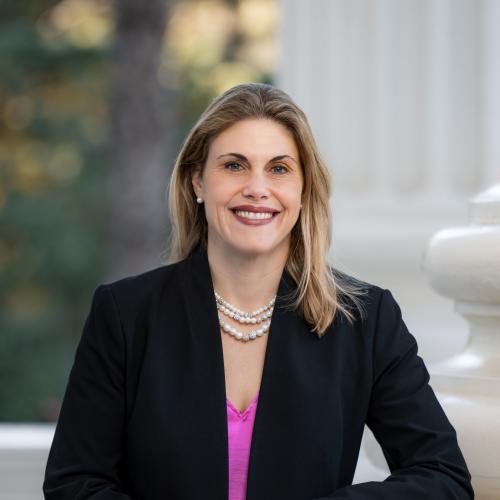
Asm. Maggy Krell
Sponsored bills
Maddy summaryThis House Resolution officially designates September as Black Music Month to honor the significant contributions of Black artists to American culture. The measure recognizes a wide range of musical genres, including jazz, blues, gospel, and hip-hop, by highlighting their historical origins and influential figures. While the text celebrates these artistic achievements, it does not impose any new legal requirements or funding mandates.
Existing law requires that, as a condition of parole, a prisoner who has a severe mental health disorder, as specified, be treated by the State Department of State Hospitals, if the prisoner meets certain requirements, including, among others, that the person in charge of treating the prisoner and a practicing psychiatrist or psychologist from the State Department of State Hospitals have evaluated the prisoner and that a chief psychiatrist of the Department of Corrections and Rehabilitation certify to the Board of Parole Hearings that by reason of the prisoner's severe mental health disorder, the prisoner represents a substantial danger of physical harm to others. This bill would require that certain factors be considered in determining whether an offender poses a substantial danger of physical harm to others, including, but not limited to, a history of violent behavior and prior history of state hospital commitment. Existing law allows a prisoner to request a hearing before the Board of Parole Hearings for the purpose of proving that the prisoner meets the criteria to be treated by the State Department of State Hospitals. Existing law allows a prisoner who disagrees with the determination of the Board of Parole Hearings to file a petition in court for a hearing on whether they met the criteria and, if the court reverses the determination of the Board of Parole Hearings, existing law authorizes the court to require the parties to return to court to ensure that the entities involved in the release of the prisoner have coordinated an exit plan for the prisoner. This bill would require that an exit plan include the submission of an application for Medi-Cal benefits and a recommendation, as appropriate, to the supervising county's behavioral health department by a licensed behavioral health professional, as specified, supervising the treatment of, or treating, the prisoner for a mental health disorder for certain resources and programs, including substance use disorder treatment, assisted outpatient treatment, and early psychosis intervention services. Existing law, the Mental Health Services Act (MHSA) , an initiative measure enacted by the voters as Proposition 63 at the November 2, 2004, statewide general election, funds a system of county mental health plans for the provision of mental health services, as specified. The MHSA establishes the Mental Health Services Fund, a continuously appropriated fund, which is administered by the State Department of Health Care Services (department) , to fund specified county mental health programs. Existing law, the Behavioral Health Services Act (BHSA) , a legislative act amending the MHSA that was approved by the voters as Proposition 1 at the March 5, 2024, statewide primary election, recast the MHSA by, among other things, renaming the fund to the Behavioral Health Services Fund and reallocating how moneys from that fund may be spent. The BHSA requires each county to establish and administer a full-service partnership program that includes, among other things, outpatient behavioral health services, as specified, and housing interventions. Existing law establishes criteria for an individual with a serious mental illness to be presumptively eligible for a full-service partnership, including, among other things, the person is transitioning to the community after 6 months or more in the state prison or county jail. This bill would add to the criteria for presumptively eligibility for a full-service partnership an individual transitioning to the community after 6 months or more in a state hospital. Existing law establishes the Medi-Cal program, which is administered by the State Department of Health Care Services and under which qualified low-income individuals receive health care services. The Medi-Cal program is, in part, governed and funded by federal Medicaid program provisions. Existing law, the California Advancing and Innovating Medi-Cal (CalAIM) Act, supports the stated goals of identifying and managing the risk and needs of Medi-Cal beneficiaries, transitioning and transforming the Medi-Cal program to a more consistent and seamless system, and improving quality outcomes. Existing law makes a qualifying inmate of a public institution eligible, commencing no sooner than January 1, 2023, to receive targeted Medi-Cal services, limited to those services approved in the CalAIM Terms and Conditions for 90 days, as specified. This bill would also make a qualifying inmate of a state hospital eligible to receive targeted Medi-Cal services, as described. By expanding the population receiving benefits under the BHSA and to the extent that the bill would create new duties for counties relating to Medi-Cal eligibility determinations, the bill would impose a state-mandated local program. The California Constitution requires the state to reimburse local agencies and school districts for certain costs mandated by the state. Statutory provisions establish procedures for making that reimbursement. This bill would provide that, if the Commission on State Mandates determines that the bill contains costs mandated by the state, reimbursement for those costs shall be made pursuant to the statutory provisions noted above.
Existing law authorizes a court to grant pretrial diversion to a defendant suffering from a mental disorder, on an accusatory pleading alleging the commission of a misdemeanor or felony offense, to allow the defendant to undergo mental health treatment. Existing law prescribes specified criteria for a defendant to be eligible for pretrial diversion and for a court to consider whether the defendant is suitable for pretrial diversion. Existing law authorizes a court to require the defendant to make a prima facie showing that they will meet the minimum requirements of eligibility for diversion and that the defendant and the offense are suitable for diversion and authorizes the court, if that showing is not made, to summarily deny diversion and grant alternate relief. This bill, if the court intends to summarily grant diversion or any other relief, would require the court to conduct an additional hearing if requested by either party. By increasing the duties on local prosecutors, this bill would impose a state-mandated local program. The California Constitution requires the state to reimburse local agencies and school districts for certain costs mandated by the state. Statutory provisions establish procedures for making that reimbursement. This bill would provide that, if the Commission on State Mandates determines that the bill contains costs mandated by the state, reimbursement for those costs shall be made pursuant to the statutory provisions noted above.
Existing law defines an assault as an unlawful attempt, coupled with present ability, to commit a violent injury upon the person of another. Existing law defines a battery as any willful and unlawful use of force or violence upon the person of another. Under existing law, an assault or battery committed against specified professionals engaged in the performance of their duties, including peace officers, firefighters, and emergency medical personnel, is punishable by imprisonment in a county jail not exceeding one year, by a fine not exceeding $2,000, or by both that fine and imprisonment. This bill would make an assault or battery committed against a utility worker, as defined, who is engaged in the performance of their duties punishable by imprisonment in a county jail not exceeding one year, by a fine not exceeding $2,000, or by both that fine and imprisonment. By expanding the scope of these crimes, this bill would impose a state-mandated local program. The California Constitution requires the state to reimburse local agencies and school districts for certain costs mandated by the state. Statutory provisions establish procedures for making that reimbursement. This bill would provide that no reimbursement is required by this act for a specified reason.
Existing law, the Dymally-Alatorre Bilingual Services Act, requires every state agency directly involved in the furnishing of information or the rendering of services to the public where contact is made with a substantial number of non-English-speaking people to employ a sufficient number of qualified bilingual persons in public contact positions to ensure provision of information and services to the public in the language of the non-English-speaking person, except as specified. The act requires every state agency that serves a substantial number of non-English-speaking people and provides materials in English explaining services to also provide the same type of materials in any non-English language spoken by a substantial number of the public served by the agency, as specified. The act also requires a state agency to distribute certain written materials in the appropriate non-English language or provide other specified translation assistance at its statewide and local offices and facilities if the state agency finds, among other things, that the statewide or local office or facility serves a substantial number of non-English-speaking persons. The act defines "substantial number of non-English-speaking people" to mean members of a group who either do not speak English or who are unable to effectively communicate in English because it is not their native language and who comprise 5% or more of the people served by the state agency, as specified. This bill would revise the definition of "substantial number of non-English-speaking people" to include the higher of either the people served by or eligible to be served by the state agency and would make related conforming changes to the act. The act requires each state agency to conduct a language survey of each of its statewide and local offices every 2 years to determine and provide, among other things, the number and percentage of non-English-speaking people served by each statewide and local office, broken down by native language. The act requires each state agency to develop and update an implementation plan that provides a detailed description of how the agency plans to address any deficiencies in meeting the requirements of the act, as specified. The act authorizes a state agency to rely upon data gathered from its most recent language survey in developing its implementation plan. This bill would revise and recast the above-described language survey requirements to instead require each state agency to conduct an assessment and survey of the language needs of non-English-speaking and limited-English-speaking people, as specified. The bill would require a state agency to utilize specified information in conducting the assessment and survey and in developing and updating the above-described implementation plan, including, among other things, the most recent census data from the United States Census Bureau. The bill would authorize a state agency to rely on its most recent survey and assessment in developing its implementation plan. The act requires each state agency to report to the Department of Human Resources the language survey results, its implementation plan, and any additional information requested by the department, as specified. The act requires the department to review the results of the surveys and implementation plans, compile that data, and provide a report to the Legislature every 2 years that identifies significant problems or deficiencies and propose solutions where warranted. This bill would include each state agency's most recent language assessment in the materials required to be reported to and reviewed by the department and would require the department's report to the Legislature to include each state agency's language assessment, survey results, and implementation plan. This bill would also require the California Health and Human Services Agency to designate a Language Access Director to ensure individuals with limited English proficiency and individuals who are deaf or hard of hearing have meaningful access to government programs and services. This bill would require the Language Access Director to, among other things, lead the implementation, monitoring, and periodic updating of every Language Access Plan within the agency and coordinate with language access coordinators throughout the agency to implement each Language Access Plan. The bill would require the Language Access Director, commencing no later than January 1, 2027, to engage communities with limited English proficiency and deaf and hard of hearing communities to assist in expanding access to the programs and services provided by the California Health and Human Services Agency and the various departments and offices within the agency. This bill would require the Language Access Director to develop a Language Access Plan Guidance Document to support its various departments and offices in the development of their Language Access Plans. The bill would require each department and office within the agency to develop a Language Access Plan, as specified. The bill would require the California Health and Human Services Agency to allocate, from a specified appropriation, sufficient funds to implement and carry out the provisions relating to the Language Access Director and Language Access Plans.
Maddy summaryThis bill serves as a commemorative resolution to mark the 50th anniversary of the Surface Mining and Reclamation Act of 1975. It does not create new laws or alter existing regulations but instead formally acknowledges the milestone achievement of the original legislation. The measure is intended to honor the history of mining and land reclamation efforts established by the 1975 act.
This measure would acknowledge and celebrate 50 years of coastal protection and affirm the state's longstanding commitment to protecting its coastal waters, as specified.
Maddy summaryThis bill designates June 2026 as Men's Mental Health Month to raise awareness about mental health issues affecting men. The measure is a formal proclamation that does not change laws or allocate funding, but rather encourages public recognition of the topic. Once passed, it serves as an official declaration without imposing new requirements on individuals or organizations.
This measure would declare the month of June 2026 as Alzheimer's Disease and Brain Awareness Month, and would urge all Californians to commemorate the month of June 2026 as Alzheimer's Disease and Brain Awareness Month.