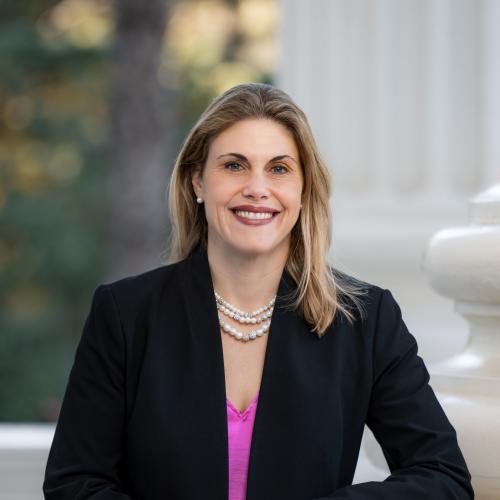
Photo of Maggy Krell
D California Assembly · District 6 On the 2026 ballot

Asm. Maggy Krell

Compare
Total votes
5,562
all sessions
Attendance
93%
274 missed
Near the chamber average
With party
99%
of cast votes
Near the chamber average
Bipartisan score
0%
crosses aisle rarely
Near the chamber average
Sponsored
376
bills & resolutions
Near the chamber average
Committees
5
assignments
376 bills and resolutions

Sponsored bills

Total
376
Primary
30
Co-sponsor
346
This page
376
matching current filters
Co-sponsor AJR 18
Passed · California Assembly · Co-sponsor
Recognition of the historical wrongdoing committed against California Native Americans.

This measure would recognize the historical wrongdoing committed against California Native Americans and urge the federal government to work alongside tribal leaders to address historic injustices, uphold treaty obligations, and ensure equitable access to resources, healthcare, education, and environmental stewardship.

Passed Jun 4, 2026 1 co-sponsor
Co-sponsor SCR 123
Signed into law · California Senate · Co-sponsor
California Peace Officers' Memorial Day.

Maddy summaryThis bill designates Monday, May 4, 2026, as California Peace Officers' Memorial Day to honor law enforcement officers. It does not create new laws or change existing policies but serves as a formal proclamation to recognize the date. The measure affects the state by establishing an official day of remembrance for peace officers.

Signed into law May 21, 2026 1 co-sponsor
Co-sponsor ACR 141
Signed into law · California Assembly · Co-sponsor
Relative to Vesak Day.

This measure would recognize the significance of Vesak Day to people of Buddhist faith and extend sincere best wishes to the state's Buddhist community in celebrating Vesak Day.

Signed into law May 18, 2026 1 co-sponsor
Co-sponsor HR 111
Passed · California Assembly · Co-sponsor
Relative to International Day Against Homophobia, Biphobia, Interphobia, and Transphobia.

Maddy summaryThis House Resolution recognizes May 17, 2026, as the International Day Against Homophobia, Biphobia, Interphobia, and Transphobia within the California Legislature. The measure formally acknowledges the ongoing discrimination faced by LGBTQ+ individuals globally and reaffirms the state's commitment to equality and civil rights. By adopting this resolution, the Assembly encourages all Californians to support inclusive practices and stand against hate toward the LGBTQ+ community.

Passed May 18, 2026 1 co-sponsor
Co-sponsor AB 2582
In committee · California Assembly · Co-sponsor
Crimes: prostitution.

Under existing law, an individual who solicits, or who agrees to engage in, or who engages in, any act of prostitution is guilty of disorderly conduct, a misdemeanor. This bill would require a person who commits prostitution with intent to receive compensation, money, or anything of value from another person to, for a first or 2nd violation of those provisions, be offered a diversion program pursuant to specified provisions. By imposing new duties on local officials, the bill would create a state-mandated local program. The California Constitution requires the state to reimburse local agencies and school districts for certain costs mandated by the state. Statutory provisions establish procedures for making that reimbursement. This bill would provide that, if the Commission on State Mandates determines that the bill contains costs mandated by the state, reimbursement for those costs shall be made pursuant to the statutory provisions noted above.

In committee May 14, 2026 1 co-sponsor
Primary AB 1800
In committee · California Assembly · Lead sponsor
Portable electronics and optical products insurance.

Existing law creates the Department of Insurance, headed by the Insurance Commissioner, and generally regulates the business of insurance in the state. Existing law authorizes the commissioner to issue a portable electronics insurance agent license to a portable electronics vendor, authorizing the vendor to sell or offer to its customers insurance in connection with, and incidental to, the sale of portable electronics or the sale or provision of accessories or services related to the use of portable electronics. Existing law authorizes an endorsee of a portable electronics vendor to sell or offer portable electronics insurance pursuant to the authority of the vendor's portable electronics insurance agent license, as provided. Existing law imposes various requirements on licensees and endorsees, including making specified disclosures, training, and recordkeeping. Under existing law, any person who transacts insurance without a valid license is guilty of a misdemeanor. This bill would expand the application of the above-described provisions to include optical products, as defined, by authorizing the commissioner to issue a portable electronics or optical products insurance agent license to a portable electronics or optical products vendor. The bill would make various conforming changes. By expanding the scope of products for which an insurance license is required, the violation of which is a crime, the bill would impose a state-mandated local program. The California Constitution requires the state to reimburse local agencies and school districts for certain costs mandated by the state. Statutory provisions establish procedures for making that reimbursement. This bill would provide that no reimbursement is required by this act for a specified reason.

In committee May 14, 2026 0 co-sponsors
Primary AB 2069
In committee · California Assembly · Lead sponsor
Sales and Use Tax Law: exemption: fairgrounds.

Existing state sales and use tax laws impose a tax on retailers measured by the gross receipts from the sale of tangible personal property sold at retail in this state, or on the storage, use, or other consumption in this state of tangible personal property purchased from a retailer for storage, use, or other consumption in this state. The Sales and Use Tax Law provides various exemptions from those taxes. This bill, the Fairground Act for Investment and Revitalization, on and after January 1, 2027, and before January 1, 2032, would exempt the gross receipts from the sale in this state of, and the storage, use, or other consumption in this state of, tangible personal property for use in the construction, development, or ongoing operation of a qualified project, defined to mean a new development project, or new phase of an existing project, that is located on the land of a fairground, undertaken pursuant to a written agreement and approved by a governing body of a fairground, as provided. The bill would require a governing body of a fairground to approve a project. By requiring additional duties be performed by the governing body of a fairground, this bill would impose a state-mandated local program. Existing law requires any bill authorizing a new tax expenditure to contain, among other things, specific goals, purposes, and objectives that the tax expenditure will achieve, detailed performance indicators, and data collection requirements. This bill also would include additional information required for any bill authorizing a new tax expenditure. The Bradley-Burns Uniform Local Sales and Use Tax Law authorizes counties and cities to impose local sales and use taxes in conformity with the Sales and Use Tax Law, and existing laws authorize districts, as specified, to impose transactions and use taxes in accordance with the Transactions and Use Tax Law, which generally conforms to the Sales and Use Tax Law. Amendments to the Sales and Use Tax Law are automatically incorporated into the local tax laws. This bill would provide that the exemption created by the bill does not apply to local sales and use taxes or transactions and use taxes. Existing law imposes or dedicates certain state sales and use tax rates for local funding, including through the Local Revenue Fund 2011. This bill would provide that the exemption created by the bill does not apply to those state sales and use tax rates imposed or dedicated for local government funding, including those rates for which revenues are deposited into the Local Revenue Fund 2011. The California Constitution requires the state to reimburse local agencies and school districts for certain costs mandated by the state. Statutory provisions establish procedures for making that reimbursement. This bill would provide that, if the Commission on State Mandates determines that the bill contains costs mandated by the state, reimbursement for those costs shall be made pursuant to the statutory provisions noted above. This bill would take effect immediately as a tax levy.

In committee May 14, 2026 0 co-sponsors
Co-sponsor SB 1071
In committee · California Senate · Co-sponsor
Death certificates.

Existing law requires that each death be registered with the local registrar of births and deaths in the district in which the death was officially pronounced or the body was found. Existing law establishes the required contents of the death certificate, including, but not limited to, the decedent's name, sex, race, and the disease or conditions leading directly to death and antecedent causes, among other relevant identifying and medical information. When the facts are incorrectly stated in a certificate of death, including a typographical error, existing law authorizes a person to make an affidavit under oath stating the changes necessary to make the record correct. Existing law requires that specified information be filed with the state or local registrar, and if the amendments are accepted, the State Registrar is required to transmit copies of the amendment to the county recorder in whose offices the copies of the original record and information are on file. Existing law requires the amendment to be filed with and become a part of the record to which it pertains. This bill would authorize a family member of the deceased, when a judicial determination is made on the manner of a deceased person's death, to submit a written request to the State Registrar for a new death certificate reflecting the newly determined manner of death. This bill would require the request to be supported by a certified copy of the plea, verdict, statement of decision, or a judgment showing that the manner of death was determined by a finder of fact to be different than stated on the existing certificate. The bill would require the State Registrar to review the request and issue a new death certificate if specified conditions are met, including, but not limited to, that the request identifies the determination of manner of death in the certified court record. The bill would require the State Registrar to transmit copies of the new death certificate and the new certificate will supplant any previously issued certificate for the deceased person. The bill would require the local registrar to transmit any copies of the previously issued death certificate to the State Registrar if it is practical to do so and if it is not practical to do so, seal a cover over the copy, as specified. The bill would specify that a plea, verdict, statement of decision, or judgment reflects a judicial determination that the manner of death was homicide if it shows criminal responsibility or civil liability for the death of the deceased person. The bill would authorize a family member of the deceased to include additional certified court records with their request to permit the State Registrar to determine the manner of death. The bill would require a determination by the State Registrar to be based solely on the request and the submitted certified court documents. By imposing new duties on local registrars, this bill would impose a state-mandated program. The California Constitution requires the state to reimburse local agencies and school districts for certain costs mandated by the state. Statutory provisions establish procedures for making that reimbursement. This bill would provide that, if the Commission on State Mandates determines that the bill contains costs mandated by the state, reimbursement for those costs shall be made pursuant to the statutory provisions noted above.

In committee May 14, 2026 1 co-sponsor
Co-sponsor HR 95
Passed · California Assembly · Co-sponsor
Relative to National Public Works Week.

Maddy summaryThis bill designates the week of May 17 to May 24, 2026, as National Public Works Week throughout California to honor the contributions of public works professionals. It directly affects engineers, managers, and employees in government and the private sector who maintain essential infrastructure like transportation systems, water supplies, and public buildings. The resolution requests that the Governor issue a proclamation encouraging the public to observe the week with educational programs and activities that highlight the importance of these workers.

Passed May 14, 2026 1 co-sponsor
Primary AB 2138
In committee · California Assembly · Lead sponsor
Medi-Cal: enhanced care management: peer support specialists.

Existing law establishes the Medi-Cal program, which is administered by the State Department of Health Care Services and under which qualified low-income individuals receive health care services. The Medi-Cal program is in part governed by, and funded pursuant to, federal Medicaid program provisions. Existing law requires the department to implement an enhanced care management (ECM) benefit designed to address the clinical and nonclinical needs on a whole-person-care basis for certain target populations of Medi-Cal beneficiaries enrolled in Medi-Cal managed care plans. Under existing law, target populations include, among others, high utilizers with frequent hospital admissions, short-term skilled nursing facility stays, or emergency room visits, and individuals experiencing homelessness. Existing law authorizes a county, or an agency representing a county, to develop a peer support specialist certification program, subject to departmental approval. Under existing law, these specialists are individuals, at least 18 years of age, who self-identify as having lived experience with the process of recovery from mental illness, substance use disorder, or both, as specified. Existing law requires the department to seek any federal waivers that it deems necessary to establish a demonstration or pilot project for the provision of peer support services in counties that agree to participate. This bill would require the department to require, as a condition of providing ECM, that any ECM provider, whose caseload of members meets certain criteria, maintain an interdisciplinary care team that includes at least one peer support specialist or trainee, as defined, who is integrated into ECM service delivery and available to support ECM members. The bill would set forth the functions of a peer support specialist or trainee for ECM purposes. The bill would require the department to allow an ECM provider to satisfy the requirement through any combination of staffing models, as specified. The bill would require the department to ensure that Medi-Cal managed care plan contracts, policies, and guidance reflect the requirement and to establish monitoring and compliance mechanisms to ensure that ECM providers implement the requirement. The bill would require the department to recognize virtual, telephonic, and technology-enabled peer support service delivery as meeting the integration requirement. Under the bill, an ECM provider subject to these provisions would have until January 1, 2028, to achieve full compliance, as specified. The bill would prohibit the department, a county, a Medi-Cal managed care plan, or a Medi-Cal provider, as applicable, from disqualifying a peer support specialist solely or primarily on the basis of a criminal background check, fingerprint-based background check, or similar screening that is a condition of employment, contracting, certification, credentialing, enrollment, or participation in providing peer support services. Under the bill, this restriction would be implemented to the extent not in conflict with federal law, and the restriction would not prohibit background checks under specified circumstances. The bill would also authorize consideration of an individual's criminal record as part of their overall fitness for the position of peer support specialist if the criminal record has a nexus to that position or its duties. The bill would condition implementation of these provisions on receipt of any necessary federal approvals and the availability of federal financial participation.


In committee May 14, 2026 0 co-sponsors
Showing 131 to 140 of 376 bills
Previous 1 … 13 14 15 … 38 Next