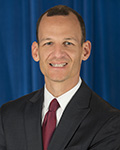
Photo of Kevin McCarty
D California Assembly · District 6

Asm. Kevin McCarty

Contact Email
Compare
Total votes
24,221
all sessions
Attendance
94%
1,034 missed
Near the chamber average
With party
99%
of cast votes
Near the chamber average
Bipartisan score
0%
crosses aisle rarely
Near the chamber average
Sponsored
1,989
bills & resolutions
Near the chamber average
Committees
0
assignments
1,989 bills and resolutions

Sponsored bills

Total
1,989
Primary
257
Co-sponsor
1,732
This page
1,989
matching current filters
Co-sponsor AB 1
Signed into law · California Assembly · Co-sponsor
Developmental services: Medi-Cal: funding.

The Lanterman Developmental Disabilities Services Act requires the State Department of Developmental Services to contract with regional centers to provide services and supports to individuals with developmental disabilities. Under existing law, regional centers purchase needed services for individuals with developmental disabilities through approved service providers or arrange for those services through other publicly funded agencies. Existing law establishes specified rates and wages to be paid to certain service providers and the rates to be paid for certain developmental services. Existing law requires that rates to be paid to other developmental service providers either be set by the department or negotiated between the regional center and the service provider. Existing law establishes the Medi-Cal program, administered by the State Department of Health Care Services, under which basic health care services are provided to qualified low-income persons. The Medi-Cal program is, in part, governed and funded by federal Medicaid Program provisions. Existing law requires, except as otherwise provided, Medi-Cal provider payments to be reduced, as specified. This bill would appropriate a specified sum to the State Department of Developmental Services to, commencing July 1, 2016, among other things, increase rates and wages for certain developmental services providers and fund incentive payments for competitive integrated employment opportunities and internships for individuals with developmental disabilities. The bill would require the department to submit a rate study to specified committees of the Legislature on or before March 1, 2019, regarding community-based services for individuals with developmental disabilities. The bill would require each regional center to report specified information to the department regarding increased funding for regional center operations. The bill would, for dates of service on or after August 1, 2016, increase the payment rates for intermediate care facilities and skilled nursing facilities that provide services to developmentally disabled individuals under the Medi-Cal program, as specified. The bill would also prohibit the State Department of Health Care Services from seeking to retroactively implement certain Medi-Cal provider payment reductions and limitations with regards to reimbursements for services provided by skilled nursing facilities that are distinct parts of general acute care hospitals for dates of service on or after June 1, 2011, and on or before September 30, 2013, and from seeking to recoup overpayments, as specified. Existing law requires the department and regional centers to annually collaborate to compile specified data relating to purchase of service authorization, utilization, and expenditure by each regional center. Existing law requires each regional center to annually report to the department regarding the regional center's implementation of these requirements, including whether the data indicates a need to reduce disparities in the purchase of services among consumers in the regional center's catchment area and the regional center's recommendations and plan to promote equity, and reduce disparities, in the purchase of services. Existing law requires the department to consult with specified stakeholders to review the data, develop recommendations to help reduce disparities in purchase of service expenditures, and encourage development and expansion of culturally appropriate services, among other things, and to report the status of its efforts during the 2016–17 legislative budget subcommittee hearing process. The bill would also require the department, subject to available funding, to allocate funding to regional centers to assist in implementing specified recommendations and plans, including the recommendations and plans of the regional centers to promote equity, and reduce disparities, in the purchase of services. Existing law requires an entity that receives payments between $250,000 and $500,000 per year from one or more regional centers to obtain either an independent audit or an independent review report of its financial statements, and requires an entity that receives payments that are equal to or more than $500,000 per year to obtain an independent audit. This bill would instead require an entity that receives payments between $500,000 and $2,000,000 from one or more regional centers to obtain an independent review report of its financial statements, and would authorize these entities to apply for, and require the regional center to grant, a 2-year exemption from this requirement if the regional center does not find issues in the independent review report that have an impact on regional center services. The bill would require an entity that receives payments from one or more regional centers that are equal to or more than $2,000,000 to obtain an independent audit and would authorize these entities to apply for, and require the regional center to grant, a 2-year exemption from the audit requirement if the audit resulted in an unmodified opinion, an unmodified opinion with additional communication, or a qualified opinion with issues that are not material. The bill would require a regional center to annually report to the State Department of Developmental Services any exemptions granted pursuant to these provisions.


Signed into law Mar 1, 2016 1 co-sponsor
Primary ACR 9
Signed into law · California Assembly · Lead sponsor
Relative to Pet Care Education Month.

This measure would declare the month of January 2016 as Pet Care Education Month and would request Californians to observe the month by ensuring that their companion animals receive the proper preventative care by establishing a financial plan for pet health emergencies and by contributing to charitable organizations that provide low-cost spay and neuter services and vaccinations or funds to help low-income individuals pay for veterinary care.

Signed into law Feb 10, 2016 0 co-sponsors
Co-sponsor SB 243
In committee · California Senate · Co-sponsor
Medi-Cal: reimbursement: provider rates.

(1) Existing law establishes the Medi-Cal program, administered by the State Department of Health Care Services, under which health care services are provided to qualified, low-income persons. The Medi-Cal program is, in part, governed and funded by federal Medicaid provisions. Existing law requires the department to develop and implement a Medi-Cal inpatient hospital reimbursement payment methodology based on diagnosis-related groups, subject to federal approval, that reflects the costs and staffing levels associated with quality of care for patients in all general acute care hospitals, as specified. Existing law generally requires the diagnosis-related group-based payments to apply to all claims. This bill would require claims for payments pursuant to the inpatient hospital reimbursement methodology described above to be increased by 16% for the 2015–16 fiscal year, and would require, commencing July 1, 2016, and annually thereafter, the department to increase each diagnosis-related group payment claim amount based, at a minimum, on increases in the medical component of the California Consumer Price Index. Commencing with the 2015–16 fiscal year, and annually thereafter, the bill would require managed care rates for Medi-Cal managed care health plans to be increased by a proportionately equal amount for increased payments for hospital services. (2) Existing law requires, except as otherwise provided, Medi-Cal provider payments to be reduced by 1% or 5%, and provider payments for specified non-Medi-Cal programs to be reduced by 1%, for dates of service on and after March 1, 2009, and until June 1, 2011. Existing law requires, except as otherwise provided, Medi-Cal provider payments and payments for specified non-Medi-Cal programs to be reduced by 10% for dates of service on and after June 1, 2011. This bill would, instead, prohibit the application of those reductions for payments to providers for dates of service on or after June 1, 2011. The bill would also require payments for managed care health plans for dates of service following the effective date of the bill to be determined without application of some of those reductions. The bill would require the Director of Health Care Services to implement this provision to the maximum extent permitted by federal law and for the maximum time period for which the director obtains federal approval for federal financial participation for those payments. (3) Prior law required, beginning January 1, 2013, through and including December 31, 2014, that payments for primary care services provided by specified physicians be no less than 100% of the payment rate that applies to those services and physicians as established by the Medicare program, for both fee-for-service and managed care plans. This bill, commencing January 1, 2016, would require payments for specified medical care services to not be less than 100% of the payment rate that applies to those services as established by the Medicare program for services rendered by fee-for-service providers, and would require rates paid to Medi-Cal managed care plans to be actuarially equivalent to payment rates established by the Medicare program. The bill, commencing January 1, 2016, would require rates paid to Denti-Cal providers for dental services provided to adults and children to be increased by the equivalent percentage as the percentage increase required for other fee-for-service Medi-Cal providers. The bill would require those provisions to be implemented only to the extent permitted by federal law and that federal financial participation is available. The bill would authorize the department to implement those provisions through provider bulletins without taking regulatory action until regulations are adopted, and would require the department to adopt those regulations by July 1, 2018. The bill would require, commencing July 1, 2016, the department to provide a status report to the Legislature on a semiannual basis until regulations have been adopted. (4) This bill would declare that it is to take effect immediately as an urgency statute.

In committee Feb 1, 2016 1 co-sponsor
Primary AB 86
Failed · California Assembly · Lead sponsor
Peace officers: Department of Justice: independent investigation.

Existing law establishes the Department of Justice under the direction and control of the Attorney General, and requires the Department of Justice to perform duties in the investigation of crimes as may be assigned by the Attorney General. Existing law requires each department or agency in this state that employs peace officers to establish a procedure to investigate complaints by members of the public against the personnel of these departments or agencies, as specified. This bill would require the Attorney General to appoint a special prosecutor to direct an independent investigation if a peace officer, in the performance of his or her duties, uses deadly physical force upon another person and that person dies as a result of the use of that deadly physical force. The bill would grant the special prosecutor the sole authority to determine whether criminal charges should be filed. The bill would make the special prosecutor responsible for prosecuting any charges filed.

Failed Feb 1, 2016 0 co-sponsors
Co-sponsor SB 174
In committee · California Senate · Co-sponsor
Crisis nurseries: study.

Existing law provides for the licensure and regulation by the State Department of Social Services of crisis nurseries. Crisis nurseries are nonprofit corporations that care for and supervise children under 6 years of age who are voluntarily placed in the crisis nursery by a parent or legal guardian due to a family crisis or stressful situation for no more than 30 days. This bill, until January 1, 2018, would require the department to implement a 2-year pilot project in the County of Sacramento and the County of Yolo to conduct a study of the relationship between crisis respite care and incidents of reported child abuse in those counties, and report the results of the study to the Legislature. The bill would make the implementation of this pilot project contingent upon all of the crisis nurseries in those counties voluntarily participating in the project and providing funding for 12 of the cost of the project.

In committee Feb 1, 2016 1 co-sponsor
Primary AB 519
Failed · California Assembly · Lead sponsor
Foster youth: permanency.

Existing law provides that a minor may be removed from the physical custody of his or her parents if there is a substantial danger to the physical health of the child or the child is suffering severe emotional damage and there are no reasonable means to protect the child without removing him or her. Additionally, a minor who is in wardship proceedings may be removed from the physical custody of his or her parents if the court finds that one of several facts is present, including that the parent or guardian is incapable of providing or has failed to provide proper maintenance, training, and education for the minor. When a minor is removed from the physical custody of his or her parents in dependency or wardship proceedings, existing law generally requires that reunification services be provided to a minor and his or her family. Existing law also provides for periodic status review hearings, at which the court must return a minor to the physical custody of his or her parents unless the court makes specified findings. Existing law requires, if a minor is not returned to the physical custody of his or her parents, the juvenile court to devise a permanency plan, including, among others, an order that the child be placed for adoption, an order that a legal guardian be appointed, or an order that the child remain in another planned permanent living arrangement or long-term foster care. Existing law requires, prior to ordering a dependent child to remain in another planned permanent living arrangement or long-term foster care as his or her permanency plan, the court to make a finding that the child is not a proper subject for adoption and has no one willing to accept legal guardianship. This bill would generally delete references to "long-term foster care" and, instead, refer to that permanency plan as "another planned permanent living arrangement" and would establish a new permanency plan option of placement with a fit and willing relative. The bill would prohibit a child under 16 years of age from having as his or her permanency plan continued placement in another planned permanent living arrangement and would require a child 16 years of age or older to be receiving specialized permanency services in order to continue in another planned permanent living arrangement. The bill would require for any child who has as his or her permanency plan another planned permanent living arrangement, and would authorize for children under 16 years of age and in an out-of-home placement, the placing agency to, among other things, conduct intensive and ongoing efforts to return the child home or secure a placement for the child with a fit and willing relative, a legal guardian, or an adoptive parent. The bill would also require for any child who has as his or her permanency plan another planned permanent living arrangement, and would authorize for children under 16 years of age and in an out-of-home placement, the court, at each permanency hearing to, among other things, review the intensive, ongoing, and, as of the date of the hearing, unsuccessful efforts made by the placing agency to return the child home or secure a placement for the child with a fit and willing relative, a legal guardian, or an adoptive parent and to redetermine the appropriateness of placement. The bill would require, prior to a child being deemed not a proper subject for adoption or as having no one willing to accept legal guardianship, the child to receive specialized permanency services. The bill would also require, commencing January 1, 2017, in any case in which the court has ordered a dependent child or a ward of the juvenile court placed for adoption or has appointed a relative or nonrelative legal guardian, the social worker or probation officer to provide the prospective adoptive family or the guardian or guardians specified mental health treatment information. By expanding the duties of social workers and probation officers with regard to the provision of child welfare services, this bill would impose a state-mandated local program. The California Constitution requires the state to reimburse local agencies and school districts for certain costs mandated by the state. Statutory provisions establish procedures for making that reimbursement. This bill would provide that no reimbursement is required by this act for specified reasons.

Failed Feb 1, 2016 0 co-sponsors
Co-sponsor SCR 91
Signed into law · California Senate · Co-sponsor
Relative to India Republic Day.

This measure would proclaim January 26, 2016, as India Republic Day, and would urge all Californians to join in celebrating India Republic Day.

Signed into law Feb 1, 2016 1 co-sponsor
Showing 1,801 to 1,810 of 1,989 bills