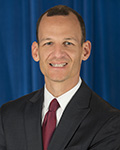
Photo of Kevin McCarty
D California Assembly · District 6 · Former member

Asm. Kevin McCarty

Contact Email
Compare
Total votes
24,221
all sessions
Attendance
94%
1,034 missed
Near the chamber average
With party
99%
of cast votes
Near the chamber average
Bipartisan score
0%
crosses aisle rarely
Near the chamber average
Sponsored
1,989
bills & resolutions
Near the chamber average
Committees
0
assignments
1,989 bills and resolutions

Sponsored bills

Total
1,989
Primary
257
Co-sponsor
1,732
This page
1,989
matching current filters
Co-sponsor ACR 109
Passed · California Assembly · Co-sponsor
Relative to Red Ribbon Week.

This measure would proclaim the period of October 23, 2017, to October 31, 2017, inclusive, as Red Ribbon Week and would encourage all Californians to help build drug-free communities and to participate in drug prevention activities.

Passed Jan 3, 2018 1 co-sponsor
Primary AB 848
Signed into law · California Assembly · Lead sponsor
Public contracts: University of California: California State University: domestic workers.

(1) Existing law requires a state agency to comply with specified procedures in awarding agency contracts. Existing law, with specified exceptions, prohibits a state agency authorized to enter into contracts relating to public benefit programs from contracting for services provided by a call center that directly serves applicants for, recipients of, or enrollees in, those public benefit programs with a contractor or subcontractor unless that contractor or subcontractor certifies in its bid for the contract that the contract, and any subcontract performed under that contract, will be performed solely with workers employed in California. Existing law imposes a civil penalty, as provided, for knowingly providing false information in that certification. Existing law also requires the contract to include a clause providing for a right by the state to terminate the contract for noncompliance and specified penalties, if the contractor or subcontractor performs the contract or the subcontract with workers not employed in California during the life of the contract. This bill would prohibit, on or after July 1, 2017, the University of California and the California State University from contracting for services with a contractor or subcontractor unless that contractor or subcontractor certifies, under penalty of perjury, in his or her bid for that contract that the contract, and any subcontract performed under that contract, will be performed solely with workers within the United States or describes in his or her bid any parts of the work that will be performed by workers outside of the United States. The bill would prohibit the University of California and the California State University from expending funds for training for service contract employees located in foreign countries or for training for service contract employees who plan to relocate to a foreign country as part of the service contract, if that service contract displaces an employee of the University of California or the California State University. The bill would require a contract entered into pursuant to the bill to provide, in the event a contractor or subcontractor performs the contract or the subcontract with workers outside the United States during the life of the contract, for the termination of the contract for noncompliance, as specified. The bill would specify the circumstances under which a contractor or the University of California or the California State University would be found to have violated a provision of the bill. The bill would define "displace" for purposes of the bill as the layoff, demotion, involuntary transfer to a new classification or location, or time base reduction of an employee of the University of California or the California State University, under specified conditions. The bill would specify that nothing in its provisions would preclude the University of California and the California State University from contracting with a contractor or subcontractor that utilizes workers in offshore operations in circumstances that do not directly result in the displacement of an employee of the University of California or the California State University. The bill would specify that these provisions do not apply to contracts relating to study abroad programs, or to international teaching, research, or public service activities and projects, conducted by the University of California or the California State University. By requiring contractors and subcontractors to make certifications under penalty of perjury, this bill would create a new crime and thereby impose a state-mandated local program. (2) The California Constitution requires the state to reimburse local agencies and school districts for certain costs mandated by the state. Statutory provisions establish procedures for making that reimbursement. This bill would provide that no reimbursement is required by this act for a specified reason.

Signed into law Oct 15, 2017 0 co-sponsors
Co-sponsor AB 1665
Signed into law · California Assembly · Co-sponsor
Telecommunications: California Advanced Services Fund.

Under existing law, the Public Utilities Commission has regulatory authority over public utilities, including telephone corporations. Existing law establishes, among other funds related to telecommunications, the California Advanced Services Fund (CASF) in the State Treasury. Existing law requires the commission to develop, implement, and administer the CASF to encourage deployment of high-quality advanced communications services to all Californians that will promote economic growth, job creation, and the substantial social benefits of advanced information and communications technologies, as provided in specified decisions of the commission and in the CASF statute. Existing law requires the commission to give priority to projects that provide last-mile broadband access to households that are unserved by an existing facility-based broadband provider. Existing law establishes that the goal of the program is, no later than December 31, 2015, to approve funding for infrastructure projects that will provide broadband access to no less than 98% of California households. Existing law authorizes the commission to collect a surcharge for deposit into the CASF not to exceed $315,000,000 in total and authorizes the surcharge until 2020. Existing law establishes 4 accounts, the Broadband Infrastructure Grant Account, the Rural and Urban Regional Broadband Consortia Grant Account, the Broadband Infrastructure and Revolving Loan Account, and the Broadband Public Housing Account, within the CASF and specifies the amount of moneys to be deposited into each account. This bill would revise the goal of the program to provide that its goal is to approve funding by December 31, 2022, for infrastructure projects that will provide broadband access to no less than 98% of California households in each consortia region, as identified by the commission on or before January 1, 2017. The bill would eliminate the Broadband Infrastructure and Revolving Loan Account and would require the transfer of the remaining unencumbered moneys in that account as of January 1, 2018, and the deposit of moneys collected that would be owed to that account into the Broadband Infrastructure Grant Account. The bill would establish within the CASF the Broadband Adoption Account and would require specified amounts of moneys to be deposited into this new account, the Broadband Infrastructure Grant Account, and the Rural and Urban Regional Broadband Consortia Grant Account. The bill repeals the current authorization to collect up to $315,000,000 for deposit in the CASF at a rate of up to $25,000,000 per year through the 2020 calendar year, and instead would authorize the commission to collect $330,000,000 for deposit into the CASF beginning January 1, 2018, and continuing through the 2022 calendar year. The bill would revise the eligibility requirements for projects and project applicants for grants funded from the Broadband Infrastructure Grant Account. The bill would make moneys from the Rural and Urban Regional Broadband Consortia Grant Account available to facilitate the deployment of broadband infrastructure by assisting infrastructure grant applicants in the project development or grant application process. The bill would require recipients of those moneys to conduct an annual audit and to submit to the commission an annual report regarding activities funded by those moneys. The bill would make available moneys in the Broadband Adoption Account to specified entities for digital literacy training, public education, and outreach programs to increase broadband adoption by consumers. Existing law requires the commission to conduct and report to the Legislature, by April 1, 2021, a final financial audit and a final performance audit of the CASF. This bill would require the commission to conduct and report to the Legislature, by April 1, 2020, an interim financial audit and an interim performance audit. The bill would delay the date for the submission of the final audits to April 1, 2023. Existing law requires the commission to annually report specified information relative to the CASF to the Legislature. Existing law repeals these reporting requirements on January 1, 2022. This bill would revise the information specified for inclusion in the report. The bill would repeal these reporting requirements on January 1, 2024. The bill would require the commission to identify unserved areas and delineate the areas in the annual reports. The bill would require the commission to consult regional consortia, stakeholders, and consumers regarding priority areas and cost-effective strategies to achieve the broadband access goal through public workshops conducted at least annually no later than April 30 of each year. Under existing law, a violation of the Public Utilities Act or any order, decision, rule, direction, demand, or requirement of the commission is a crime. Because a violation of an order or decision of the commission implementing the bill's requirements would be a crime, this bill would impose a state-mandated local program by creating a new crime. The California Constitution requires the state to reimburse local agencies and school districts for certain costs mandated by the state. Statutory provisions establish procedures for making that reimbursement. This bill would provide that no reimbursement is required by this act for a specified reason. This bill would declare that it is to take effect immediately as an urgency statute.

Signed into law Oct 15, 2017 1 co-sponsor
Co-sponsor AB 250
Signed into law · California Assembly · Co-sponsor
State Coastal Conservancy: Lower Cost Coastal Accommodations Program.

(1) Existing law establishes the State Coastal Conservancy in state government, and prescribes the membership and functions and duties of the conservancy with regard to the protection, preservation, and enhancement of specified coastal lands in the coastal zone, as defined. Existing law establishes the California Coastal Commission, and prescribes the commission's duties with regard to, among other things, the review and issuance of coastal development permits for development within the coastal zone, as defined. Existing law authorizes the commission to charge various in-lieu fees to an applicant for a coastal development permit and use those fees for certain purposes related to coastal protection and preservation. This bill would require the conservancy to develop and implement a specified Lower Cost Coastal Accommodations Program intended to facilitate improvement of existing, and development of new, lower cost accommodations within 112 miles of the coast. The bill would require the conservancy to take specified actions to develop and implement the program, as prescribed. The bill would require the conservancy to prepare a lower cost coastal accommodations assessment containing specified information relating to specific opportunities to improve existing, and generate new, lower cost coastal accommodations, and to update the assessment not less than every 5 years. The bill would also authorize the conservancy to develop and implement a pilot program for the purposes of identifying and testing measures that support development, improvement, maintenance, and the operation of lower cost coastal accommodations by nonprofit or for-profit private entities, and would require the conservancy to establish criteria for the selection of projects to be included in the pilot program. The bill would authorize the commission to reclaim any in-lieu fee, as defined, that has not been expended within 7 years of its deposit with the appropriate entity, and reassign any such fee for use for one or more lower cost coastal accommodation and visitor-serving facilities projects, as described, if the executive director of the commission makes a specified written determination that the in-lieu fee will be better utilized by the reassignment to those projects, as specified. (2) Existing law authorizes the State Public Works Board to select and acquire, in the name of and on behalf of the state, with the consent of the state agency concerned, the fee or any lesser right or interest in any real property necessary for any state purpose or function. Existing law requires that all land and other real property to be acquired by or for any state agency, except for specified state agencies including the State Coastal Conservancy with respect to acceptance of offers to dedicate public accessways made pursuant to the California Coastal Act of 1976, be acquired by the state board. This bill would exempt land acquired by the conservancy for the purposes of the program from that requirement.

Signed into law Oct 15, 2017 1 co-sponsor
Co-sponsor SB 5
Signed into law · California Senate · Co-sponsor
California Drought, Water, Parks, Climate, Coastal Protection, and Outdoor Access For All Act of 2018.

Under existing law, programs have been established pursuant to bond acts for, among other things, the development and enhancement of state and local parks and recreational facilities. Existing law, the Water Quality, Supply, and Infrastructure Improvement Act of 2014, approved by the voters as Proposition 1 at the November 4, 2014, statewide general election, authorizes the issuance of general obligation bonds in the amount of $7,545,000,000 to finance a water quality, supply, and infrastructure improvement program. Existing law, the Safe Drinking Water, Water Quality and Supply, Flood Control, River and Coastal Protection Bond Act of 2006, an initiative measure approved by the voters as Proposition 84 at the November 7, 2006, statewide general election, authorizes the issuance of bonds in the amount of $5,388,000,000 for the purposes of financing safe drinking water, water quality and supply, flood control, natural resource protection, and park improvements. Existing law, the California Clean Water, Clean Air, Safe Neighborhood Parks, and Coastal Protection Act of 2002, approved by the voters as Proposition 40 at the March 5, 2002, statewide primary election, authorizes the issuance of bonds in the amount of $2,600,000,000, for the purpose of financing a program for the acquisition, development, restoration, protection, rehabilitation, stabilization, reconstruction, preservation, and interpretation of park, coastal, agricultural land, air, and historical resources. This bill would enact the California Drought, Water, Parks, Climate, Coastal Protection, and Outdoor Access For All Act of 2018, which, if approved by the voters, would authorize the issuance of bonds in an amount of $4,000,000,000 pursuant to the State General Obligation Bond Law to finance a drought, water, parks, climate, coastal protection, and outdoor access for all program. The bill, upon voter approval, would reallocate $100,000,000 of the unissued bonds authorized for the purposes of Propositions 1, 40, and 84 to finance the purposes of a drought, water, parks, climate, coastal protection, and outdoor access for all program. The bill would provide for the submission of these provisions to the voters at the June 5, 2018, statewide primary direct election. This bill would declare that it is to take effect immediately as an urgency statute.


Signed into law Oct 15, 2017 1 co-sponsor
Primary AB 1008
Signed into law · California Assembly · Lead sponsor
Employment discrimination: conviction history.

Existing law, the California Fair Employment and Housing Act (FEHA) , prohibits an employer from engaging in various defined forms of discriminatory employment practices. Existing law prohibits an employer, whether a public agency or private individual or corporation, from asking an applicant for employment to disclose, or from utilizing as a factor in determining any condition of employment, information concerning an arrest or detention that did not result in a conviction, or information concerning a referral or participation in, any pretrial or posttrial diversion program, except as specified. Existing law also prohibits a state or local agency from asking an applicant for employment to disclose information regarding a criminal conviction, except as specified, until the agency has determined the applicant meets the minimum employment qualifications for the position. This bill would repeal the prohibition on a state or local agency from asking an applicant for employment to disclose information regarding a criminal conviction, as described above. The bill would, instead, provide it is an unlawful employment practice under FEHA for an employer with 5 or more employees to include on any application for employment any question that seeks the disclosure of an applicant's conviction history, to inquire into or consider the conviction history of an applicant until that applicant has received a conditional offer, and, when conducting a conviction history background check, to consider, distribute, or disseminate information related to specified prior arrests, diversions, and convictions. This bill would also require an employer who intends to deny an applicant a position of employment solely or in part because of the applicant's conviction history to make an individualized assessment of whether the applicant's conviction history has a direct and adverse relationship with the specific duties of the job, and to consider certain topics when making that assessment. The bill would require an employer who makes a preliminary decision to deny employment based on that individualized assessment to provide the applicant written notification of the decision. The bill would require the notification to contain specified information. The bill would grant an applicant 5 business days to respond to that notification before the employer may make a final decision. If the applicant notifies the employer in writing that he or she disputes the accuracy of the conviction history and is obtaining evidence to support that assertion, the bill would grant the applicant an additional 5 business days to respond to the notice. The bill would require an employer to consider information submitted by the applicant before making a final decision. The bill would require an employer who has made a final decision to deny employment to the applicant to notify the applicant in writing of specified topics. The bill would exempt specified positions of employment from the provisions of the bill.

Signed into law Oct 14, 2017 0 co-sponsors
Primary AB 424
Signed into law · California Assembly · Lead sponsor
Possession of a firearm in a school zone.

Existing law makes it a crime to possess a firearm in a place that the person knows, or reasonably should know, is a school zone, unless it is with the written permission of the school district superintendent, his or her designee, or equivalent school authority. This bill would delete the authority of a school district superintendent, his or her designee, or equivalent school authority to provide written permission for a person to possess a firearm within a school zone. By expanding the scope of a crime, the bill would create a state-mandated local program. The bill would exempt from that crime the activities of a program involving shooting sports or activities that are sanctioned by a school, school district, college, university, or other governing body of the institution, as specified, and the activities of a certified hunter education program, as specified. The bill would make other conforming changes to related provisions. The California Constitution requires the state to reimburse local agencies and school districts for certain costs mandated by the state. Statutory provisions establish procedures for making that reimbursement. This bill would provide that no reimbursement is required by this act for a specified reason.

Signed into law Oct 14, 2017 0 co-sponsors
Co-sponsor AB 1674
Signed into law · California Assembly · Co-sponsor
University of California: nonresident student enrollment.

Existing law expresses the intent of the Legislature that the University of California establish nonresident student tuition policies that are consistent with their resident student fee policies. The provisions are applicable to the University of California only if the Regents of the University of California act, by resolution, to make them applicable. This bill would request the University of California, in collaboration with the Academic Senate of the University of California, to ensure that implementation of any admissions policy regarding admission of nonresident undergraduate students includes guidance that ensures the academic qualifications for admitted nonresident undergraduate students generally exceeds the academic qualifications of resident undergraduate students, and would request the University of California to report specified information to the Legislature annually regarding implementation of the policy.

Signed into law Oct 14, 2017 1 co-sponsor
Co-sponsor AB 746
Signed into law · California Assembly · Co-sponsor
Public health: potable water systems: lead testing: schoolsites.

Existing law, the California Safe Drinking Water Act, requires the State Water Resources Control Board to administer provisions relating to the regulation of drinking water to protect public health, including, but not limited to, conducting research, studies, and demonstration programs relating to the provision of a dependable, safe supply of drinking water, enforcing the federal Safe Drinking Water Act, adopting implementing regulations, and conducting studies and investigations to assess the quality of water in private domestic water supplies. The act requires the state board to establish a grant program, in consultation with the State Department of Education, to award grants to local educational agencies for the purposes of improving access to, and the quality of, drinking water in public schools serving kindergarten or any of grades 1 to 12, inclusive, and preschools and child day care facilities located on public school property. This bill would require a community water system that serves a schoolsite of a local educational agency with a building constructed before January 1, 2010, to test for lead in the potable water system of the schoolsite before January 1, 2019. The bill would require the community water system to report its findings to the schoolsite, as specified, and, if the schoolsite's lead level exceeds a certain level, to test a water sample from the point at which the schoolsite connects to the community water system's supply network. The bill would require the local educational agency, if the lead level exceeds the specified level at a schoolsite, to notify the parents and guardians of the pupils who attend the schoolsite or preschool. The bill would require the local educational agency to take immediate steps to make inoperable and shut down from use all fountains and faucets where the excess lead levels may exist and would require the local educational agency to work with the school site to ensure that a potable source of drinking water is provided for students. The bill would require a community water system to prepare a sampling plan for each schoolsite where lead sampling is required under these provisions. By imposing additional duties on local educational agencies, this bill would impose a state-mandated local program. The California Constitution requires the state to reimburse local agencies and school districts for certain costs mandated by the state. Statutory provisions establish procedures for making that reimbursement. This bill would provide that, if the Commission on State Mandates determines that the bill contains costs mandated by the state, reimbursement for those costs shall be made pursuant to the statutory provisions noted above.

Signed into law Oct 13, 2017 1 co-sponsor
Co-sponsor AB 19
Signed into law · California Assembly · Co-sponsor
Community colleges: California College Promise.

Existing law establishes the California Community Colleges, under the administration of the Board of Governors of the California Community Colleges, as one of the segments of public postsecondary education in this state. Existing law authorizes the establishment of community college districts under the administration of community college governing boards, and authorizes these districts to provide instruction at community college campuses throughout the state. Existing law requires community college district governing boards to charge students an enrollment fee of $46 per unit per semester. Existing law requires the board of governors to waive this fee for students meeting prescribed requirements. This bill would establish the California College Promise, to be administered by the Chancellor of the California Community Colleges, which shall distribute funding, upon appropriation by the Legislature, to each community college meeting prescribed requirements to be used to, among other things, accomplish specified policy goals and waive fees for one academic year for first-time students who are enrolled in 12 or more semester units or the equivalent at the college and complete and submit either a Free Application for Federal Student Aid or a California Dream Act application.

Signed into law Oct 13, 2017 1 co-sponsor
Showing 1,461 to 1,470 of 1,989 bills