This measure would proclaim the month of April 2022 as Donate Life/DMV Partnership Month in California and would encourage all Californians to register with the Donate Life California Organ and Tissue Donor Registry.
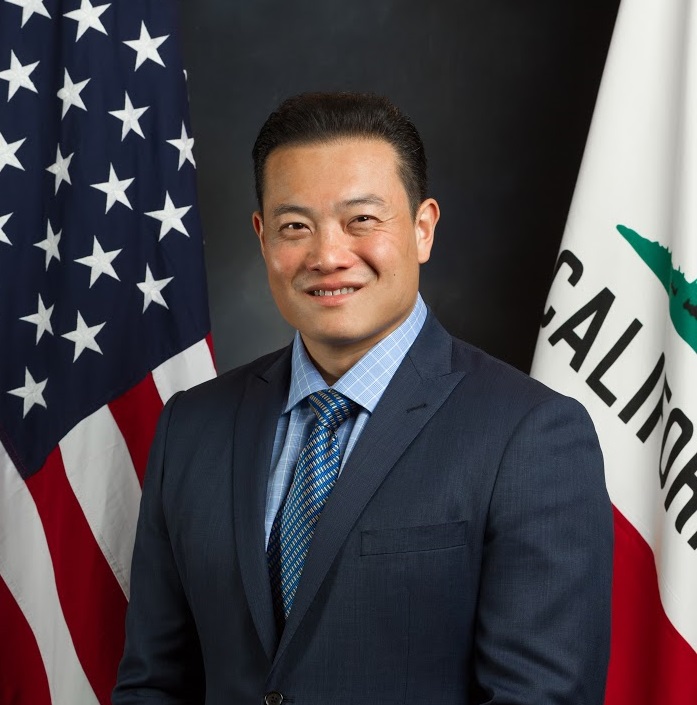
Asm. Phillip Chen
Sponsored bills
This measure would recognize April 24, 2022, through April 30, 2022, as Crime Victims' Rights Week.
This measure would acknowledge April 2022 as Child Abuse Prevention Month and encourage Californians to work together to support youth-serving child abuse prevention activities in their communities and schools.
This measure would recognize the 30th anniversary of the Los Angeles Riots on April 29, 2022, as a time of building and reflection for the citizens of Los Angeles and the citizens of California.
This measure would declare April 28, 2022, as Take Our Daughters and Sons to Work Day, and would recognize the goals of introducing our daughters and sons to the workplace and commend all participants of Take Our Daughters And Sons To Work Day.
This measure would designate the week of May 1, 2022, through May 7, 2022, as Compost Awareness Week.
Existing law provides for the licensure and regulation of adult alcoholism or drug abuse recovery or treatment facilities by the State Department of Health Care Services and authorizes the department to enforce those provisions. Existing law also requires the department to require that an individual providing counseling services within a program be certified by a certifying organization approved by the department. Existing law authorizes the department to charge a fee to all programs for licensure or certification by the department, and establishes the Residential and Outpatient Program Licensing Fund to hold these fees. This bill would create the Allied Behavioral Health Board within the Department of Consumer Affairs, and would transfer the responsibility to oversee those certifying organizations from the State Department of Health Care Services to the board. The bill would require the board to establish regulations and standards for the licensure of substance use disorder counselors, as specified. This bill would require an applicant for a substance use disorder counselor license to have documented to a certifying organization that they have obtained a master's degree in alcohol and drug counseling or a related counseling master's degree, as specified, and to pass specified examinations. The bill would require the board to review the criminal history of the applicant, as specified. The bill would prohibit a person from using the title of "Licensed Alcohol Drug Counselor" unless the person has applied for and obtained a license from the board, and would make a violation of that provision punishable by an administrative penalty not to exceed $1,000. The bill would require the board to establish fees for licensure, as specified, and would revert all unencumbered funds appropriated from fees in the Residential and Outpatient Program Licensing Fund to the State Department of Health Care Services for the purpose of certification oversight of substance use disorder counselors to that fund. The bill would make its provisions operative upon the appropriation by the Legislature of sufficient funds allocated to the state from a specified settlement agreement, consistent with the requirements of the settlement agreement.

This measure would proclaim, in perpetuity, the month of April as California Wines: Down to Earth Month, to celebrate the sustainable leadership of California wineries and winegrape growers throughout the month of April.
Existing law authorizes a county to establish a homeless adult and family multidisciplinary personnel team, as defined, with the goal of facilitating the expedited identification, assessment, and linkage of homeless individuals to housing and supportive services within that county and to allow provider agencies to share confidential information for the purpose of coordinating housing and supportive services to ensure continuity of care. Existing law authorizes the team to include, among others, housing or homeless services provider agencies, medical personnel, and legal counsel, as specified. This bill would require the Department of Justice, to the extent funding is provided for these purposes, to administer a competitive grant program to enable local law enforcement agencies to establish and operate homeless outreach teams. The bill would require a homeless outreach team funded with a grant to be composed of specified individuals.
Existing law establishes various programs to provide assistance to homeless persons, including, among others, the Emergency Housing and Assistance Program and homeless youth emergency service pilot projects. Existing law also establishes the California Interagency Council on Homelessness to oversee the implementation of Housing First guidelines and regulations, and, among other things, identify resources, benefits, and services that can be accessed to prevent and end homelessness in California. This bill would require the California Health and Human Services Agency to convene a working group that includes representatives from all departments and agencies that currently receive funding relating to services for homeless individuals. The bill would require the working group to determine the best approach to creating a Department of Homelessness Prevention, Outreach, and Support and to submit its findings and recommendations to the Legislature no later than January 1, 2024. The bill would repeal these provisions on January 1, 2024.