

Passed Aug 11, 2022
1 co-sponsor
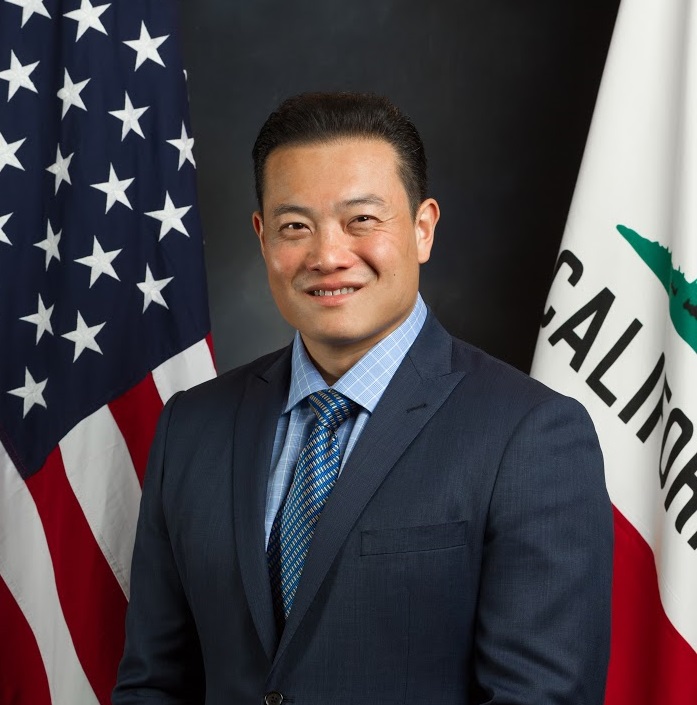
Asm. Phillip Chen
Total votes
21,436
all sessions
Attendance
81%
3,567 missed
Lower than 97% of chamber peers
With party
98%
of cast votes
Lower than 78% of chamber peers
Bipartisan score
1%
crosses aisle rarely
Higher than 76% of chamber peers
Sponsored
1,732
bills & resolutions
Lower than 91% of chamber peers
Committees
9
assignments
1,732 bills and resolutions
Sponsored bills
Total
1,732
Primary
225
Co-sponsor
1,507
This page
1,732
matching current filters
CalFresh: income eligibility: basic allowance for housing.
Existing federal law provides for the federal Supplemental Nutrition Assistance Program (SNAP) , known in California as CalFresh, under which supplemental nutrition assistance benefits allocated to the state by the federal government are distributed to eligible individuals by each county. Existing federal law establishes eligibility requirements, including specified income eligibility standards, for receipt of CalFresh benefits. This bill would require the State Department of Social Services, on or before July 1, 2023, and annually thereafter, to submit a request for a federal waiver to exclude the basic allowance for housing provided to specified uniformed service members from countable income in the determination of eligibility and benefit level for purposes of receiving CalFresh benefits. The bill would, upon federal approval of the waiver, require the department, in consultation with the County Welfare Directors Association of California, advocates for CalFresh recipients, and the Military Department, to issue an all-county letter instructing counties on updated eligibility requirements and benefit calculations for uniformed service members receiving a basic allowance for housing. To the extent the bill would expand the duties of counties, the bill would impose a state-mandated local program. The California Constitution requires the state to reimburse local agencies and school districts for certain costs mandated by the state. Statutory provisions establish procedures for making that reimbursement. This bill would provide that, if the Commission on State Mandates determines that the bill contains costs mandated by the state, reimbursement for those costs shall be made pursuant to the statutory provisions noted above.
Passed Aug 11, 2022
0 co-sponsors
The Fixing the Firefighter Shortage Act of 2022.
Existing law establishes the Department of Forestry and Fire Protection in the Natural Resources Agency to provide fire protection and prevention services, as specified. This bill would require the department to maintain a standard minimum level of staffing for each of its engines, as specified, without the regular practice of forcing overtime on its personnel. The bill would require the department to increase its existing firefighter fuel crews, as specified. The bill would require the department, on or before January 1, 2024, to provide to the Legislature a long-term staffing plan to meet the new era of wildfire firefighting.
Passed Aug 11, 2022
1 co-sponsor
Homeless and domestic violence shelters grants: pets and veterinary services.
Existing law establishes the California Emergency Solutions and Housing Program, under the administration of the Department of Housing and Community Development and requires the department to, among other things, provide rental assistance and housing relocation and stabilization services to ensure housing affordability to people who are experiencing homelessness or who are at risk of homelessness. This bill would require the department, subject to an appropriation in the annual Budget Act, to develop and administer a program to award grants to qualified homeless shelters and qualified domestic violence shelters, as described, for the provision of shelter, food, and basic veterinary services for pets owned by people experiencing homelessness or escaping domestic violence. The bill would authorize the department to use up to 5% of the funds appropriated in the annual Budget Act for those purposes for its costs in administering the program.
Passed Aug 11, 2022
1 co-sponsor
Vehicular air pollution: Zero-Emission Aftermarket Conversion Project.
Existing law directs the State Air Resources Board to coordinate efforts to attain and maintain ambient air quality standards. Existing law creates the Air Quality Improvement Program, administered by the state board, to fund, upon appropriation by the Legislature, air quality improvement projects relating to fuel and vehicle technologies. This bill would require the state board to establish the Zero-Emission Aftermarket Conversion Project (ZACP) by allocating up to $2,000,000 annually from the Clean Vehicle Rebate Project to provide an applicant who is a California resident with a rebate for an eligible vehicle that has been converted into a zero-emission vehicle. The bill would require the rebate issued pursuant to the ZACP to be limited to one per vehicle and have a value of up to $2,000. The bill would also require the state board to establish guidelines for the program, as specified, and minimum eligibility criteria for an applicant to be eligible for the rebate. The bill would require that if any of the moneys allocated for this purpose are not expended by the end of each fiscal year, those moneys shall be repaid to the Clean Vehicle Rebate Project.
Passed Aug 11, 2022
1 co-sponsor
Passed Aug 11, 2022
1 co-sponsor
Relative to the Aerospace Valley.
This measure would recognize that the Antelope Valley will henceforth be affectionately and acceptably referred to by the State of California as the Aerospace Valley.
Passed Aug 10, 2022
1 co-sponsor
Relative to California HPV Vaccine Week.
This measure would proclaim the week of August 1, 2022, to August 7, 2022, inclusive, as California HPV Vaccine Week in order to increase awareness of the human papillomavirus (HPV) vaccine as a cancer prevention tool and to promote the vaccination of all adolescents who are 9 to 13 years of age, inclusive, throughout California. The measure would urge all health providers and community members to get California adolescents caught up on all routine vaccinations, especially the cancer-preventing HPV vaccine.
Passed Aug 9, 2022
1 co-sponsor
Passed Aug 9, 2022
1 co-sponsor
Relative to California Hindu American Awareness and Appreciation Month.
This measure would designate the month of October 2022 as California Hindu American Awareness and Appreciation Month. The measure would also recognize and acknowledge the significant contributions made by Californians of Hindu heritage to the state and seek to increase awareness and understanding of the Hindu American community.
Passed Aug 8, 2022
1 co-sponsor
Ask Maddy
·
AI policy assistant
Ask Maddy about Phillip Chen
Scope: CA
Hi! I can help you understand Phillip Chen's legislative record. What would you like to know?
Try one of these
i
Maddy answers using official bill text and legislative records. Always verify before sharing.
Sources cited inline