

Existing law authorizes and regulates the formation and operation of a nonprofit public benefit corporation, nonprofit mutual benefit corporation, nonprofit religious corporation, or cooperative corporation. Existing law authorizes meetings of members to be held at any place as stated or fixed in the bylaws, as specified, and provides that, subject to certain conditions, members not physically present may participate in a meeting, be deemed present, and vote by electronic transmission by and to the corporation, electronic video screen communication, conference telephone, or other means of remote communication. Existing law prohibits conducting a meeting of members solely by electronic transmission, electronic video screen communication, conference telephone, or other remote communications unless all of the or members consent, the board determines it is necessary or appropriate because of an emergency, as defined, or if the meeting is conducted on or before June 30, 2022. Existing law, the General Corporation Law, additionally authorizes corporations not governed by other specified state laws to conduct a meeting of shareholders solely by electronic transmission by and to the corporation, electronic video screen communication, conference telephone, or other means of remote communication if the meeting is conducted on or before December 31, 2025, as specified, and includes a live audiovisual feed for the duration of the meeting. Existing law provides that a de minimis disruption of an audio, visual, or audiovisual feed does not require a corporation to end a shareholder meeting under, or render the corporation out of compliance with, the above-described provisions. This bill would authorize corporations conducting a meeting on or before December 31, 2025, as described above, to offer, in addition to the live audiovisual feed, an audio-only means of participation. The bill would grant the shareholder or proxyholder the right to choose whether to participate via audiovisual or audio-only means and would prohibit the corporation from imposing any barriers on either mode of participation. The bill would provide that a de minimis disruption of an audio or audiovisual feed does not require a corporation to end a shareholder meeting under, or render the corporation out of compliance with, those provisions. The bill would extend those same provisions to a nonprofit public benefit corporation, nonprofit mutual benefit corporation, nonprofit religious corporation, or cooperative corporation holding a meeting of members. Existing law requires a corporation to implement reasonable measures when it conducts a meeting of shareholders solely by specified means of remote communication. The General Corporation Law requires a corporation not governed by other specified state laws to verify that a person who has voted remotely is a shareholder or proxyholder. Existing law requires a nonprofit public benefit corporation, nonprofit mutual benefit corporation, nonprofit religious corporation, or cooperative corporation to verify that each person participating remotely is a member or proxyholder. This bill would instead require a nonprofit public benefit corporation, nonprofit mutual benefit corporation, nonprofit religious corporation, or cooperative corporation to verify that person who has voted remotely is a member or proxyholder, thereby aligning those corporations with the parallel requirement set forth in the General Corporation Law. Existing law requires a cooperative corporation or a corporation not governed by other specified state laws to provide members or shareholders, and proxyholders as applicable, a reasonable opportunity to participate in a meeting conducted by remote communication, including an opportunity to read or hear the proceedings of the meeting concurrently with those proceedings. Existing law requires a nonprofit public benefit corporation, nonprofit mutual benefit corporation, or nonprofit religious corporation to provide members and proxyholders a reasonable opportunity to participate in a meeting conducted by remote communication, including an opportunity to read or hear the proceedings of the meeting substantially concurrently with those proceedings. This bill would instead require a nonprofit public benefit corporation, nonprofit mutual benefit corporation, or nonprofit religious corporation to provide members and proxyholders an opportunity to read or hear the proceedings of the meeting concurrently with those proceedings, thereby aligning those corporations with the parallel requirements set forth in the Cooperative Corporation Law and in the General Corporation Law.
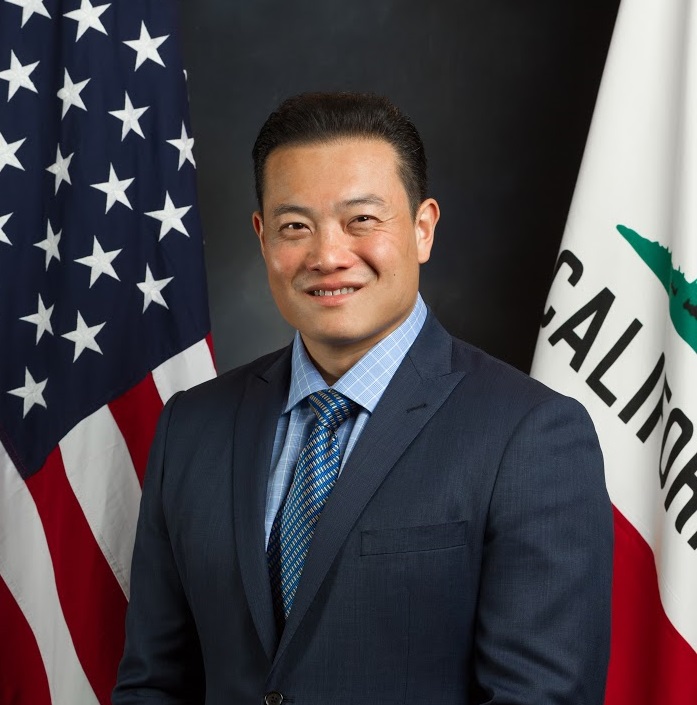
Asm. Phillip Chen
Sponsored bills
Existing law, until January 1, 2024, establishes a structural fumigation enforcement program that requires the Director of the Department of Pesticide Regulation to provide oversight for the program. Existing law requires any company performing a structural fumigation in the Counties of Los Angeles, Orange, or Santa Clara to pay the county agricultural commissioner a specified fee for each fumigation conducted at a specific location. Existing law authorizes the agricultural commissioners of those counties to perform increased structural fumigation, inspection, and enforcement activities to be funded by the required fee. Existing law requires these funds to be paid to the county and used for the sole purpose of funding enforcement and training activities directly related to the structural fumigation program. This bill would extend the operation of these provisions to January 1, 2029.
Existing law authorizes an individual to contribute amounts in excess of the individual's personal income tax liability for the support of specified funds. Existing law allows a taxpayer to designate an amount in excess of personal income tax liability to be deposited into the California Senior Citizen Advocacy Voluntary Tax Contribution Fund, which is continuously appropriated to the California Senior Legislature for the purpose of funding the activities of the California Senior Legislature. Existing law requires the Franchise Tax Board to revise the return for taxable years 2017 to 2023, inclusive, to include a space for that designation, and repeals these voluntary contribution provisions on January 1, 2025. This bill would require the Franchise Tax Board to revise the return for taxable years 2017 to 2030, inclusive, to allow a taxpayer to designate an amount in excess of personal income tax liability to be deposited into the California Senior Citizen Advocacy Voluntary Tax Contribution Fund, and would extend the repeal date for these provisions to January 1, 2032. By extending a continuously appropriated fund, the bill would make an appropriation.
This measure would express the Legislature's support for the creation of policies to decrease the rising number of deaths of Americans as a result of atherosclerotic cardiovascular disease (ASCVD) . The measure would declare the importance of enhanced public awareness of comprehensive cardiovascular screening programs to allow for earlier identification of patients at risk of cardiovascular events. The measure would also declare the importance of collaboration on statewide cardiovascular planning to accelerate quality improvements in care rendered to these patients.
This measure would designate the month of June 2023 as Immigrant Heritage Month.
This measure would designate the Ayala Drive overcrossing at postmile marker 17.437 on State Route 210 in the County of San Bernardino as the Scott "Buckshot" Schwingel Memorial Overcrossing. The measure would request the Department of Transportation to determine the cost of appropriate signs showing this special designation and, upon receiving donations from nonstate sources covering that cost, to erect those signs.
This measure would proclaim June 24, 2023, as Play Day and encourage all Californians to go out and play on that day.
This measure would declare the month of June 2023 as Alzheimer's Disease and Brain Awareness Month, recognize Wednesday, June 21, 2023, as The Longest Day, and would urge all Californians to commemorate the month of June 2023 as Alzheimer's Disease and Brain Awareness Month.
This measure would recognize June 19, 2023, as Juneteenth and would urge the people of California to join in celebrating Juneteenth as a day to honor and reflect on the significant role that African Americans have played in the history of the United States and how they have enriched society through their steadfast commitment to promoting unity and equality.
This measure would declare the month of June 2023 to be Portuguese Heritage Month and would recognize June 10 as the Day of Portugal and May 29 as the Day of the Azores.