This measure would recognize February 2024 as Black History Month, urge all citizens to join in celebrating the accomplishments of African Americans during Black History Month, and encourage the people of California to recognize the many talents of African Americans and the achievements and contributions they make to their communities to create equity and equality for education, economics, and social justice. The measure would also recognize the significance in protecting citizens' right to vote and remedying racial discrimination in voting.
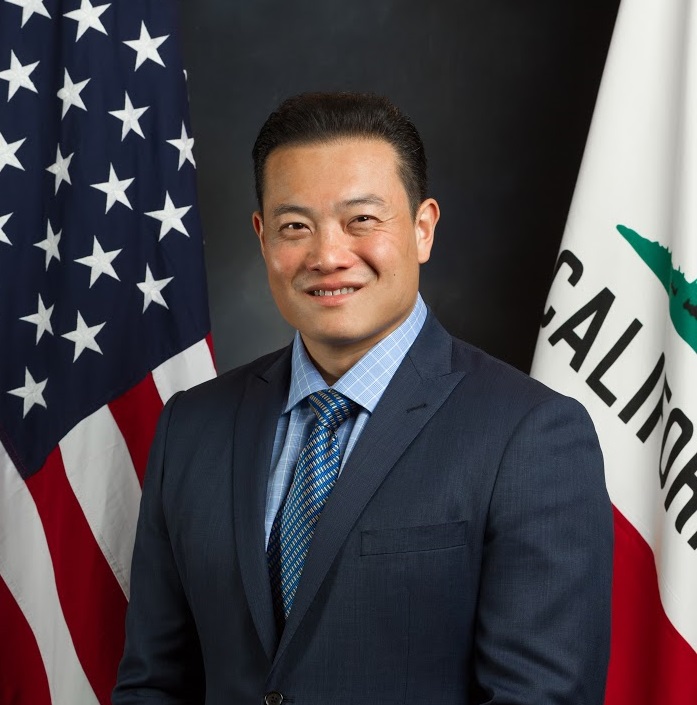
Asm. Phillip Chen
Sponsored bills
This measure would recognize the week of February 18, 2024, to February 24, 2024, as Engineers Week.
This resolution would designate the week beginning on February 26, 2024, and the last week of February hereafter, as Eating Disorders Awareness Week.
This measure would honor the late civil rights pioneer Reverend Dr. Martin Luther King, Jr. and commemorate Dr. Martin Luther King, Jr. Day.
Existing law generally regulates classes of insurance, including motor vehicle liability insurance. Existing law requires an admitted insurer licensed to issue motor vehicle liability policies or a licensed agent to provide, upon request as specified, a written explanation of a refusal to accept an application for, or refusal to issue, a motor vehicle liability policy. An insurer or agent who willfully violates this provision is guilty of a misdemeanor and is punishable by a fine not exceeding $1,000 for each violation. This bill would increase that maximum penalty to $1,500 and would also make technical, nonsubstantive changes.
Existing law authorizes the State Energy Resources Conservation and Development Commission to set a maximum gross gasoline refining margin, as provided, and requires the commission, if the commission establishes a maximum gross gasoline refining margin, to establish a penalty for exceeding the maximum gross refining margin, as specified. Existing law establishes the Division of Petroleum Market Oversight in the commission to, among other duties, provide guidance and recommendations to the Governor and the commission on issues related to transportation fuel pricing and transportation decarbonization in California. This bill would require the commission to post and update, on a monthly basis, on its internet website the difference between retail gasoline prices in California and the national average and a calculation of how much that difference has decreased since June 26, 2023, which is the effective date of the above-described provisions, due to the actions taken pursuant to those provisions.
(1) The Motor Vehicle Fuel Tax Law, administered by the California Department of Tax and Fee Administration, imposes a tax upon each gallon of motor vehicle fuel removed from a refinery or terminal rack in this state, entered into this state, or sold in this state, at a specified rate per gallon. Existing law requires the department to adjust the tax on July 1 each year by a percentage amount equal to the increase in the California Consumer Price Index, as calculated by the Department of Finance. Article XIX of the California Constitution restricts the expenditure of revenues from the Motor Vehicle Fuel Tax Law, Diesel Fuel Tax Law, and other taxes imposed by the state on fuels used in motor vehicles upon public streets and highways to street and highway and certain mass transit purposes. This bill would authorize the Governor to suspend an adjustment to the motor vehicle fuel tax, as described above, scheduled on or after July 1, 2025, upon making a determination that increasing the rate would impose an undue burden on low-income and middle-class families. The bill would require the Governor to notify the Legislature of an intent to suspend the rate adjustment on or before January 10 of that year, and would require the Department of Finance to submit to the Legislature a proposal by January 10 that would maintain the same level of funding for transportation purposes as would have been generated had the scheduled adjustment not been suspended. (2) The California Constitution provides for the establishment of the State Board of Equalization, which, before July 1, 2017, had primary responsibility for most of the state's duties, powers, and responsibilities regarding the administration of taxes and fees. Existing law, on July 1, 2017, transferred to the California Department of Tax and Fee Administration various duties, powers, and responsibilities of the State Board of Equalization, including administration of the Motor Vehicle Fuel Tax Law and the Diesel Fuel Tax Law, as specified. This bill would also change references in these provisions of law from the "State Board of Equalization" to the "California Department of Tax and Fee Administration" or "department," as applicable, to reflect the transfer of the board's duties, powers, and responsibilities to the department. (3) This bill would take effect immediately as a tax levy.