

Passed Feb 1, 2021
1 co-sponsor
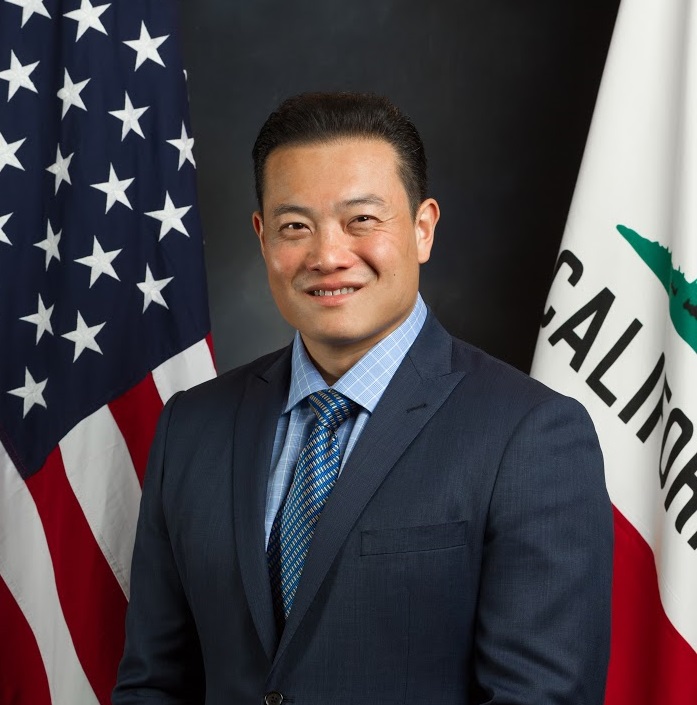
Asm. Phillip Chen
Total votes
21,436
all sessions
Attendance
81%
3,567 missed
Lower than 85% of chamber peers
With party
98%
of cast votes
Near the chamber average
Bipartisan score
1%
crosses aisle rarely
Near the chamber average
Sponsored
1,732
bills & resolutions
Higher than 82% of chamber peers
Committees
9
assignments
1,732 bills and resolutions
Sponsored bills
Total
1,732
Primary
225
Co-sponsor
1,507
This page
1,732
matching current filters
Passed Jan 15, 2021
1 co-sponsor
Unemployment and disability insurance: benefits: in-home supportive services and waiver personal care services.
Existing law provides for the payment of unemployment compensation benefits and extended benefits to eligible individuals who meet specified requirements. Existing law provides definitions for "employment" for purposes of these provisions. Existing federal and state law excludes services performed by a child in the employ of a parent, a parent in the employ of their child, or a person in the employ of their spouse, from the definition of "employment" for purposes of unemployment taxes and unemployment insurance benefit eligibility, as specified. Under existing law, unemployment benefits are generally paid from the Unemployment Compensation Disability Fund, which is continuously appropriated for these purposes. This bill would provide that the definition of "employment" for the purposes of unemployment insurance coverage includes services performed by an individual in the employ of their parent, child, or spouse if that individual is providing services through the In-Home Supportive Services program or the Waiver Personal Care Services program. This bill would, notwithstanding existing law, provide that no money is continuously appropriated for purposes of the provisions of this bill and would make the operation of the bill's provisions contingent upon appropriation by the Legislature. Existing law permits an employing unit for which services are performed that do not constitute employment because they are services performed by a minor child in the employ of parent, or services performed by an individual in the employ of their child or spouse, to elect that the services constitute employment for purposes of disability compensation laws and provides that, upon written approval from the Director of Employment Development, those services are deemed to constitute employment. This bill would require that an individual whose services are deemed to constitute employment pursuant to the above-described provisions be treated as an individual whose services ordinarily constitute employment for purposes of computing disability benefit rights and contributions, if that individual is providing services through the In-Home Supportive Services program or the Waiver Personal Care Services program. Under existing law, disability benefits are generally paid from the Unemployment Compensation Disability Fund, which is continuously appropriated for these purposes. This bill would, notwithstanding existing law, provide that no money is continuously appropriated for purposes of the provisions of this bill and would make the operation of the bill's provisions contingent upon appropriation by the Legislature. The California Constitution requires the state to reimburse local agencies and school districts for certain costs mandated by the state. Statutory provisions establish procedures for making that reimbursement. This bill would provide that, if the Commission on State Mandates determines that the bill contains costs mandated by the state, reimbursement for those costs shall be made pursuant to the statutory provisions noted above. This bill would declare that it is to take effect immediately as an urgency statute.
Vetoed Sep 30, 2020
1 co-sponsor
Public Employees' Retirement System: contracting agencies: exclusion from membership.
Existing law, the Public Employees' Retirement Law (PERL) , establishes the Public Employees' Retirement System (PERS) , which provides a defined benefit to members of the system, based on final compensation, credited service, and age at retirement, subject to certain variations. PERS is administered by the Board of Administration of the Public Employees' Retirement System. PERL authorizes a public agency to contract to make all or part of its employees members of PERS, subject to specified conditions, and requires membership in PERS to be compulsory for all employees included under a contract. Existing law prohibits these contracts from providing for the exclusion of some, but not all, firefighters and specified public safety officers. With regard to other groups of employees, existing law requires that they be based on general categories, such as departments or duties, and not on individual employees. This bill would delete provisions of PERL that generally authorize a public agency contracting with PERS to make all or part of its employees members of the system. The bill would generally prohibit exclusions of groups of employees from being made by amendment of a public agency contract with PERS, except as provided. The bill would apply these provisions to contracts entered into, amended, or extended on and after January 1, 2021.
Signed into law Sep 28, 2020
1 co-sponsor
Crematories: burning of flags.
Existing law requires a crematory regulated by the Cemetery and Funeral Bureau to knowingly cremate only human remains in cremation chambers, along with cremation containers, items used for disease control, and personal effects of the deceased. Existing law authorizes the incineration of one or more American flags, performed separately from the cremation of human remains and in accordance with specified federal law, during the periods within one week before or after Memorial Day, Flag Day, and Independence Day. This bill would additionally authorize a crematory to incinerate one or more American flags during the periods within one week before or after Presidents' Day and Veterans' Day.
Signed into law Sep 11, 2020
0 co-sponsors
Relative to the Deputy Sheriff Brian "Ish" Ishmael Memorial Highway.
This measure would designate a specified portion of State Route 50 in the County of El Dorado as the Deputy Sheriff Brian "Ish" Ishmael Memorial Highway. The measure would request that the Department of Transportation determine the cost of appropriate signs showing this special designation and, upon receiving donations from nonstate sources covering that cost, erect those signs.
Signed into law Sep 11, 2020
1 co-sponsor
Workers' compensation: injury: COVID-19.
Existing law establishes a workers' compensation system, administered by the Administrative Director of the Division of Workers' Compensation, to compensate an employee for injuries sustained in the course of employment. Existing law creates a disputable presumption that specified injuries sustained in the course of employment of a specified member of law enforcement or a specified first responder arose out of and in the course of employment. Existing law allows for a claim to be presumed compensable if it has not been rejected within 90 days of filing, as specified. Existing law imposes a duty on an employer to provide certain safety materials and adopt safety practices as necessary. A failure to meet this duty, under specified circumstances, is a misdemeanor. This bill would, until July 1, 2024, define "injury," for certain state and local firefighting personnel, peace officers, certain correctional and law enforcement personnel, as described, certain health care employees who provide direct patient care at an acute care hospital, and certain fire and rescue services coordinators who work for the Office of Emergency Services to include illness or death resulting from COVID-19, that is diagnosed on or after January 1, 2020, if certain circumstances apply. The bill would create a disputable presumption, as specified, that the injury arose out of and in the course of the employment. The bill would require a claim to be presumed compensable, if not rejected within 30 days, as specified. This bill would explicitly add emergency equipment or personal protective equipment, as described, to those materials required to be provided by an employer. A failure to comply with this additional requirement would not constitute a misdemeanor. This bill would declare that it is to take effect immediately as an urgency statute.
Passed Sep 1, 2020
1 co-sponsor
Residential property insurance: high fire risk areas: study.
The Insurance Rate Reduction and Reform Act of 1988, an initiative measure enacted by Proposition 103, as approved by the voters at the November 8, 1988, statewide general election, prohibits specified insurance rates from being approved or remaining in effect that are excessive, inadequate, unfairly discriminatory, or otherwise in violation of the act. The act requires an insurer that wishes to change a rate to file a complete rate application with the Insurance Commissioner, as specified. This bill would require the commissioner to investigate, study, and prepare a report that addresses specific issues relating to ratemaking for residential property insurance policies in high fire risk areas. The bill would require the study to address the extent to which the commissioner may use its authority to create one or more market assistance plans to ensure that residential property insurance is fair, available, and affordable in high fire risk communities, the costs and benefits of authorizing insurers to include the cost of reinsurance as part of the rate for residential property insurance, and the extent to which the establishment of a public wildfire catastrophe model would be appropriate for use in residential property insurance ratemaking. The bill would require the commissioner, on or before July 1, 2022, to submit the report to the Chairpersons of the Assembly and Senate Committees on Insurance, the Speaker of the Assembly, the President pro Tempore of the Senate, and the Governor. The bill would repeal these provisions on January 1, 2025.
Passed Sep 1, 2020
1 co-sponsor
California Manufacturing Emergency Preparedness Act of 2020.
The Bergeson-Peace Infrastructure and Economic Development Bank Act establishes the California Infrastructure and Economic Development Bank (I-Bank) . Among other things, the act authorizes I-Bank to make loans, issue bonds, and provide financial assistance to economic development or public development facilities. Under existing law, the Disaster Assistance Fund is continuously appropriated, without regard to fiscal year, for purposes of the California Disaster Assistance Act. That act provides that when funds are available for purposes of the act, the Governor may allocate the funds, in connection with relief provided, in affected areas during the period of federal disaster relief, to the Small Business Expansion Fund for use by the California Infrastructure and Economic Development Bank (I-Bank) , to provide guarantees for low-interest interim loans to be made by lending institutions for the purpose of providing interim financing to enable small businesses that have suffered actual physical damage or significant economic losses, as a result of the disaster or state of emergency for which funding is made available. This bill would enact the California Manufacturing Emergency Preparedness Act of 2020, which would authorize I-Bank to establish the California Manufacturing Disaster Loan and Loan Guarantee Program for the purpose of attracting, retaining, retooling, establishing, and expanding manufacturing and logistics capacity in the state, and would require I-Bank to establish guidelines for the implementation and oversight of the program. The bill would prohibit I-Bank from commencing the program until it adopts a resolution finding that there is sufficient funding in the account to cover the costs of implementing the program and that the I-Bank has sufficient direction from the Director of the Office of Emergency Services, as provided. The bill would require I-Bank to provide for the development and administration of the program, as specified, and would require program applicants to demonstrate satisfaction of specified requirements. The bill would also require each applicant to pay a nonrefundable application fee, as provided. The bill would create the Manufacturing Program Account within the California Infrastructure and Economic Development Bank Fund. The bill would authorize the Governor to allocate disaster relief funds, including funds in the Disaster Assistance Fund, to the Manufacturing Program Account for use by I-Bank, to cover the costs of administering the program and to provide direct loans or guarantees, or both, made by lending institutions, and to forgive those loans in appropriate circumstances, for the purpose of providing financing to enable the manufacturing and logistics sectors to support the emergency needs of Californians. The bill would provide that the moneys in the account be made available to I-Bank, upon a transfer of funds by the Director of Finance pursuant to an allocation by the Governor under the California Disaster Assistance Act, for specified purposes. The bill would authorize moneys in the account to be allocated to a lending institution or financial company that will act as trustee of the funds, with the approval of the Department of Finance. The bill would authorize I-Bank to create subaccounts in the account for specified purposes. Because this bill would expand the purposes for which a continuously appropriated fund is expended and would deposit moneys and fees into a new, continuously appropriated account, the bill would make an appropriation. The bill would require I-Bank to annually report, commencing with January 1, 2022, to the Governor and the Legislature on program activity, as specified, in any fiscal year that the program receives funding or has active loans. The bill would further provide that the above described provisions will be implemented only to the extent that sufficient moneys are available to I-Bank to implement the California Manufacturing Disaster Loan and Loan Guarantee Program. The bill would permit these provisions to be used to respond to, and recover from, the conditions arising from the state of emergency declared by the Governor on March 4, 2020, related to the COVID-19 virus. The bill would prohibit I-Bank from entering into loans or loan guarantees pursuant to the bill's provisions on or after January 1, 2026. This bill would declare that it is to take effect immediately as an urgency statute.
Passed Aug 20, 2020
1 co-sponsor
International medical graduates: study.
Existing law, the Medical Practice Act, establishes the Medical Board of California for the licensure and regulation of physicians and surgeons. Existing law establishes the University of California at Los Angeles David Geffen School of Medicine's International Medical Graduate Program to allow selected international medical graduates in a preresidency training program at the University of California, Los Angeles David Geffen School of Medicine, Department of Family Medicine to receive hands-on clinical instruction, as prescribed. This bill would require the board to conduct a study by January 1, 2022, on achieving specified goals relating to expanding the existing pool of international medical graduates. The bill would require the board, on or before January 1, 2022, to prepare and submit to the Legislature a report with recommendations to achieve those goals.
Passed Aug 20, 2020
1 co-sponsor
Ask Maddy
·
AI policy assistant
Ask Maddy about Phillip Chen
Scope: california
Hi! I can help you understand Phillip Chen's legislative record. What would you like to know?
Try one of these
i
Maddy answers using official bill text and legislative records. Always verify before sharing.
Sources cited inline