

Existing law provides funding for homelessness prevention and mental health services through various state programs, such as Housing First, and the Early Psychosis Intervention Plus Program. Existing law establishes the State Department of Health Care Services and, among other things, requires the department to implement certain mental health services through contracts with a county or counties acting jointly. Existing law requires the Governor to create a California Interagency Council on Homelessness to serve as a statewide facilitator, coordinator, and policy development resource on ending homelessness in California, among other things. Existing law requires the council to create a statewide data system with a goal of matching data on homelessness to programs impacting homeless recipients of state programs. This bill would require the Controller, by January 1, 2027, in collaboration with the department and the council to develop, publish, and maintain an online search portal that contains specified information relating to state funding for programs as described above. The bill would require the portal to include funding amounts provided in the current fiscal year and the previous 10 fiscal years, as well as specified information about the state program that received the funds and the department or agency that administers the program. The bill would require the Controller, the department and the council to each include a link to the online portal on their internet websites. The bill would authorize the Controller, the department and the portal to request any relevant information from a state agency or department for the purpose of reporting accurate information within the portal.
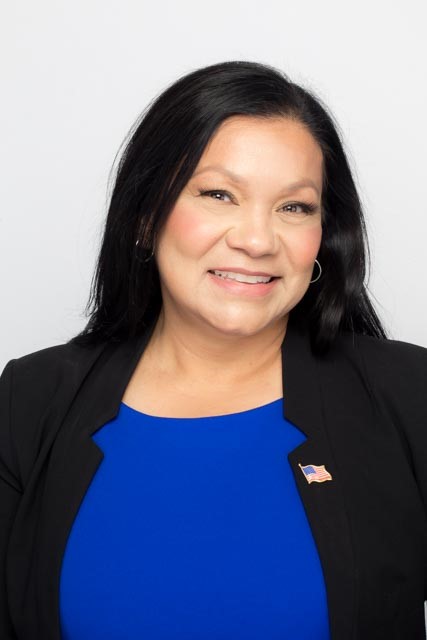
Asm. Leticia Castillo
Sponsored bills
Existing law requires a person engaged in the production of human whole blood or human whole blood derivatives to be licensed by the state, and requires licensed blood banks and blood transfusion services to meet specified standards. Existing law authorizes the State Department of Public Health to establish and require compliance with additional requirements, as specified. This bill, the California Source Plasma Donation Centers Act, would authorize a person to operate a source plasma donation center for the purpose of collecting source plasma, as defined. The bill would, among other things, authorize a source plasma donation center to offer payment to a donor of money or other valuable consideration. The bill would require the operator of a source plasma donation center to obtain a license from the State Department of Public Health, as specified. The bill would authorize the department to regulate source plasma donation centers, including to inspect the property or records of the center and to suspend or revoke a license for violation of specified law or regulation. The bill would authorize the department to promulgate any regulations it deems necessary to implement the bill's provisions. The bill would make a violation of the bill's provisions a misdemeanor, and would authorize a district or city attorney to prosecute a violation of the bill's provisions. By creating a new crime, the bill would impose a state-mandated local program. This bill would require a local health officer, if they obtained records from a source plasma donation center of a plasma donor who had a reactive result to HIV antibody testing, upon completion of the officer's efforts to locate and notify the plasma donor, to expunge all of the individual's records. By imposing additional duties on local health officials, this bill would impose a state-mandated local program. Existing law establishes the Clinical Laboratory Improvement Fund and requires specified fees collected from the licensing and regulation of blood banks and blood transfusion services to be deposited in the fund, available upon appropriation, for the purpose of regulating blood banks and blood transfusion services. This bill would additionally require fees collected from the licensing and regulation of source plasma donation centers to be deposited in the fund for the purpose of regulating source plasma donation centers, upon appropriation by the Legislature. Existing law requires specified establishments that receive specified human whole blood and derivatives to be considered blood bank depositories and require specified procedures on blood for transfusion to be the sole responsibility of the blood bank depository. This bill would exempt source plasma donation centers from these provisions. The California Constitution requires the state to reimburse local agencies and school districts for certain costs mandated by the state. Statutory provisions establish procedures for making that reimbursement. This bill would provide that with regard to certain mandates no reimbursement is required by this act for a specified reason. With regard to any other mandates, this bill would provide that, if the Commission on State Mandates determines that the bill contains costs so mandated by the state, reimbursement for those costs shall be made pursuant to the statutory provisions noted above.
(1) Existing law declares that it is the policy of the state that no adoptable animal should be euthanized if it can be adopted into a suitable home. Existing law also declares that it is the policy of the state that no treatable animal should be euthanized. This bill, Bowie's Law, would require an animal shelter, as defined, to provide in a conspicuous location on its internet website or a third-party internet website a list of all animals that are available for adoption or that are being held pursuant to specified laws, except as provided. The bill would also require the Department of Food and Agriculture to conduct a study on certain topics, including, among other topics, the overcrowding of California's animal shelters, and, on or before January 1, 2028, to submit a report on that study to the Legislature, as provided. The bill would repeal these study and reporting requirements on January 1, 2032. To the extent that this bill would impose a new program or higher level of service on local public animal control agencies or shelters, the bill would impose a state-mandated local program. (2) The existing Polanco-Lockyer Pet Breeder Warranty Act requires every breeder of dogs to meet certain requirements relating to housing and maintaining dogs and to disclose specified information. The act defines "dog breeder" and "breeder" to mean a person, firm, partnership, corporation, or other association that has sold, transferred, or given away all or part of 3 or more litters or 20 or more dogs during the preceding 12 months that were bred and reared on the premises of the person, firm, partnership, corporation, or other association. This bill would change that definition to a person, firm, partnership, corporation, or other association that has sold, transferred, or given away all or part of 2 or more litters or 10 or more dogs during the preceding 12 months, as specified. The bill would additionally require a breeder, before a dog reaches eight weeks of age, to have a microchip device implanted in the dog that identifies the breeder, except as provided. The bill would require the breeder, upon the sale or transfer of the dog, to register the identity of the new owner with the microchip registry company as the primary owner on the microchip device and would require the breeder to provide certain information to the new owner regarding the microchip. The bill would prohibit a dog from being sold or otherwise transferred by a breeder, whether for compensation or otherwise, until it has been immunized against common diseases, in accordance with veterinary recommendations for the age and breed of the dog, and has a documented health check from a California-licensed veterinarian. (3) The California Constitution requires the state to reimburse local agencies and school districts for certain costs mandated by the state. Statutory provisions establish procedures for making that reimbursement. This bill would provide that, if the Commission on State Mandates determines that the bill contains costs mandated by the state, reimbursement for those costs shall be made pursuant to the statutory provisions noted above.
Maddy summarySCR 103 designates the week of July 20-26, 2025, as "Probation Services Week" in California. This concurrent resolution recognizes the work of probation services professionals across the state. It is a symbolic observance with no new laws, regulations, or direct impact on individuals or policies. The bill does not alter existing statutes or create obligations for any entity.
Maddy summaryThis bill establishes January as National Human Trafficking Awareness Month in California to raise public awareness about human trafficking. The resolution recognizes the severity of human trafficking as a felony crime and highlights statistics showing its prevalence across the country and specific challenges with identifying male victims and labor trafficking cases. It aims to educate the public and encourage reporting and support for victims during this designated month.
Existing law prohibits a person from carrying a concealed firearm or carrying a loaded firearm in public. Existing law requires a licensing authority to issue or renew a license to carry a firearm capable of being concealed if specified conditions are met, including, among others, that the applicant is not a disqualified person for the license, as specified, and the applicant has completed a specified course of training. Existing law makes a new or renewal license that is issued valid for a period of time not to exceed 2 years from the date of the license, except as otherwise provided. This bill would, for a license issued after January 1, 2026, and before January 1, 2027, extend the duration of those licenses to a period of time not to exceed 3 years from the date of the license. The bill would, for a license issued after January 1, 2027, extend the duration of those licenses to a period of time not to exceed 4 years from the date of the license.
This measure would call upon Congress to reauthorize the enhanced premium tax credits and would urge Congress to continue exploring the concept of bolstering health savings accounts, as specified.
The California Constitution includes a balanced budget provision that prohibits the Legislature from sending a budget bill to the Governor, and prohibits the Governor from signing a budget bill, if the total amount of General Fund appropriations and reserve deposits for the fiscal year exceed General Fund revenues for the fiscal year estimated as of the date of the budget bill's passage. The Constitution requires the Legislature to include that revenue estimate in the budget bill. The Constitution also requires the Legislature to pass a budget bill by midnight on June 15 of each year. If that deadline is not met, the Members of the Legislature forfeit any salary or reimbursement for travel or living expenses from midnight on June 15 until the day that the budget bill is presented to the Governor. This measure would authorize the Controller, no later than 30 days after the date of the budget bill's passage, to determine that the budget bill violates the balanced budget provision. If the Controller makes that determination, the Members of the Legislature and the Governor would forfeit their salary and reimbursement for travel or living expenses from the day immediately following the date on which the Controller makes the determination until the date on which a budget bill is enacted.
Existing law authorizes the governing board of a school district to establish a security department under the supervision of a chief of security as designated by, and under the direction of, the superintendent of the school district. Existing law also authorizes the governing board of a school district to establish a school police department under the supervision of a school chief of police and to employ peace officers. This bill would require, commencing with the 2028–29 school year, and each school year thereafter, a rural school district or charter school, as defined, to determine the appropriate number of armed school resource officers, as defined, authorized to carry a loaded firearm for each school of the rural school district or charter school. The bill would require the governing board of the school district or the governing body of the charter school to ensure that at least one armed school resource officer is present during regular school hours at each school of the rural school district or charter school that meets specified criteria, as provided. By imposing an additional requirement on school districts and charter schools, the bill would impose a state-mandated local program. The bill would authorize the governing board or body, if it is unable to comply with these requirements due to the unavailability of funding or personnel who qualify to serve as an armed school resource officer, to claim a good cause exception to these requirements by adopting a resolution, as provided. The California Constitution requires the state to reimburse local agencies and school districts for certain costs mandated by the state. Statutory provisions establish procedures for making that reimbursement. This bill would provide that, if the Commission on State Mandates determines that the bill contains costs mandated by the state, reimbursement for those costs shall be made pursuant to the statutory provisions noted above.
The Planning and Zoning Law requires each county and city to adopt a comprehensive, long-term general plan for the physical development of the county or city, which includes, among other mandatory elements, a housing element. Existing law requires, for the 4th and subsequent revisions of the housing element, the Department of Housing and Community Development, in consultation with each council of governments, where applicable, to determine the existing and projected need for housing for each region, as prescribed. Existing law requires, among other things, the department to meet and consult with the council of governments regarding the assumptions and methodology to be used by the department to determine the region's housing needs at least 26 months prior to the scheduled revision of the housing element and before developing the existing and projected housing need for a region. This bill would require the department to meet and consult with the council of governments, as described above, pursuant to prescribed deadlines. For the 7th revision of the housing element, the bill would require the department to meet and consult with each council of governments at least 38 months prior to the scheduled revision, except for specified councils of governments. For the 8th and subsequent revision of the housing element, the bill would require the department to meet and consult with each council of governments at least 38 months prior to the scheduled revision. This bill would incorporate additional changes to Section 65584.01 of the Government Code proposed by SB 486 to be operative only if this bill and SB 486 are enacted and this bill is enacted last.