

Existing law designates specific days as holidays in this state, including, among others, Dr. Martin Luther King, Jr. Day and Cesar Chavez Day. Existing law designates certain days as judicial holidays and exempts others including, Lunar New Year, Diwali, and Genocide Remembrance Day. This bill would designate Sylvia Mendez Day as a state holiday, but would exempt the holiday from being a judicial holiday. The bill would include related legislative findings and declarations. This bill would incorporate additional changes to Section 135 of the Code of Civil Procedure proposed by AB 2017 to be operative only if this bill and AB 2017 are enacted and this bill is enacted last. The bill would also incorporate additional changes to Section 6700 of the Government Code proposed by AB 2017 and SB 1394 to be operative only if this bill and either or both of those bills are enacted and this bill is enacted last.
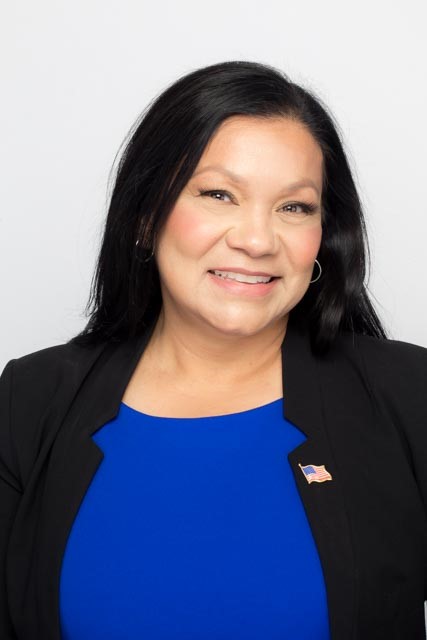
Rep. Leticia Castillo
Sponsored bills
(1) Existing law generally provides for the placement of foster youth in various placement settings. Existing law provides for the implementation of the resource family approval process, and defines a resource family as an individual or family who has successfully met both the home environment assessment standards and permanency assessment criteria, as specified, necessary for providing care for a child placed by a public or private child placement agency by court order, or voluntarily placed by a parent or legal guardian. Existing law requires the State Department of Social Services, on or before January 1, 2027, to adopt a simplified approval process for relative caregivers, as specified. Existing law conditions implementation of the simplified approval process upon federal financial participation and approval, as specified. This bill would, among other things, require the department to, on or before July 1, 2028, adopt a kinship family approval process to approve a relative, nonrelative extended family member, or extended family member of an Indian child to be a kinship family, which the bill defines as an individual or family who has successfully met the home environment assessment and family engagement standards, as specified, necessary for providing care for a child placed by a county child welfare department or a probation department by court order or voluntarily placed by a parent or legal guardian. The bill would require counties to ensure relatives, nonrelative extended family members, and extended family members of an Indian child are provided information regarding approval processes and the option to choose between the kinship family approval process, the resource family approval process, and in the case of an Indian child, a tribally approved home. The bill would also make technical, conforming changes to make provisions that are applicable to resource families also applicable to kinship families, and delete obsolete provisions. By imposing duties on counties relating to the approval of, and placement of children with, kinship families, this bill would impose a state-mandated local program. The bill would make certain personal identifying information, written evaluation reports, and court proceedings relating to kinship families confidential, except as specified. The bill would require the application form signed by a kinship family applicant to be signed with a declaration by the applicant that the information submitted is true, correct, and contains no material omissions of fact to the best knowledge and belief of the applicant, and makes any person who willfully and knowingly, with the intent to deceive, makes a false statement or fails to disclose a material fact in their application is guilty of a misdemeanor. By expanding the scope of an existing crime, the bill would impose a state-mandated local program. (2) Existing law authorizes the court to order temporary placement of the child in the home of a relative, extended family member, or nonrelative extended family member, and requires the court to consider the results of a criminal records check, among other things, before ordering that placement. Existing law also authorizes the placement of a child on an emergency basis in the home of a relative or nonrelative extended family member after a criminal records check, among other things, and requires the relative or nonrelative extended family member to submit an application for approval as a resource family after the emergency placement. Existing law authorizes the court to place a child after an order of removal, or on a temporary or emergency basis in the home of a relative, regardless of the status of any criminal record exemption or resource family approval if the court finds that the placement does not pose a risk to the health and safety of the child. This bill would additionally authorize the court to place a child after an order of removal, or on a temporary or emergency basis, in the home of a nonrelative extended family member or an extended family member, regardless of the status of any criminal record exemption, kinship family approval, tribally approved home, or resource family approval if the court finds that the placement does not pose a risk to the health and safety of the child. (3) Existing law prohibits a school district from permitting access to pupil records to a person without written parental consent or under judicial order except as authorized by law, and requires access to be granted to a list of specified persons and entities, including, among others, a parent or a caregiver, who have direct responsibility for the care of the pupil. This bill would add a kinship family, as defined, to the list of persons and entities required to be granted access to pupil records. To the extent the bill would impose additional duties on local educational agencies, the bill would impose a state-mandated local program. (4) Existing law establishes the Adoption Assistance Program to benefit children residing in foster homes by providing the stability and security of permanent homes and requires a child to be eligible for benefits under the program if they meet specified criteria, including that the prospective adoptive parent has completed specified background check requirements. This bill would authorize a child to receive benefits under the program if the prospective parent is otherwise ineligible if the prospective parent or an adult living in the home was granted a criminal record exception or the juvenile court authorized the placement with a prospective parent who was not granted the exemption. (5) Existing constitutional provisions require that a statute that limits the right of access to the meetings of public bodies or the writings of public officials and agencies be adopted with findings demonstrating the interest protected by the limitation and the need for protecting that interest. This bill would make legislative findings to that effect. (6) The California Constitution requires the state to reimburse local agencies and school districts for certain costs mandated by the state. Statutory provisions establish procedures for making that reimbursement. This bill would provide that with regard to certain mandates no reimbursement is required by this act for a specified reason. With regard to any other mandates, this bill would provide that, if the Commission on State Mandates determines that the bill contains costs so mandated by the state, reimbursement for those costs shall be made pursuant to the statutory provisions noted above. (7) This bill would incorporate additional changes to Section 49076 of the Education Code proposed by SB 1017 to be operative only if this bill and SB 1017 are enacted and this bill is enacted last. This bill would incorporate additional changes to Sections 366.31, 11363, 11386, 16120, and 16501.1 of the Welfare and Institutions Code proposed by AB 2764 to be operative only if this bill and AB 2764 are enacted and this bill is enacted last. This bill would incorporate additional changes to Section 11461.6 of the Welfare and Institutions Code proposed by SB 1051 to be operative only if this bill and SB 1051 are enacted and this bill is enacted last.
Existing law, the Protecting Our Kids from Social Media Addiction Act, prohibits an operator of an addictive internet-based service or application from providing an addictive feed, as defined, to a user unless the operator does not have actual knowledge that the user is a minor, as specified, or the operator has obtained verifiable parental consent to provide an addictive feed to the user who is a minor. Existing law, the Digital Age Assurance Act, beginning January 1, 2027, requires a person who owns, maintains, or controls a software application, as defined, to request age bracket data sent by a real-time secure application programming interface or operating system with respect to a particular user from an operating system provider or a covered application store when the application is downloaded and launched. This bill would prohibit a covered platform, as defined, from providing an addictive feature, as defined, to a user who is under 16 years of age and would require a covered platform to implement reasonable measures to ensure that users under 16 years of age are not offered or provided any addictive feature on the covered platform. The bill would also authorize the Attorney General to adopt regulations to implement and enforce the bill in order to further the purpose of protecting minors online, including by altering the scope of "covered platform" if the Attorney General determines that doing so is necessary to ensure that "covered platform" applies to internet websites, online services, online applications, or mobile applications that make addictive features, as defined, available to users under 16 years of age. This bill would impose a civil penalty upon a noncompliant platform and would require its provisions to be enforced by a civil action brought only by the Attorney General or a local public prosecutor, as specified. This bill would also establish the e-Safety Advisory Commission within the Department of Justice as an independent advisory body that is only for administrative purposes to advise state government on certain matters related to online safety and would require the commission to, on or before January 1 of each year, report to the Legislature and the Governor on, among other things, its activities under the bill.
The Public Employees' Retirement Law (PERL) establishes the Public Employees' Retirement System (PERS) to provide a defined benefit to members of the system based on final compensation, credited service, and age at retirement, subject to certain variations. Existing law creates the Public Employees' Retirement Fund, which is continuously appropriated for purposes of PERS, including depositing employer and employee contributions. Under the California Constitution, assets of a public pension or retirement system are trust funds. The California Public Employees' Pension Reform Act of 2013 (PEPRA) establishes a variety of requirements and restrictions on public employers offering defined benefit pension plans. In this regard, PEPRA restricts the amount of compensation that may be applied for purposes of calculating a defined pension benefit for a new member, as defined, by restricting it to specified percentages of the contribution and benefit base under a specified federal law with respect to old age, survivors, and disability insurance benefits. Existing law, the Teachers' Retirement Law, establishes the State Teachers' Retirement System (STRS) and creates the Defined Benefit Program of the State Teachers' Retirement Plan, which provides a defined benefit to members of the program, based on final compensation, creditable service, and age at retirement, subject to certain variations. This bill, for service performed on and after January 1, 2027, would prohibit the pensionable compensation for calendar year 2027 used to calculate the defined benefit paid to a new member of a retirement system subject to PEPRA who retires from the system from exceeding specified percentages of the contribution and benefit base under the specified federal law with respect to old age, survivors, and disability insurance benefits. The bill would make related, conforming changes to these provisions on pensionable compensation. The bill also would require a new member of STRS to be subject to specified limits of the Teachers' Retirement Law. PEPRA requires each retirement system that offers a defined benefit plan for safety members of the system to use one of 3 formulas for safety members, 2% at age 57, 2.5% at age 57, or 2.7% at age 57. This bill would establish new retirement formulas, for employees first hired on or after January 1, 2027, as 2.5% at age 55, 2.7% at age 55, or 3% at age 55, subject to certain exceptions. For new members hired on or after January 1, 2013, who are safety members, the bill would require employers to adjust the formulas for service performed on or after January 1, 2027, to offer the formula that has the same fraction at age 55 as the fraction at age 57 in the formula the employer offered pursuant to existing law. The bill would authorize a public employer and a recognized employee organization to negotiate a prospective increase to the retirement benefit formulas for safety members and new safety members, consistent with the formulas permitted under PEPRA, including the new formulas described above. This bill would authorize an employer and its employees to agree in a memorandum of understanding to be subject to a higher safety plan or a lower safety plan, subject to certain requirements, including that the memorandum of understanding is collectively bargained in accordance with applicable laws. By increasing the contribution to continuously appropriated funds, and by increasing expenditures from those funds, this bill would make an appropriation.
Existing law establishes the Medi-Cal program, which is administered by the State Department of Health Care Services and under which qualified low-income individuals receive health care services. The Medi-Cal program is in part governed by, and funded pursuant to, federal Medicaid program provisions. Under existing law, certain vision care benefits are covered under the Medi-Cal program, relating to, among other things, optometric and optician services and eyeglasses, as specified. This bill would require the department, by no later than January 1, 2028, to establish a list of performance measures to ensure that the vision services under the Medi-Cal program meet quality and access criteria. The bill would require that the performance measures be designed to evaluate utilization, access, and availability of Medi-Cal vision services. The bill would require certain information within the performance measures, relating to providers and examinations, among other factors. The bill would require the department, when evaluating performance measures, to consider certain criteria, including trended data and other state performance and quality measures. The bill would require the department to report on each performance measure only to the extent that the department has existing data sources from which to calculate the applicable measure, as specified. The bill would specify a timeline for the posting of performance measures and data on the department's internet website. The bill would also require the department to establish benchmarks for each performance measure and to annually prepare a summary report on complaints and grievances, as specified.
Existing law establishes the California Career Technical Education Incentive Grant Program, administered by the State Department of Education, with the purpose of encouraging, maintaining, and strengthening the delivery of high-quality career technical education programs. Existing law provides, for the 2021–22 fiscal year and each fiscal year thereafter, that $300,000,000 shall be available to the department, upon appropriation by the Legislature, for the program. Existing law requires an applicant to demonstrate a proportional dollar-for-dollar match and sets that amount for the 2021–22 fiscal year, and each fiscal year thereafter, at $2 for every $1 received from the program. Existing law prohibits an applicant from being awarded an amount higher than the amount that the allocation formula determines them to be eligible to receive under the program. Existing law requires the Superintendent of Public Instruction, in administering the program, to perform specified duties, including, among other duties, to (1) determine, in collaboration with the executive director of the State Board of Education, and make public on a preliminary basis at least 30 days before a regularly scheduled meeting of the state board, the allocation formula, (2) distribute funding on a multiyear schedule, (3) require grant recipients to submit program reports, (4) manage the grant process, and (5) promote the success of K–12 career technical education programs, as provided. This bill would require the department, instead of the Superintendent, to perform the above-described duties. The bill would, for purposes of allocations commencing no later than the 2027–28 fiscal year and pursuant to the above-described requirements, also require the department to determine, in consultation with the executive director of the state board, a revised allocation formula that ensures that all funds appropriated for the program in any given fiscal year are fully allocated to program applicants in that fiscal year, as provided.
Maddy summaryThis bill designates September 2026 as Childhood Cancer Awareness Month. It directly affects state agencies and organizations by encouraging them to recognize this specific month for awareness activities. The measure does not change laws or allocate funding but serves as a formal commemorative resolution.
This measure would recognize and affirm the important role of artists, arts organizations, creative arts therapists, and arts for health initiatives in supporting behavioral health, promoting recovery, strengthening community resilience, and contributing to public safety. The measure would encourage and recognize exploration, support, and integration of arts and behavioral health within California's health care, behavioral health, and community-based systems.
Existing law establishes various programs and services for older adults, as defined, including, among other things, the Adult Education Program under the administration of the Chancellor of the California Community Colleges and the Superintendent of Public Instruction, and health promotion and preventative health services for older adults under the administration of the State Department of Public Health. This bill would authorize a local health department, area agency on aging, community college, public or private college, public or private university, or other appropriate county department, as determined by a county, to establish a Healthy Aging Community Partnership Program for older individuals designed to promote healthy aging, social engagement, and independent living in collaboration with relevant local entities, including school districts, libraries, faith institutions, and community organizations. The bill would authorize program activities to include, among other things, technology assistance, physical activity, and other community-based enrichment activities that support healthy aging and social connection. The bill would make implementation of these provisions subject to the availability of local resources and partnerships. The bill would specify that these provisions do not duplicate or supplant specified current adult education courses, classes, and services provided by the California Community Colleges, including through the Adult Education Program, as provided.
Existing law, the Healthy Workplaces, Healthy Families Act of 2014, entitles an employee who works in California for the same employer for 30 or more days within a year from the commencement of employment to paid sick days. Under existing law, an employee accrues paid sick days at a rate of not less than one hour per every 30 hours worked, subject to certain use, accrual, and yearly carryover limitations. This bill would require specified fire departments to provide a paid leave of absence of up to 26 weeks to an active firefighting member who requests leave because the firefighter is disabled by pregnancy, childbirth, or a related medical condition, as provided. The bill would apply to an active firefighting member who has at least 1,250 hours of service with the fire department in the 12-month period before the date on which the paid leave begins and would require the leave to be with full pay, except as specified, at the firefighter's regular rate of pay set forth in a collective bargaining agreement and in accordance with their normal pay schedule. The bill would require all benefits to continue to accrue during the paid leave, as specified, and would require a firefighter returning from the paid leave to be restored to their prior position, as provided. The bill would request a fire department of the University of California to comply with these provisions.