This measure would proclaim the month of October 2026 as California Firefighter Appreciation Month and October 3, 2026, as California Firefighters Memorial Day.
Rep. Leticia Castillo
Sponsored bills
Existing law makes it a crime, punishable by not more than one year in county jail, to manufacture or cause to be manufactured, import into the state for sale, keep for sale, offer or expose for sale, give, or lend an unsafe handgun. Existing law establishes certain exemptions to this prohibition, including, among others, exemptions for sales to specified law enforcement agencies and other specified government agencies for use by specified employees and sales to specified peace officers. Existing law specifies that the sale of an unsafe handgun to certain specified entities, including county probation departments, and members of those entities, is only authorized if the handgun is to be used as a service weapon by a peace officer who has successfully completed the basic course prescribed by the Commission on Peace Officer Standards and Training (POST) and who qualifies with the handgun, as specified, at least every 6 months. Existing law also provides that this training requirement may be satisfied by completion of the firearm portion of a training course prescribed by POST, if that training was completed before January 1, 2021. This bill would instead authorize a peace officer employed by a county probation department and using an unsafe handgun as a service weapon to satisfy the above-described training requirement by completion of the firearm portion of a training course prescribed by POST and who qualifies with the handgun, as specified, at least every 3 months. Existing law imposes certain vehicle storage requirements on specified persons who obtain an unsafe handgun, including sworn members of a county probation department who have completed the basic course or, prior to January 1, 2021, completed the firearm portion of a training course described above. A violation of those provisions is a crime. Because the bill would expand the application of the crime described above to sworn members of a county probation department who have completed the firearm portion of a training course, this bill would impose a state-mandated local program. The California Constitution requires the state to reimburse local agencies and school districts for certain costs mandated by the state. Statutory provisions establish procedures for making that reimbursement. This bill would provide that no reimbursement is required by this act for a specified reason.

Existing law defines a safe-surrender site to mean a location designated by the board of supervisors of a county or by a local fire agency, or a location within a public or private hospital that is designated by that hospital, to be responsible for accepting physical custody of a minor child who is 72 hours old or younger from a parent or individual who has lawful custody of that child and who surrenders the child. Existing law requires personnel on duty at a safe-surrender site to accept physical custody of the minor child, and to notify child protective services or a county agency providing child welfare services as soon as possible, but no later than 48 hours after accepting custody of the child. Under existing law, a parent or other individual with lawful custody of a minor child 72 hours old or younger who voluntarily surrenders physical custody of the child to personnel on duty at a safe-surrender site cannot be prosecuted for child abandonment. This bill, the Keeping Infants from Danger (KID) Act, would expand the scope of these provisions to apply to children who are 30 days of age or younger. By imposing new duties on local officials, the bill would impose a state-mandated local program. This bill would also make a conforming change. The California Constitution requires the state to reimburse local agencies and school districts for certain costs mandated by the state. Statutory provisions establish procedures for making that reimbursement. This bill would provide that, if the Commission on State Mandates determines that the bill contains costs mandated by the state, reimbursement for those costs shall be made pursuant to the statutory provisions noted above.
Existing law prohibits Members of the Legislature from entering into, or requesting that another party enter into, a nondisclosure agreement relating to the drafting, negotiation, or discussion of proposed legislation, and makes any nondisclosure agreement relating to the drafting, negotiation, or discussion of proposed legislation void and unenforceable. Existing law provides an exception for nondisclosure agreements, or portions thereof, that prevent only the disclosure of trade secrets, financial information, or proprietary information, as specified. This bill would prohibit an elective or appointive officer of a state agency acting in their official capacity from entering into, or requesting that another party enter into, a nondisclosure agreement relating to the drafting, negotiation, or discussion of a proposed regulation or legislation. The bill would also make any nondisclosure agreement relating to the drafting, negotiation, or discussion of a proposed regulation or legislation entered into by an elective or appointive officer of a state agency acting in their official capacity after the effective date of this bill void and unenforceable. The bill would provide an exception for nondisclosure agreements, or portions thereof, that prevent only the disclosure of trade secrets, private financial information, or proprietary information, as specified.
Existing law, the Knox-Keene Health Care Service Plan Act of 1975, provides for the licensure and regulation of health care service plans by the Department of Managed Health Care and makes a willful violation of the act a crime. Existing law provides for the regulation of disability insurers by the Department of Insurance. Existing law requires a health care service plan or disability insurer to allow an individual to enroll in or change their health benefit plan as a result of a specified triggering event. This bill would make pregnancy a triggering event for purposes of enrollment or changing a health benefit plan. Because a willful violation of this provision by a health care service plan would be a crime, the bill would impose a state-mandated local program. The California Constitution requires the state to reimburse local agencies and school districts for certain costs mandated by the state. Statutory provisions establish procedures for making that reimbursement. This bill would provide that no reimbursement is required by this act for a specified reason.

Existing law authorizes an unmarried person who is under 18 years of age to marry upon obtaining a court order granting permission and the written consent of at least one of the parents or the guardian of each underage party to the marriage, as specified. Existing law requires the court, if it considers it necessary, as part of the court order granting permission to marry, to require the parties to the prospective marriage of a minor to participate in premarital counseling, as specified. Existing law provides that 2 unmarried, unrelated adults who have chosen to share one another's lives in an intimate and committed relationship of mutual caring may establish a domestic partnership by filing a declaration with the Secretary of State, if certain requirements are met. Existing law provides that a person under 18 years of age who, together with the person with whom the person proposes to establish a domestic partnership, meets the requirements for a domestic partnership other than the requirement of being at least 18 years of age, is capable of consenting to and establishing a domestic partnership upon obtaining a court order granting permission to the underage person or persons to establish a domestic partnership. Under existing law, registered domestic partners have the same rights, protections, and benefits as spouses. This bill would repeal the authorization for a person under 18 years of age to be issued a marriage license or to establish a domestic partnership, thereby prohibiting a person under 18 years of age from being issued a marriage license or from establishing a domestic partnership. The bill would make conforming changes. Existing law requires the State Registrar to create a document, no later than March 1, 2020, concerning marriage certificates in which one or both of the parties were minors at the time of solemnization of the marriage. Existing law requires the State Registrar to update that document annually, as specified. Existing law requires the local registrar to submit specified information for the purposes of that report. This bill would repeal those provisions.
Existing law makes a person who is a dealer in or collector of junk, metals, or secondhand materials, or their agent, employee, or representative, who buys or receives any wire, cable, copper, lead, solder, mercury, iron, or brass that the person knows or reasonably should know is used by or belongs to specified entities, including a railroad, certain utility companies, or a public entity engaged in furnishing public utility service, without using due diligence to ascertain that the person selling or delivering that material has a legal right to do so, guilty of criminally receiving that property and, in addition to imprisonment, makes that act punishable by a fine of not more than $5,000. This bill would prohibit organized metal theft, described as acting in concert with one or more persons to steal metal materials from one or more of specified materials and items with the intent to sell, exchange, or return those metal materials for value, acting in concert with 2 or more persons to receive, purchase, or possess those metal materials knowing or believing it to have been stolen, acting as an agent of another to steal those metal materials as part of an organized plan to commit theft, or recruiting, coordinating, organizing, supervising, directing, managing, or financing another to undertake acts of theft of metal. The bill would make a violation of organized metal theft punishable as either a misdemeanor or a felony. The bill would make related findings and declarations and state the intent of the Legislature. By creating new crimes, the bill would impose a state-mandated local program. The California Constitution requires the state to reimburse local agencies and school districts for certain costs mandated by the state. Statutory provisions establish procedures for making that reimbursement. This bill would provide that no reimbursement is required by this act for a specified reason.
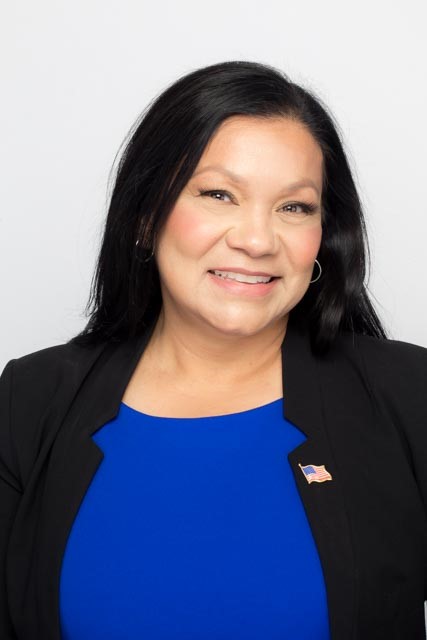
This measure would urge the President of the United States and Congress of the United States to immediately restore full and consistent funding and staffing for the National Park Service.
Maddy summaryCalifornia Assembly Resolution 140 designates August 2026 as Children's Get Offline and Get Outdoors Month to promote awareness of the benefits of screen-free play for child development. The resolution cites research linking excessive social media use and reduced free play time to increased rates of anxiety, depression, and other behavioral issues among teenagers. It encourages families and communities to support unstructured outdoor activities and highlights ongoing federal efforts to protect children's mental health through technology guardrails.
Maddy summaryCalifornia Assembly Resolution 137 formally recognizes the Diwali festival scheduled for November 8, 2026, and encourages state residents to participate in the celebration. The resolution highlights the cultural significance of the holiday for Indian Americans and South Asian communities, noting its themes of unity, joy, and the triumph of light over darkness. It also acknowledges that California previously designated Diwali as an official state holiday in 2025. This measure serves as a commemorative statement rather than a law with new regulatory or financial provisions.