This measure would affirm the fundamental importance of indigent defense to due process, equal justice, and democratic governance, recognize public defenders as essential protectors of constitutional rights and the rule of law, and encourage the development of statewide approaches to indigent defense.
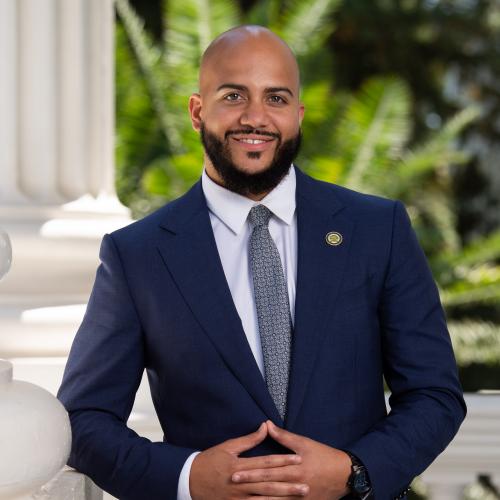
Rep. Isaac Bryan
Sponsored bills
Maddy summaryThis bill designates June 2026 as Electronic Dance Music Month to recognize the genre's cultural significance. It directly affects communities and organizations involved in the electronic dance music scene by encouraging public awareness and celebration during that period. The measure requires no new funding or legal changes, serving instead as a symbolic declaration to highlight the month's theme.
Maddy summaryThis bill designates the month of June as Dairy Month throughout California. It directly affects the state by officially recognizing the dairy industry during this specific time period. The measure requires no changes to laws or regulations, as it serves only as a symbolic proclamation.
This measure would encourage the chief administrator of each public building or facility owned by the state, a county, or a municipality to display the 9/11 Remembrance Flag on September 11 of each year and to prescribe procedures necessary for its display. The measure would declare that any public official or chief administrator of a public building or facility may accept a donation of one or more 9/11 Remembrance Flags for the purpose of display at a public building or facility owned by the state, a county, or a municipality.
This measure would designate August 10, 2026, and August 10 of each subsequent year thereafter, as Black Girl Joy Day and encourage all Californians to join in celebrating Black Girl Joy Day.
Existing law subjects a minor between 12 and 17 years of age, who violates any federal, state, or local law or ordinance, and a minor under 12 years of age who is alleged to have committed specified serious offenses, to the jurisdiction of the juvenile court, which may adjudge the minor to be a ward of the court. Existing law also establishes the transition jurisdiction or the juvenile court and subjects certain minors who are older than 17 years and 5 months of age and younger than 18 years of age, and certain nonminors who are older than 18 years of age and less than 21 years of age, who were wards of the juvenile court and in foster care placement to that jurisdiction. Existing law assigns various responsibilities relating to these individuals to the probation officer, including, among others, the responsibility to supervise minors placed on probation. Existing law requires every county to appoint a chief probation officer and requires the chief probation officer to perform the duties and discharge the obligations imposed on the office by law or by order of the superior court, including, among other things, community supervision of the minors described above and the operation of juvenile halls, camps, and ranches, pursuant to specified provisions. This bill would authorize the board of supervisors in a county with a population of at least 6,000,000 people to, except as specified, delegate to a county official who has jurisdiction over youth development, diversion, and reentry all or part of the duties and authorities concerning these individuals, as specified. The bill would require the county board of supervisors to delegate all or part of these duties and authorities to a county official that is part of a collective bargaining unit. Existing law generally limits access to juvenile case files, as defined. Existing law authorizes only certain individuals to inspect a juvenile case file, including, among others, the county counsel, city attorney, or any other attorney representing the petitioning agency in a dependency action. This bill would additionally authorize county officials who have been delegated duties, authorities, or both, as described above, to inspect a juvenile case file.

This measure would call on the state's Representatives in Congress to continue to support investments in the federal Local Food for Schools and Child Care program and would call on the President of the United States to work with Congress to support family farmers who produce fresh, locally sourced food for school meals.
Maddy summaryACR 61 designates April 9-15, 2025, as Filicide Awareness Week through a formal proclamation. This resolution does not create new laws or affect specific groups; it simply establishes a designated week for public awareness. The key mechanism is the official naming of the dates by the legislature to encourage community education about filicide (the killing of a child by a parent or caregiver). The bill has no policy changes or funding provisions, serving solely as a commemorative measure.
Maddy summaryCalifornia House Resolution 138 designates the week of October 4 through October 10, 2026, as National 4-H Week throughout the state. The resolution encourages citizens to recognize the impact of the 4-H program, which is described as the largest youth development organization in the United States. It highlights how the program, delivered by the University of California Cooperative Extension, helps young people develop leadership skills through hands-on projects in health, science, agriculture, and civic engagement.
Maddy summaryCalifornia House Resolution 134 designates the month of November as "California's First-Generation College Celebration Month." The resolution honors students whose parents did not complete a bachelor's degree and recognizes the specific academic and financial challenges they often face. It also highlights the importance of federal and state support programs, such as Pell Grants and the Educational Opportunity Program, in helping these students succeed in higher education.