

Existing law requires the State Department of Public Health to maintain a program of maternal and child health, which may include, among other things, facilitating services directed toward reducing infant mortality and improving the health of mothers and children. Existing law requires the Office of Health Equity within the department to serve as a resource for ensuring that programs collect and keep data and information regarding ethnic and racial health statistics, and strategies and programs that address multicultural health issues, including, but not limited to, infant and maternal mortality. Existing law makes legislative findings relating to implicit bias and racial disparities in maternal mortality rates. Existing law requires a hospital that provides perinatal care, and an alternative birth center or a primary clinic that provides services as an alternative birth center, to implement an evidence-based implicit bias program, as specified, for all health care providers involved in perinatal care of patients within those facilities. Existing law requires the health care provider to complete initial basic training through the program and a refresher course every 2 years thereafter, or on a more frequent basis if deemed necessary by the facility. Existing law requires the facility to provide a certificate of training completion upon request, to accept certificates of completion from other facilities, and to offer training to physicians not directly employed by the facility. Existing law requires the department to track and publish data on pregnancy-related death and severe maternal morbidity, as specified. This bill would make a legislative finding that the Legislature recognizes all birthing people, including nonbinary persons and persons of transgender experience. The bill would extend the evidence-based implicit bias training requirements to specified health care providers at hospitals that provide perinatal care, alternative birth centers, or primary care clinics, as specified. The bill would require an implicit bias program to include recognition of intersecting identities and the potential associated biases. The bill would require initial basic training for the implicit bias program to be completed by June 1, 2025, for current health care providers, and within 6 months of their start date for new health care providers, unless exempted. The bill would require specified facilities to, by February 1 of each year, commencing in 2026, provide the Attorney General with proof of compliance with these provisions, as specified. The bill would authorize the Attorney General to pursue civil penalties for violations of these provisions, as specified. The bill would require that Attorney General be awarded all attorney's fees and costs in any civil action in which a court imposes any of those civil penalties. The bill would authorize the Attorney General to post on its internet website a list of facilities that did not timely submit proof of compliance or were assessed penalties under these provisions, as specified. The bill would authorize the Attorney General to post any other compliance data they deem necessary and would authorize the Attorney General to biennially publish a report outlining compliance data related to these provisions. The bill would make the provisions of the act severable.
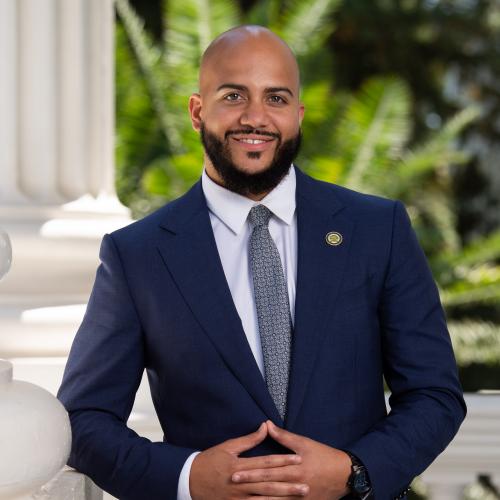
Asm. Isaac Bryan
Sponsored bills
Existing law provides for the out-of-home placement, including foster care placement, of children who are unable to remain in the custody and care of their parents. Existing law, the federal Social Security Act, provides for benefits for eligible beneficiaries, including survivorship and disability benefits and Supplemental Security Income (SSI) benefits for, among others, blind and disabled children. Existing law requires every youth who is in foster care to be screened by the county for potential eligibility for SSI and requires that screening to occur when the foster youth is at least 16 years of age and not older than 17 years of age. This bill, among other things, would require a placing agency to act in accordance with specified guidelines and pursuant to certain requirements when acting as the representative payee or in any other fiduciary capacity for a child or youth receive federal Social Security Administration survivors' benefits, including, among other requirements, ensuring that the child's federal Social Security Administration survivors' benefits, as defined, are not used to pay for, or to reimburse, the placing agency for any costs of the child's care and supervision, as defined. The bill would make these requirements operative January 1, 2025, or 30 days after the department issues the necessary all-county letters and informing materials to county placing agencies, whichever is later. By increasing county duties with respect to foster youth, the bill would impose a state-mandated local program. Existing law requires the State Department of Social Services to convene a workgroup to develop best practice guidelines for county welfare departments to assist eligible children who are in the state's or a county's custody in obtaining all federal benefits for which they are eligible. Existing law requires that workgroup to make recommendations to the department, by December 31, 2006, regarding the feasibility and cost-effectiveness of reserving a designated amount of foster children's social security and SSI/SSP benefits in lieu of reimbursing the county and the state for care and maintenance, and, in making those recommendations, to consider that the reserved benefits would be for the purpose of assisting the foster child in the transfer to self-sufficient living in a manner consistent with federal law. This bill would repeal the requirement for that workgroup to make the above-described recommendations regarding feasibility and cost-effectiveness. The bill would also delete other obsolete provisions of law. The California Constitution requires the state to reimburse local agencies and school districts for certain costs mandated by the state. Statutory provisions establish procedures for making that reimbursement. This bill would provide that no reimbursement is required by this act for a specified reason.
Existing law establishes the Geologic Energy Management Division in the Department of Conservation, under the direction of the State Oil and Gas Supervisor, who is required to supervise the drilling, operation, maintenance, and abandonment of oil and gas wells, as provided. Existing law requires the operator of a well to file a written notice of intention to commence drilling with, and prohibits any drilling until approval is given by, the supervisor or district deputy. Existing law requires the operator of any idle well, as defined, to either (1) no later than May 1 of each year, for each idle well that was an idle well at any time in the last calendar year, file with the supervisor an annual fee according to a specified schedule of fees based on the length of time a well has been idle, or (2) file a plan with the supervisor to provide for the management and elimination of all long-term idle wells. A violation of these or other laws regulating oil and gas operations, as provided, is a crime. This bill would require the division, on or before March 1, 2025, to identify all low-production wells, as defined, that are located in the County of Los Angeles in an oil field that is adjacent to a state recreation area or state park and is located, in whole or in part, within the boundary of the Baldwin Hills Conservancy, and determine the length of time each of those wells has continuously been a low-production well, as provided. The bill would prohibit, commencing March 1, 2026, the owners of those wells from allowing those wells to be low-production wells for more than 12 months. Upon a violation of that prohibition, the bill would require the supervisor to charge an administrative penalty of $10,000 per month to the low-production well owner, until the low-production well is plugged and abandoned, as provided. Because a violation of these requirements would be a crime, the bill would impose a state-mandated local program. The bill would establish the Equitable Community Repair and Reinvestment Account, require these administrative penalties to be deposited into the account, and make the funds from the account available, upon appropriation by the Legislature, to the Department of Conservation for allocation to the County of Los Angeles for projects that benefit communities living within 212 miles of the identified low production wells, as provided. This bill would require the plugging and abandoning of all wells located in the County of Los Angeles in an oil field that is adjacent to a state recreation area or state park and is located, in whole or in part, within the boundary of the Baldwin Hills Conservancy by December 31, 2030. The bill would require the supervisor, on and after January 1, 2031, to charge the owner of a well an administrative penalty of $10,000 per month for a violation of that requirement, until the well is plugged and abandoned, to be deposited in the account, as provided. The bill would authorize the owner of an idle well or long-term idle well subject to this requirement to adjust the terms of the above-described idle well management plan to accomplish the plugging and abandoning of those covered wells by December 31, 2030. Because a violation of these requirements would be a crime, the bill would impose a state-mandated local program. The bill would state that the Legislature shall not allow the account balance to exceed specified amounts, determined as provided. The California Constitution requires the state to reimburse local agencies and school districts for certain costs mandated by the state. Statutory provisions establish procedures for making that reimbursement. This bill would provide that no reimbursement is required by this act for a specified reason.
Existing law establishes the Medi-Cal program, which is administered by the State Department of Health Care Services and under which qualified low-income individuals receive health care services. The Medi-Cal program is, in part, governed and funded by federal Medicaid program provisions. Existing law requires the department to establish the Medically Tailored Meals Pilot Program and the Short-Term Medically Tailored Meals Intervention Services Program, to operate in specified counties and during limited periods for the purpose of providing medically tailored meal intervention services to eligible Medi-Cal beneficiaries with certain health conditions, including congestive heart failure, cancer, diabetes, chronic obstructive pulmonary disease, or renal disease. Existing law, subject to implementation of the California Advancing and Innovating Medi-Cal (CalAIM) initiative, authorizes a Medi-Cal managed care plan to elect to cover community supports approved by the department as cost effective and medically appropriate in a comprehensive risk contract that are in lieu of applicable Medi-Cal state plan services. Under existing law, community supports that the department is authorized to approve include, among other things, medically supportive food and nutrition services, including medically tailored meals. This bill would make medically supportive food and nutrition interventions a covered benefit under the Medi-Cal program, through both the fee-for-service and managed care delivery systems, no sooner than July 1, 2026, upon appropriation and subject to federal approval and the issuance of final guidance by the department. The bill would require those interventions to be covered if determined to be medically necessary by a health care provider or health care plan, as specified. The bill would require the provision of interventions for 12 weeks, or longer if deemed medically necessary. The bill would require the department to define the qualifying medical conditions for covered interventions and delineate the services included in the definition of a medically supportive food and nutrition intervention. The bill would require a health care provider, to the extent possible, to match the acuity of a patient's condition to the intensity and duration of the covered intervention and to include culturally appropriate foods. The bill would require the department, upon appropriation, to establish a medically supportive food and nutrition benefit stakeholder group, with a specified composition, to advise the department on certain related items, such as the scope of the benefit, among others.
Existing law establishes, until January 1, 2030, the Racial Equity Commission within the Office of Planning and Research and requires the commission to develop resources, best practices, and tools for advancing racial equity by, among other things, developing a statewide Racial Equity Framework that includes methodologies and tools that can be employed to advance racial equity and address structural racism in California. This bill would require the Office of Legal Affairs, which would be established within the California American Freedmen Affairs Agency as provided by SB 1403 of the 2023–24 Regular Session, to, upon appropriation by the Legislature, review, investigate, and make certain determinations regarding applications from persons who claim they are the dispossessed owner, as defined, of property taken as a result of racially motivated eminent domain. The bill would define "racially motivated eminent domain" to mean when the state, county, city, city and county, district, or other political subdivision of the state acquires private property for public use and does not distribute just compensation to the owner at the time of the taking, and the taking, or the failure to provide just compensation, was due, in whole or in part, to the owner's ethnicity or race. Upon a determination that providing property or just compensation is warranted, as provided, the bill would require the Office of Legal Affairs to certify that the dispossessed owner is entitled to the return of the taken property, as specified, or other publicly held property, as defined, of equal value, or financial compensation, as specified. Upon a determination that the dispossessed owner is entitled to other publicly held property of equal value, the bill would require the Office of Legal Affairs to solicit and select, as specified, a list of recommendations of publicly held properties that are suitable as compensation, as provided. Upon a rejection of the determination of the Office of Legal Affairs by the state or local agency that took property by racially motivated eminent domain, the bill would authorize the dispossessed owner, as specified, to bring an action to challenge the taking or the amount of compensation, as provided. Upon a determination that an applicant is not a dispossessed owner or issuing property or just compensation is not warranted, the bill would require the Office of Legal Affairs to notify the applicant of its finding and provide an appeal process, as specified. The bill would make every finding, decision, determination, or other official act of the California American Freedmen Affairs Agency subject to judicial review. Existing law generally prohibits state agencies from employing in-house counsel to act on behalf of the agency or its employees in judicial or administrative adjudicative proceedings, but exempts specified agencies from this provision. This bill would exempt the California American Freedmen Affairs Agency from that provision. This bill would make related findings and declarations, including those related to a gift of public funds.
Existing law requires that a weapon acquired by a specified governmental entity under specified circumstances, including as part of a "gun-buyback" program, be destroyed. This bill would require a law enforcement agency that contracts with a third party for the destruction of firearms or weapons to ensure that the contract for those services prohibits the sale of any parts of, or attachments to, the firearm or other weapon, as specified. The bill would also exempt from the destruction requirement, any firearm obtained through a "gun-buyback" program that is donated to a historical society, museum, or institutional collection, as specified. By requiring a higher level of service for local agencies, this bill would impose a state-mandated local program. This bill would incorporate additional changes to Section 18005 of the Penal Code proposed by SB 1019 and AB 2739 to be operative only if this bill and either one or both of those bills are enacted and this bill is enacted last. The California Constitution requires the state to reimburse local agencies and school districts for certain costs mandated by the state. Statutory provisions establish procedures for making that reimbursement. This bill would provide that, if the Commission on State Mandates determines that the bill contains costs mandated by the state, reimbursement for those costs shall be made pursuant to the statutory provisions noted above.
Existing law makes it a crime to intimidate a voter or to interfere with the conduct of an election, as specified. Existing law makes it a crime for a person in possession of a firearm or a uniformed peace officer, private guard, or security personnel to be stationed in the immediate vicinity of, or posted at, a polling place without written authorization of the appropriate elections official, except as specified. Existing law also makes it a crime to hire a person to conduct these prohibited acts. This bill would prohibit a person from intimidating, threatening, or coercing, or attempting to intimidate, threaten, or coerce, any other person for engaging in specified election-related activities. The bill would authorize an aggrieved person, an officer holding an election or conducting a canvass, or the Attorney General to file a civil action to enforce this prohibition. The bill would create a presumption that a person who openly carries a firearm or imitation firearm while interacting with or observing the specified election-related activities would be presumed to have engaged in prohibited intimidation, in the absence of an affirmative showing to the contrary by a preponderance of the evidence. The bill would provide that an aggrieved person who prevails in such an action will recover reasonable attorney's fees, reasonable expert fees, and reasonable litigation expenses, as specified. This bill would declare that it is to take effect immediately as an urgency statute.
Existing law authorizes, until January 1, 2025, a school district with an average daily attendance of 250,000 or more pupils to maintain any single gender schools and classes that were enrolling pupils as of July 1, 2017, if certain requirements are met, and authorizes, until January 1, 2025, a charter school authorized by a school district with an average daily attendance of 250,000 or more pupils that was operating as a single gender school or with single gender classes as of July 1, 2017, to be maintained as a single gender school or to maintain single gender classes, if those same requirements are met. Existing law requires, until January 1, 2025, a school district that maintains a single gender school or class, and a charter school maintained as a single gender school or that maintains a single gender class to conduct certain evaluations at least once every 2 years, and to report the findings of those evaluations to the State Department of Education and specified legislative committees. This bill, among other things, would extend the operation of these provisions through June 30, 2031. If the department finds that one or more of the above-described single gender schools or single gender classes fails to comply with certain federal regulations or these provisions, the bill, until July 1, 2031, would require the department to order corrective action, as specified.
Existing law requires a child to be deemed to have entered foster care on the earlier of the date of a jurisdictional hearing or the date 60 days following when the child was initially removed from the physical custody of their parent or guardian. This bill would require that, when the court orders the custody of a child to be retained by the parent or guardian at disposition, even if the child was initially detained, and then subsequently removes the child at disposition on a petition brought pursuant to a subsequent petition, as specified, the child is deemed to have entered foster care on the earlier of the date of the jurisdictional hearing held pursuant to the subsequent petition or the date that is 60 days after the date the child was initially removed from the physical custody of their parent or guardian on a subsequent petition. The bill would require that the disposition on a subsequent petition be considered the initial disposition for specified circumstances. The bill would require, for purposes of calculating the date of a continued permanency review hearing or a subsequent permanency review hearing, as specified, the child is deemed to have been originally removed from the physical custody of their parent or guardian on the date they were taken into custody by the social worker based on a subsequent petition, as specified. By allowing additional reunification services and increasing the duties on county social workers, this bill would create a state-mandated local program. The California Constitution requires the state to reimburse local agencies and school districts for certain costs mandated by the state. Statutory provisions establish procedures for making that reimbursement. This bill would provide that no reimbursement is required by this act for a specified reason.
Under existing law, a person is authorized to vote if that person is a United States citizen, a resident of California, at least 18 years of age, and not imprisoned for the conviction of a felony. Existing law further specifies conditions under which a person may register to vote, vote in person, vote by mail, vote a provisional ballot, and receive a replacement ballot. This bill would, until January 1, 2030, require the Secretary of State to, upon appropriation of funds for this purpose, operate a pilot program to provide grants to county election offices in the County of San Benito, the County of San Mateo, and the County of Santa Cruz to improve voter participation in jail facilities, as defined. The bill would require grantees to facilitate in-person voting for all eligible incarcerated persons. Participating counties would be required to meet specified requirements and permit any eligible incarcerated person to perform specified activities, including registering to vote and voting, returning a vote by mail ballot, voting a provisional ballot, and receiving a replacement ballot. In the counties administering grants under these provisions, the bill would require the county sheriff or jail facility administrator to designate an employee as a voting coordinator at each facility who will be responsible for ensuring compliance with requirements pertaining to in-person voting for maintaining voter education materials in the jail library, and for posting informational flyers regarding voting rights and eligibility to vote, among other duties. The bill would require the Secretary of State to prepare a related training for voting coordinators. The bill would require a local elections official receiving a grant to evaluate the program and report the results of the evaluation to the Secretary of State, as specified. By imposing additional duties on specific county election offices, this bill would impose a state-mandated local program. The California Constitution requires the state to reimburse local agencies and school districts for certain costs mandated by the state. Statutory provisions establish procedures for making that reimbursement. This bill would provide that, if the Commission on State Mandates determines that the bill contains costs mandated by the state, reimbursement for those costs shall be made pursuant to the statutory provisions noted above.