

Existing law, commencing with the 2023–24 fiscal year, appropriates $300,000,000 each fiscal year from the General Fund to the Superintendent of Public Instruction for allocation for the Local Control Funding Formula Equity Multiplier apportionment, as provided. Existing law requires the funding to be allocated to eligible local educational agencies that generate a specified local control funding formula entitlement based on, among other things, the percentage of unduplicated pupils served. Existing law establishes the Strong Workforce Program to provide funding to career technical education regional consortia made up of community college districts and local educational agencies, as specified. Existing law also establishes a K–12 component of the Strong Workforce Program. Existing law provides that, commencing with the 2018–19 fiscal year, the amount appropriated in the annual Budget Act for the K–12 component of the program is used to create, support, or expand high-quality career technical education programs at the K–12 level that are aligned with the workforce development efforts occurring through the program. Existing law requires each consortium to form a K–12 Selection Committee, as specified, for purposes of awarding grants under the K–12 component of the program and requires that applicants with certain characteristics be given positive consideration, as specified. This bill would require positive consideration for purposes of awarding grants under the K–12 component of the program to also be given to applicants that serve pupils enrolled at local educational agencies receiving Local Control Funding Formula Equity Multiplier funding.
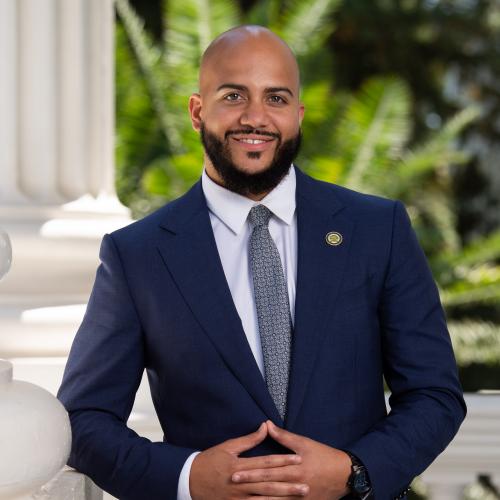
Asm. Isaac Bryan
Sponsored bills
Existing law prohibits an employer from requiring an employee or applicant for employment to agree, in writing, to any term or condition that is known by the employer to be illegal. Existing law provides that certain contractual agreements between an employer and employee are against public policy, including specified provisions affecting an employee's membership in a labor organization and the protection of state law in employment. Under existing law, enforcement of state labor laws is generally committed to the Division of Labor Standards Enforcement within the Department of Industrial Relations under the direction of the Labor Commissioner. This bill would provide that a provision in an agreement between an individual and any other person for the performance of personal or professional services is unenforceable only as it relates to a new performance, fixed on or after January 1, 2025, by a digital replica of the individual if the provision meets specified conditions relating to the use of a digital replica of the voice or likeness of an individual in lieu of the work of the individual. The bill would define "digital replica" to mean a computer-generated, highly realistic electronic representation that is readily identifiable as the voice or visual likeness of an individual that is embodied in a sound recording, image, audiovisual work, or transmission in which the actual individual either did not actually perform or appear, or the actual individual did perform or appear, but the fundamental character of the performance or appearance has been materially altered, except as prescribed.
Existing law provides that in the case of a theft of any article of historical, interpretive, scientific, cultural, or artistic significance, a cause of action is not deemed to have accrued until the discovery of the whereabouts of the article by the aggrieved party, the aggrieved party's agent, or a law enforcement agency. Existing law requires a civil action against a museum, gallery, auctioneer, or dealer for the recovery of works of fine art that were unlawfully taken or stolen, including a taking or theft by means of fraud or duress, to be commenced within 6 years of the actual discovery by the claimant or their agent of the identity and whereabouts of the work of fine art and information or facts that are sufficient to indicate that the claimant has a claim for a possessory interest in the work of fine art. Existing federal law, the Holocaust Expropriated Art Recovery Act of 2016, establishes a statute of limitation for claims to recover artwork and other property, as defined, stolen or misappropriated by the Nazis between 1933 and 1945. This bill would provide that California substantive law shall apply in actions to recover fine art or an item of historical, interpretive, scientific, or artistic significance, including those covered by the Holocaust Expropriated Art Recovery Act of 2016, brought by a California resident or their heirs, as specified. This bill would also permit a California resident or a representative of the estate of a California resident, as specified, to bring an action for damages or to recover artwork or personal property, as defined, that was stolen or otherwise lost as the result of political persecution. The bill would permit such actions to be brought within six years of the discovery of relevant facts, as provided. This bill would also permit those who discovered relevant facts prior to the effective date of this bill, to bring such actions within 6 years of the discovery of the relevant facts or within 2 years of the effective date of this bill, whichever is later. The bill would permit a cause of action previously dismissed on specified grounds to be brought again under these provisions within 2 years of either the effective date of the bill or the entry of final judgment and the termination of all appeals, whichever is later. This bill would declare that it is to take effect immediately as an urgency statute.
The California Environmental Quality Act (CEQA) requires a lead agency, as defined, to prepare, or cause to be prepared, and certify the completion of an environmental impact report (EIR) on a project that it proposes to carry out or approve that may have a significant effect on the environment or to adopt a negative declaration if it finds that the project will not have that effect. CEQA also requires a lead agency to prepare a mitigated negative declaration for a project that may have a significant effect on the environment if revisions in the project would avoid or mitigate that effect and there is no substantial evidence that the project, as revised, would have a significant effect on the environment. CEQA establishes administrative procedures for the review and certification of the EIR for a project and judicial review procedures for any action or proceeding brought to challenge the lead agency's decision to certify the EIR or to grant project approvals. This bill would establish streamlined procedures for the administrative and judicial review of the environmental review and approvals granted for an environmental leadership media campus project, defined by the bill as a construction or renovation project on a film and television media campus in the County of Los Angeles, under certain conditions. The bill would require a city within the County of Los Angeles that is the lead agency for an environmental leadership media campus project to certify the project for the streamlined judicial review, as specified, if the lead agency finds the project will meet those conditions. The bill would require the project applicant of the environmental leadership media campus project to take certain actions in order for those specified procedures to apply to the project. The bill would require the Judicial Council, on or before July 1, 2025, to adopt rules of court establishing procedures requiring actions or proceedings seeking judicial review of the certification of an environmental impact report for an environmental leadership media campus project or the granting of any project approval, including any appeals to the court of appeal or the Supreme Court, to be resolved, to the extent feasible, within 365 calendar days of the filing of the certified record of proceedings with the court. The bill would require the lead agency to prepare the EIR for an environmental leadership media campus project in a specified manner and would require the concurrent preparation of the record of proceedings. Because the bill would impose additional duties on a lead agency and on a local agency, this bill would impose a state-mandated local program. This bill would make legislative findings and declarations as to the necessity of a special statute for the County of Los Angeles. The California Constitution requires the state to reimburse local agencies and school districts for certain costs mandated by the state. Statutory provisions establish procedures for making that reimbursement. This bill would provide that no reimbursement is required by this act for a specified reason.
Existing law requires the Department of Justice to maintain a certification or confirmation program for persons who roll fingerprint impressions for non-law-enforcement purposes and persons who are designated by agencies as custodians of records. Existing law requires them, except as exempt, to be certified or confirmed by the department, as specified. Existing law requires the department to refuse to certify or confirm a fingerprint roller or custodian of records, or revoke their certification or confirmation, upon, among other things, their conviction for a felony offense or their arrest or conviction for an offense that involves moral turpitude, dishonesty, or fraud, and that bears on the person's ability to perform their duties or responsibilities, as specified. Existing law also requires the department to refuse to certify an individual as a fingerprint roller, or to suspend or revoke that certification, upon the revocation, suspension, restriction, or denial of a professional license, if the denial was for misconduct, dishonesty, or any cause substantially related to the duties or responsibilities of their profession. This bill would instead give the department discretion to refuse to certify or confirm a fingerprint roller or custodian of records, or to revoke their certification or confirmation, based upon, among other things, a felony conviction or an arrest pending conviction or conviction for an offense that is substantially related to the qualifications, functions, or duties of that profession. The bill would make the same change with relation to the revocation, suspension, restriction, or denial of a professional license for fingerprint rollers. The bill would require the department to develop criteria for determining whether an offense is substantially related to the qualifications, functions, or duties of that profession, including, among other factors, the nature and gravity of the offense and whether the applicant has offered credible evidence of rehabilitation, as specified. The bill would prohibit the department from denying certification or confirmation based in whole or in part on a conviction without considering evidence of rehabilitation, as specified. The bill would also prohibit the department from denying certification or confirmation if the applicant has been granted clemency or a pardon by a state or federal executive.
The California Constitution provides that voters may recall a state officer by majority vote and, in the same election, elect a successor with a plurality of the vote. The Constitution prohibits an officer who is the subject of a recall election from being a candidate for successor. The Constitution provides that the Lieutenant Governor becomes Governor when a vacancy occurs in the office of Governor, and requires the Lieutenant Governor to act as Governor during the impeachment, absence from the state, or other temporary disability of the Governor or of a Governor-elect who fails to take office. When a recall of the Governor is initiated, the Constitution requires the Lieutenant Governor to perform the recall duties of the Governor. The Constitution requires the Governor to fill vacancies in certain judicial and executive offices by appointment, as specified. This measure would eliminate the successor election for a recalled state officer and instead provide, in the event an officer is removed in a recall election, that the office will remain vacant until it is filled in accordance with the Constitution and statute. The measure would repeal the prohibition against the officer subject to the recall being a candidate to fill the office in a special election, but would prohibit the appointment of the officer subject to the recall election to fill the vacancy. If the Governor is removed from office in a recall election, this measure would provide that the Lieutenant Governor will become Governor for the remainder of the unexpired term. If the Governor is removed from office by recall before the close of the nomination period for the next statewide election during the first two years of the Governor's term, the measure would provide for a special election to be held to replace the Governor for the remainder of the unexpired term, to be consolidated with the next statewide primary election and, if necessary, the subsequent statewide general election. The measure would require the Secretary of State to perform the recall duties of the Governor when a recall of the Governor is initiated. The measure would require the Controller to perform the recall duties of the Governor and Secretary of State if recalls of those two officers are initiated at the same time. If adopted by the Legislature, the measure would appear on the ballot at the November 3, 2026, statewide general election.
This measure would, among other things, urge the United States Congress and President Joseph R. Biden to fully fund the United States Environmental Protection Agency's Comprehensive Infrastructure Solution for the Tijuana River due to the ongoing impacts to public health, the environment, and the local economy caused by cross-border pollution and would urge President Joseph R. Biden to declare a national emergency due to those ongoing impacts.
Former law, until July 1, 2023, established the Task Force to Study and Develop Reparation Proposals for African Americans, with a Special Consideration for African Americans Who are Descendants of Persons Enslaved in the United States (Task Force) . Former law required the Task Force, among other things, to identify, compile, and synthesize the relevant corpus of evidentiary documentation of the institution of slavery that existed within the United States and the colonies, as specified, and to recommend the form of compensation that should be awarded, the instrumentalities through which it should be awarded, and who should be eligible for this compensation. This bill would establish the California American Freedmen Affairs Agency in state government, under the control of the secretary, who would be appointed by the Governor and confirmed by the Senate. The bill would require the agency to implement the recommendations of the Task Force, as approved by the Legislature and the Governor. The bill would require the agency, as part of its duties, to determine how an individual's status as a descendant would be confirmed. The bill would also require proof of an individual's descendant status to be a qualifying criterion for benefits authorized by the state for descendants. To accomplish these goals, the bill would require the agency to be comprised of a Genealogy Office and an Office of Legal Affairs. The bill would further require the agency to oversee and monitor existing state agencies and departments tasked with engaging in direct implementation of the policies that fall within the scope of the existing state agencies' and departments' authority, including policies related to reparations. Existing law prohibits a state agency, with certain exceptions, from employing any in-house counsel to act on behalf of the state agency or its employees in any judicial or administrative adjudicative proceeding in which the agency is interested, or is a party as a result of office or official duties, or contracting with outside counsel for any purpose. This bill would exempt the California American Freedmen Affairs Agency from the above-described prohibition.
(1) Existing law authorizes a peace officer, as defined, or a regularly employed and salaried employee, who is engaged in directing traffic or enforcing parking laws and regulations, of a city, county, or jurisdiction of a state agency in which a vehicle is located, to remove a vehicle located within the territorial limits in which the officer or employee may act, under designated circumstances, including, but not limited to, when a vehicle is found upon a highway or public land or removed pursuant to the Vehicle Code, and has been issued 5 or more notices of parking violations to which the owner or person in control of the vehicle has not responded within a designated time period. Under existing law, a vehicle that has been removed and impounded under those circumstances that is not released may be subject to a lien sale to compensate for the costs of towage and for caring for and keeping safe the vehicle. This bill would delete the authority of a peace officer or public employee, as appropriate, to remove a vehicle under these circumstances. The bill would delete the related authority to conduct a lien sale to cover towing and storage expenses, except as specified. The bill would make various conforming and technical changes. (2) Existing law authorizes a parking citation processing agency, as defined, to collect an unpaid parking penalty by requesting the Department of Motor Vehicles to place a registration hold on the vehicle to which the citations have been issued, or by obtaining a civil judgment against the registered owner of the vehicle, as specified. Existing law requires a processing agency to offer a payment plan for unpaid parking citations to qualified indigent persons, defined as a person whose monthly income is 200 percent or less of the current federal poverty guidelines. This bill would expand the payment plan option to a person whose monthly income is 300 percent or less of the current poverty guidelines. The bill would modify payment plans for low-income persons by removing the deadline to file a request to participate in a payment plan, allowing automatic payments, and reducing the total amount due for penalties so that it can be paid off within 24 months, as specified. The bill would give a low-income person who falls out of compliance with a payment plan at least 4 extensions to resume payments, as specified. The bill would require a processing agency to establish a process to have an unpaid parking penalty waived for a vehicle if the registered owner was in custody in a juvenile facility, county jail, or state prison when the penalty was pending. The bill would require the processing agency to provide a payment plan option for persons who do not qualify as low income. The bill would require the processing agency to mail a courtesy warning notice to the registered vehicle owner that contains information about the payment program, as specified. Existing law authorizes an issuing officer or agency to make a determination, in the interest of justice, to cancel a notice of parking violation within 21 days of the notice being secured to the vehicle. This bill would remove the 21-day time limitation described above. Existing law authorizes penalties for specified parking violations to be paid in installments if the issuing agency determines the violator is unable to pay the entire amount in one payment. This bill would further authorize an issuing agency to reduce or waive the parking penalty if the violator provides evidence satisfactory to the issuing agency of an inability to pay the parking penalty in full. This bill would incorporate additional changes to Section 22651 of the Vehicle Code proposed by AB 1978 to be operative only if this bill and AB 1978 are enacted and this bill is enacted last.
(1) Existing law provides that a person who willfully disturbs a public school or a public school meeting is guilty of a misdemeanor and subject to a fine of not more than $500. This bill would exempt from those misdemeanor and fine provisions a person who, at the time of the disturbance, is a pupil of the school district. (2) Existing state law requires the principal of a school or the principal's designee to notify the appropriate law enforcement authorities of the county or city in which the school is situated of certain acts committed by a pupil that may be unlawful, including, among others, the selling or possession of narcotics or other designated controlled or regulated substances, and acts of assault, as specified. This bill instead would eliminate the requirement that the principal or principal's designee notify the appropriate law enforcement authorities of possession of designated controlled or regulated substances by a pupil. The bill would require that the principal or principal's designee notify the appropriate law enforcement authorities if a pupil's act requires notification pursuant to the federal Gun-Free Schools Act of 1994, which conditions certain federal funding on a criminal or juvenile delinquency referral policy for a student who brings a firearm or weapon to a school.