

(1) Existing law requires a court, when a defendant is convicted of a crime, to order the defendant to pay restitution to the victim or victims, and to additionally pay a restitution fine to be deposited in the Restitution Fund. Existing law generally provides for the compensation of victims and derivative victims of specified types of crimes by the California Victim Compensation Board from the Restitution Fund. This bill would make the outstanding balance of any restitution fines, including any collection fees, unenforceable and uncollectible 10 years after the date of imposition of an order for a restitution fine. (2) Existing law establishes the jurisdiction of the juvenile court over minors who are between 12 and 17 years of age, inclusive, who have violated a federal, state, or local law or ordinance, as specified, and over minors under 12 years of age who have been alleged to have committed specified crimes. Existing law authorizes a juvenile court to adjudge a person under these circumstances to be a ward of the court. Existing law generally requires that the minor pay a restitution fine to be deposited into the Restitution Fund and restitution to any victim of the minor's conduct, as specified. The bill would remove the requirement that a minor adjudged to be a ward of the court pay a restitution fine and would make the outstanding balance of any restitution fines, including any collection fees, unenforceable and uncollectible 10 years after the date of imposition of a restitution fine. The bill would make additional conforming changes. (3) Existing law requires the juvenile court, when issuing the order of restitution, to identify on the court order, any co-offenders who are jointly and severally liable for victim restitution. The bill would require, for the purposes of victim restitution, that each minor be held severally liable, as specified, and would prohibit a minor from being held jointly and severally liable as co-offenders. The bill would prohibit the aggregate amount of apportioned liability for all minors involved from exceeding 100% in total. (4) Existing law establishes the distribution of trust funds of a ward committed to the Division of Juvenile Justice, including payment of restitution orders and restitution fines. Under existing law, the Division of Juvenile Justice closed on June 30, 2023. This bill would repeal these provisions.
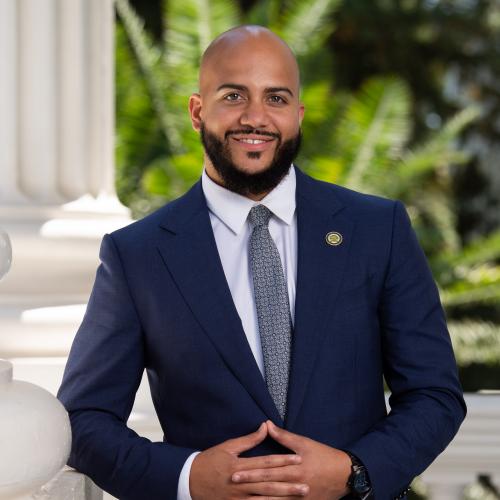
Asm. Isaac Bryan
Sponsored bills
Existing unemployment compensation disability law requires workers to pay contribution rates based on, among other things, wages received in employment and benefit disbursement, for payment into the Unemployment Compensation Disability Fund, for purposes of compensating in part for the wage loss sustained by any individual who is unable to work due to the employee's own sickness or injury, among other reasons. Existing law sets forth standards for eligibility to receive unemployment compensation disability benefits. Existing law establishes, within the above state disability insurance program, a family temporary disability insurance program, also known as the paid family leave program, for the provision of wage replacement benefits for up to 8 weeks to workers who take time off work for prescribed purposes, including to care for a seriously ill family member. Existing law requires, for purposes of unemployment compensation disability benefits, the Employment Development Department to issue the initial payment for unemployment compensation disability benefits to a monetarily eligible claimant who is otherwise determined eligible by the department within 14 days of receipt of the claimant's properly completed first disability claim. Existing law provides for purposes of the paid family leave program that eligible workers shall receive benefits generally in accordance with unemployment and disability compensation law. This bill would instead require, for purposes of unemployment compensation disability benefits, the issuance of the initial payment for those benefits within 14 days of receipt of the claimant's properly completed first disability claim or as soon as eligibility begins, whichever is later. The bill would apply the same initial payment issuance schedule applicable to unemployment compensation disability benefits to the paid family leave program and repeal the requirement that eligible workers receive benefits generally in accordance with unemployment and disability compensation law. The bill would make these changes operative when these changes are incorporated in the Employment Development Department's integrated claims management system as part of the EDDNext project. Under the state disability insurance and paid family leave programs, a first claim is required to be filed not later than the 41st consecutive day following the first compensable day with respect to which the claim is made for benefits, as specified. This bill would authorize an individual to initiate the claims process up to 30 days in advance of the anticipated first compensable day. The bill would make these changes operative when the changes are incorporated in the Employment Development Department's integrated claims management system as part of the EDDNext project.
The Planning and Zoning Law, among other things, authorizes a development proponent to submit an application for a housing development that is subject to a specified streamlined, ministerial approval process not subject to a conditional use permit, if the development satisfies certain objective planning standards. The California Environmental Quality Act (CEQA) requires a lead agency, as defined, to prepare, or cause to be prepared, and certify the completion of, an environmental impact report on a project that it proposes to carry out or approve that may have a significant effect on the environment or to adopt a negative declaration if it finds that the project will not have that effect. CEQA does not apply to the approval of ministerial projects. This bill would make a development that meets specified objective planning standards, including that, among other things, it is on a parcel that is within a zone where office, retail, health care, or parking are a principally permitted use, a permitted use and would require a local agency to review an application for that development on an administrative, nondiscretionary basis. The bill would require a local agency, within 60 calendar days of receiving an application pursuant to these provisions, to approve or deny the application subject to specified requirements, including that, among other things, if the local agency determines that the development is in conflict with any of the above-described standards, the local agency is required to provide the development proponent written documentation of which standard or standards the development conflicts with, as specified. The bill would provide that a development eligible for approval pursuant to this process is not a "project" for purposes of CEQA, thereby expanding the exemption for ministerial approval of projects under CEQA. By increasing duties on local governments in reviewing and approving these developments, the bill would impose a state-mandated local program. The bill would authorize a development proponent to bring an action to enforce the bill's provisions, as specified, and would make its provisions enforceable by the Attorney General and provide the Attorney General an unconditional right to intervene to enforce the bill's provisions. The bill would define various terms for these purposes. The California Constitution requires the state to reimburse local agencies and school districts for certain costs mandated by the state. Statutory provisions establish procedures for making that reimbursement. This bill would provide that no reimbursement is required by this act for a specified reason. The bill would include findings that changes proposed by this bill address a matter of statewide concern rather than a municipal affair and, therefore, apply to all cities, including charter cities.
The existing federal Indian Gaming Regulatory Act of 1988 provides for the negotiation and execution of tribal-state gaming compacts for the purpose of authorizing certain types of gaming on Indian lands within a state. The California Constitution prohibits the Legislature from authorizing casinos of the type operating in Nevada and New Jersey and authorizes the Governor to negotiate and conclude tribal-state gaming compacts, subject to ratification by the Legislature. Existing law expressly ratifies a number of tribal-state gaming compacts between the State of California and specified Indian tribes. Existing law, the Gambling Control Act, provides for the regulation, oversight, and licensure of gambling establishments by the California Gambling Control Commission. Existing law prohibits a list of specified gambling games or any banking or percentage game played with cards, dice, or any device, for money, checks, credit, or any representative of value, and provides that any person who offers for play or participates in these games is guilty of a misdemeanor and is punishable as specified. Existing law authorizes gambling establishments to operate controlled games utilizing a player-dealer position, as defined, and to contract with a third party for the provision of proposition player services subject to specified conditions and regulatory requirements. Existing law generally specifies the persons or entities that may bring a civil action as prescribed for relief. Existing law authorizes a court to grant a preliminary injunction or temporary restraining order at any time prior to judgment, if the verified complaint or affidavits provide sufficient grounds to do so and the opposing party has been given notice. This bill would authorize a California Indian tribe, under certain conditions, to bring an action solely against licensed California card clubs and third-party proposition player services providers to seek a declaration as to whether a controlled game operated by a licensed California card club and banked by a third-party proposition player services provider constitutes a banking card game that violates state law, including tribal gaming rights under the constitutional provisions described above, and to request injunctive relief. The bill would require that any review of such a challenge be conducted de novo. The bill would prohibit a claim for money damages, penalties, or attorney's fees and would require that actions be filed no later than April 1, 2025, as specified. The bill would clarify that it does not intend to authorize an action, or otherwise impose any liability, against the state and would prohibit a court from issuing a preliminary injunction or temporary restraining order under certain circumstances. This bill would provide that its provisions are severable.
(1) Existing federal law, the Victims of Crime Act of 1984, creates the Crime Victims Fund and authorizes federal financial assistance to states for the purpose of supporting eligible crime victim assistance programs. Existing law creates various programs under the Office of Emergency Services related to crime prevention and education, including, among other things, programs concerning family violence prevention and domestic violence prevention. This bill, the California Victims of Crime Act, would establish the California Crime Victims Fund in the State Treasury and would require that moneys deposited in the fund be continuously appropriated to the Office of Emergency Services to support crime victims services. The bill would require the Office of Emergency Services to seek advisement from the Victims of Crime Act Steering Committee on priorities for utilizing the funds and would require the Treasurer to provide an annual report to the Legislature on the amounts deposited into the fund. By continuously appropriating moneys to the Office of Emergency Services for the support of crime victim services, the bill would make an appropriation. (2) Existing law establishes the aggravated white-collar crime enhancement which imposes enhanced penalties against a person who commits 2 or more related felonies, a material element of which is fraud or embezzlement, that involve a pattern of related felony conduct, and the pattern of related felony conduct involves the taking or loss of more than $100,000, as specified. This bill would authorize a court to impose an additional fine, known as the corporate white collar criminal enhancement, against a corporation that is convicted of a misdemeanor or felony. The bill would authorize the court to determine the amount of the fine, but would set specified limits. The bill would require the court to consider certain factors when determining the amount of the fine, including, among other things, the nature and seriousness of the offense and the corporation's assets, liabilities, and net worth, as specified. The bill would require that any moneys collected under this provision be deposited into the California Crime Victims Fund. (3) The California Constitution entitles the victim of a crime to restitution. Existing law requires the court in each criminal case to order a convicted defendant to pay full restitution to the victim and a separate restitution fine, as specified. This bill would, if a corporation is convicted of a misdemeanor or felony offense, require the court to impose a separate and additional restitution fine, as specified. The bill would authorize the court to determine the amount of the restitution fine, but would impose specified maximums. The bill would require any moneys collected under this provision to be distributed to the California Crime Victims Fund and the prosecuting agency that brought the criminal prosecution, as specified.
Existing law, the Unruh Civil Rights Act, provides that all persons within the jurisdiction of this state are entitled to full and equal accommodations in all business establishments regardless of their sex, race, color, religion, ancestry, national origin, disability, medical condition, genetic information, marital status, sexual orientation, citizenship, primary language, or immigration status. Existing law, the California Fair Employment and Housing Act, makes it unlawful to engage in specified discriminatory employment practices based on certain protected characteristics, including race, unless based on a bona fide occupational qualification or applicable security regulations, and prohibits housing discrimination based on specified personal characteristics, including race. Existing law states the policy of the State of California to afford all persons in public schools, regardless of their disability, gender, gender identity, gender expression, nationality, race or ethnicity, religion, sexual orientation, or any other specified characteristic, equal rights and opportunities in the educational institutions of the state, and to prohibit acts that are contrary to that policy and to provide remedies therefor. Existing law prohibits discrimination because of a perception that a person has one of those protected characteristics or is associated with a person who has, or is perceived to have, any of those characteristics. The California Fair Employment and Housing Act and public school policy define the term race for purposes of those provisions to include traits historically associated with race, including, but not limited to, hair texture and protective hairstyles, as defined. This bill would remove the term "historically" from the definitions of race, thus defining race to include traits associated with race, including, but not limited to, hair texture and protective hairstyles, as defined, and would add those definitions for "race" and "protective hairstyle" to the Unruh Civil Rights Act. This bill would declare that its provisions are declaratory of existing law. This bill would incorporate additional changes to Section 51 of the Civil Code proposed by SB 1137 to be operative only if this bill and SB 1137 are enacted and this bill is enacted last. This bill would incorporate additional changes to Section 12926 of the Government Code proposed by SB 1022 and SB 1137 to be operative only if this bill and either or both of those bills are enacted and this bill is enacted last.
Existing law grants a person sentenced to imprisonment the right to purchase, receive, and read any and all newspapers, periodicals, and books, as specified, subject to restrictions reasonably related to legitimate penological interests. Existing law authorizes the Department of Corrections and Rehabilitation to prescribe and amend rules and regulations for the administration of state prisons, including determining which materials are a threat to legitimate penological interests. Existing law creates the Office of the Inspector General and grants the Inspector General responsibility for oversight of the department, as specified. This bill would require the Office of the Inspector General to post the Centralized List of Disapproved Publications maintained by the department on the office's internet website and would require the department to notify the office each time a change is made to that list. The bill would authorize the office, upon request, to review publications on the list to determine if it concurs with the department's determination that the publication violates department regulations. The bill would require the office to notify the department if it does not concur with the department's determination. The bill would also require the office to include information relating to those notifications in an annual report the Inspector General provides to the Governor and Legislature.
Former law established, until July 1, 2023, the Task Force to Study and Develop Reparation Proposals for African Americans, with a Special Consideration for African Americans Who are Descendants of Persons Enslaved in the United States. Former law required the Task Force to, among other things, identify, compile, and synthesize the relevant corpus of evidentiary documentation of the institution of slavery that existed within the United States and the colonies that became the United States, and to recommend appropriate remedies in consideration of the Task Force's findings, as specified. Former law required the Task Force to submit a written report of its findings and recommendations to the Legislature, as specified. This bill would provide that the State of California recognizes and accepts responsibility for all of the harms and atrocities committed by the state, its representatives thereof, and entities under its jurisdiction who promoted, facilitated, enforced, and permitted the institution of chattel slavery and the enduring legacy of ongoing badges and incidents from which the systemic structures of discrimination have come to exist. The bill would further provide that the State of California apologizes for perpetuating the harms African Americans have faced and affirms its role in protecting the descendants of enslaved people and all Black Californians. The bill would require a plaque memorializing this apology to be publicly and conspicuously installed and maintained in the State Capitol Building. The bill would impose various duties on the Department of General Services and the Joint Rules Committee relating to the installation and maintenance of the plaque. The bill would authorize the Department of General Services and the Joint Rules Committee to receive money from grants and private donations and would continuously appropriate those funds for this purpose, as specified. The bill would require the Legislature to prepare the formal apology and would request it be signed by specified state leaders. The bill would require the Secretary of State to submit a final copy of this formal apology to the State Archives, where it would be available for viewing by the general public in perpetuity. The bill would include related legislative findings.
(1) Existing law regulates the employment of workers in grocery establishments, as defined, including requiring an incumbent grocery employer, as defined, where there is a change of control, as defined, to post a public notice of the change in control at the location of the affected grocery establishment within 5 business days following the execution of the transfer document, as specified. Existing law requires the notice to include, among other specified information, the name of the incumbent grocery employer, and to be posted in a conspicuous place at the grocery establishment in a manner where it can be readily viewed by specified persons, including eligible grocery workers. Existing law, the Pharmacy Law, provides for the licensure and regulation of pharmacies by the California State Board of Pharmacy. Existing law authorizes a pharmacy to furnish prescription drugs only to certain entities, including specific health care entities, and individual patients or another pharmacy either pursuant to prescription or as otherwise authorized by law. Existing law defines a pharmacy as an area, place, or premises licensed by the board in which the profession of pharmacy is practiced and where prescriptions are compounded. This bill would require a covered establishment, defined to include a grocery establishment or a pharmacy establishment, to satisfy specified requirements no later than 45 days before its closure, as defined, takes effect, including providing written notice of the closure to specified entities, including the employees of the covered establishment affected by the closure and their authorized representatives if the covered establishment employs more than 5 employees, and the Employment Development Department. The bill would require, notwithstanding that provision, a covered establishment that employs 5 or fewer employees to, no later than 30 days before a closure of the covered establishment takes effect, provide written notice of the closure to the employees of the covered establishment affected by the closure. The bill would exempt, notwithstanding the same provision, specified covered establishments, including a covered establishment that, among other things, is a pharmacy and is owned by a person or entity who owns 15 or fewer pharmacies nationwide, from providing written notice to specified persons and entities, including the Employment Development Department. The bill would exempt a covered establishment from these requirements if specified circumstances apply, including that the closure is necessitated by a physical calamity or an act of war, except as specified. (2) Existing law authorizes an aggrieved employee of a grocery establishment or their representative, as described, to bring an action, as specified, for violations of the above-described change of control provisions to recover, among other awards, reasonable attorney's fees and costs, if specified requirements are met, including that the employee provided written notice to the employer of the violations, as specified. Existing law also authorizes a civil penalty not to exceed $100 against, among other specified entities, the grocery employer for each employee whose rights are violated under those provisions. Existing law also authorizes an additional amount of $100 per employee payable as liquidated damages for each day of the violation until the violation is cured, as specified, and authorizes that amount to be recovered by the Labor Commissioner, as specified, and paid to the employee as compensatory damages. This bill would authorize a civil penalty not to exceed $10,000 for each closure to be assessed and collected in a civil action against a covered establishment that violates the above-described written notice provisions brought by specified persons or entities, including any person injured by the violation, except as specified. The bill would require the court, in assessing the amount of the civil penalty, to consider relevant circumstances, including the nature and severity of the misconduct, and require the court to award a prevailing plaintiff reasonable attorney's fees and costs. The bill would require, if the action is pursued by specified entities, including the Attorney General, that specified portions of the civil penalty collected be paid to, among other specified sources, the treasurer of the county in which the judgment was entered. The bill would entitle an employee that does not receive the written notice to recover in a civil action an additional sum of $100 payable as liquidated damages per employee for each day of the violation until the violation is cured, as specified. The bill would specify that these provisions do not preempt or alter any other rights or remedies, including any causes of action, available under any other federal or state law, except as specified. (3) Existing law, the California Workforce Innovation and Opportunity Act, establishes local workforce development boards to perform duties related to the planning, oversight, and evaluation of local workforce investment, including identifying workforce training programs. This bill would require a county, after receiving a written notice described above from any covered establishment, to provide the local workforce development board of the county in which the covered establishment is located with information about safety net programs, including the CalWORKs program, and would require a local workforce development board to provide the covered establishment with information about safety net programs and the availability of local workforce training services. The bill would require a covered establishment that receives information from a county or a local workforce development board as described above, no later than 30 days before its closure, to provide any of that information it receives to each of its employees. By increasing the duties of a county and a local workforce development board, the bill would impose a state-mandated local program. (4) Existing law provides for various public social services programs in the state, which are administered by the State Department of Social Services, including the CalFresh program, under which supplemental nutrition assistance benefits allocated to the state by the federal government are distributed to eligible individuals by each county, and the California Work Opportunity and Responsibility to Kids (CalWORKs) program, under which each county provides cash assistance and other benefits to qualified low-income families and individuals. This bill would require the department, after receiving a written notice described above from a grocery establishment, to transmit to the Food and Nutrition Service of the United States Department of Agriculture information stating that the grocery establishment will be closing and the closing date. (5) This bill would make findings and declarations relating to these provisions. (6) The California Constitution requires the state to reimburse local agencies and school districts for certain costs mandated by the state. Statutory provisions establish procedures for making that reimbursement. This bill would provide that, if the Commission on State Mandates determines that the bill contains costs mandated by the state, reimbursement for those costs shall be made pursuant to the statutory provisions noted above.
Under existing law, human trafficking is a crime and law enforcement officers who are assigned field and investigative duties are required to complete minimum training pertaining to the handling of human trafficking complaints. Existing law generally provides support services for individuals who are survivors of human trafficking, including public social services and address confidentiality, as specified. Existing law establishes the Commission on Peace Officer Standards and Training to prescribe selection and training standards for peace officers. Existing law requires the commission to develop training curriculum in specified areas and to develop model policies that may be used by local law enforcement agencies, including model policies for investigations of missing persons, elder and dependent adult abuse, and hate crimes. This bill would require the commission to, by no later than June 1, 2026, develop guidelines for interacting with survivors of human trafficking. The bill would require each law enforcement agency to, by no later than December 1, 2026, adopt a written policy for interacting with survivors of human trafficking based on the guidelines developed by the commission. By requiring local agencies to adopt a new policy, this bill would impose a state-mandated local program. The California Constitution requires the state to reimburse local agencies and school districts for certain costs mandated by the state. Statutory provisions establish procedures for making that reimbursement. This bill would provide that, if the Commission on State Mandates determines that the bill contains costs mandated by the state, reimbursement for those costs shall be made pursuant to the statutory provisions noted above.