

Existing law disqualifies an individual for unemployment compensation benefits if that individual willfully, for the purpose of obtaining unemployment compensation benefits, either made a false statement or representation, including, but not limited to, using a false name, false social security number, or other false identification, with actual knowledge of the falsity of it, or withheld a material fact in order to obtain unemployment compensation benefits. An individual disqualified from unemployment compensation benefits for making a false statement or representation or withholding material facts is ineligible to receive unemployment compensation benefits for certain periods of time, as provided. This bill, among other things, would require the Employment Development Department, prior to disqualifying an individual and subjecting that person to a period of ineligibility, to provide notice to the individual of the proposed determination. The bill would authorize the notice to be sent in combination with other notices from the department and would require the notice to provide specified information with regard to the eligibility provision related to the false statement or misrepresentation on which the department is determining whether to disqualify the individual and the individual's right to respond. The bill would authorize the department, after certain conditions are fulfilled, to issue a final notice of determination to the individual that includes specified information, including the number of weeks for which the individual is ineligible for benefits and the individual's right of appeal. The bill would require the department to implement these provisions upon completing any necessary technical changes to fulfill these requirements or by September 1, 2022, whichever is earlier. Existing law authorizes the Director of Employment Development to extend the period of ineligibility for not more than 8 weeks when there have been successive disqualifications from unemployment compensation benefits, as provided. This bill would require the department to provide the above-described notices for each successive disqualification for making a false statement or representation or withholding material facts before the director can extend the ineligibility period.
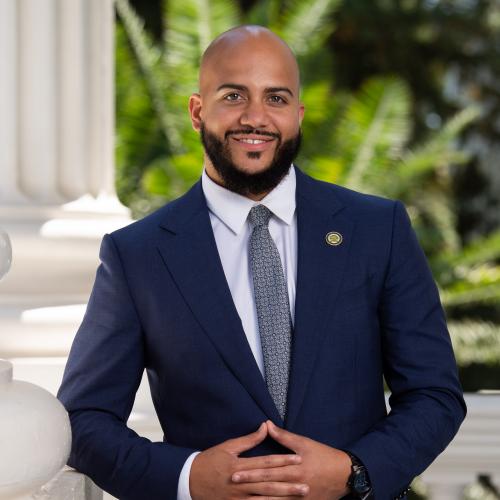
Asm. Isaac Bryan
Sponsored bills
(1) Existing law, the Nursing Practice Act, establishes the Board of Registered Nursing within the Department of Consumer Affairs for the licensure and regulation of the practice of nursing, and requires the board to issue a certificate to practice nurse-midwifery to a person who, among other qualifications, meets educational standards established by the board or the equivalent of those educational standards. Existing law, the Licensed Midwifery Practice Act of 1993, provides for the licensure of midwives by the Medical Board of California. Existing law, the Song-Brown Health Care Workforce Training Act, provides for specified training programs for certain health care workers, including family physicians, registered nurses, nurse practitioners, and physician assistants. Existing law establishes a state medical contract program with accredited medical schools, hospitals, and other programs and institutions to increase the number of students and residents receiving quality education and training in specified primary care specialties and maximize the delivery of primary care and family physician services to underserved areas of the state. This bill would enact the Midwifery Workforce Training Act, under which the Office of Statewide Health Planning and Development would, upon appropriation by the Legislature, contract with programs that train certified nurse-midwives and programs that train licensed midwives to increase the number of students receiving quality education and training as a certified nurse-midwife or a licensed midwife, as specified. The bill would require the office to contract only with programs that include, or intend to include, a component of training designed for medically underserved multicultural communities, lower socioeconomic neighborhoods, or rural communities, and that are organized to prepare program graduates for service in those neighborhoods and communities. (2) Existing law requires the State Department of Public Health to track data on pregnancy-related deaths, including specified health conditions, indirect obstetric deaths, and other maternal disorders predominantly related to pregnancy and complications predominantly related to the puerperium, and requires this data to be published at least once every 3 years. Existing law also requires the department to develop a plan to identify causes of infant mortality and morbidity in California and to study recommendations on the reduction of infant mortality and morbidity in California. This bill would, commencing August 1, 2022, establish the California Pregnancy-Associated Review Committee, and would require the committee to, among other things, identify and review all pregnancy-related deaths and severe maternal morbidity. The bill would require the committee to be composed of a minimum of 13 members, as specified, and would authorize the committee to request from any state department, commission, local health department, or coroner, among others, specified information, including death records, medical records, and autopsy reports. The bill would make all proceedings, activities, and opinions of the committee confidential. This bill would require each county to annually report infant deaths to its respective local health department. The bill would require local health departments, upon appropriation by the Legislature, to establish a Fetal and Infant Mortality Review committee to investigate infant deaths to prevent fetal and infant death under specified circumstances, and would require those local health departments that participate in the Fetal and Infant Mortality Review process to annually investigate, track, and review cases of term infants, as defined, who were born following labor with the outcome of intrapartum stillbirth, early neonatal death, or postneonatal death. The bill would require counties, hospitals, birthing centers, and state entities to provide to local health departments death records, medical records, and autopsy reports, among other information, that will help the local health department conduct the fetal and infant mortality review. By imposing duties on local officials, this bill would impose a state-mandated local program. (3) Existing law provides for the Medi-Cal program, which is administered by the State Department of Health Care Services, under which qualified low-income individuals receive health care services pursuant to a schedule of benefits. The Medi-Cal program is, in part, governed and funded by federal Medicaid program provisions. This bill would require the department to convene a workgroup to examine the implementation of the Medi-Cal doula benefit, as specified. No later than July 1, 2024, the bill would require the department to publish a report that addresses the number of Medi-Cal recipients utilizing doula services and identifies barriers that impede access to doula services, among other things, and would require the department to post that report on its internet website. (4) Existing law provides for the California Work Opportunity and Responsibility to Kids (CalWORKs) program under which, through a combination of state and county funds and federal funds, each county provides cash assistance and other benefits to qualified low-income families. Existing law requires a recipient of CalWORKs to participate in welfare-to-work activities as a condition of eligibility, but provides an exemption to a woman who is pregnant and for whom it has been medically verified that the pregnancy impairs their ability to be regularly employed or participate in welfare-to-work activities or the county has determined that, at that time, participation will not readily lead to employment or that a training activity is not appropriate. This bill would remove the medical verification and county determination requirements, and would instead provide an exemption to any recipient who is pregnant. Because the bill would result in an increase in CalWORKs eligibility, thus increasing the duties of counties administering the CalWORKs program, the bill would impose a state-mandated local program. Existing law continuously appropriates moneys from the General Fund to defray a portion of county costs under the CalWORKs program. This bill would, instead, provide that the continuous appropriation would not be made for purposes of implementing the bill. (5) Existing constitutional provisions require that a statute that limits the right of access to the meetings of public bodies or the writings of public officials and agencies be adopted with findings demonstrating the interest protected by the limitation and the need for protecting that interest. This bill would make legislative findings to that effect. (6) The California Constitution requires the state to reimburse local agencies and school districts for certain costs mandated by the state. Statutory provisions establish procedures for making that reimbursement. This bill would provide that, if the Commission on State Mandates determines that the bill contains costs mandated by the state, reimbursement for those costs shall be made pursuant to the statutory provisions noted above.
(1) Under existing law, the Tom Bane Civil Rights Act, if a person or persons, whether or not acting under color of law, interferes or attempts to interfere, by threats, intimidation, or coercion, with the exercise or enjoyment by any individual or individuals of rights secured by the Constitution or laws of the United States, or of the rights secured by the Constitution or laws of this state, the Attorney General, or any district attorney or city attorney, is authorized to bring a civil action for injunctive and other appropriate equitable relief in the name of the people of the State of California, in order to protect the exercise or enjoyment of the right or rights secured. Existing law also authorizes an action brought by the Attorney General, or any district attorney or city attorney, to seek a civil penalty of $25,000. Existing law also allows an individual whose exercise or enjoyment of rights has been interfered with to prosecute a civil action for damages on their own behalf. The bill would eliminate certain immunity provisions for peace officers and custodial officers, or public entities employing peace officers or custodial officers sued under the act. (2) Existing laws defines persons who are peace officers and the entities authorized to appoint them. Existing law requires certain minimum training requirements for peace officers including the completion of a basic training course, as specified. Existing law prescribes certain minimum standards for a person to be appointed as a peace officer, including moral character and physical and mental condition, and certain disqualifying factors for a person to be employed as a peace officer, including a felony conviction. This bill would prohibit a person who has been convicted of a felony, as specified, from regaining eligibility for peace officer employment based upon any later order of the court setting aside, vacating, withdrawing, expunging or otherwise dismissing or reversing the conviction, unless the court finds the person to be factually innocent of the crime for which they were convicted at the time of entry of the order. The bill would disqualify a person from being employed as a peace officer if that person has been convicted of, or has been adjudicated in an administrative, military, or civil judicial process as having committed, a violation of certain specified crimes against public justice, including the falsification of records, bribery, or perjury. The bill would also disqualify any person who has been certified as a peace officer by the Commission on Peace Officer Standards and Training and has surrendered that certification or had that certification revoked by the commission, or has been denied certification. The bill would disqualify any person previously employed in law enforcement in any state or United States territory or by the federal government, whose name is listed in the national decertification index, or any other database designated by the federal government, or who engaged in serious misconduct that would have resulted in their certification being revoked in this state. The bill would require a law enforcement agency employing certain peace officers to employ only individuals with a current, valid certification or pending certification. (3) Existing law establishes the Commission on Peace Officer Standards and Training to set minimum standards for the recruitment and training of peace officers and to develop training courses and curriculum. Existing law authorizes the commission to establish a professional certificate program that awards basic, intermediate, advanced, supervisory, management, and executive certificates on the basis of a combination of training, education, experience, and other prerequisites, for the purpose of fostering the professionalization, education, and experience necessary to adequately accomplish the general police service duties performed by peace officers. Existing law authorizes the commission to cancel a certificate that was awarded in error or obtained through misrepresentation or fraud, but otherwise prohibits the commission from canceling a certificate that has properly been issued. This bill would require the Department of Justice to provide the commission with necessary disqualifying felony and misdemeanor conviction data for all persons known by the department to be current or former peace officers, as specified. The bill would grant the commission the power to investigate and determine the fitness of any person to serve as a peace officer in the state. The bill would direct the commission to issue or deny certification, which includes a basic certificate or proof of eligibility, to a peace officer in accordance with specified criteria. The bill would require the commission to issue a proof of eligibility or basic certificate, as specified, to certain persons employed as a peace officer on January 1, 2022, who do not otherwise possess a certificate. The bill would declare certificates or proof of eligibility awarded by the commission to be property of the commission and would authorize the commission to suspend or revoke a proof of eligibility or certificate on specified grounds, including the use of excessive force, sexual assault, making a false arrest, or participating in a law enforcement gang, as defined. The bill would create the Peace Officer Standards Accountability Division within the commission to review investigations conducted by law enforcement agencies and to conduct additional investigations into serious misconduct that may provide grounds for suspension or revocation of a peace officer's certification, as specified. The bill would require the division to review grounds for decertification and make findings as to whether grounds for action against an officer's certification exist. The bill would require the division to notify the officer subject to decertification of their findings and allow the officer to request review. The bill would also create the Peace Officer Standards Accountability Advisory Board with 9 members to be appointed as specified. The bill would require the board to hold public meetings to review the findings after an investigation made by the division and to make a recommendation to the commission. The bill would require the commission to review the recommendation made by the board based on whether there is evidence that reasonably supports the board's conclusion that misconduct has been established and, if action is to be taken against an officer's certification, return the determination to the division to commence formal proceedings consistent with the Administrative Procedure Act. The bill would require the commission to notify the employing agency and the district attorney of the county in which the officer is employed of this determination, as specified. The bill would make all records related to the revocation of a peace officer's certification public and would require that records of an investigation be retained for 30 years. The bill would require an agency employing peace officers to report to the commission the employment, appointment, or separation from employment of a peace officer, any complaint, charge, allegation, or investigation into the conduct of a peace officer that could render the officer subject to suspension or revocation, findings by civil oversight entities, and civil judgements that could affect the officer's certification. In case of a separation from employment or appointment, the bill would require each agency to execute an affidavit-of-separation form adopted by the commission describing the reason for separation. The bill would require the affidavit to be signed under penalty of perjury. By creating a new crime, this bill would impose a state-mandated local program. The bill would require the board to report annually on the activities of the division, board, and commission, relating to the certification program, including the number of applications for certification, the events reported, the number of investigations conducted, and the number of certificates surrendered or revoked. By imposing new requirements on local agencies, this bill would impose a state-mandated local program. This bill would incorporate additional changes to Section 832.7 of the Penal Code proposed by SB 16 to be operative only if this bill and SB 16 are enacted and this bill is enacted last. The California Constitution requires the state to reimburse local agencies and school districts for certain costs mandated by the state. Statutory provisions establish procedures for making that reimbursement. This bill would provide that with regard to certain mandates no reimbursement is required by this act for a specified reason. With regard to any other mandates, this bill would provide that, if the Commission on State Mandates determines that the bill contains costs so mandated by the state, reimbursement for those costs shall be made pursuant to the statutory provisions noted above.
Existing law, the Zenovich-Moscone-Chacon Housing and Home Finance Act, prohibits "affordable rent" for certain rental housing developments that receive assistance on or after January 1, 1991, from exceeding a specified percentage based on the area median income adjusted for family size and whether the household is an extremely low income household, very low income household, lower income household, or moderate-income household. This bill, for leases entered into on or after January 1, 2022, would additionally prohibit "affordable rent" for certain rental housing developments that receive assistance from exceeding the product of 30 percent times 15 percent of the area median income adjusted for family size appropriate for the unit if the household is an "acutely low income household," as defined to mean persons and families whose incomes do not exceed 15 percent of area median income, adjusted for family size, as specified. By revising the duties of local government officials with respect to administering various programs and requirements that require a determination of "affordable rent," this bill would impose a state-mandated local program. The California Constitution requires the state to reimburse local agencies and school districts for certain costs mandated by the state. Statutory provisions establish procedures for making that reimbursement. This bill would provide that, if the Commission on State Mandates determines that the bill contains costs mandated by the state, reimbursement for those costs shall be made pursuant to the statutory provisions noted above.
Existing law makes garment manufacturers liable for guaranteeing payment of wages to employees of their contractors. This bill would expand the definition of garment manufacturing to include dyeing, altering a garment's design, and affixing a label to a garment. The bill would prohibit any employee engaged in the performance of garment manufacturing to be paid by the piece or unit, or by the piece rate, except as specified. The bill would impose compensatory damages of $200 per employee against a garment manufacturer or contractor, payable to the employee, for each pay period in which each employee is paid by the piece rate. This bill would define "brand guarantor" for purposes of these provisions as a person contracting for the performance of garment manufacturing, as specified, regardless of whether the person with whom they contract performs manufacturing operations or hires a contractor or subcontractor to perform manufacturing operations. This bill would specify that a garment manufacturer, contractor, or brand guarantor who contracts with another person for the performance of garment manufacturing operations shares joint and several liability with any manufacturer and contractor for the full amount of unpaid wages, and any other compensation, including interest, due to any and all employees who performed manufacturing operations for any violation, attorney's fees, and civil penalties, as specified. The bill would also make garment manufacturers and contractors liable for the full amount of damages and penalties for any violation, as specified. This bill would create a rebuttable presumption in a claim filed with the Labor Commissioner to recover unpaid wages and associated penalties, if an employee has provided the Labor Commissioner with labels or other information that the commissioner finds credible relating to the identity of any brand guarantor or garment manufacturer that the brand guarantor or garment manufacturer is liable with the contractor for any amounts found to be due to the employee. The bill would also give the Labor Commissioner authority to enforce these provisions by issuing a stop order or a citation. Existing law requires every employer engaged in the business of garment manufacturing to keep certain records for 3 years, including, among other things, contract worksheets indicating the price per unit agreed to between the contractor and manufacturer. This bill would also require every employer engaged in the business of garment manufacturing and brand guarantors to keep all contracts, invoices, purchase orders, work orders, style or cut sheets, and any other documentation pursuant to which garment manufacturing work was, or is being, performed for 4 years. Existing law requires the commissioner to deposit $75 of each garment manufacturer's registration fee into one separate account to be disbursed by the commissioner only to persons determined by the commissioner to have been damaged by the failure to pay wages and benefits by a garment manufacturer, contractor, or subcontractor. This bill would instead require these funds to be disbursed by the commissioner only to persons determined by the commissioner to have been damaged by the failure to pay wages and benefits by a garment manufacturer, brand guarantor, or contractor. Existing law precludes any employer, or other person or entity, who may be liable for a violation of any provision of the Labor Code from introducing as evidence, in an administrative proceeding contesting a citation or writ proceeding under specified provisions, books, documents, or records that are not provided pursuant to a duly served written request by the Labor Commissioner within the time the Labor Commissioner requests those books, documents, or records be produced, as specified. This bill would expand those provisions to also preclude the introduction of records not provided to the Labor Commissioner, as specified, in an administrative proceeding under the provisions described above relating to the payment of wages for the performance of garment manufacturing.
(1) Existing law establishes a minimum wage for all industries and makes it a crime to pay an employee less than the minimum wage fixed by the Industrial Welfare Commission. Existing law, however, permits the commission to issue an employee who is mentally or physically disabled, or both, a special license authorizing the employment of the licensee for a period not to exceed one year from date of issue, at a wage less than the minimum wage. Existing law requires the commission to fix a special minimum wage for the licensee, which may be renewed on a yearly basis. This bill would prohibit new special licenses from being issued after January 1, 2022. The bill would permit a license to only be renewed for existing licenseholders who meet requisite benchmarks. The bill would make the above-described provision authorizing a lesser minimum wage for an employee who is mentally or physically disabled inoperative on January 1, 2025, or when the multiyear phaseout plan as described below is released, whichever is later. The bill, commencing on the later of January 1, 2025, or when the plan is released, would prohibit an employee with a disability from being paid less than the legal minimum wage or the applicable local minimum wage ordinance, whichever is higher. The bill would require the State Council on Developmental Disabilities, in consultation with stakeholders and relevant state agencies, to develop a multiyear phaseout plan with stakeholder involvement, by January 1, 2023, to pay any employee with a disability, as defined, by January 1, 2025, no less than the state minimum wage otherwise required. The bill would require the multiyear phaseout plan to contain specified components, including benchmarks and desired outcomes for each year of the plan and a list of resources to ensure employees with disabilities can receive services based on their needs. The bill would require the State Council on Developmental Disabilities, in developing the multiyear phaseout plan, to engage with and seek input from people with developmental disabilities who have experience working for subminimum wage and various stakeholder organizations. The bill would require the State Council on Developmental Disabilities to release and publicly post on its internet website a report by January 1, 2023. The bill would also require the State Council on Developmental Disabilities to submit a copy of the report on its multiyear phaseout plan to the appropriate policy committees of the Legislature for review on or before January 1, 2023. The bill would further require the State Council on Developmental Disabilities to publicly post on its internet website and submit to the Legislature an annual report beginning on January 1, 2024, as specified, detailing specified information about the multiyear phaseout plan. By expanding the scope of a crime, the bill would impose a state-mandated local program. (2) Under existing law, the Industrial Welfare Commission is authorized to issue a special license to a nonprofit organization such as a sheltered workshop or rehabilitation facility to permit the employment of disabled employees who the commission has determined meet the requirements for paying less than the state minimum wage without requiring individual licenses of those employees. Existing law requires the commission to fix a special minimum wage for those employees, subject to renewal, as specified. This bill would repeal that provision on January 1, 2025. This bill would also include related legislative findings about the need to afford equal pay and equal treatment in the workplace to all Californians, including those with disabilities. The California Constitution requires the state to reimburse local agencies and school districts for certain costs mandated by the state. Statutory provisions establish procedures for making that reimbursement. This bill would provide that no reimbursement is required by this act for a specified reason.
This measure would proclaim November 3, 2021, as One Health Day, to celebrate and bring attention to the need for a One Health approach to address shared health threats at the human-animal-environmental interface.
This measure would designate the month of September 2021 as Leukemia, Lymphoma, and Myeloma Awareness Month and Blood Cancer Awareness Month and the first week of September 2021 as Blood Donation Week.
This measure would declare August 2021 as Valley Fever Awareness Month.
This measure would designate November 2021 as Runaway and Homeless Youth Prevention Month and recognize the need for individuals, schools, communities, businesses, local governments, and the state to take action on behalf of runaway and homeless youth in California.