

Employment: garment manufacturing.
Summary
Existing law makes garment manufacturers liable for guaranteeing payment of wages to employees of their contractors. This bill would expand the definition of garment manufacturing to include dyeing, altering a garment's design, and affixing a label to a garment. The bill would prohibit any employee engaged in the performance of garment manufacturing to be paid by the piece or unit, or by the piece rate, except as specified. The bill would impose compensatory damages of $200 per employee against a garment manufacturer or contractor, payable to the employee, for each pay period in which each employee is paid by the piece rate. This bill would define "brand guarantor" for purposes of these provisions as a person contracting for the performance of garment manufacturing, as specified, regardless of whether the person with whom they contract performs manufacturing operations or hires a contractor or subcontractor to perform manufacturing operations. This bill would specify that a garment manufacturer, contractor, or brand guarantor who contracts with another person for the performance of garment manufacturing operations shares joint and several liability with any manufacturer and contractor for the full amount of unpaid wages, and any other compensation, including interest, due to any and all employees who performed manufacturing operations for any violation, attorney's fees, and civil penalties, as specified. The bill would also make garment manufacturers and contractors liable for the full amount of damages and penalties for any violation, as specified. This bill would create a rebuttable presumption in a claim filed with the Labor Commissioner to recover unpaid wages and associated penalties, if an employee has provided the Labor Commissioner with labels or other information that the commissioner finds credible relating to the identity of any brand guarantor or garment manufacturer that the brand guarantor or garment manufacturer is liable with the contractor for any amounts found to be due to the employee. The bill would also give the Labor Commissioner authority to enforce these provisions by issuing a stop order or a citation. Existing law requires every employer engaged in the business of garment manufacturing to keep certain records for 3 years, including, among other things, contract worksheets indicating the price per unit agreed to between the contractor and manufacturer. This bill would also require every employer engaged in the business of garment manufacturing and brand guarantors to keep all contracts, invoices, purchase orders, work orders, style or cut sheets, and any other documentation pursuant to which garment manufacturing work was, or is being, performed for 4 years. Existing law requires the commissioner to deposit $75 of each garment manufacturer's registration fee into one separate account to be disbursed by the commissioner only to persons determined by the commissioner to have been damaged by the failure to pay wages and benefits by a garment manufacturer, contractor, or subcontractor. This bill would instead require these funds to be disbursed by the commissioner only to persons determined by the commissioner to have been damaged by the failure to pay wages and benefits by a garment manufacturer, brand guarantor, or contractor. Existing law precludes any employer, or other person or entity, who may be liable for a violation of any provision of the Labor Code from introducing as evidence, in an administrative proceeding contesting a citation or writ proceeding under specified provisions, books, documents, or records that are not provided pursuant to a duly served written request by the Labor Commissioner within the time the Labor Commissioner requests those books, documents, or records be produced, as specified. This bill would expand those provisions to also preclude the introduction of records not provided to the Labor Commissioner, as specified, in an administrative proceeding under the provisions described above relating to the payment of wages for the performance of garment manufacturing.
Bill status
signed
all 5 stages cleared
Introduction
Dec 2020
Committee Review
Jun 2021
Senate Passage
May 2021
Assembly Passage
Sep 2021
Signed into Law
Sep 2021
Introduced Dec 7, 2020
Signed Sep 27, 2021
Floor votes · Senate May 24, 2021 · Assembly Sep 9, 2021
How they voted
27–8
Passed · 2 other
Total votes 37
May 24, 2021
D
Democratic29
93% Yea
R
Republican8
100% Nay
Vote distribution
All Yea
All Nay
Mixed
No data
Full legislative history
Actions timeline
Total actions
32
Key actions
14
Committee
6
Amendments
7
Sep 27, 2021
Signed into law
Approved by the Governor.
legislature
Sep 10, 2021
Upper · Passed
Assembly amendments concurred in. (Ayes 26. Noes 10. Page 2635.) Ordered to engrossing and enrolling.
upper
Sep 10, 2021
Introduced
In Senate. Concurrence in Assembly amendments pending.
upper
Sep 9, 2021
Assembly · Passed
Assembly Vote: pass (50-19-11)
assembly
Sep 8, 2021
Lower · Passed
Read third time. Passed. (Ayes 50. Noes 19. Page 2934.) Ordered to the Senate.
lower
Sep 3, 2021
Lower · Passed
Read third time and amended. (Ayes 54. Noes 17. Page 2787.)
lower
Aug 30, 2021
Lower · Passed
Read second time and amended. Ordered to second reading.
lower
Aug 26, 2021
Lower · Passed
From committee: Do pass as amended. (Ayes 12. Noes 4.) (August 26).
lower
Jun 22, 2021
Lower · Passed
From committee: Do pass and re-refer to Com. on APPR. (Ayes 8. Noes 3.) (June 22). Re-referred to Com. on APPR.
lower
Jun 9, 2021
Lower · Passed
From committee: Do pass and re-refer to Com. on JUD. (Ayes 5. Noes 2.) (June 8). Re-referred to Com. on JUD.
lower
May 28, 2021
Committee
Referred to Coms. on L. & E. and JUD.
lower
May 24, 2021
Upper · Passed
Read third time. Passed. (Ayes 29. Noes 9. Page 1228.) Ordered to the Assembly.
upper
May 20, 2021
Upper · Passed
From committee: Do pass. (Ayes 5. Noes 2. Page 1181.) (May 20).
upper
Apr 8, 2021
Upper · Passed
Read second time and amended. Re-referred to Com. on APPR.
upper
Apr 7, 2021
Upper · Passed
From committee: Do pass as amended and re-refer to Com. on APPR. (Ayes 9. Noes 2. Page 685.) (April 6).
upper
Mar 23, 2021
Upper · Passed
From committee: Do pass and re-refer to Com. on JUD. (Ayes 4. Noes 0. Page 574.) (March 22). Re-referred to Com. on JUD.
upper
Jan 28, 2021
Committee
Referred to Coms. on L., P.E. & R. and JUD.
upper
Dec 7, 2020
Introduced
Introduced. Read first time. To Com. on RLS. for assignment. To print.
upper
1 primary · 10 co-sponsors
Sponsors
Role
Legislator
Party
State
District
P
ME
María Elena Durazo
DDemocratic
Co
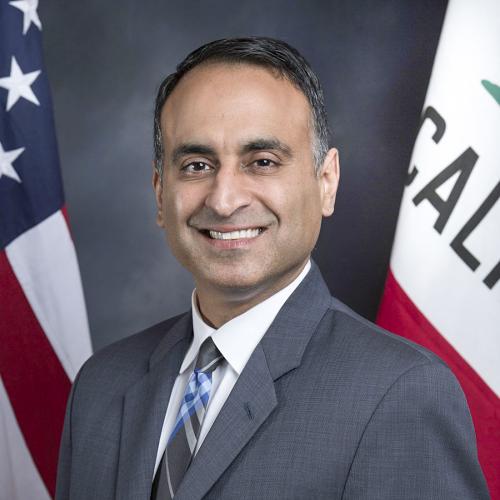
Ash Kalra
DDemocratic
Co

Connie M. Leyva
DDemocratic
Co
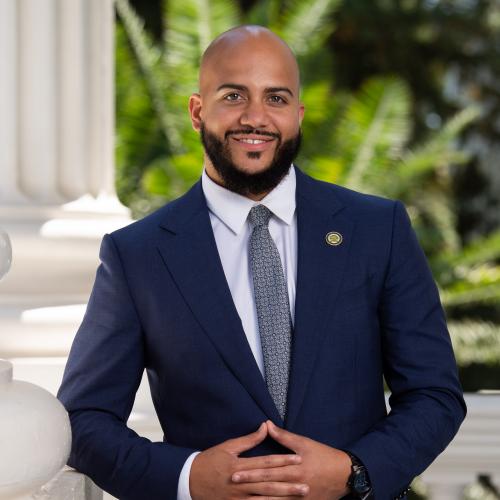
Isaac Bryan
DDemocratic
Co

Josh Becker
DDemocratic
Co

Lorena Gonzalez
DDemocratic
Co

Luz Rivas
DDemocratic
Co

Nancy Skinner
DDemocratic
Co

Reggie Jones-Sawyer
DDemocratic
Co

Robert M. Hertzberg
DDemocratic
Co

Wendy Carrillo
DDemocratic
Ask Maddy
·
AI policy assistant
Ask Maddy about SB 62
Scope: CA
Hi! I can help you understand SB 62. What would you like to know?
Try one of these
i
Maddy answers using official bill text and legislative records. Always verify before sharing.
Sources cited inline