Existing law establishes the state prisons under the jurisdiction of the Department of Corrections and Rehabilitation. Existing law authorizes the Secretary of the Department of Corrections and Rehabilitation to insure products produced at any prison or institution under the secretary's jurisdiction, and all materials and equipment necessary to make those products, against risk of loss. This bill would make technical, nonsubstantive changes to those provisions.
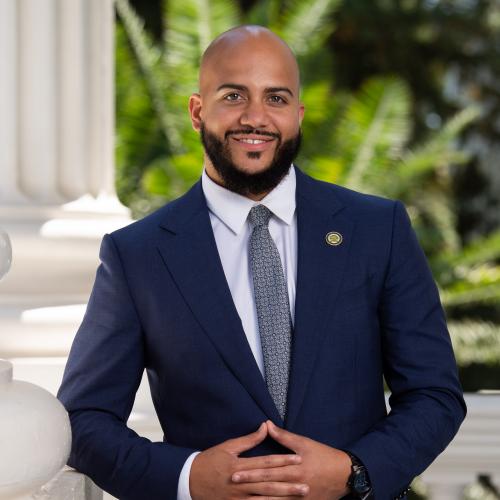
Asm. Isaac Bryan
Sponsored bills
Existing federal law, the federal Patient Protection and Affordable Care Act (PPACA) , requires each state to establish an American Health Benefit Exchange to facilitate the purchase of qualified health benefit plans by qualified individuals and qualified small employers. PPACA defines a "qualified health plan" as a plan that, among other requirements, provides an essential health benefits package. Existing state law creates the California Health Benefit Exchange, also known as Covered California, to facilitate the enrollment of qualified individuals and qualified small employers in qualified health plans as required under PPACA. Existing law, the Knox-Keene Health Care Service Plan Act of 1975, provides for the licensure and regulation of health care service plans by the Department of Managed Health Care. Existing law provides for the regulation of health insurers by the Department of Insurance. Existing law provides for the Medi-Cal program, which is administered by the State Department of Health Care Services, under which qualified low-income individuals receive health care services. The Medi-Cal program is, in part, governed and funded by federal Medicaid program provisions. This bill, the California Guaranteed Health Care for All Act, would create the California Guaranteed Health Care for All program, or CalCare, to provide comprehensive universal single-payer health care coverage and a health care cost control system for the benefit of all residents of the state. The bill, among other things, would provide that CalCare cover a wide range of medical benefits and other services and would incorporate the health care benefits and standards of other existing federal and state provisions, including the federal Children's Health Insurance Program, Medi-Cal, ancillary health care or social services covered by regional centers for persons with developmental disabilities, Knox-Keene, and the federal Medicare program. The bill would require the board to seek all necessary waivers, approvals, and agreements to allow various existing federal health care payments to be paid to CalCare, which would then assume responsibility for all benefits and services previously paid for with those funds. This bill would create the CalCare Board to govern CalCare, made up of 9 voting members with demonstrated and acknowledged expertise in health care, and appointed as provided, plus the Secretary of California Health and Human Services or their designee as a nonvoting, ex officio member. The bill would provide the board with all the powers and duties necessary to establish CalCare, including determining when individuals may start enrolling into CalCare, employing necessary staff, negotiating pricing for covered pharmaceuticals and medical supplies, establishing a prescription drug formulary, and negotiating and entering into necessary contracts. The bill would require the board, on or before July 1, 2024, to conduct and deliver a fiscal analysis to determine whether or not CalCare may be implemented and whether revenue is more likely than not to pay for program costs, as specified. The bill would require the board to convene a CalCare Public Advisory Committee with specified members to advise the board on all matters of policy for CalCare. The bill would establish an 11-member Advisory Commission on Long-Term Services and Supports to advise the board on matters of policy related to long-term services and supports. This bill would provide for the participation of health care providers in CalCare, including the requirements of a participation agreement between a health care provider and the board, provide for payment for health care items and services, and specify program participation standards. The bill would prohibit a participating provider from discriminating against a person by, among other things, reducing or denying a person's benefits under CalCare because of a specified characteristic, status, or condition of the person. This bill would prohibit a participating provider from billing or entering into a private contract with an individual eligible for CalCare benefits regarding a covered benefit, but would authorize contracting for a health care item or service that is not a covered benefit if specified criteria are met. The bill would authorize health care providers to collectively negotiate fee-for-service rates of payment for health care items and services using a 3rd-party representative, as provided. The bill would require the board to annually determine an institutional provider's global budget, to be used to cover operating expenses related to covered health care items and services for that fiscal year, and would authorize payments under the global budget. This bill would state the intent of the Legislature to enact legislation that would develop a revenue plan, taking into consideration anticipated federal revenue available for CalCare. The bill would create the CalCare Trust Fund in the State Treasury, as a continuously appropriated fund, consisting of any federal and state moneys received for the purposes of the act. Because the bill would create a continuously appropriated fund, it would make an appropriation. This bill would prohibit specified provisions of this act from becoming operative until the Secretary of California Health and Human Services gives written notice to the Secretary of the Senate and the Chief Clerk of the Assembly that the CalCare Trust Fund has the revenues to fund the costs of implementing the act, the people of California have approved the necessary revenue mechanisms, and the Legislature has approved implementation of the CalCare by statute. The California Health and Human Services Agency would be required to publish a copy of the notice on its internet website. Existing constitutional provisions require that a statute that limits the right of access to the meetings of public bodies or the writings of public officials and agencies be adopted with findings demonstrating the interest protected by the limitation and the need for protecting that interest. This bill would make legislative findings to that effect.
Existing law establishes the Department of Housing and Community Development in the Business, Consumer Services, and Housing Agency and makes the department responsible for administering various housing programs throughout the state, including, among others, the Multifamily Housing Program, the Housing for a Healthy California Program, and the California Emergency Solutions Grants Program. This bill would establish the Reentry Housing and Workforce Development Program. The bill would require the department, on or before July 1, 2022, to take specified actions to, upon appropriation by the Legislature, provide grants to applicants, as defined, for innovative or evidence-based housing, housing-based services, and employment interventions to allow people with recent histories of incarceration to exit homelessness and remain stably housed. The bill would require the department to establish a process, in collaboration with the Department of Corrections and Rehabilitation and with counties in which recipients are operating, for referral of participants, in accordance with certain guidelines and procedures. The bill would require the department to score applicants to the program competitively according to specified criteria. The bill would require recipients of funds from the program to use those funds for, among other things, long-term rental assistance in permanent housing, incentives to landlords, and innovative or evidence-based services to assist participants in accessing permanent supportive housing. The bill would require the department to distribute funds allocated by executing contracts with awarded entities for a term of 5 years, subject to automatic renewal. The bill would require a recipient of the program to submit an annual report to the department. The bill would require the department to hire an independent evaluator to assess outcomes from the program and would require the department to submit that analysis to specified committees of the Legislature.
Existing law establishes the California Violence Intervention and Prevention (CalVIP) Grant Program, administered by the Board of State and Community Corrections, to award competitive grants for the purpose of violence intervention and prevention. Existing law imposes various taxes, including taxes on the privilege of engaging in certain activities. The Fee Collection Procedures Law, the violation of which is a crime, provides procedures for the collection of certain fees and surcharges. This bill, the Gun Violence Prevention, Healing, and Recovery Act, would, commencing July 1, 2023, and subject to an appropriation as specified, impose an excise tax in the amount of 10% of the sales price of a handgun and 11% of the sales price of a long gun, rifle, firearm precursor part, and ammunition, as specified. The tax would be collected by the state pursuant to the Fee Collection Procedures Law. The bill would require that the revenues collected be deposited in the Gun Violence Prevention, Healing, and Recovery Fund, which the bill would establish in the State Treasury. This bill would include a change in state statute that would result in a taxpayer paying a higher tax within the meaning of Section 3 of Article XIII A of the California Constitution, and thus would require for passage the approval of 23 of the membership of each house of the Legislature. Because this bill would expand the scope of the Fee Collection Procedures Law, the violation of which is a crime, this bill would impose a state-mandated local program. The California Constitution requires the state to reimburse local agencies and school districts for certain costs mandated by the state. Statutory provisions establish procedures for making that reimbursement. This bill would provide that no reimbursement is required by this act for a specified reason. This bill would declare that it is to take effect immediately as an urgency statute.
(1) Existing law requires the Secretary of the Department of Corrections and Rehabilitation to implement literacy programs in the state prison. Existing law requires the department to offer college programs through voluntary education programs or their equivalent. This bill would instead require the department to make college programs available for the benefit of inmates with a general education development certificate or equivalent or a high school diploma and would require those college programs to only be provided by the California Community Colleges, the California State University, the University of California, or other regionally accredited, nonprofit colleges or universities. The bill would provide a set of criteria to prioritize various college programs, including face-to-face instruction, comprehensive in-person support, and coordination with nonprofit postsecondary programs serving formerly incarcerated students. The bill would require the education providers to be responsible for determining and developing their curricula and degree pathways, determining certificate pathways, providing instructional staff, and determining what services will be offered to ensure incarcerated students can successfully complete the course of study. (2) Existing law allows the department to create regulations for the administration of the state prison. Existing regulations authorize an inmate enrolled in a full-time college program, as defined, to combine that program with a half-time work or career program to equate to a full-time work assignment. This bill would require an inmate enrolled in a full-time college program, as specified, to be deemed by the department to be assigned to a full-time work or training assignment.
Existing law establishes the Geologic Energy Management Division in the Department of Conservation, under the direction of the State Oil and Gas Supervisor, who is required to supervise the drilling, operation, maintenance, and abandonment of oil and gas wells, as provided. Existing law requires the supervisor, on or before the first day of October of each year, to make public, for the benefit of all interested persons, a report in writing showing specified information, including the total amounts of oil and gas produced in each county in the state during the previous calendar year. This bill would require the supervisor, on or before July 1, 2026, to make all public information collected or maintained by the division, as specified, and, on or before July 1, 2024, to make all notices of violation and orders of the supervisor readily available to the public on the division's internet website. The bill would require all online materials to be organized by well, operator, or project, and searchable. The bill would require the supervisor to make continuous progress towards meeting these requirements and would require the materials readily available to the public online to steadily increase. The bill would require priority be given to certain public information previously available on the division's internet website and documents associated with wells that have not been plugged and abandoned. Existing law requires the division to submit an annual report to the Legislature on well operations, as specified, organized statewide and by district. This bill would require the division, on or before July 1, 2023, to develop and implement an education and outreach program to provide training to local governmental entities on materials collected and maintained by the division related to oil and gas operations. Existing law requires the operator of a well to file a written notice of intention to commence drilling with, and prohibits any drilling until approval is given by, the supervisor or district deputy. Existing law authorizes the supervisor to require other pertinent information to supplement the notice. This bill would require the division to require a copy of the local land use authorization that supports the installation of a well at the time an operator submits the notice of intention for the well, and would require the division to modify its forms used to evaluate notices of intention to include expiration dates for the required local land use authorizations submitted with the notice of intention. Existing law requires an owner or operator of a well to keep, or cause to be kept, a careful and accurate log, core record, and history of the drilling of the well. Existing law requires the history to include, among other things, acid treatment data. This bill would clarify that the history of a well is required to include, among other things, all acid treatment data of any amount. Existing law requires the owner of any well to file with the supervisor a monthly statement that provides certain information relating to the well, including the source, volume, treatment, and disposition of water produced in oil and gas activities. Existing law also requires the owner of any well to file with the supervisor, on a quarterly basis, specified information relating to the well. Existing law also requires any operator that produces oil by the application of mining or other unconventional techniques to file a report with the supervisor, on or before March 1 of each year, showing the amount of oil produced by those techniques in the preceding calendar year. Under existing law, a person who fails to comply with this and other requirements relating to the regulation of oil or gas operations is guilty of a misdemeanor. This bill would require, on or before July 1, 2023, all operators to provide to the division the information described above electronically. Because a violation of these requirements would be a crime, the bill would impose a state-mandated local program. Existing law authorizes the supervisor, upon their own initiative, and requires the supervisor, upon receipt of a written complaint from a person owning land or operating wells within a radius of one mile of any well or group of wells complained against, to make an investigation of the well or wells involved. Existing law requires the supervisor to make a written report and order, stating the work required to repair the damage complained of, or stating that no work is required. This bill would require the supervisor to additionally investigate a well or wells upon receipt of a written complaint from a person residing within a radius of one mile of any well or group of wells complained against. Existing law requires the department to, on or before June 15 of each year, acting in conjunction with the Department of Finance, make an estimate of the amount of money that will be required to carry out certain provisions regarding the regulation of oil and gas, including any adjustments for savings or increased expenditures in the current and prior fiscal years, and to determine the rate or rates that will produce the sums estimated necessary to be raised and to extend into the proper column of the record of assessments the amount of charges due from each person. This bill would require the Department of Conservation to post the information supporting the rate or rates on a publicly available portion of its internet website. This bill would also make nonsubstantive changes. The California Constitution requires the state to reimburse local agencies and school districts for certain costs mandated by the state. Statutory provisions establish procedures for making that reimbursement. This bill would provide that no reimbursement is required by this act for a specified reason.

Existing law authorizes, in certain circumstances, a child who has been removed from their parent or guardian to be placed with a relative or nonrelative extended family member if the relative or nonrelative extended family member is either an approved resource family or has been assessed by a county social worker or a county probation agency and, among other things, the relative or nonrelative extended family member has not been convicted of a crime for which a criminal record exemption cannot be granted, has been granted a criminal record exemption, or, in certain circumstances, a criminal record exemption is pending. This bill would, notwithstanding those provisions, authorize the court to order placement with a relative, regardless of the status of any criminal exemption or resource family approval, if the court finds that the placement does not pose a risk to the health and safety of the child. The bill would require the county welfare department, if the sole issue preventing an emergency placement of a child with a relative or nonrelative extended family member is a lack of resources, to use reasonable efforts to assist the relative or nonrelative extended family member in obtaining the necessary items. By imposing new duties of county welfare departments, this bill would impose a state-mandated local program. Existing law establishes the Approved Relative Caregiver Funding Program (ARC) for the purpose of making the amount paid to relative caregivers for the in-home care of children placed with them who are ineligible for Aid to Families with Dependent Children-Foster Care program (AFDC-FC) payments equal to the amount paid on behalf of children who are eligible for AFDC-FC payments. Existing law also provides financial support to emergency caregivers with a pending resource family approval application who have a child placed in their home who is ineligible for AFDC-FC payments. Existing law requires a county to pay an approved relative caregiver or an emergency caregiver a per child per month rate that is equal to the basic rate paid to foster care providers and that is funded, in part, through the California Work Opportunity and Responsibility to Kids (CalWORKs) program. This bill would expand eligibility for ARC to include relatives with whom a child is authorized to be placed by the court, as described above, when the placement is ineligible for emergency caregiver financial support or AFDC-FC payments due to the denial of resource family approval. The bill would also expand eligibility for emergency caregiver financial support to include emergency caregivers who had a child placed with them pursuant to additional provisions of law. By expanding county duties relative to these funding programs, this bill would impose a state-mandated local program. Existing law subjects foster care provider applicants, resource family applicants, and certain other adults in those homes, to a criminal records check and requires the applicant or other adult in the applicant's home to obtain a criminal record clearance or criminal record exemption prior to licensure or approval. Existing law prohibits the State Department of Social Services or other approving entity from granting a criminal record exemption to an applicant or other adult in the applicant's home who has been convicted of certain felonies. With regard to an applicant or other adult in the applicant's home who has been convicted of a crime other than those for which an exemption cannot be granted, existing law either authorizes or requires, depending on the crime for which an applicant or other adult in the applicant's home has been convicted, the department or other approving entity to grant an exemption if, among other things, the applicant or other adult in the applicant's home is of present good character, as specified. This bill would instead limit the convictions for which an exemption cannot be granted to those that occurred within the last 10 years. The bill would authorize the State Department of Social Services or other approving entity, for the purpose of the resource family approval process described below, to grant an exemption from disqualification for the conviction of a felony for which a criminal record exemption cannot be granted if the applicant is seeking placement of a specific relative child or children, the applicant or other adult living in the home is of present good character necessary to justify granting the exemption, and the applicant or other adult living in the home has not been convicted of certain felonies within the last 5 years. The bill would specify that a criminal record exemption granted pursuant to this provision is not transferrable to another community care facility. This bill would also expand the types of convictions for which the department or other approving entity is required to grant an exemption and revise the standards used to determine if a permissive exemption should be granted. The bill would require the department to submit a report to the Legislature, by July 1, 2024, regarding certain data relating to criminal record exemptions for resource family applicants who have applied for resource family approval, or tribally approved homes who applied for approval, to care for a relative child. The bill would require foster family agencies to submit that data to the department. Because the failure of a foster family agency to comply with this requirement would be a crime, this bill would expand the scope of a crime, thereby imposing a state-mandated local program. Existing law generally does not require a criminal record exemption for foster care provider applicants, resource family applicants, and certain other individuals in those homes, or for applicants for licensure or a special permit to operate certain community care facilities and other individuals associated with those community care facilities, if an individual only has a conviction for a minor traffic violation. This bill would instead specify that a criminal record exemption is not required if those individuals only have a conviction for an infraction. Existing law provides for the implementation of the resource family approval process, which replaces the multiple processes for licensing foster family homes, certifying foster homes by foster family agencies, approving relatives and nonrelative extended family members as foster care providers, and approving guardians and adoptive families. Existing law, among other things, requires a resource family to demonstrate the financial ability within the household to ensure the stability and financial security of the family. This bill would authorize that requirement to be waived for relative and nonrelative extended family member resource families on a case-by-case basis and would specify that, for the purposes of that requirement, there is not a minimum income requirement. Existing law continuously appropriates moneys from the General Fund to defray a portion of county costs under the CalWORKs program. This bill would provide that the continuous appropriation would not be made for purposes of implementing the bill. This bill would incorporate additional changes to Section 16519.5 of the Welfare and Institutions Code proposed by AB 366 and SB 584 to be operative only if this bill and AB 366, this bill and SB 584, or all 3 bills are enacted and this bill is enacted last. The California Constitution requires the state to reimburse local agencies and school districts for certain costs mandated by the state. Statutory provisions establish procedures for making that reimbursement. This bill would provide that no reimbursement is required by this act for specified reasons.
Existing law establishes various social services and programs to address the needs of young people in this state including the California Youth Leadership Project to support and promote civic engagement through scholarships to disconnected and disadvantaged youth. This bill would create the California Youth Empowerment Act to address, among other issues, the growing need to engage youth directly with policymakers. The bill would establish the California Youth Empowerment Commission in state government consisting of 13 voting commissioners between 14 and 25 years of age and meeting specified requirements, with 11 members appointed by the Governor, one at-large member appointed by the Senate Committee on Rules, and one at-large member appointed by the Speaker of the Assembly, along with several ex officio, nonvoting members from various geographic regions of the state. The bill would establish the commission to be advisory in nature, for the main purpose of providing meaningful opportunities for civic engagement to improve the quality of life for California's disconnected and disadvantaged youth. The bill would require the commission to conduct regular meetings, in accordance with specified timeframes and procedures, and, among other duties, formally advise and make recommendations to the Legislature, the Superintendent of Public Instruction, and the Governor, on various legislative and fiscal issues affecting youth. The bill would also authorize the commission to draft and approve resolutions, draft model legislation, provide testimony during legislative committee meetings, conduct public hearings, and award prizes or direct grants to organizations. The bill would require the Governor to appoint an executive director of the California Youth Empowerment Commission to assist the commission in carrying out its work, would authorize the commission to accept gifts and grants, and would create the Youth Commission Fund in the State Treasury, with moneys deposited in the fund available for expenditure, upon appropriation by the Legislature, to carry out the duties of the commission. The bill would require that its provisions be implemented only if funds are made available in the budget or through gifts and grants. The bill would require the Department of Finance to determine if sufficient funds have been provided and would require the department to publish notice of this determination on its website.
Existing law prohibits a full-service restaurant, as specified, from providing single-use plastic straws, as defined, to consumers unless requested by the consumer, and places the duty to enforce this prohibition on specified state and local health and environmental health officers and their agents. Existing law specifies that the first and 2nd violations of these provisions result in a notice of violation, and any subsequent violation is an infraction punishable by a fine of $25 for each day the full-service restaurant is in violation, but not to exceed an annual total of $300. This bill would instead prohibit a food facility from providing any single-use foodware accessory or standard condiment, as defined, to a consumer unless requested by the consumer, as provided. The bill would prohibit those items from being bundled or packaged in a way that prohibits the consumer from taking only the item desired. The bill would authorize a food facility to ask a drive-through consumer, or a food facility located within a public airport to ask a walk-through consumer, if the consumer wants a single-use foodware accessory in specified circumstances. The bill would require a food facility using a third-party food delivery platform to list on its menu the availability of single-use foodware accessories and standard condiments and only provide those items when requested, as provided. The bill would exclude from these requirements correctional institutions, health care facilities, residential care facilities, and public and private school cafeterias. This bill would require a city, county, or city and county, on or before June 1, 2022, to authorize an enforcement agency to enforce these requirements. The bill would specify that the first and 2nd violations of these provisions result in a notice of violation, and any subsequent violation is an infraction punishable by a fine of $25 for each day in violation, but not to exceed an annual total of $300. By creating a new crime and imposing additional duties on local governing bodies, this bill would impose a state-mandated local program. The California Constitution requires the state to reimburse local agencies and school districts for certain costs mandated by the state. Statutory provisions establish procedures for making that reimbursement. This bill would provide that with regard to certain mandates no reimbursement is required by this act for a specified reason. With regard to any other mandates, this bill would provide that, if the Commission on State Mandates determines that the bill contains costs so mandated by the state, reimbursement for those costs shall be made pursuant to the statutory provisions noted above.