

The Personal Income Tax Law, in conformity with federal income tax law, generally defines "gross income" as income from whatever source derived, except as specifically excluded, and provides various exclusions from gross income. Existing law, known as the Golden State Scholarshare Trust Act, establishes the Golden State Scholarshare College Savings Trust (Scholarshare trust) , under the administration of the Scholarshare Investment Board, to provide financial aid for postsecondary education costs of participating students. Existing state and federal law generally includes in gross income distributions from a qualified tuition program, as defined to include the Scholarshare trust, except as provided. Existing federal law, the Consolidated Appropriations Act, 2023, excludes from gross income, for federal income tax purposes, distributions from a qualified tuition program that are made after December 31, 2023, and are paid in a direct trustee-to-trustee transfer to a Roth IRA, as described. The Personal Income Tax Law generally conforms to federal income tax law relating to qualified state tuition programs, except as specified. Among those exceptions, existing state law does not conform to the above-described exclusion for distributions from a qualified tuition program. This bill would instead conform to that federal exclusion for taxable years beginning on or after January 1, 2026, and before January 1, 2031. The Personal Income Tax Law, in modified conformity with federal income tax laws, allows various deductions from gross income in calculating adjusted gross income. This bill would, for taxable years beginning on or after January 1, 2027, and before January 1, 2032, would allow a deduction in determining adjusted gross income for contributions to a Scholarshare account by a qualified taxpayer, as specified. Existing law requires a bill authorizing a new tax expenditure to contain, among other things, specific goals, purposes, and objectives the tax expenditure will achieve, detailed performance indicators, and data collection requirements. This bill would include additional information required for any bill authorizing a new tax expenditure. This bill would take effect immediately as a tax levy.
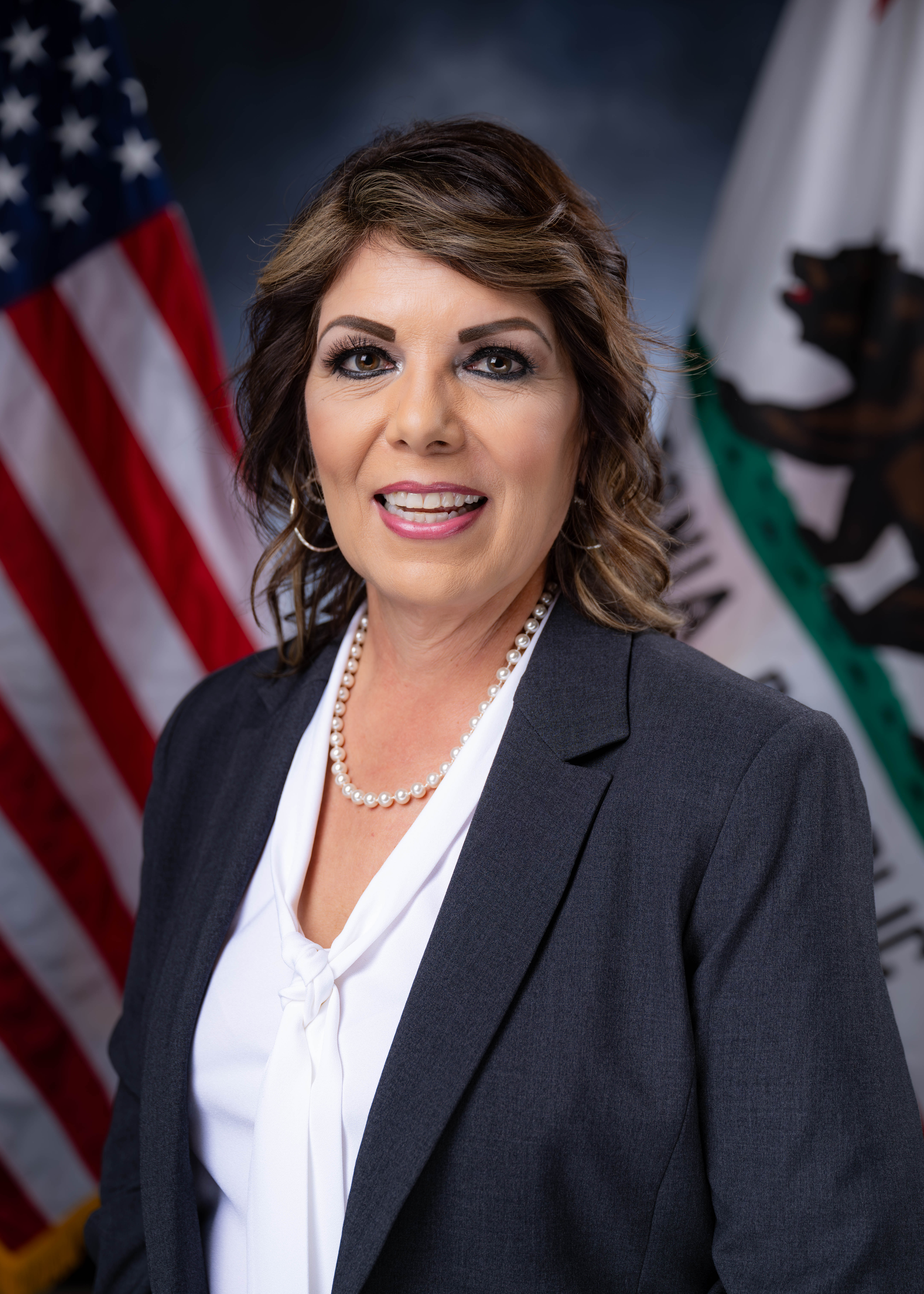
Asm. Michelle Rodriguez
Sponsored bills
Maddy summaryThis bill designates the week of May 17 to May 24, 2026, as National Public Works Week throughout California to honor the contributions of public works professionals. It directly affects engineers, managers, and employees in government and the private sector who maintain essential infrastructure like transportation systems, water supplies, and public buildings. The resolution requests that the Governor issue a proclamation encouraging the public to observe the week with educational programs and activities that highlight the importance of these workers.
(1) Under existing law, as part of the hazardous waste control laws, the Department of Toxic Substances Control (DTSC) generally regulates the management and handling of hazardous waste and hazardous materials. Existing law authorizes a public agency, as defined, to operate a household hazardous waste collection facility under permit from DTSC. The California Integrated Waste Management Act of 1989, which is administered by the Department of Resources Recycling and Recovery (CalRecycle) , requires a city and a county to prepare and submit to CalRecycle a countywide integrated waste management plan. The act requires the plan to include a household hazardous waste element that identifies a program in each city and county for the safe collection, recycling, treatment, and disposal of hazardous wastes that are generated by households. The California Oil Recycling Enhancement Act, administered by CalRecycle, establishes a used oil recycling program to promote and develop alternatives to illegal disposal of used oil. The act imposes a charge for every gallon of lubricating oil sold or transferred in the state, or imported into the state for use in the state, as specified. This bill would create a producer responsibility program for lubricants waste that is not covered by the act, and packaging associated with lubricant products, and would require a producer responsibility organization (PRO) to provide a convenient collection and management system for covered products at no cost to residents. The bill would create 2 categories of covered product, covered liquid product and covered packaging product. The bill would define "covered liquid product" to mean a petroleum-based automotive product and other related products, as specified. The bill would define "covered packaging product" to mean primary packaging and containers designed and intended to hold a covered liquid product and other similar packaging, as specified. The bill would require a producer of a covered product to register with the PRO, which would be required to develop and implement a producer responsibility plan for the collection and the safe and proper management of covered products. The bill would require CalRecycle, in coordination with DTSC, to adopt regulations to implement the program with an effective date no earlier than January 1, 2029. This bill would require the PRO, within 12 months of the effective date of the regulations, to submit a product responsibility plan to CalRecycle. The bill would require the plan to include specified elements, including a funding mechanism that provides sufficient funding to carry out the plan. The bill would require, within 6 months of receipt of the plan, CalRecycle, in collaboration with DTSC, to approve, approve in part, or disapprove the plan, as specified. The bill would require CalRecycle to notify the PRO of its decision. If CalRecycle does not approve the plan in full, then the bill would require CalRecycle to specify the reasons for disapproval or identify the portions of the partially approved plan that do not comply with the program, as applicable. The bill would require the PRO to submit a revised plan if its plan is not fully approved. This bill would require the PRO to implement its plan within 90 days of approval. The bill would require the plan to be fully funded in a manner that equitably distributes the plan's costs among participant producers, as specified. The bill would require the plan to describe how the producer responsibility organization will consult with and mutually agree upon terms and amounts to reimburse local jurisdictions for the proportional costs associated with collecting and managing covered products pursuant to these provisions. The bill would also require the plan to include a description of how the producer responsibility organization will contract with haulers to transport covered products from the collection facilities to recycling facilities or disposal, and how the producer responsibility organization will contract with recyclers. This bill would require the PRO to prepare and submit to CalRecycle an annual report describing the activities carried out pursuant to the plan. The bill would require the PRO to retain specified documents, annually audit its accounting books, and make documents available to CalRecycle for review, as specified. The bill would require all reports and records provided to CalRecycle pursuant to the program to be provided under the penalty of perjury. By expanding the scope of a crime, the bill would impose a state-mandated local program. This bill would require a participant producer, through the PRO, to pay CalRecycle, on an unspecified schedule, an annual administrative charge, as determined by CalRecycle and DTSC. The bill would require the charge be set at an amount that is adequate to cover CalRecycle's and DTSC's actual and reasonable costs of administering and enforcing the program. The bill would provide for the imposition of administrative civil penalties on producers and other specified persons who violate the program. The bill would establish the Lubricant Waste and Packaging Producer Responsibility Fund in the State Treasury and would require the administrative charges collected by CalRecycle to be deposited into that fund for expenditure by CalRecycle, upon appropriation by the Legislature, to cover CalRecycle's cost to implement and enforce the program. The bill would also establish the Lubricant Waste and Packaging Penalty Account in the Lubricant Waste and Packaging Producer Responsibility Fund and would require that the civil penalties collected by CalRecycle pursuant to the program be deposited into that account, for expenditure by CalRecycle, upon appropriation by the Legislature, for activities related to the collection and recycling of covered products, grants for related purposes, and the administration and enforcement of the program. (2) Existing law, the Plastic Pollution Prevention and Packaging Producer Responsibility Act, establishes a producer responsibility program designed to ensure that producers of single-use packaging and food service ware covered by that program take responsibility for the costs associated with the end-of-life management of that material and ensure that the material is recyclable or compostable. The act requires producers, either individually or through participation in a producer responsibility organization, to have an approved plan that, among other things, describe how the producer or organization will comply with the act. This bill would exempt a covered packaging product from the act. (3) Existing constitutional provisions require that a statute that limits the right of access to the meetings of public bodies or the writings of public officials and agencies be adopted with findings demonstrating the interest protected by the limitation and the need for protecting that interest. This bill would make legislative findings to that effect. (4) The California Constitution requires the state to reimburse local agencies and school districts for certain costs mandated by the state. Statutory provisions establish procedures for making that reimbursement. This bill would provide that no reimbursement is required by this act for a specified reason.
Existing law, the Knox-Keene Health Care Service Plan Act of 1975, provides for the licensure and regulation of health care service plans by the Department of Managed Health Care, and makes a willful violation of the act a crime. Existing law provides for the regulation of health insurers by the Department of Insurance. Existing law requires a health care service plan contract issued, amended, delivered, or renewed on or after January 1, 2000, or an individual or group policy of disability insurance or self-insured employee welfare benefit plan to provide coverage for mammography for screening or diagnostic purposes upon referral by specified professionals. Under existing law, mammography performed pursuant to those requirements or that meets the current recommendations of the United States Preventive Services Task Force is provided to an enrollee or an insured without cost sharing. This bill would require a health care service plan contract, a health insurance policy, or a self-insured employee welfare benefit plan issued, amended, or renewed on or after January 1, 2028, to provide coverage without imposing cost sharing for, among other things, screening mammography and medically necessary diagnostic breast imaging, including diagnostic breast imaging following an abnormal mammography result and for an enrollee or insured indicated to have a risk factor associated with breast cancer, except as specified. The California Constitution requires the state to reimburse local agencies and school districts for certain costs mandated by the state. Statutory provisions establish procedures for making that reimbursement. This bill would provide that no reimbursement is required by this act for a specified reason.
Existing law, the Alcoholic Beverage Control Act, provides for the issuance, suspension, revocation, and conditions upon licensure for the manufacture, distribution, and sale of alcoholic beverages. Existing law makes every person who sells, furnishes, gives, or causes to be sold, furnished or given away any alcoholic beverage to any person under 21 years of age guilty of a misdemeanor. Existing law also makes it unlawful for a person who is under the influence of any alcoholic beverage or drug, or the combined influence of both, to drive a vehicle and requires a court, when granting probation following conviction of a driving under the influence offense, to impose certain terms and conditions, including that the individual not drive a vehicle with any measurable amount of alcohol in their blood, among others. This bill would require everyone who sells or furnishes alcoholic beverages to first review bona fide evidence of majority and identity, as described. The bill would authorize a court when granting probation for certain driving under the influence offenses to prohibit the person from purchasing alcohol and would require the Department of Motor Vehicles to issue an identification card or driver's license with an appropriate designation on the face upon the receipt of an abstract of the record of a court. The bill would authorize the court to prohibit the purchase of alcohol when the offense occurred within 10 years of 2 or more driving under the influence offenses that resulted in conviction or certain other prior convictions, or if the conviction was for vehicular manslaughter, as specified. The bill would require a seller of alcoholic beverages to refuse to sell or serve someone subject to such an order. To the extent this bill would require a higher level of service from court staff who are county employees, the bill would impose a state-mandated local program. The California Constitution requires the state to reimburse local agencies and school districts for certain costs mandated by the state. Statutory provisions establish procedures for making that reimbursement. This bill would provide that, if the Commission on State Mandates determines that the bill contains costs mandated by the state, reimbursement for those costs shall be made pursuant to the statutory provisions noted above.
Existing law requires the State Department of Public Health to conduct a program of epidemiological assessments of the incidence of Parkinson's disease and establish a system for the collection of information determining the incidence of Parkinson's disease. Existing law encourages the department to convene a task force comprised of researchers with expertise in Parkinson's disease, advocates for patients with Parkinson's disease, and other individuals with relevant expertise to provide support and advice for the implementation and funding of the program. Existing law requires the director to establish a statewide system for the collection of information determining the incidence of Parkinson's disease. This bill would require the department to establish the California Epilepsy Program for the purposes of epidemiological assessments of the incidence and prevalence of epilepsy and seizures. The bill would require the department to convene an advisory panel comprised of specified individuals to provide support and advice for the implementation of the program. The bill would authorize the department to seek private or public funding and to spend those funds for the purposes of the program, and would authorize the department to contract with various entities for the purposes of collecting and collating data. The bill would require the department to analyze available data, to prepare and publish reports on its internet website as necessary, and to publish on its internet website a listing of agencies that offer services to individuals affected by epilepsy, as specified.
Maddy summaryThis bill designates April 2026 as Second Chance Month in California to raise awareness about opportunities for individuals reentering society after incarceration. The measure is a ceremonial proclamation that does not alter laws, allocate funding, or change government operations. Its primary purpose is to encourage public recognition of the challenges faced by formerly incarcerated people and to highlight available support resources during that specific month.
This measure would proclaim the week of April 20, 2026, to April 24, 2026, inclusive, as California Home Visiting Week, and would encourage all Californians to recognize and celebrate the contributions of home visiting programs and professionals and the families they serve.
Maddy summaryThis bill designates the week of April 19 to April 25, 2026, as Mosquito Awareness Week. The measure is a commemorative resolution that officially recognizes this specific time period to highlight mosquito-related issues. It does not create new laws, impose regulations, or allocate funding, but rather serves to raise public awareness through official designation.
Maddy summaryThis bill designates April 2026 as Parkinson's Disease Awareness Month in California. It requires state officials to issue a formal proclamation highlighting the importance of raising public awareness about the condition. The measure does not change laws or allocate funding but serves to recognize the month dedicated to this health issue.