

Existing law establishes the Civil Rights Department to administer and enforce various laws relating to civil rights, including the California Fair Employment and Housing Act. Existing law requires certain private employers to annually submit a pay data report to the department that includes, among other information, the number of employees by race, ethnicity, and sex, as specified, and, within each job category, for each combination of race, ethnicity, and sex, the median and mean hourly rate. Upon request from the Civil Rights Department, existing law requires a court to impose a civil penalty not to exceed $100 per employee upon any employer who fails to file the required report and not to exceed $200 per employee upon any employer for a subsequent failure to file the required report. This bill would increase the penalty for subsequent failures to file the report described above to an amount not to exceed $1,000 per employee. Existing law authorizes the department to develop, publish on an annual basis, and publicize aggregate reports based on the data obtained pursuant to their authority under this section, provided that the aggregate reports are reasonably calculated to prevent the association of any data with any individual business or person. This bill would require the department to annually publish the number of total pay data reports submitted, as provided and specified.
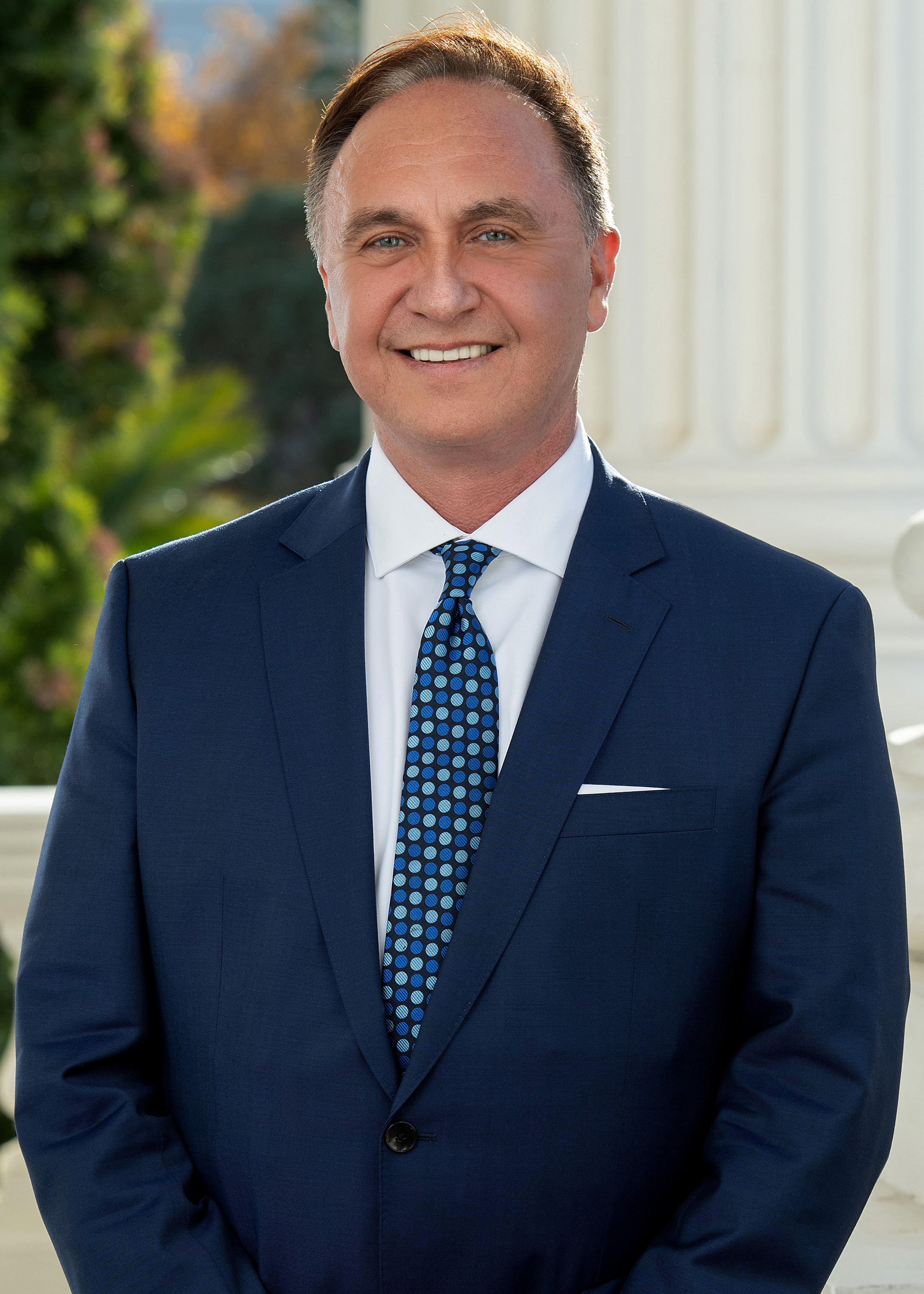
Asm. Rick Zbur
Sponsored bills
Existing law, the Lesbian, Gay, Bisexual, Transgender, and Intersex Disparities Reduction Act, requires the State Department of Public Health, among other specified state entities, in the course of collecting demographic data directly or by contract as to the ancestry or ethnic origin of Californians, to collect voluntary self-identification information pertaining to sexual orientation, gender identity, and variations in sex characteristics/intersex status (SOGISC) . This bill would define "information pertaining to SOGISC" to mean information pertaining to a person's sexual orientation identity, gender identity, identification as intersex, or identification as possessing sex characteristics that vary from those typically associated with a person's sex assigned at birth. Existing law, the Information Practices Act of 1977, prescribes a set of requirements, prohibitions, and remedies applicable to agencies, as defined, with regard to their collection, storage, and disclosure of personal information, as defined. Under existing law, a person who willfully requests or obtains any record containing personal information from an agency under false pretenses is guilty of a misdemeanor. Existing law establishes the University of California, administered by the Regents of the University of California, the California State University, administered by the Trustees of the California State University, and the California Community Colleges, administered by the Board of Governors of the California Community Colleges, as the 3 segments of public postsecondary education in the state. Existing law requests the Trustees of the California State University, the Regents of the University of California, and the governing board of each community college district to allow the faculty, staff, and students to identify their sexual orientation, gender identity, and gender expression on any forms used to collect specified demographic data and to report that data, as provided. This bill would prohibit information pertaining to SOGISC collected pursuant to the Lesbian, Gay, Bisexual, Transgender, and Intersex Disparities Reduction Act, or collected by public postsecondary education institutions in accordance with the above paragraph, from being disclosed in a manner allowing personal identification to any entity outside of California state or local government, or an authorized agency thereof, subject to specified exceptions, and would require information pertaining to SOGISC reported in an identifiable form to be limited to the minimal extent required to meet the applicable exception, and in compliance with the Information Practices Act of 1977. The bill would require state entities under these provisions, after notifying the Legislature that the entity has the necessary automation capabilities, to share information pertaining to SOGISC in accordance with specified requirements when state and federal programs share systems or intake processes and that information is required for federal program participation. The bill would require the State Department of Social Services to comply with these provisions as early as possible following the notification set forth above, but no later than January 1, 2028. The bill would provide that these provisions also apply to information that could reasonably be used to infer a person's transgender or intersex status, as specified, and a that violation of these provisions is subject to penalties described in the Information Practices Act of 1977. By expanding the scope of a crime in the Information Practices Act of 1977, the bill would impose a state-mandated local program. Existing law, the California Public Records Act, requires each state and local agency, as defined, to make its records open to public inspection at all times during office hours, except as specifically exempted from disclosure by law. This bill would provide, subject to specified exceptions, that information pertaining to SOGISC is confidential and shall be exempt from disclosure by specified state entities under the California Public Records Act, unless the information pertaining to SOGISC is deidentified, or disclosed in accordance with the Information Practices Act of 1977. This bill would provide that its provisions are severable. Existing constitutional provisions require that a statute that limits the right of access to the meetings of public bodies or the writings of public officials and agencies be adopted with findings demonstrating the interest protected by the limitation and the need for protecting that interest. This bill would make legislative findings to that effect. The California Constitution requires the state to reimburse local agencies and school districts for certain costs mandated by the state. Statutory provisions establish procedures for making that reimbursement. This bill would provide that no reimbursement is required by this act for a specified reason.
Existing law, notwithstanding the requirement that each person between 6 and 18 years of age who is not otherwise exempted is subject to compulsory full-time education, requires a pupil to be excused from school for specified types of absences, including, among others, for justifiable personal reasons when the pupil's absence is requested in writing by the parent or guardian and approved by the principal or a designated representative, as provided. Existing law specifies that a justifiable personal reason includes observance of a holiday or ceremony of the pupil's religion. This bill would include observance of a holiday or ceremony of the pupil's religion as a type of required excused absence without the requirement that the absence be requested in writing by the parent or guardian and approved by the principal or a designated representative. To the extent that this bill would impose additional duties on local educational agencies, the bill would impose a state-mandated local program. The California Constitution requires the state to reimburse local agencies and school districts for certain costs mandated by the state. Statutory provisions establish procedures for making that reimbursement. This bill would provide that, if the Commission on State Mandates determines that the bill contains costs mandated by the state, reimbursement for those costs shall be made pursuant to the statutory provisions noted above.
Existing law prohibits a person from manufacturing, selling, or distributing in commerce any juvenile's feeding product or juvenile's sucking or teething product, as defined, that contains any form of bisphenol, as defined, at a detectable level above the practical quantitation limit, as determined by the Department of Toxic Substances Control, except as provided. This bill would prohibit, on and after January 1, 2028, a person from manufacturing, distributing, or offering for sale a paper proof of purchase containing intentionally added bisphenol A, as defined, and, on and after January 1, 2029, containing any intentionally added bisphenols, as defined. The bill would require a manufacturer to use the least toxic alternative when replacing any form of bisphenol in a paper proof of purchase product. The bill would also prohibit a manufacturer from replacing any form of bisphenol pursuant to these provisions with a chemical known to cause cancer or reproductive or developmental harm, as specified. This bill would authorize the department to enforce a violation of those provisions by considering, on a case-by-case basis, the enforcement mechanism and an administrative penalty not to exceed $5,000 for a first violation, and not to exceed $10,000 for each subsequent violation. The bill would require all penalties collected pursuant to this bill to be deposited into the Toxic Substances Control Account, to be available for expenditure by the department upon appropriation by the Legislature, as specified. The bill would require the department to post any substantiated violation or final enforcement action of these provisions on the department's internet website.
(1) Existing law requires a county office of education and county probation department to have a joint transition planning policy that includes collaboration with relevant local educational agencies to coordinate education and services for youth who have had contact with the juvenile justice system. Existing law requires, as part of the joint transition planning policy, the county office of education to assign transition oversight responsibilities to existing county office of education personnel who will work in collaboration with the county probation department and relevant local educational agencies to ensure that specified transition activities are completed for the pupil. This bill would require, as part of the joint transition planning policy, the school district or charter school in which the juvenile court school pupil will be enrolling to assign a staff member of that school district or charter school to serve as the point person for transition liaison responsibilities, and notify the county office of education and the county probation department of the assigned staff member's name and contact information. The bill would also require that staff member, and other personnel of the school district or charter school as needed to serve the pupil, to work in collaboration with the county office of education transition oversight personnel throughout the calendar year to ensure that the transition activities noted above are completed for the pupil. Existing law requires, for pupils detained for 20 consecutive schooldays or fewer, the pupil's individualized learning plan, if one exists, to be made available by the county office of education to the pupil upon the pupil's release. This bill would additionally require that pupil's individualized learning plan to be made available to the pupil's school district or charter school point person for transition liaison responsibilities. Existing law requires the county office of education, in collaboration with the county probation department, to establish procedures for the timely, accurate, complete, and confidential transfer of educational records, as specified. This bill would additionally require the county office of education to collaborate with relevant local educational agencies to establish those procedures. By imposing additional requirements on local educational agencies, the bill would impose a state-mandated local program. (2) Existing law requires local educational agencies to issue full or partial credit on an official transcript for all full or partial coursework satisfactorily completed by pupil in foster care, a pupil who is a homeless child or youth, a former juvenile court school pupil, a pupil who is a child of a military family, a pupil who is a migratory child, or a newcomer pupil, while attending a public school, juvenile court school, charter school, school in a country other than the United States, or a nonpublic, nonsectarian school, as provided. Existing law requires, for a pupil in foster care, upon receiving a transfer request from a county placing agency or notification of enrollment from the new local educational agency, the local educational agency to deliver the official transcript to the next educational placement within 2 business days, as provided. This bill would require the transferring local educational agency to issue that official transcript within 2 business days, as provided. By imposing additional requirements on local educational entities, the bill would impose a state-mandated local program. (3) The California Constitution requires the state to reimburse local agencies and school districts for certain costs mandated by the state. Statutory provisions establish procedures for making that reimbursement. This bill would provide that, if the Commission on State Mandates determines that the bill contains costs mandated by the state, reimbursement for those costs shall be made pursuant to the statutory provisions noted above. (4) This bill would incorporate additional changes to Section 51225.2 of the Education Code proposed by SB 685 to be operative only if this bill and SB 685 are enacted and this bill is enacted last.
Existing law requires the governing board of a school district to have general control of, and be responsible for, all aspects of the interscholastic athletic policies, programs, and activities in its school district, as provided, and requires the governing board of a school district to ensure that all interscholastic policies, programs, and activities in the school district comply with state and federal law. Existing law authorizes the governing board of a school district to enter into associations or consortia with other governing boards for purposes of governing regional or statewide interscholastic athletics, as provided. Existing law describes the California Interscholastic Federation (CIF) as a voluntary organization that consists of school and school-related personnel with responsibility for administering interscholastic athletic activities in secondary schools and states the intent of the Legislature that the CIF, in consultation with the State Department of Education, implement specified policies relating to interscholastic athletics. Existing law, the 1998 California High School Coaching Education and Training Program, declares the intent of the Legislature to establish a California High School Coaching Education and Training Program, to be administered by school districts with an emphasis on specific components, including, among other components, sports psychology. Existing law requires every high school sports coach to complete, at their own expense, a coaching education program that meets the guidelines established by the California High School Coaching Education and Training Program. This bill would add a component on mental health training, as specified, to the list of components to be emphasized by the 1998 California High School Coaching Education and Training Program. The bill, commencing with the 2027–28 school year, would require a person who serves as a coach in an interscholastic athletic program at a high school, including a private school, that is a member of the California Interscholastic Federation to complete an initial training, and a subsequent training every 2 years, on mental health, as provided. The bill, commencing with the 2027–28 school year, would also require a school district, county office of education, or charter school that elects to offer an athletic program, other than an interscholastic athletic program, to ensure that the athletic program's coaches complete an initial training, and a subsequent training every 2 years, that covers sudden cardiac arrest, as provided, and youth athletics behavioral and mental health training, as provided. This bill would incorporate additional changes to Section 35179.1 of the Education Code proposed by AB 1626 to be operative only if this bill and AB 1626 are enacted and this bill is enacted last. This bill would make the operation of its provisions contingent upon the enactment of AB 1626 of the 2025–26 Regular Session.
(1) Existing law, the California Healthy Youth Act, requires school districts, defined to include county boards of education, county superintendents of schools, the California School for the Deaf, the California School for the Blind, and charter schools, to ensure that all pupils in grades 7 to 12, inclusive, receive comprehensive sexual health education and human immunodeficiency virus (HIV) prevention education, as specified. This bill would authorize the State Department of Education to monitor compliance with the requirements of the California Healthy Youth Act as part of its annual compliance monitoring of state and federal programs. (2) Existing law establishes the Office of School-Based Health Programs for the purpose of assisting local educational agencies regarding the current health-related programs under the purview of the State Department of Education including, among other duties, coordinating school health program activities with public health, social services, environmental, and local educational agencies, and other public and private entities. This bill would prohibit a local educational agency, as defined, from prohibiting school-based health centers, as defined, that serve schools of the local educational agency from making internal and external condoms available and easily accessible to pupils in any of grades 7 to 12, inclusive, at the school-based health center site and would require a school of a local educational agency to allow condoms to be made available to pupils in any of grades 7 to 12, inclusive, during the course of, or in connection with, educational or public health programs and initiatives, as provided. To the extent the bill imposes additional duties on local educational agencies, the bill would impose a state-mandated local program. (3) Under existing law, the Sherman Food, Drug, and Cosmetic Law, the State Department of Public Health generally regulates the packaging, labeling, advertising, and sale of food, drugs, devices, and cosmetics, in accordance with the Federal Food, Drug, and Cosmetic Act. A violation of those provisions is generally a crime. Existing law sets forth various other provisions relating to the furnishing and health care coverage of certain types of contraception. This bill would, with certain exceptions, prohibit a retail establishment, as defined, from refusing to furnish nonprescription contraception to a person solely on the basis of age by means of any conduct, including, but not limited to, requiring the customer to present identification for purposes of demonstrating their age. Under the bill, a violation of that prohibition would be exempt from the above-described criminal penalty. (4) The California Constitution requires the state to reimburse local agencies and school districts for certain costs mandated by the state. Statutory provisions establish procedures for making that reimbursement. This bill would provide that, if the Commission on State Mandates determines that the bill contains costs mandated by the state, reimbursement for those costs shall be made pursuant to the statutory provisions noted above.
(1) The California Coastal Act of 1976, among other things, establishes the California Coastal Commission and provides for the planning and regulation of development in the coastal zone, as defined. The act generally requires each local government, as specified, to prepare a local coastal program for certification by the commission, however, the act authorizes any local government to request the commission to prepare the local coastal program for the local government, as provided. The act generally prohibits, after certification of a local coastal program and all implementing actions within the affected area, the commission from exercising its coastal development permit review authority over any new development within the area to which the certified local coastal program, or any portion thereof, applies. This bill would require, on or before January 1, 2029, the City of Santa Monica to submit to the commission a proposed, complete local coastal program for the city's portion of the coastal zone. By creating a new duty for the City of Santa Monica, the bill would impose a state-mandated local program. The bill would require the commission to act within 6 months of receipt of the proposed, complete local coastal program, unless an extension is requested by the city. The bill would also require the commission, within 45 days of receipt of the proposed, complete local coastal program, to provide the city, in writing, a list of identified issues, if any, that require further refinement through suggested modifications for the local coastal program, as provided, and would require the city and the commission to coordinate expeditiously and in good faith to reach agreement on any suggested modifications within 6 months of receipt of the submitted complete proposal. If the commission fails to act on the city's complete, proposed local coastal program within 6 months of receipt of a submitted complete proposal, as provided, the bill would require the commission to provide quarterly, written updates to the Legislature describing, among other things, the reason for the delay. (2) Existing law prohibits an application by a local government to convert an existing motorized vehicle lane into a dedicated bicycle lane, dedicated transit lane, or a pedestrian walkway from being required to include a traffic study for the processing of either a coastal development permit or an amendment to a local coastal program. Existing law requires, if a proposal to convert an existing motorized vehicle travel lane into a dedicated bicycle lane, dedicated transit lane, or a pedestrian walkway within the developed portion of an existing road right-of-way requires an amendment to a local coastal program, that the amendment be processed in accordance with the procedures applicable to de minimus local coastal program amendments if the executive director of the commission makes specified determinations. This bill would require, if a proposal to convert part or all of a developed portion of an existing road right-of-way into a bicycle right-of-way, transit right-of-way, pedestrian walkway, or combination thereof requires an amendment to a local coastal program, that the amendment be processed in accordance with the procedures applicable to de minimus local coastal program amendments if the executive director determines that, on balance, the project will provide commensurate or enhanced public access to the coast. For an application for a coastal development permit to convert part or all of the developed portion of an existing road right-of-way that is not a state highway into a bicycle right-of-way, transit right-of-way, pedestrian walkway, or combination thereof, the bill would require the permit requirement be waived if the executive director determines that, on balance, the project will provide commensurate or enhanced public access to the coast. The bill would, until December 31, 2032, require, on or before January 31 of each year, the commission to post on its internet website and transmit to the Legislature a report that includes, among other things, the total number of applications received for a coastal development permit to convert part or all of the developed portion of an existing road right-of-way that is not a state highway into a bicycle right-of-way, transit right-of-way, pedestrian walkway, or combination thereof, as provided. This bill would make legislative findings and declarations as to the necessity of a special statute for the City of Santa Monica. The California Constitution requires the state to reimburse local agencies and school districts for certain costs mandated by the state. Statutory provisions establish procedures for making that reimbursement. This bill would provide that, if the Commission on State Mandates determines that the bill contains costs mandated by the state, reimbursement for those costs shall be made pursuant to the statutory provisions noted above.
Existing law, the State Bar Act, provides for the licensure and regulation of attorneys by the State Bar of California (State Bar) , a public corporation governed by a board of trustees. Existing law makes it a misdemeanor for a person who is not a member of the State Bar, or authorized to practice law, to practice law in this state. Existing law regulates, among other things, fee agreements, legal advertising and referral services, the sale of financial products to a client, and the allowable forms of organization of a law practice, including a law corporation. Existing law, until January 1, 2030, prohibits an attorney licensed or otherwise authorized to practice in the state from sharing legal fees directly or indirectly with an out-of-state entity that provides legal services while allowing nonlawyer ownership or decisionmaking authority, except as specified. Existing law authorizes the board of trustees, with the approval of the Supreme Court to formulate and enforce rules of professional conduct on all licensees. A violation of these provisions may result in disciplinary action against a licensed attorney or other remedies. This bill would make a corporate legal funder interfering with a substantive litigation decision or exercising control over a litigation function, an unauthorized practice of law. The bill would prohibit a litigation practice from contracting with a corporate legal funder for specific terms, including restricting an attorney or client from withdrawing from representation in the event of a nonlawyer engaging in the unauthorized practice of law under these provisions. This bill would prohibit a corporate legal funder, or an entity it controls, from entering into any contract, agreement, or arrangement with a litigation practice if the contract would constitute an unauthorized practice of law under these provisions, and would further prohibit and void a contract or terms that would permit or facilitate an unauthorized practice of law under these provisions, as specified. This bill would provide that these provisions shall not be construed to prohibit the practice of nonrecourse litigation finance and that the practice of nonrecourse litigation finance shall not constitute impermissible fee sharing under the above-described provisions or the rules of professional conduct, as provided. The bill would deem a violation of these provisions by an attorney as grounds for the imposition of discipline by the State Bar and subject an attorney and the corporate legal funder to statutory or actual damages, attorney's fees and costs, and other relief, as specified. The bill would define terms for these purposes. This bill would exempt violation of its provisions from the criminal prohibitions. This bill would specify that its provisions only apply to contracts entered into on and after January 1, 2027.
Under existing law, if parties to pending litigation settle the matter, the court may enter judgment pursuant to the terms of the settlement and, upon stipulation by the settling parties, dismiss the settling parties without prejudice while retaining jurisdiction over the parties to enforce the settlement. This bill would permit the enforcement, pursuant to the above provision and under specified conditions, of a settlement agreement that resolves a tort claim against a local public entity that is eligible for payment from a victims' compensation fund or other victim-related financial assistance program, as specified. This bill would declare that it is to take effect immediately as an urgency statute.