

Under existing law, the Tom Bane Civil Rights Act (act) , if a person or persons, whether or not acting under color of law, interferes or attempts to interfere, by threats, intimidation, or coercion, with the exercise or enjoyment by any individual or individuals of rights secured by the Constitution or laws of the United States, or of the rights secured by the Constitution or laws of this state, the Attorney General, or any district attorney or city attorney, is authorized to bring a civil action for injunctive and other appropriate equitable relief in the name of the people of the State of California, in order to protect the exercise or enjoyment of the right or rights secured. Under that act, an individual may also institute and prosecute in their own name and on their own behalf a civil action for damages, as described, for any resulting interference or attempt at interference of the individual's exercise or enjoyment of rights secured by the Constitution or laws of the United States or this state. The act authorizes the court to award the petitioner or plaintiff reasonable attorney's fees in addition to any damages, injunction, or other equitable relief awarded in these civil actions (attorney's fees authorization) . Existing federal law provides that every person who, under color of any statute, ordinance, regulation, custom, or usage, of any state, territory, or the District of Columbia, subjects or causes to be subjected any United States citizen or other person within the jurisdiction to the deprivation of any rights, privileges, or immunities secured by the Constitution and laws, is liable to the party injured in an action at law, suit in equity, or other proper proceeding for redress, except as provided. This bill would also provide that every natural person, as defined, who, under color of any law, statute, ordinance, regulation, custom, or usage, as defined, subjects or causes to be subjected any citizen of this state or any person within the jurisdiction thereof to the deprivation of any rights, privileges, or immunities secured by the United States Constitution, shall be liable to the party injured in an action at law, suit in equity, or other proper proceeding for redress, except as specified. The bill would apply the aforementioned attorney's fees authorization, except as specified, to any action brought under these provisions. The bill would authorize a court, in its discretion, to also award costs, except as specified, to the prevailing plaintiff in any action brought under these provisions. This bill would authorize a defendant in an action brought under these provisions to assert and receive the benefit of a defense of absolute or qualified immunity only to the same extent as a person sued under certain federal provisions under like circumstances, as specified, and would specify that nothing in these provisions is to be construed to waive or abrogate any defense of sovereign immunity otherwise available to a party, as specified. The bill would prohibit any civil action brought under these provisions from being commenced later than 2 years after the date that the cause of action accrues. The bill would make its provisions severable. The bill would specify that these provisions apply retroactively to March 1, 2025, as provided. This bill would declare the intent of the Legislature in enacting these provisions. This bill would declare that it is to take effect immediately as an urgency statute.
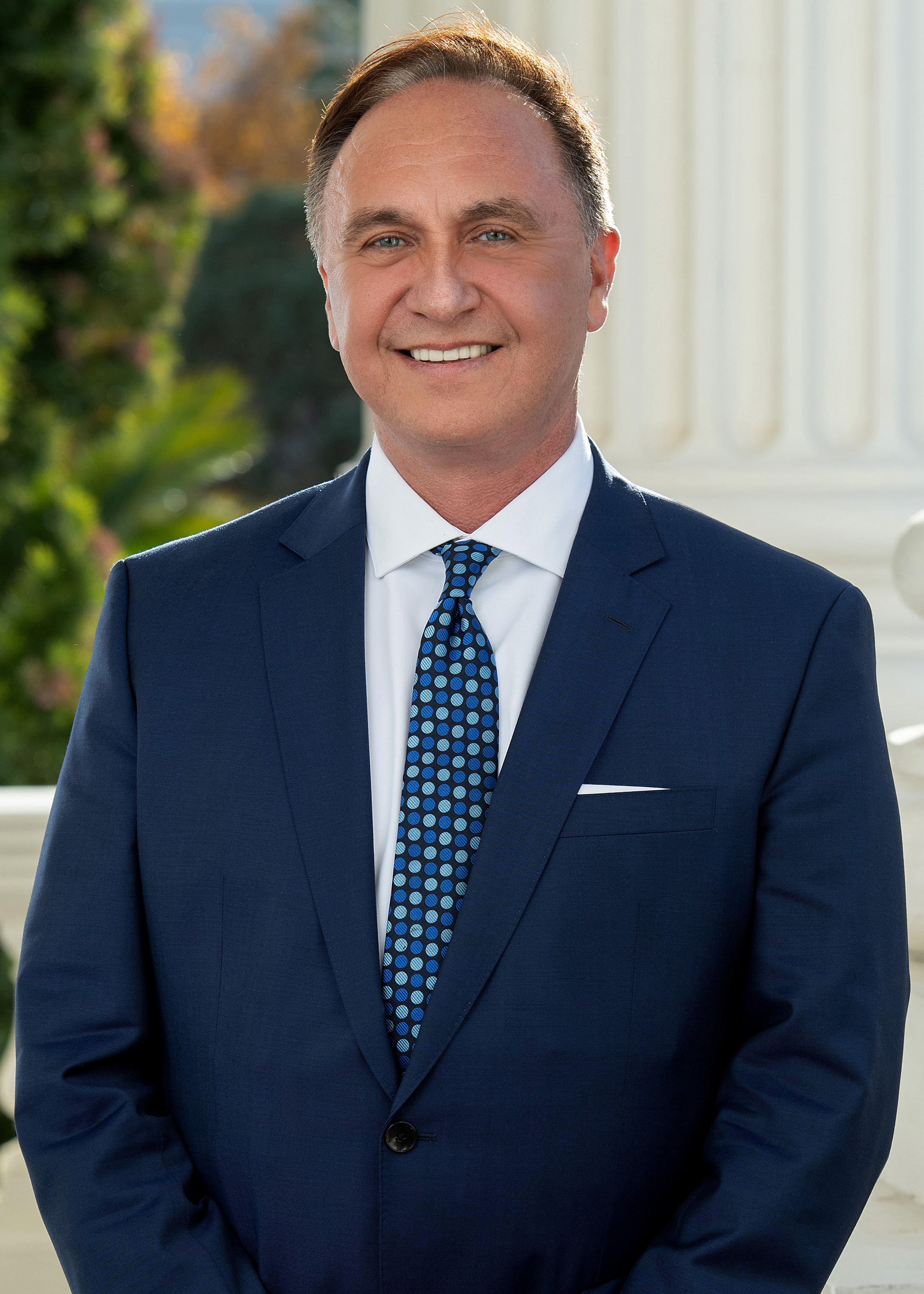
Asm. Rick Zbur
Sponsored bills
Existing law establishes a specialized license plate program and requires the Department of Motor Vehicles to issue specialized license plates, also referred to as environmental license plates, on behalf of a sponsoring state agency if the agency receives 7,500 applications for that plate within a 12-month period, among other requirements. Existing law authorizes a person who is the registered owner or lessee of a vehicle to apply to the department for specialized license plates. Existing law imposes a fee, in addition to the regular registration fee, for the issuance, renewal, retention, transfer, and duplication of specialized license plates. Existing law requires that all revenue derived from these fees be deposited in the California Environmental License Plate Fund. This bill would require the Arts Council to apply to the department to sponsor "The Lowrider" specialized license plate program, as specified. The bill would require the design of the plate to reflect lowrider culture and heritage. The bill would require the council to consult with a nonprofit entity for plate design consultation, stakeholder engagement, publicity, and community outreach. The bill would authorize the council to accept and use donated or licensed artwork from a nonprofit entity for these purposes, and to use funds from nonprofit or private sources to augment implementation. The bill would require the department, after deducting its administrative costs, to deposit additional revenue derived from the issuance, renewal, transfer, and substitution of the plate into the Specialized License Plate Fund in the State Treasury. The bill would require the council to use those funds, upon appropriation by the Legislature, to fund projects that include, among others, supporting lowrider arts and cultural preservation efforts. The bill would authorize the council to use 4 to 6% of those funds to consult with or enter into an agreement with a nonprofit entity to support implementation of the program.
The State Bar Act provides for the licensure and regulation of attorneys by the State Bar of California (State Bar) , a public corporation governed by a board of trustees. Existing law authorizes the board of trustees, with the approval of the Supreme Court, to formulate and enforce rules of professional conduct for all licensees of the State Bar. Existing provisions of the Labor Code prohibit an employer from making, adopting, or enforcing any rule, regulation or policy preventing an employee from disclosing information to a government or law enforcement agency, to a person with authority over the employee, or to another employee who has authority to investigate, discover, or correct the violation or noncompliance, if the employee has reasonable cause to believe that the information discloses a violation of state or federal statute, or a violation of or noncompliance with a local, state, or federal rule or regulation. This bill would add provisions to the State Bar Act that would prohibit an employer, law firm, attorney, or any person acting on their behalf from retaliating against an individual for disclosing information in good faith, or because the employer, law firm, or attorney believes the individual disclosed or may disclose information in good faith, where the individual has reasonable cause to believe that the information reveals a violation of the State Bar Act, the California Rules of Professional Conduct, or any other state or federal statute, rule, or regulation governing the conduct of attorneys. Existing law requires certain contracts between an attorney and client to comply with specified requirements, including requiring contracts to represent a client on a contingency fee basis to be in writing and include the contingency fee rate and specified other information. This bill would require an attorney entering into a loan or financial assistance arrangement with a client to have a separate written contract that contains the total amount financed, repayment terms and contingencies, and all fees, costs, and charges. The bill would prohibit an attorney from charging the client interest on any loan or funds. The bill would make a violation of those requirements subject to a civil penalty of $15,000 per offense or injunctive relief, and subject to discipline by the State Bar. Existing law makes it unlawful for any person to act as a runner or capper for any attorneys or to solicit any business for attorneys, as specified. Existing law makes a violation of those provisions a misdemeanor or a felony, as specified, and also authorizes a person to bring a civil action for specified remedies for a violation of those provisions. Existing law authorizes the Supreme Court to disbar, including to summarily disbar, or suspend an attorney for specified acts, including conviction of a felony or misdemeanor involving moral turpitude. This bill would also make a violation of the provisions prohibiting capping or running subject to a civil penalty of $25,000 for each violation. The bill would require the State Bar to enact summarily disbarment procedures for any licensee for a felony conviction of the provisions prohibiting capping or running or a misdemeanor conviction under those provisions where the court finds, or the record establishes, that the licensee acted knowingly and for financial gain.
Existing law includes various provisions limiting how state and local entities may use their resources for immigration enforcement purposes. This bill would prohibit the use of state-owned property for purposes of immigration enforcement, as specified. In this regard, the bill would prohibit, among other uses, staging, assembling, mobilizing, or deploying vehicles, equipment, or personnel for immigration enforcement purposes. The bill would require the Department of General Services and state agencies to work together to identify state-owned property previously or likely to be used for immigration enforcement purposes. The bill would require state agencies to post signage at those properties regarding the prohibition and to use physical barriers limiting access, as provided. The bill would require state agencies to develop procedures to ensure that an attempted or actual use of state-owned property for immigration enforcement purposes is documented in writing, that the documentation includes any photographic or video evidence, and that the Attorney General's office or the Attorney General's designee is notified. The bill would direct state agencies to make educational materials available regarding the rights of employees, tenants, and security staff if federal agents enter state-owned property. The bill would further require the Attorney General's office to design standardized signage and to make the signage available to download free of charge on the Attorney General's internet website.
The California Fair Employment and Housing Act makes specified employment practices unlawful, including the harassment of an employee directly by the employer or indirectly by agents of the employer with the employer's knowledge. Under existing law, the Civil Rights Department administers these provisions. Existing law requires a specified employer with 5 or more employees to, by January 1, 2021, provide at least 2 hours of classroom or other effective interactive training and education regarding sexual harassment to all supervisory employees and at least one hour of classroom or other effective interactive training and education regarding sexual harassment to all nonsupervisory employees in California and, after that date, once every 2 years. Existing law requires an employer to include prevention of abusive conduct as a component of that training and education. This bill would additionally require that, beginning January 1, 2028, the above-described training and education include, as a component of the training and education, anti-hate speech training, as specified.
Existing law, the California Building Standards Law, establishes the California Building Standards Commission within the Department of General Services. Existing law requires the commission to approve and adopt building standards and to codify those standards in the California Building Standards Code. Existing law authorizes local governments to enact ordinances or regulations that make building standards amendments to the California Building Standards Code, as specified. Existing law establishes a streamlined approval process for a local permit for a tenant improvement related to a restaurant, as defined. This bill would establish a similar streamlined approval process for a local permit for a tenant improvement relating to a retailer, as defined. In this regard, the bill would require a local building department, upon the request and at the expense of the permit applicant, to allow a qualified professional certifier, defined as a licensed architect or engineer who meets certain requirements, to certify that the plans and specifications of the tenant improvement comply with all applicable building, health, and safety codes, as specified, unless otherwise provided by specified provisions. The bill would require a qualified professional certifier, or the applicant, as applicable, to prepare certain affidavits related to the tenant improvement under penalty of perjury. The bill would require the local building department to approve or deny the permit application within 20 business days of receiving a complete application. The bill would also authorize the applicant to resubmit corrected plans addressing the deficiencies identified in the initial denial, would limit the local building department's review of each subsequent resubmission to the deficiencies identified in the initial denial, and would require the local building department to approve or deny each subsequent resubmission within 10 business days of receipt. The bill would require each local building department to conduct audits of tenant improvements submitted for certification, as specified. The bill would authorize a city or county to adopt additional qualifications or requirements for qualified professional certifiers, including penalties or reasonable administrative fines for certain actions. The bill would make qualified professional certifiers liable for any damages arising from negligent plan review. The bill would also require the applicant to indemnify the local agency from any property damage or personal injury arising from construction permitted under the above-described provisions. The bill would further require the use of a qualified professional certifier to be temporary in cases in which there is an excessive delay, as defined. Existing law establishes the California Architects Board and the Board for Professional Engineers, Land Surveyors, and Geologists to administer the licensure and regulation of architects and engineers, respectively. Existing law specifies grounds for disciplinary action by the boards. This bill would deem making a false statement in a certification described above to be grounds for disciplinary action against a licensee who serves as a qualified professional certifier. Existing law, the Government Claims Act, establishes the liability and immunity of a public entity for its acts or omissions that cause harm to persons. Where a public entity is under a mandatory duty imposed by an enactment that is designed to protect against the risk of a particular kind of injury, the act makes the public entity liable for an injury of that kind proximately caused by its failure to discharge the duty unless the public entity establishes that it exercised reasonable diligence to discharge the duty. This bill, notwithstanding the above-described liability of a public entity for failure to discharge certain mandatory duties, would provide that a public entity or public employee is not liable for an injury caused by their discretionary or ministerial acts or omissions relating to the issuance or denial of a permit pursuant to the bill's provisions. Existing law, the California Environmental Quality Act (CEQA) , requires a lead agency, as defined, to prepare, or cause to be prepared, and certify the completion of, an environmental impact report on a project that it proposes to carry out or approve that may have a significant effect on the environment or to adopt a negative declaration if it finds that the project will not have that effect. CEQA does not apply to the approval of ministerial projects. To the extent that the streamlined, ministerial review processes established by the bill would apply to final, discretionary approval of a tenant improvement, the bill would exempt those projects from CEQA. This bill would also make related findings and declarations. The bill would include findings that changes proposed by this bill address a matter of statewide concern rather than a municipal affair and, therefore, apply to all cities, including charter cities. By adding to the duties of local officials with respect to the review and approval of tenant improvements for retailers, and by expanding the scope of various crimes related to these provisions, this bill would impose a state-mandated local program. The California Constitution requires the state to reimburse local agencies and school districts for certain costs mandated by the state. Statutory provisions establish procedures for making that reimbursement. This bill would provide that no reimbursement is required by this act for specified reasons.
Existing law establishes the California Interagency Council on Homelessness (council) , which has various goals, including, among other things, to serve as a statewide facilitator, coordinator, and policy development resource on ending homelessness in California. This bill would require the council to, by July 1, 2028, complete a comprehensive statewide study of the coordinated entry system and its role in connecting individuals and families experiencing homelessness to affordable housing, as specified. The bill would require the council, in conducting the study, to meaningfully consult with a geographically representative group of stakeholders, as described, and would require the council, by July 1, 2028, to post the report on its internet website and submit the report to the Legislature and any relevant policy committees.
Existing law, the Davis-Stirling Common Interest Development Act, governs the management and operation of common interest developments, and requires an association to manage a common interest development, including requiring the association to levy regular and special assessments sufficient to perform its obligations, subject to specified limitations on increases in those assessments. The act requires an association to distribute an annual budget report 30 to 90 days before the end of its fiscal year. Under existing law, that budget report includes, among other things, a summary of the association's reserve accounts. The act requires an association to perform a study of the reserve account requirements, as defined, and, as part of that study, cause to be conducted a visual inspection of the accessible areas of major components that the association is obligated to repair, replace, restore, or maintain. This bill would, beginning January 1, 2032, revise the requirement to perform a study of the reserve account requirements to, among other things, include the minimum reserve contribution level to prevent the projected association reserve account balance from falling below zero over the following 30 years. The bill would require an association to fund the reserve account on an annual basis in at least the minimum reserve contribution level. If an association's reserve balance account is projected to fall below zero at any time over the following 30 years, the bill would require the association to transfer 15% of its gross annual budget to its reserve account each year, as prescribed. If the association is unable to fund the reserve account in at least the minimum reserve contribution level through its gross annual budget, the bill would require the association to levy a reserve funding special assessment, as provided. This bill would incorporate additional changes to Section 5550 of the Civil Code proposed by SB 1238 to be operative only if this bill and SB 1238 are enacted and this bill is enacted last.
Existing law authorizes a borrower who is experiencing financial hardship that prevents the borrower from making timely payments on a specified residential mortgage loan due directly to a specified state of emergency proclaimed by the Governor, or a specified federally declared disaster, to request forbearance on their residential mortgage loan, as prescribed. Existing law requires a mortgage servicer, except as specified, to offer mortgage payment forbearance for an initial 90-day period that may be extended up to a maximum forbearance period of 12 months and prohibits a mortgage servicer from assessing any late fees to the borrower's account or charging a default rate of interest during the forbearance period. This bill would, among other things, similarly authorize a borrower to request forbearance on a residential mortgage loan, as defined, secured by residential real property that has become uninhabitable as a direct result of a disaster, which the bill would define to mean the conditions described in a declaration of a disaster issued by the federal government. The bill would require the borrower to affirm that as a direct result of a disaster, a residential unit is uninhabitable. Because the bill would expand the crime of perjury, the bill would impose a state-mandated local program. This bill would, except as specified, require a mortgage servicer to offer mortgage payment forbearance of a period of up to an initial 180 days, to be extended at the request of the borrower in 90-day increments, up to a maximum forbearance period of 12 months. The bill would provide that the forbearance period includes any period of forbearance related to the disaster that a mortgage servicer has provided to a borrower before the date upon which a declaration of a disaster was issued. The bill would also prohibit a mortgage servicer from assessing any late fees to the borrower's account or charging a default rate of interest during the forbearance period. This bill would require a mortgage servicer to report the credit obligations of borrowers under a disaster-related forbearance plan in compliance with the federal Fair Credit Reporting Act. For an account granted disaster-related mortgage payment relief, the bill would prohibit a mortgage servicer from furnishing information during the forbearance period indicating that the payments are in forbearance and would require the mortgage servicer to report the credit obligation or account as current. This bill would authorize a civil action to enforce these provisions to be brought by the Attorney General, a district attorney, or a county counsel. The California Constitution requires the state to reimburse local agencies and school districts for certain costs mandated by the state. Statutory provisions establish procedures for making that reimbursement. This bill would provide that no reimbursement is required by this act for a specified reason.
Existing law requires every retail seller and manufacturer doing business in this state and having annual worldwide gross receipts that exceed $100,000,000 to disclose, as specified, its efforts to eradicate slavery and human trafficking from its direct supply chain for tangible goods offered for sale. Existing law also requires a person that submits a bid or proposal to, or otherwise proposes to enter into or renew a contract with, a state agency with respect to any contract in the amount of $100,000 or more to certify, under penalty of perjury, at the time the bid or proposal is submitted or the contract is renewed that they have complied with the Unruh Civil Rights Act and the California Fair Employment and Housing Act, and that any policy that they have adopted against any sovereign nation or peoples recognized by the government of the United States is not used as a pretext for discrimination in violation of the Unruh Civil Rights Act or the California Fair Employment and Housing Act. This bill, upon appropriation by the Legislature, would require any business or enterprise that is doing business in the state that was in existence or whose predecessor company was in existence on or before December 31, 1964 and has annual worldwide gross receipts that exceed $100,000,000 to complete an affidavit, under penalty of perjury, verifying that it has searched through any and all records in its and its related entities', as defined, possession, control, and knowledge for records that the covered entity or its related entities bought or sold persons subjected to slavery, used persons subjected to slavery as collateral, provided loans to purchase persons subjected to slavery, insured such transactions or the persons subjected to slavery, or provided related or other services to aid or otherwise facilitate those transactions. The bill would set forth the contents of the affidavit, the timeline and manner of submission, and reporting requirements. This bill would require the Civil Rights Department to create a public, digital platform within one year after an appropriation is made, that would make available affidavits and records made pursuant to the bill and disaggregated data, as described. The bill would additionally require the above-described business or entity, that submits a bid or proposal to, or otherwise proposes to enter into or renew a contract with, a state agency, as described above, to additionally certify, under penalty of perjury, that they have submitted the affidavit in compliance with the above-described provisions. By requiring an affidavit and to certify under penalty of perjury regarding compliance with the above-described affidavit requirements, and thus expanding the crime of perjury, the bill would impose a state-mandated local program. The California Constitution requires the state to reimburse local agencies and school districts for certain costs mandated by the state. Statutory provisions establish procedures for making that reimbursement. This bill would provide that no reimbursement is required by this act for a specified reason.