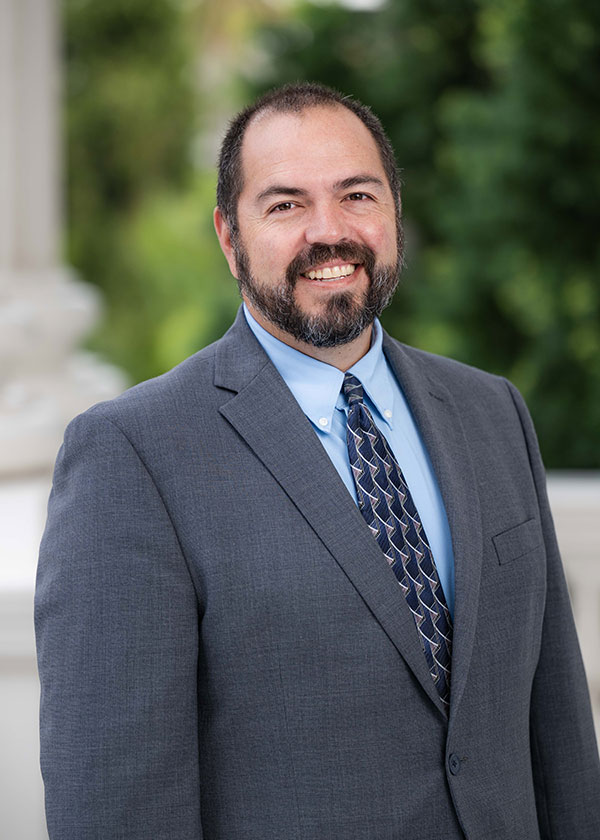
Photo of Robert Garcia
D California Assembly · District 50 On the 2026 ballot

Asm. Robert Garcia

Compare
Total votes
4,860
all sessions
Attendance
93%
254 missed
Near the chamber average
With party
99%
of cast votes
Near the chamber average
Bipartisan score
0%
crosses aisle rarely
Near the chamber average
Sponsored
421
bills & resolutions
Near the chamber average
Committees
10
assignments
421 bills and resolutions

Sponsored bills

Total
421
Primary
34
Co-sponsor
387
This page
421
matching current filters
Co-sponsor HR 71
Passed · California Assembly · Co-sponsor
Relative to National Fried Rice Day.

Maddy summaryThis symbolic resolution recognizes September 20, 2025, as National Fried Rice Day in California, highlighting the dish's cultural significance to Asian American communities and its connection to California's rice-growing economy (noting the state's status as the second-largest rice producer). It has no legal effect or policy changes - it serves solely to celebrate culinary traditions and community diversity. The resolution was adopted by the California Assembly with no opposing votes.

Passed Sep 4, 2025 1 co-sponsor
Co-sponsor AB 1234
Passed · California Assembly · Co-sponsor
Employment: nonpayment of wages: complaints.

Existing law authorizes the Labor Commissioner to investigate employee complaints and to provide for a hearing in any action to recover wages, penalties, and other demands for compensation. Existing law requires the Labor Commissioner to determine all matters arising under the commissioner's jurisdiction. Existing law makes any employer or other person acting on behalf of an employer who violates or causes to be violated specified provisions regulating hours and days of work in any order of the Industrial Welfare Commission to be subject to a civil penalty, as specified. This bill would revise and recast the provisions relating to the process for the Labor Commissioner to investigate, hold a hearing, and make determinations relating to an employee's complaint. The bill would set forth timelines for the Labor Commissioner to notify parties of an employee complaint, as provided, and for the defendant to respond, as provided. The bill would require the Labor Commissioner, if the Labor Commissioner determines to prosecute the action or that no action will be taken, to notify the parties within 30 days of receipt of the defendant's answer. If the Labor Commissioner does not make either of those determinations, the bill would require the Labor Commissioner, within 90 days of receipt of the defendant's answer, to conduct an investigation of the employee complaint, make an estimated appraisal of the amount of wages, damages, penalties, expenses, and other compensation owed, and to determine all the parties liable for the assessment. The bill would set forth a process for the Labor Commissioner's investigation, assessment, and determination, including authorizing the Labor Commissioner to issue a subpoena for records and requiring the Labor Commissioner to issue a formal complaint. This bill would require the Labor Commissioner, within 90 days of the issuance of the formal complaint, to set a hearing date and would set forth procedures for the hearing. The bill would require the Labor Commissioner, within 15 days of the hearing, or upon a failure of the defendant to answer or appear, to file in the office of the Division of Labor Standards Enforcement a copy of the order, decision, or award. This bill would authorize the Labor Commissioner, in an order, decision, or award granted pursuant to specified provisions to impose an administrative fee of up to 30% of the award, as provided. The bill would require the administrative fee to be deposited into the Wage Recovery Fund, which would be created by the bill. The bill would require the money in the fund, upon appropriation, to be disbursed by the Labor Commissioner only to persons determined by the Labor Commissioner to have been damaged by the failure to pay wages and penalties and for other damages by an employer. The bill would require a disbursement to be made pursuant to a claim for recovery from the fund in accordance with procedures prescribed by the Labor Commissioner and would require any disbursed funds subsequently recovered by the Labor Commissioner from a liable party, as provided, to be returned to the fund. The bill would require the Labor Commissioner to waive any or all of the administrative fee upon request by a defendant, if specified conditions are met. This bill would classify an appeal filed in a superior court relating to the Labor Commissioner's order, decision, or award as an unlimited civil case. The bill would grant a court hearing the action jurisdiction over the entire wage dispute, including related wage claims not raised in front of the Labor Commissioner, but would prohibit the court from consolidating the action with any other actions not arising out of, or related to, the underlying order, decision, or award, absent an executed agreement in writing by all parties.

Passed Sep 3, 2025 1 co-sponsor
Co-sponsor HR 65
Passed · California Assembly · Co-sponsor
Relative to Filipino American History Month.

Maddy summaryThis House Resolution designates a month as Filipino American History Month in California. It recognizes the historical contributions of Filipino Americans to the state, including early settlement (dating to 1587), agricultural labor, community building (such as "Little Manila" in Stockton), and military service during World War II. As a symbolic resolution, it does not create new laws, policies, or direct effects on any specific group.

Passed Sep 2, 2025 1 co-sponsor
Co-sponsor SB 433
Passed · California Senate · Co-sponsor
Residential care facilities for the elderly: assisted living waiver rental rate protection.

Existing law, the California Residential Care Facilities for the Elderly Act, regulates residential care facilities for the elderly. A violation of the act is a crime. Existing law provides for the Medi-Cal program, administered by the State Department of Health Care Services, under which qualified low-income persons are provided with health care services. The Medi-Cal program is, in part, governed and funded by federal Medicaid Program provisions. Existing law provides for the State Supplementary Program for the Aged, Blind and Disabled (SSP) , which requires the State Department of Social Services to contract with the United States Secretary of Health and Human Services to make payments to SSP recipients to supplement Supplemental Security Income (SSI) payments made available pursuant to the federal Social Security Act. Under existing regulation, residential facilities for the elderly are prohibited from charging recipients of SSI payments more than a specific set rate for basic services. Existing law requires an individual under these provisions to satisfy certain financial eligibility requirements to be eligible for Medi-Cal, including, among other things, that the individual's countable income does not exceed an income standard equal to a specified amount, plus an income disregard of specified amounts, subject to certain exceptions. This bill would prohibit a residential care facility for the elderly that is contracted to receive Medi-Cal reimbursement for services provided to a resident enrolled in Medi-Cal from charging that resident a room and board rate exceeding the difference between their income, as defined, and the personal and incidental needs allowance set by the department for recipients of SSI/SSP in nonmedical out-of-home care. By creating a new crime, this bill would impose a state-mandated local program. This bill would, for the purposes of determining Medi-Cal eligibility, exclude the difference between the resident's income and the rate charged by a residential care facility for the elderly and retained by the resident from countable income. The bill would state that the exclusion does not apply to the portion of the difference retained by the resident that exceeds the personal and incidental needs allowance set by the department for recipients of SSI/SSP in nonmedical out-of-home care. Because counties are required to make Medi-Cal eligibility determinations, and this bill would alter Medi-Cal eligibility by changing the income disregard amounts and would increase the responsibility of counties in determining Medi-Cal eligibility, the bill would impose a state-mandated local program. The California Constitution requires the state to reimburse local agencies and school districts for certain costs mandated by the state. Statutory provisions establish procedures for making that reimbursement. This bill would provide that with regard to certain mandates no reimbursement is required by this act for a specified reason. With regard to any other mandates, this bill would provide that, if the Commission on State Mandates determines that the bill contains costs so mandated by the state, reimbursement for those costs shall be made pursuant to the statutory provisions noted above.

Passed Aug 29, 2025 1 co-sponsor
Co-sponsor SB 323
Passed · California Senate · Co-sponsor
Student Aid Commission: California Dream Act application.

Existing law exempts a student, other than a nonimmigrant alien, as defined, from paying nonresident tuition at the California State University and the California Community Colleges if the student meets certain requirements. Existing law makes a student who meets these requirements for exemption from nonresident tuition, or who meets equivalent requirements adopted by the Regents of the University of California, eligible to apply for, and participate in, any student financial aid program administered by the state to the full extent permitted by federal law. Existing law requires the Student Aid Commission to establish procedures and forms that enable these students to apply for, and participate in, those student financial aid programs. This bill would require the commission, by the start of the 2026–27 financial aid cycle, to amend the California Dream Act application, and any of its grant processing systems, to clarify and ensure that the application can be used by any student eligible for state financial aid programs, regardless of their eligibility for federal financial aid. The bill would also require the commission to consult with California's public and private colleges and universities to promote the California Dream Act application effectively and inform students and their families of their available financial aid application options, as provided.

Passed Aug 29, 2025 1 co-sponsor
Co-sponsor SB 332
Passed · California Senate · Co-sponsor
Investor-Owned Utilities Accountability Act.

(1) Existing law vests the State Energy Resources Conservation and Development Commission (Energy Commission) with various responsibilities for developing and implementing the state's energy policies. This bill would require the Energy Commission to select a research institute, as defined, to conduct a comparative analysis of the benefits and challenges of transitioning the electrical corporations to a public entity, nonprofit public benefit corporation, or mutual benefit corporation in order to identify a recommended model, as provided. The bill would require the research institute to complete the analysis on or before January 1, 2029, and, upon completion, to submit the analysis to the Legislature and the Energy Commission. The bill would require the Energy Commission to make a draft of the analysis available to the public for comment before submitting the final draft to the Legislature, and would limit the cost of conducting the analysis to $5,000,000. This bill would require the research institute to conduct the first phase of the comparative analysis and to submit an interim report, on or before December 31, 2026, to the Energy Commission on threshold legal issues, as provided. The bill would require the Energy Commission to convene a group of state attorneys from the legal departments of state agencies that regulate electrical corporations to advise the research institute on the first phase of the comparative analysis, as specified. This bill would, upon completion of the analysis by the research institute, require the Energy Commission to present the analysis at a publicly noticed business meeting on or before September 30, 2029. (2) Existing law vests the Public Utilities Commission (PUC) with regulatory authority over public utilities, including electrical corporations and gas corporations, while local publicly owned utilities are under the direction of their governing boards. Existing law prohibits an electrical corporation, gas corporation, or water corporation from terminating a customer's residential service for nonpayment of a delinquent account in certain circumstances, including, among other circumstances, unless the corporation first gives notice to the customer of the delinquency and impending termination, during the pendency of an investigation by the corporation of the customer's dispute or complaint, or when the customer has been granted an extension of the period for payment of a bill. This bill would require each electrical corporation and gas corporation, on or before March 1, 2026, and each local publically owned electric utility, on or before March 1, 2027, and annually thereafter, to post specified information concerning terminations of service due to nonpayment on their respective internet websites, as provided. (3) Existing law requires the Director of the Office of Energy Infrastructure Safety to issue a safety certification that is valid for 12 months after the date of issuance to an electrical corporation if the electrical corporation provides documentation that it is meeting certain requirements and that it has an approved executive incentive compensation structure that is structured to promote safety as a priority and to ensure public safety and utility financial stability with performance metrics, as specified. This bill would additionally require that the electrical corporation's executive incentive compensation structure is structured to ensure ratepayer affordability, as provided. The bill would also require, for purposes of the safety certification, that documentation related to compensation include specified dollar amounts. Existing law requires the PUC to develop policies, rules, or regulations with a goal of reducing the statewide level of gas and electrical service disconnections for nonpayment by residential customers, as specified. Existing law requires the PUC to include in an annual report to the Legislature information on residential and household gas and electrical service disconnections, disaggregated by certain customer categories. This bill would require the PUC to provide any public nonconfidential data collected pursuant to the above-described provisions to the Office of Energy Infrastructure Safety for the purpose of reviewing ratepayer affordability when assessing executive compensation under the above-described provisions. (4) Under existing law, a violation of the Public Utilities Act or any order, decision, rule, direction, demand, or requirement of the PUC is a crime. Because certain provisions of this bill would be part of the act and a violation of a PUC action implementing the bill's requirements would be a crime, the bill would impose a state-mandated local program. In addition, to the extent the bill would impose new requirements on local publicly owned utilities, the bill would impose a state-mandated local program. The California Constitution requires the state to reimburse local agencies and school districts for certain costs mandated by the state. Statutory provisions establish procedures for making that reimbursement. This bill would provide that no reimbursement is required by this act for specified reasons.


Passed Aug 29, 2025 1 co-sponsor
Co-sponsor AB 1109
Passed · California Assembly · Co-sponsor
Evidentiary privileges: union agent-represented worker privilege.

Existing law governs the admissibility of evidence in court proceedings and generally provides a privilege as to communications made in the course of certain relations, including the attorney-client, physician-patient, and psychotherapist-patient relationship, as specified. Under existing law, the right of any person to claim those evidentiary privileges is waived with respect to a communication protected by the privilege if any holder of the privilege, without coercion, has disclosed a significant part of the communication or has consented to a disclosure. This bill would establish a privilege between a union agent, as defined, and a represented employee or represented former employee to refuse to disclose any confidential communication between the employee or former employee and the union agent made while the union agent was acting in the union agent's representative capacity, except as specified. The bill would permit a represented employee or represented former employee to prevent another person from disclosing a privileged communication, except as specified. The bill would further provide that this privilege may be waived in accordance with existing law and does not apply in criminal proceedings.

Passed Aug 29, 2025 1 co-sponsor
Co-sponsor AB 485
Passed · California Assembly · Co-sponsor
Labor Commissioner: unsatisfied judgments: nonpayment of wages.

Existing law establishes the Division of Labor Standards Enforcement, under the direction of the Labor Commissioner, within the Department of Industrial Relations and sets forth its powers and duties regarding the enforcement of labor laws. Existing law authorizes the Labor Commissioner to investigate employee complaints and to take various actions against an employer with respect to unpaid wages. Existing law generally prohibits an employer with an unsatisfied final judgment for nonpayment of wages from continuing to conduct business in California, unless that employer has obtained a bond from a surety company and filed that bond with the Labor Commissioner, as prescribed. Under existing law, if an employer in the long-term care industry that is also required to obtain a license from the State Department of Public Health or the State Department of Social Services has violated the above provision governing unsatisfied judgments (unsatisfied judgment provision) , either of those departments may deny a new license or the renewal of an existing license for that employer. Existing law further requires the Labor Commissioner, upon finding that an employer in the long-term care industry is violating the unsatisfied judgment provision, to notify those departments. This bill would repeal the above-described provision applicable to employers in the long-term care industry. The bill would require a state agency, if an employer that is required to obtain a license or permit from that state agency is found to have violated the unsatisfied judgment provision, to deny a new license or permit or the renewal of an existing license or permit for that employer. The bill would also require the Labor Commissioner, upon finding that an employer is conducting business in violation of that provision, to notify the applicable state agency with jurisdiction over that employee's license or permit. The bill would additionally permit the State Public Health Officer to exempt a hospital employer from the bill's requirements upon a determination that a denial, suspension, or revocation of the hospital's license, permit, or renewal could have imminent or substantial adverse effects upon public health or safety or would violate constitutional law.

Passed Aug 29, 2025 1 co-sponsor
Primary AB 803
Passed · California Assembly · Lead sponsor
Urban forestry: school greening.

The California Urban Forestry Act of 1978 has a stated purpose of the promotion of the use of urban forest resources for the purpose of increasing integrated projects with multiple benefits in urban communities, including, but not limited to, the benefit of expanded urban forest canopy and community greening. This bill would also include school greening, as defined, as a benefit of the act. The act requires the Department of Forestry and Fire Protection to implement a program in urban forestry to encourage better tree management and planning in urban areas to increase integrated, multiple benefit projects by assisting urban areas with innovative solutions to problems including, among other things, improved capture of storm water and dry weather runoff, addressing water shortages. This bill would provide improving school greening as a problem to be addressed by the program. The act requires the department to complete a statewide strategic plan, as specified, and to submit the plan to the Legislature on or before June 30, 2025. This bill would require the plan to be submitted to the Legislature on or before June 30, 2026. The act requires the department to provide technical assistance to urban areas with respect to, among other things, improvement and enhancement of local water capture for urban forest maintenance, and requires the department to provide advice and guidance to cities, counties, districts, and other specified entities on, among other things, best practices and metrics for maintaining urban forest health. This bill would require the department to also provide technical assistance to urban areas with respect to improvement of public schools to create tree-shaded, natural school grounds, as specified, and to provide advice and guidance on use of trees in urban areas to promote community resilience and adaptation. The act authorizes the Director of Forestry and Fire Protection to make grants to provide assistance for specified projects, including, but not limited to, tree planting projects and other categories of projects recommended by the director, as provided. This bill would include, as part of that assistance, funding for school greening to optimize tree canopy cover and nature-based learning. The bill would authorize the director to authorize a negotiated indirect cost rate agreement within an approved project that is funded with state or federal dollars. The bill would also make conforming changes.

Passed Aug 29, 2025 0 co-sponsors
Co-sponsor AB 380
Passed · California Assembly · Co-sponsor
Price gouging.

Under existing law, upon the proclamation of a state of emergency by the President of the United States or the Governor, or upon the declaration of a local emergency by the executive officer of any county, city, or city and county, and for 30 days or 180 days, as specified, following the proclamation or declaration of emergency, it is a misdemeanor, punishable by up to one year in county jail, a fine of $10,000, or both that imprisonment and fine, for a person, contractor, business, or other entity to sell or offer to sell certain goods or services for a price of more than 10% greater than the price charged by that person immediately prior to the proclamation or declaration of emergency. This bill would instead make that misdemeanor applicable, for those provisions for which the misdemeanor is applicable for a period of 30 days following the proclamation or declaration of emergency, for a period of 60 days. The bill would, for an entity or person other than a natural person, make that misdemeanor punishable by a fine of $25,000. By expanding the scope of a crime, this bill would impose a state-mandated local program. Under existing law, as described above, it is unlawful to increase the rental price for housing by more than 10%, or evict any residential tenant of residential housing, upon the proclamation or declaration of emergency. Existing law defines "housing" for purposes of these provisions as any rental housing with an initial lease term of no longer than one year. This bill would expand the definition of "housing" to include any rental housing without regard to the length of the initial lease term. The bill would make the prohibitions on increasing the rental price by more than 10% and eviction generally applicable to commercial real property. By expanding the scope of a crime, this bill would impose a state-mandated local program. The California Constitution requires the state to reimburse local agencies and school districts for certain costs mandated by the state. Statutory provisions establish procedures for making that reimbursement. This bill would provide that no reimbursement is required by this act for a specified reason.

Passed Aug 29, 2025 1 co-sponsor
Showing 291 to 300 of 421 bills
Previous 1 … 29 30 31 … 43 Next