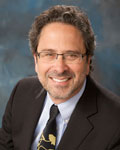
Photo of Richard Bloom
D California Assembly · District 50 · Former member

Asm. Richard Bloom

Compare
Total votes
25,648
all sessions
Attendance
97%
563 missed
Near the chamber average
With party
99%
of cast votes
Near the chamber average
Bipartisan score
0%
crosses aisle rarely
Near the chamber average
Sponsored
1,825
bills & resolutions
Near the chamber average
Committees
0
assignments
1,825 bills and resolutions

Sponsored bills

Total
1,825
Primary
241
Co-sponsor
1,584
This page
1,825
matching current filters
Primary AB 1454
Failed · California Assembly · Lead sponsor
Transportation projects: lease agreements.

Existing law authorizes the Department of Transportation and regional transportation agencies, as defined, to enter into comprehensive development lease agreements with public and private entities, or consortia of those entities, for certain transportation projects that may charge certain users of those projects tolls and user fees, subject to various terms and requirements. Existing law prohibits lease agreements under these provisions on or after January 1, 2017. This bill would state the intent of the Legislature to reestablish the authority under state law to engage in public-private partnerships for projects on the state highway system with appropriate public interest and safety protections.

Failed Feb 1, 2018 0 co-sponsors
Primary AB 1228
Vetoed · California Assembly · Lead sponsor
Marine fisheries: experimental fishing permits.

Existing law, enacted as part of the Marine Life Management Act of 1998, generally establishes a comprehensive plan for the management of marine life resources. Existing law requires the Department of Fish and Wildlife to develop, and submit to the Fish and Game Commission for its approval, a fishery management master plan, and provides for the preparation and approval of fishery management plans, which form the primary basis for managing California's sport and commercial marine fisheries. Existing law declares various state policies with regard to the management of fishery resources. Existing law authorizes the department to issue permits, subject to restrictions and regulations that the department determines are desirable, to take or possess, in any part of the state, for scientific, educational, or propagation purposes, mammals, birds and the nests and eggs thereof, fish, amphibians, reptiles, or any other form of plant or animal life. Existing law requires the commission to encourage the development of new types of commercial fishing gear and new methods of using existing commercial fishing gear by approving permits, known as experimental gear permits, to be issued by the department, consistent with specified policies, for that development or use, subject to certain restrictions. Under existing law, any violation of the Fish and Game Code, or of any rule, regulation, or order made or adopted under the code, is generally a misdemeanor. This bill would authorize the commission to approve experimental fishing permits to be issued by the department for specified purposes that would authorize commercial or recreational marine fishing activity otherwise prohibited by the Fish and Game Code or regulations adopted pursuant to that code, subject to certain requirements, including a requirement that activities conducted under the permit be consistent with specified policies enacted as part of the Marine Life Management Act of 1998 and any applicable fishery management plan and a requirement that the permit be subject to certain commission conditions. The bill would require the commission to post, and annually update, information regarding approved experimental fishing permits, as specified, on its Internet Web site. The bill would require the commission, on or before January 1, 2023, and every 5 years thereafter, to report to the appropriate legislative committees summarizing the benefits of the experimental fishing permit program, as specified. Because a violation of the terms of a permit would be a crime, this bill would impose a state-mandated local program. The California Constitution requires the state to reimburse local agencies and school districts for certain costs mandated by the state. Statutory provisions establish procedures for making that reimbursement. This bill would provide that no reimbursement is required by this act for a specified reason.


Vetoed Jan 12, 2018 0 co-sponsors
Co-sponsor ACR 109
Passed · California Assembly · Co-sponsor
Relative to Red Ribbon Week.

This measure would proclaim the period of October 23, 2017, to October 31, 2017, inclusive, as Red Ribbon Week and would encourage all Californians to help build drug-free communities and to participate in drug prevention activities.

Passed Jan 3, 2018 1 co-sponsor
Co-sponsor SB 31
Signed into law · California Senate · Co-sponsor
California Religious Freedom Act: state agencies: disclosure of religious affiliation information.

Existing law prohibits a state agency from including a question regarding an applicant's race, sex, marital status, or religion in any application form for employment. This bill would prohibit a state or local agency or a public employee acting under color of law from providing or disclosing to the federal government personal information regarding a person's religious beliefs, practices, or affiliation, as specified, when the information is sought for compiling a database of individuals based on religious belief, practice, or affiliation, national origin, or ethnicity for law enforcement or immigration purposes. The bill would also prohibit a state agency from using agency resources to assist with any government program compiling such a database, or from making state databases available in connection with an investigation or enforcement under such a program. The bill would prohibit state and local law enforcement agencies and their employees from collecting personal information on the religious beliefs, practices, or affiliation of any individual, except as part of a targeted investigation, as provided, or where necessary to provide religious accommodations. The bill would also prohibit law enforcement agencies from using agency or department moneys, facilities, property, equipment, or personnel to investigate, enforce, or assist in the investigation or enforcement of any criminal, civil, or administrative violation, or warrant for a violation, of any requirement that individuals register with the federal government or any federal agency based on religion, national origin, or ethnicity. The bill would also terminate, to the extent of any conflict, any existing agreements that make any agency or department information or database available in conflict with these provisions. The bill would not prevent the collection, retention, or disclosure of personal information or documents as required by Federal law or a court order. The bill would provide that an agency or employee would only be deemed to be in violation of its provisions if the agency or employee acted with actual knowledge that the information shared would be used for purposes prohibited by these provisions. This bill would declare that it is to take effect immediately as an urgency statute.

Signed into law Oct 15, 2017 1 co-sponsor
Co-sponsor AB 262
Signed into law · California Assembly · Co-sponsor
Public contracts: bid specifications: Buy Clean California Act.

The State Contract Act governs the bidding and award of public works contracts by specific state departments and requires an awarding department, before entering into any contract for a project, to prepare full, complete, and accurate plans and specifications and estimates of cost. Other existing law establishes specific requirements for competitive bidding for building and improvement projects by the Regents of the University of California, including requiring the regents to prepare plans and specifications before entering into a contract for a project. The California State University Contract Law governs contracting for building and improvement projects by the California State University and imposes specific competitive bidding requirements for the Trustees of the California State University, including requiring the trustees to prepare full, complete, and accurate plans and specifications for a project. This bill, the Buy Clean California Act, would, by January 1, 2019, require the Department of General Services to establish, and publish in the State Contracting Manual, a maximum acceptable global warming potential for each category of eligible materials, in accordance with requirements set out in the bill. The bill, by January 1, 2022, and every 3 years thereafter, would require the department to review the maximum acceptable global warming potential for each category of eligible materials established, and would authorize the department to adjust that number downward for any eligible material to reflect industry improvements, as provided. The bill, for specified types of contracts entered into on or after July 1, 2019, would require an awarding authority to require a successful bidder to submit a current Environmental Product Declaration, developed in accordance with specified standards, for that type of product. The bill would require an awarding authority to include in a specification for a bid for an eligible project, as defined, that the facility-specific global warming potential for any eligible materials does not exceed the maximum global warming potential for that material determined by the department in accordance with the process described above. The bill would also authorize an awarding authority to include in a specification for bids for an eligible project a facility-specific global warming potential for any eligible material that is lower than the maximum global warming potential for that material as determined by the department in accordance with the process described above. The bill would prohibit a successful bidder from installing any eligible materials on an eligible project until that bidder submits an Environmental Product Declaration to the awarding authority for that project. The bill would require an awarding authority, in carrying out its duties under the act, to strive to continuously reduce emissions over time. The bill would define "awarding authority" for these purposes to include state departments and entities subject to the State Contract Act, the Regents of the University of California, and the Trustees of the California State University. The bill, by January 1, 2022, would require the department to submit a report to the Legislature on any obstacles to the implementation of this article, and the effectiveness of this article in reducing global warming potential.

Signed into law Oct 15, 2017 1 co-sponsor
Primary AB 906
Signed into law · California Assembly · Lead sponsor
Beverage containers: polyethylene terephthalate.

Existing law requires that all rigid plastic bottles and rigid plastic containers sold in California be labeled with a code indicating the resin used to produce those bottles or containers. Existing law, among other things, specifies that the number 1 is to be used for bottles or containers that are made of polyethylene terephthalate. Under existing law, it is a crime to manufacture rigid plastic bottles or rigid plastic containers for use in California that are not properly labeled. This bill would, on and after October 1, 2018, define polyethylene terephthalate for the purposes of the labeling requirement as a plastic having certain characteristics, including, among other things, a melting peak temperature, as determined by a specified procedure, within a specified temperature range. Because the mislabeling of a bottle or container made of polyethylene terephthalate that does not meet those physical characteristics would be a crime, this bill would impose a state-mandated local program. The California Constitution requires the state to reimburse local agencies and school districts for certain costs mandated by the state. Statutory provisions establish procedures for making that reimbursement. This bill would provide that no reimbursement is required by this act for a specified reason.
Signed into law Oct 15, 2017 0 co-sponsors
Co-sponsor AB 132
Signed into law · California Assembly · Co-sponsor
Public contracts: 2028 Olympic Games and Paralympic Games.

Existing law provides specified requirements in awarding certain public contracts. This bill would authorize the Governor to execute games support contracts, not to exceed a specified amount, in connection with the site selection process for the City of Los Angeles to become the host for the 2028 Olympic Games and Paralympic Games, that accept financial liability to provide the state security for amounts owed by the Organizing Committee for the Olympic Games (OCOG) , as specified, and for any financial deficit accruing to the OCOG as a result of the hosting of the games by the endorsing municipality, as defined. The bill would establish the Olympic Games Trust Fund in the State Treasury and would, upon appropriation by the Legislature, make the money in the fund available for these purposes, as specified. This bill would make legislative findings and declarations that, among other things, the endorsing municipality has developed a self-sufficient bid for financing the games.

Signed into law Oct 15, 2017 1 co-sponsor
Showing 1,041 to 1,050 of 1,825 bills