

Under existing law, a hunting license grants the privilege to take birds and mammals and is valid from July 1 to June 30 or, if issued after July 1, for the remainder of that term. Existing law requires the Department of Fish and Wildlife to issue various types of hunting licenses, including a discounted hunting license known as a junior hunting license, upon payment of a certain fee from an eligible applicant. Existing law, until July 1, 2020, expands the eligibility for a junior hunting license from persons who are under 16 years of age on July 1 of the licensing year to persons who are under 18 years of age on July 1 of the licensing year, as specified, and makes conforming changes related to that expanded eligibility. This bill would extend, this expanded eligibility, for a junior hunting license indefinitely.
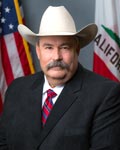
Sponsored bills
Existing law establishes within the Department of Housing and Community Development the California Housing Finance Agency and provides that the primary purpose of the agency is to meet the housing needs of persons and families of low or moderate income. Existing law requires the California Housing Finance Agency administer the Roberti-Greene Home Purchase Assistance Program, to provide home purchase assistance to low- and moderate-income homebuyers to qualify for the purchase of owner-occupied homes. Existing law authorizes the agency, pursuant to specified objectives, to create its own home purchase assistance programs, home purchase assistance products, or both, on terms and conditions as the agency deems prudent. Existing law requires the agency to provide to the Legislature and the Legislative Analyst an annual report containing information concerning all units produced, assisted, or insured using agency funds. This bill would require the Legislative Analyst to conduct a study, and present the findings thereof to the Legislature, to inform the creation of a low-interest loan program for first responders. The bill would require the report to be submitted on or before January 1, 2024. The bill would require the report to include a recommendation as to which state department is best suited to administer the program, an estimation of the amount of funding that would be necessary to conduct the program, and recommendations for qualifications for participation in the program.
Existing law requires the Secretary of State and the Department of Motor Vehicles to establish the California New Motor Voter Program. Under the program, the Department of Motor Vehicles is required to provide to the Secretary of State specified information associated with each person who submits an application for a driver's license or identification card, and additionally to report to the Secretary of State that an applicant has attested that the applicant meets the voter preregistration requirements for a person who is at least 16 years of age and otherwise meets all voter eligibility requirements. The prescribed information submitted by the department to the Secretary of State constitutes a completed or submitted affidavit of registration, and the Secretary is required to register or preregister the person to vote, unless the person affirmatively declines to register to vote during a transaction with the department, the department does not represent to the Secretary of State that the person attested that the person meets all voter eligibility requirements, or the Secretary of State determines that the person is ineligible to vote. This bill would instead require a person to affirmatively agree to become registered or preregistered to vote during a transaction with the department before the Secretary registers or preregisters that person, and it would make other conforming changes.
Existing law, the Mobilehome Residency Law, governs the terms and conditions of residency in mobilehome parks. That law prohibits a homeowner from commencing an action based upon the management's alleged failure to maintain physical improvements in the common facilities in good working order or alleged reduction of service, unless management has been given at least 30 days' prior notice, as provided. Existing law, the Mobilehome Residency Law Protection Act, establishes the Mobilehome Residency Law Protection Program, beginning July 1, 2020, which, among other things, requires the Department of Housing and Community Development to provide assistance in taking complaints, and to help resolve and coordinate the resolution of those complaints, from homeowners relating to the Mobilehome Residency Law. This bill would also prohibit a homeowner from commencing an action based upon the management's alleged failure to maintain the physical improvements in the common facilities in good working order or alleged reduction of service, unless the homeowner and all other eligible complainants have utilized and exhausted all available remedies provided under the act.
Under existing law, the Public Utilities Commission has regulatory authority over public utilities, including telephone corporations. Existing law establishes the California High-Cost Fund-A Administrative Committee Fund, the California High-Cost Fund-B Administrative Committee Fund, the Universal Lifeline Telephone Service Trust Administrative Committee Fund, the Deaf and Disabled Telecommunications Program Administrative Committee Fund, the Payphone Service Providers Committee Fund, the California Teleconnect Fund Administrative Committee Fund, and the California Advanced Services Fund (CASF) in the State Treasury and provides that moneys in the funds are held in trust and may be expended only to accomplish specified telecommunications universal service programs, upon appropriation in the annual Budget Act or upon supplemental appropriation. This bill would prohibit the commission from collecting, for deposit into any universal service fund, any revenues derived from charges upon the provision of a communications service that the Federal Communications Commission has determined is an information service, as specified. Existing law establishes the Public Utilities Commission Utilities Reimbursement Account and authorizes the commission to annually determine a utility reimbursement fee to be paid by every public utility providing service directly to customers or subscribers and subject to the jurisdiction of the commission, except for a railroad corporation. The commission is required to establish the fee, with the approval of the Department of Finance, to produce a total amount equal to that amount established in the authorized commission budget for the same year, and an appropriate reserve to regulate public utilities, less specified sources of funding. This bill would prohibit the commission from imposing a utility reimbursement fee that is applicable to the provision of a communications service that the Federal Communications Commission has determined is an information service, as specified.
This measure would name the public street, circle, and plaza at 914 and 915 Capitol Mall in the City of Sacramento as the Willie L. Brown, Jr. Circle and Plaza. The measure would request the Department of General Services to determine the cost of erecting the appropriate signage commemorating this special designation and, upon receiving donations from nonstate sources, to cover that cost to erect that signage.
Existing law, the California Whistleblower Protection Act, prohibits an employee from interfering with a person's rights to disclose improper activity and be free from reprisal under the act. The act authorizes the California State Auditor to conduct an investigation upon receiving specific information that an employee or state agency has engaged in an improper governmental activity, as defined. The act applies to state agencies, as defined, and to the University of California, the California State University, and courts, as specified. The act requires the auditor to establish a means of submitting allegations of improper governmental activity, and generally requires the California State Auditor to keep confidential every investigation, including all investigative files and work product. Under the act, a person who intentionally engages in acts of reprisal, retaliation, threats, coercion, or similar acts against a state employee or an applicant for state employment for having made a protected disclosure is subject to civil liability and criminal penalties. The act defines a "protected disclosure" to mean, among other things, a good faith communication that discloses information that may evidence an improper governmental activity. The act specifically includes in "protected disclosure" a good faith communication to the California State Auditor's Office alleging an improper governmental activity and any evidence delivered to the California State Auditor's Office in support of the allegation. Under the act, "protected disclosure" also includes, but is not limited to, a complaint made to the Commission on Judicial Performance. This bill would expand the definition of the term "protected disclosure" to include a complaint made to a Member of the Legislature, the Legislature, or any subdivision thereof. Because this bill would expand the definition of a crime, it would impose a state-mandated local program. The California Constitution requires the state to reimburse local agencies and school districts for certain costs mandated by the state. Statutory provisions establish procedures for making that reimbursement. This bill would provide that no reimbursement is required by this act for a specified reason.
Existing law establishes the Department of Corrections and Rehabilitation and charges it with certain duties and powers, including, among other things, the operation of prisons and other specified institutions. This bill would require the department to establish a Peace Officer Peer Support Labor Management Committee tasked with crafting, updating, and monitoring the implementation of a standardized statewide peace officer policy for the department's peer support program to provide substantive assistance to the peace officers employed by the department. The bill would require the committee to be composed of an equal number of representatives of the employer and peace officer employees, and would require the members of the committee to be selected and hold their first meeting on or before July 1, 2020. The bill would require the policy to address, among other things, the selection process and training for peer support team members, and guidelines for the types of communication that would remain confidential within the peer support program. The bill would require the policy to be fully implemented by January 1, 2022. The bill would require the department to submit, beginning July 1, 2020, an annual report to the Legislature that contains data pertaining to the utilization rates of the peace officer peer support program statewide.
Existing law establishes categories of peace officers with varying powers and authority to make arrests and carry firearms. Under existing law, in certain counties, a deputy sheriff, who is employed to perform duties exclusively or initially relating to custodial assignments with responsibilities for maintaining the operations of county custodial facilities, is a peace officer whose authority extends to any place in the state only while engaged in the performance of the duties of the officer's employment and for the purpose of carrying out the primary function of employment relating to the officer's custodial assignments, or when performing other law enforcement duties directed by the officer's employing agency during a local state of emergency. This bill would include a deputy sheriff employed by the County of Del Norte, the County of Mono, or the County of San Mateo within that definition of peace officers.