

Existing law establishes the California Community Colleges, under the administration of the Board of Governors of the California Community Colleges, the California State University, under the administration of the Trustees of the California State University, and the University of California, under the administration of the Regents of the University of California as the 3 segments of public postsecondary education in the state. Existing law establishes the College of the Law, San Francisco, under the governance of the Board of Directors of the College of the Law, San Francisco, within the University of California. This bill would require public postsecondary educational institutions, as defined, as a condition of receiving state financial assistance, to adopt a written policy containing certain provisions, including, among other provisions, a provision prohibiting a supervisor or administrator from providing an official letter of recommendation if the employee is the respondent in a sexual harassment complaint and the employee (1) is determined in a final administrative decision, as defined, to have committed sexual harassment, (2) resigns from their current position before a final administrative decision is made, or (3) enters into a settlement with the public postsecondary educational institution, as specified. The bill would require public postsecondary educational institutions, as a condition of receiving state financial assistance, to adopt a written policy on settlements and informal resolutions of complaints of sexual harassment in cases where the respondent is an employee of the public postsecondary educational institution and would require the written policy to include, among other things, a provision that requires specified approvals for sexual harassment settlement pffers and informal resolutions. By imposing new duties on community college districts, the bill would impose a state-mandated local program. The California Constitution requires the state to reimburse local agencies and school districts for certain costs mandated by the state. Statutory provisions establish procedures for making that reimbursement. This bill would provide that, if the Commission on State Mandates determines that the bill contains costs mandated by the state, reimbursement for those costs shall be made pursuant to the statutory provisions noted above.
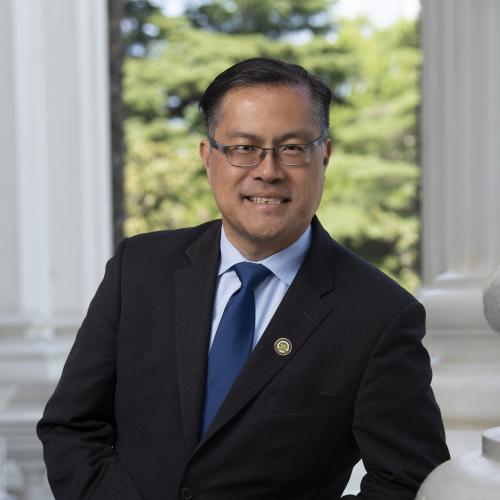
Asm. Mike Fong
Sponsored bills
Existing law establishes the California Racial Mascots Act, which prohibits public schools from using the term Redskins as a school or athletic team name, mascot, or nickname. Existing law requires the Superintendent of Public Instruction to establish and implement a system of complaint processing, known as the Uniform Complaint Procedures, for specified educational programs. This bill would exempt public schools operated by an Indian tribe or a tribal organization from this prohibition. The bill would prohibit, beginning July 1, 2026, public schools, except for public schools operated by an Indian tribe or tribal organization, from using any derogatory Native American term, as defined, as a school or athletic team name, mascot, or nickname, except as provided. The bill would require the Uniform Complaint Procedures to apply to school or athletic team names, mascots, or nicknames pursuant to the bill. To the extent that the bill would impose new duties on public schools, the bill would impose a state-mandated local program. The California Constitution requires the state to reimburse local agencies and school districts for certain costs mandated by the state. Statutory provisions establish procedures for making that reimbursement. This bill would provide that, if the Commission on State Mandates determines that the bill contains costs mandated by the state, reimbursement for those costs shall be made pursuant to the statutory provisions noted above.
Existing law establishes the California Community Colleges, under the administration of the Board of Governors of the California Community Colleges, as one of the segments of public postsecondary education in this state. The board of governors appoints the Chancellor of the California Community Colleges to serve as the chief executive officer of the segment. Existing federal law, known as Title IX, prohibits a person, on the basis of sex, from being excluded from participation in, being denied the benefits of, or being subject to discrimination, which includes sexual harassment, under any education program or activity receiving federal financial assistance. Existing law prohibits a person from being subjected to discrimination on the basis of specified attributes, including, among others, disability or gender, in a program or activity conducted by a postsecondary educational institution that receives, or benefits from, state financial assistance or enrolls students who receive state student financial aid. This bill would require the Chancellor of the California Community Colleges, on or before December 1, 2025, and in consultation with stakeholders, to submit a report to the Legislature with recommendations for establishing systemic campus reforms that effectively prevent, detect, and address sexual harassment on community college campuses, as provided.
Existing law establishes the California State University, under the administration of the Trustees of the California State University, and the University of California, under the administration of the Regents of the University of California, as 2 of the segments of public postsecondary education in the state. Existing federal law, known as Title IX, prohibits a person, on the basis of sex, from being excluded from participation in, being denied the benefits of, or being subject to discrimination, which includes sexual harassment, under any education program or activity receiving federal financial assistance. Existing law prohibits a person from being subjected to discrimination on the basis of specified attributes, including, among others, disability or gender, in a program or activity conducted by a postsecondary educational institution that receives, or benefits from, state financial assistance or enrolls students who receive state student financial aid. This bill would require each California State University campus to establish, and each University of California campus to designate, a Title IX office, as provided. The bill would require each Title IX office to be under the administration of a Title IX coordinator who would be responsible for coordinating the campus' implementation of and compliance with systemwide nondiscrimination policies, as specified. The bill would require each Title IX office, among other things, to ensure, or oversee and ensure, timely and effective responses to reports and complaints of sex discrimination, and to provide a process, or oversee the process, of adjudicating and resolving complaints of sex discrimination, as provided. This bill would also require the California State University to establish, and the University of California to designate, on or before July 1, 2026, a systemwide Office of Civil Rights to be led by a systemwide civil rights officer, as specified. The bill would require the California State University systemwide Office of Civil Rights to establish and adopt, and the University of California systemwide Office of Civil Rights to identify and maintain, a systemwide nondiscrimination policy, and to develop and implement a grievance procedure for sex discrimination complaints in which the respondent is a systemwide employee, a member of the systemwide governing body, or other specified person, as provided. The bill would also require each systemwide Office of Civil Rights to, among other things, provide or oversee specified education and training, establish best practices guidance on sex discrimination prevention and complaint adjudication, and conduct compliance reviews, as specified.
Existing law requires the destruction of certain firearms, in the possession of a law enforcement agency, that have been confiscated, seized, abandoned, unclaimed, or surrendered. This bill would specify that destruction of a firearm means destroying the firearm in its entirety by smelting, shredding, crushing, or cutting all parts of the firearm, including any attachments. The bill would also require every law enforcement agency, as defined, to develop and maintain a written policy regarding the destruction of firearms and shall make that policy available on its internet website. The bill would exempt from the requirements to destroy a weapon pursuant to the bill's provisions law enforcement agencies that have existing contracts prior to November 1, 2024, with another person or entity for the destruction of firearms if the law enforcement agency would have to breach its existing contract with the other person or entity. By requiring local law enforcement agencies to follow specified requirements for destruction and to create and maintain a written policy on firearm destruction, this bill would impose a state-mandated local program. Existing law requires certain officers who possess firearms that were exhibits in a criminal proceeding that were left unclaimed for at least 180 days to destroy the firearm, as specified. This bill would exempt firearms that were stolen or used without the prior knowledge of their lawful owner and that are possessed by a public administrator, public guardian, or public conservator in the performance of their duties as the personal representative of a decedent's estate, or in the performance of the duties of a conservator or guardian over a person or their estate. This bill would incorporate additional changes to Section 18005 of the Penal Code proposed by AB 2739 and AB 2842 to be operative only if this bill and either or both of those bills are enacted and this bill is enacted last. The California Constitution requires the state to reimburse local agencies and school districts for certain costs mandated by the state. Statutory provisions establish procedures for making that reimbursement. This bill would provide that, if the Commission on State Mandates determines that the bill contains costs mandated by the state, reimbursement for those costs shall be made pursuant to the statutory provisions noted above.
Existing law generally regulates the possession of firearms, including imposing storage requirements to prevent children from gaining access to firearms. This bill would, beginning on January 1, 2026, require a person who possesses a firearm in a residence to keep the firearm securely stored when the firearm is not being carried or readily controlled by the person or another lawful authorized user. For purposes of these provisions, a firearm is securely stored if the firearm is maintained within, locked by, or disabled using a certified firearm safety device or secure gun safe that meets specified standards. The bill would make a first and 2nd violation of this offense punishable as an infraction, and a 3rd or subsequent violation punishable as a misdemeanor. The bill would exempt unloaded antique firearms, as defined, or firearms that are permanently inoperable from these provisions. The bill would require the Department of Justice to seek to inform residents about these standards for storage of firearms. By creating a new crime, this bill would impose a state-mandated local program. Existing law makes it a misdemeanor or a felony if a person keeps a firearm within any premises that are under the person's custody or control and the person knows or reasonably should know that a child is likely to gain access to the firearm without the permission of the child's parent or legal guardian, and the child obtains access to the firearm and causes injury, other than great bodily injury, or death or great bodily injury to the child or any other person, or carries that firearm off-premises, as defined, to a public place or a school. Existing law exempts a person from the above provisions if the person has no reasonable expectation, based on objective facts and circumstances, that a child is likely to be present on the premises. This bill would remove these exemptions. The California Constitution requires the state to reimburse local agencies and school districts for certain costs mandated by the state. Statutory provisions establish procedures for making that reimbursement. This bill would provide that no reimbursement is required by this act for a specified reason.
The Horse Racing Law authorizes a thoroughbred racing association or fair to distribute the audiovisual signal and accept wagers on the results of out-of-state thoroughbred races conducted in the United States during the calendar period the association or fair is conducting a race meeting, including days on which there is no live racing being conducted by the association or fair, without the consent of the organization that represents horsemen and horsewomen participating in the race meeting and without regard to the amount of purses. Existing law prohibits the total number of thoroughbred races imported by associations or fairs on a statewide basis under these provisions from exceeding 50 races per day on days when live thoroughbred or fair racing is being conducted in the state, with the exception of prescribed races. This bill would instead prohibit the total number of thoroughbred races imported by associations or fairs on a statewide basis under these provisions from exceeding 75 races per day on days when live thoroughbred or fair racing is being conducted in the state, with the exception of prescribed races. Existing law requires any thoroughbred association or fair accepting wagers on the above-described out-of-state races to conduct the wagering in accordance with certain conditions. Existing law prohibits a thoroughbred association or fair from accepting wagers on the above-described out-of-state races commencing after 7 p.m., Pacific standard time, without the consent of the harness or quarter horse racing association that is then conducting a live racing meeting in the County of Orange or the County of Sacramento. This bill would prohibit, when the total number of thoroughbred races imported by a thoroughbred association or fair on a statewide basis is between 51 and 75 races per day on days when live thoroughbred or fair racing is being conducted in the state, a thoroughbred association or fair from accepting wagers on the above-described out-of-state races commencing after 5 p.m., Pacific standard time, without the consent of the harness and quarter horse racing association that is then conducting a live racing meeting in the County of Orange or the County of Sacramento. This bill would incorporate additional changes to Section 19596.2 of the Business and Professions Code proposed by Assembly Bill 1768 and Assembly Bill 1946, to be operative only if this bill and either or both of those bills are enacted and this bill is enacted last.
Existing law establishes the Student Aid Commission as the primary state agency for the administration of state-authorized student financial aid programs available to students attending all segments of postsecondary education. Existing law requires the commission to appoint a director as the chief executive officer for the commission and authorizes the commission to employ other employees as it deems necessary to carry out its functions. Existing law, the Cal Grant Program, establishes the Cal Grant A Entitlement Awards, the Cal Grant B Entitlement Awards, the California Community College Expanded Entitlement Awards, the California Community College Transfer Entitlement Awards, the Competitive Cal Grant A and B Awards, the Cal Grant C Awards, and the Cal Grant T Awards under the administration of the commission. Existing law also establishes the Middle Class Scholarship Program under the commission's administration. Existing law establishes eligibility requirements for awards under these programs for participating students attending qualifying institutions. The eligibility requirements under these programs, as well as other financial aid programs administered by the commission, include meeting various application deadlines. Existing law authorizes the commission to grant a postponement of an application deadline of up to 30 calendar days for any financial aid program administered by the commission, as specified. This authority applies if the commission receives a formal request to postpone a deadline from a designated educational official and the commission finds that a qualifying event, as defined, has occurred that, in the judgment of the commission, has had an adverse effect on the ability of pupils or students within a school district, community college district, or an area or region within the state, such as a city or county, to successfully complete and submit their financial aid applications by the established application deadline. Existing law requires the formal request to postpone a deadline to be submitted to the commission no later than 10 business days after the conclusion of the qualifying event and requires the commission, upon approval of a formal request, to issue a written notice of the postponement of the deadline within 24 hours. Existing law authorizes the commission, on a permanent basis, to delegate to its elected officers the authority to grant a deadline postponement, as specified. This bill would instead require the commission to grant a postponement of an application deadline for financial aid programs administered by the commission pursuant to a formal request, as described above, and would authorize the commission to grant, without submission of a formal request, a deadline postponement for certain qualifying events, as provided. The bill would instead authorize the commission, on a permanent basis, to delegate the authority to grant a deadline postponement to the director of the commission. The bill would extend the 10-day timeline for submission of a formal request to 15 days, extend the 24-hour timeline for the commission to issue a written notice of a deadline postponement to 48 hours, and would require commission staff to annually report to specified persons and entities certain information related to deadline postponements.
Existing law establishes the California Community Colleges Economic and Workforce Development Program to, among other things, advance California's economic growth and global competitiveness through education, training, and services that contribute to continuous workforce improvement. Existing law authorizes the Board of Governors of the California Community Colleges to award grants and project funds to community college districts for the program, as specified. Existing law requires the program to be implemented only during those fiscal years for which funds are appropriated for its purposes. Existing law repeals the program on January 1, 2025. This bill would extend the operation of the California Community Colleges Economic and Workforce Development Program by 5 years to January 1, 2030.
Existing law authorizes a community college district to adopt a merit system that establishes how to employ, pay, and otherwise control the services of classified employees of the community college district. Existing law requires a community college district that adopts a merit system to appoint a personnel commission and requires the commission to classify all employees and positions within the jurisdiction of the governing board of the community college district or of the commission. Existing law exempts certain positions and employees from the classified service, including part-time students employed part time in a college work-study program or in a work experience education program conducted by a community college that is financed by state or federal funds. Under existing law, any person who willfully or through culpable negligence violates certain provisions that apply to community college district merit systems is guilty of a misdemeanor. This bill would additionally exempt from the classified service part-time students employed part time as student-tutors by their community college district of enrollment. Because a violation of the bill would be a crime, the bill would impose a state-mandated local program. The California Constitution requires the state to reimburse local agencies and school districts for certain costs mandated by the state. Statutory provisions establish procedures for making that reimbursement. This bill would provide that no reimbursement is required by this act for a specified reason.