

The Donahoe Higher Education Act sets forth the missions and functions of the public institutions of higher education, including the University of California, administered by the Regents of the University of California, the California State University, administered by the Trustees of the California State University, and the California Community Colleges, administered by the Board of Governors of the California Community Colleges. The provisions of the Donahoe Higher Education Act apply to the University of California only to the extent that the Regents of the University of California, by appropriate resolution, make them applicable. This bill would prohibit the University of California, California State University, or California Community Colleges from disqualifying a student from being hired for an employment position due to the student's failure to provide proof of federal work authorization, except where that proof is required by federal law or where that proof is required as a condition of a grant that funds the particular employment position for which the student has applied. This bill would require the University of California, the California State University, and the California Community Colleges to treat a specified prohibition in federal law on hiring undocumented noncitizens as inapplicable because that provision does not apply to any branch of state government. The bill would further provide that, to the extent student employment is considered a "benefit" for purposes of federal law, the bill constitutes authorization to provide that benefit for purposes of specified federal law. This bill would require the University of California, the California State University, and the California Community Colleges to implement the bill by January 6, 2025. The bill's provisions would apply to the University of California, unless it is found inapplicable to the University of California and then only to the extent that the Regents of the University of California, by appropriate resolution, make them applicable. By imposing new duties on community college districts, the bill would impose a state-mandated local program. The California Constitution requires the state to reimburse local agencies and school districts for certain costs mandated by the state. Statutory provisions establish procedures for making that reimbursement. This bill would provide that, if the Commission on State Mandates determines that the bill contains costs mandated by the state, reimbursement for those costs shall be made pursuant to the statutory provisions noted above.
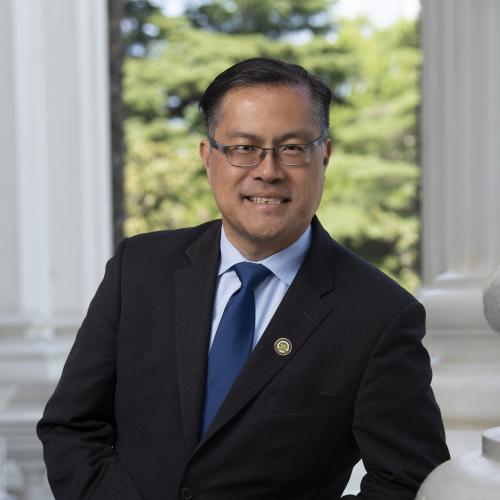
Asm. Mike Fong
Sponsored bills
Existing law authorizes the governing board of a community college district to grant without charge, except as otherwise provided, the use of any college facilities or grounds under its control, when an alternative location is not available, to nonprofit organizations and clubs and associations organized for athletic activities for youth, charitable purposes, educational purposes, or the civic well-being of the community. Existing law authorizes the governing board of a community college district to charge an amount not to exceed its direct costs or not to exceed the fair rental value of college facilities and grounds under its control for activities other than those described above, as specified. Until January 1, 2025, existing law describes "direct costs" as including (1) the share of the costs of supplies, utilities, janitorial services, services of any other community college district employees, and salaries paid to community college district employees to operate and maintain college facilities or grounds that is proportional to the organization's use of the college facilities and grounds, and (2) the share of the costs for maintenance, repair, restoration, and refurbishment, proportional to the use of the college facilities or grounds by the organization, except for certain programs and organizations. Commencing January 1, 2025, existing law describes "direct costs" as including the costs of supplies, utilities, janitorial services, services of any other community college district employees, and salaries paid to community college district employees necessitated by the organization's use of the college facilities and grounds. This bill would extend those dates by 5 years.
(1) Existing law establishes priorities and procedures that any state agency disposing of surplus residential property is required to follow, including specified procedures for the sale of specified property in the City of Pasadena and the City of South Pasadena. Under existing law, a state agency disposing of surplus residential property in the City of Pasadena is required to first offer the property to former owners and present occupants, as specified, then to specified present tenants at fair market value, and then, if not occupied by tenants, to the city, subject to terms and conditions that include the use of proceeds generated from the subsequent sale of unoccupied homes to finance the production or acquisition of affordable housing units, as prescribed. Existing law also requires, if the City of Pasadena does not resell a surplus residential property within 2 years of closure of the sale, that the property be used as affordable housing pursuant to prescribed provisions of existing law applicable to the City of South Pasadena. Existing law requires the City of Pasadena to commence construction or complete acquisition of all affordable units numbering at least 3 times the total number of unoccupied homes acquired by the city by December 31, 2026. After the foregoing order of offers, existing law requires the property in the City of Pasadena to be offered in accordance with specified generally applicable existing law. Existing law requires the Department of Transportation, before selling unimproved property within the State Route 710 corridor (SR710 corridor) in the City of Pasadena, to offer to sell the property to a housing-related entity for affordable housing purposes, pursuant to specified terms and conditions, but at the price paid by the department for original acquisition. Similar provisions govern a state agency disposing of surplus residential property in the City of South Pasadena. Existing law specific to the City of South Pasadena requires that a property within the City of South Pasadena that has a historic home not occupied by tenants be offered to the city, as prescribed. Existing law specific to the City of South Pasadena on the order of offers then requires that surplus residential property be offered to the City of South Pasadena, as a housing-related entity, and then to another housing-related entity, subject to prescribed terms and conditions, including the property's use as affordable housing. This bill would revise the City of South Pasadena provisions to more closely parallel the City of Pasadena provisions. The bill, in the case of the City of South Pasadena, would add to the terms and conditions for the use of property for affordable housing by the City of South Pasadena the requirements that any parcel used for the development of specified affordable units be granted streamlined ministerial approval and that such parcels be exempt from any initiative or other measure that may preclude achieving maximum densities, including, but not limited to, any height restriction requirements. The bill would make related findings. The bill would require the City of South Pasadena to commence construction or complete acquisition of all affordable units numbering at least 3 times the total number of unoccupied homes acquired by the city by July 1, 2028. This bill would require, for both cities, that if a surplus residential property purchased by a housing-related public entity is not resold as provided, that the property be used as affordable housing, subject to prescribed requirements. The bill, with regard to the SR710 corridor unimproved properties, would require the department to offer to sell the property to the City of Pasadena or the City of South Pasadena as a housing-related entity for affordable housing purposes, and then to another housing-related entity, pursuant to prescribed terms and conditions. This bill, by imposing new requirements on the City of Pasadena and the City of South Pasadena, would impose a state-mandated local program. (2) Existing law, known as the Administrative Procedure Act, governs the procedures for the adoption, amendment, or repeal of regulations by state agencies and for the review of those regulatory actions by the Office of Administrative Law. Under existing law, a regulation, amendment, or repeal adopted as an emergency regulatory action may only remain in effect for up to 180 days, unless the adopting agency complies with specified requirements relating to notice of regulatory action and public comment. Existing law required the Department of Transportation to file and adopt emergency regulations for specified provisions of law relating to surplus residential property along the SR 710 corridor and authorized those emergency regulations to remain in effect until specified dates, notwithstanding the 180-day limit for emergency regulations. This bill would, notwithstanding the 180-day limit for emergency regulations and for any of those emergency regulations in effect on September 15, 2024, extend the effective date of those emergency regulations to January 31, 2026, or until permanent regulations are adopted. The bill would also, notwithstanding the 180-day limit for emergency regulations, provide that any necessary emergency regulations adopted by the department to implement the bill shall remain in effect until January 31, 2026, or until new emergency regulations are adopted. (3) This bill would also make conforming changes. (4) This bill would make findings regarding the public purpose served by the bill. (5) This bill would make legislative findings and declarations as to the necessity of a special statute for the City of Pasadena and the City of South Pasadena. (6) The California Constitution requires the state to reimburse local agencies and school districts for certain costs mandated by the state. Statutory provisions establish procedures for making that reimbursement. This bill would provide that no reimbursement is required by this act for a specified reason. (7) This bill would declare that it is to take effect immediately as an urgency statute.
Existing law establishes the Office of Vital Records within the State Department of Public Health. Existing law prescribes the duties of the State Registrar of Vital Statistics (State Registrar) and local registrars of births and deaths with respect to the registration of certificates of live birth, fetal death, or death, and marriage licenses. Existing law prescribes the information to be listed on a certificate of live birth. Existing law requires the State Registrar, upon request and payment of a fee, as specified, to provide an applicant a decorative heirloom certificate of any birth registered to that official, containing only identification information and the seal of the State of California and a facsimile of the State Registrar's signature. This bill would require the State Registrar to, upon request and payment of a fee, provide an applicant a decorative Asian Zodiac heirloom certificate, as specified. The bill would require the decorative Asian Zodiac heirloom certificate to be of a distinctive design as determined by the department to include Asian Zodiac artwork by local artists, the seal of the State of California, and a facsimile of the State Registrar's signature. The bill would require the certificate to contain only identification information, as determined by the State Registrar. The bill would require the department to set the fee for the decorative Asian Zodiac heirloom certificate to capture the reasonable costs of developing, preparing, and providing the decorative Asian Zodiac heirloom certificate. The bill would require the moneys collected by the State Registrar to be deposited with the Treasurer for credit to the Health Statistics Special Fund. The bill would specify that, upon appropriation, the moneys in the fund may be used by the department for the administrative costs of developing, preparing, and providing the decorative Asian Zodiac heirloom certificate, including payment of local artists.
Existing law, commonly known as the code of ethics, prohibits a Member of the Legislature, state elective or appointive officer, or judge or justice from having any interest, engaging in any business, transaction, or professional activity, or incurring any obligation that is in substantial conflict with the proper discharge of their duties in the public interest and of their responsibilities, as specified. Existing law, the Political Reform Act of 1974, provides for the comprehensive regulation of campaign financing, including requiring the reporting of campaign contributions and expenditures, and regulates the making of gifts to public officials. Existing law, the State Civil Service Act, creates the Department of Human Resources and grants to the department the powers, duties, and authority necessary to operate the state civil service system. Existing law requires that a California Science and Technology Policy Fellow provided by the California Council on Science and Technology (CCST) be selected according to criteria, and pursuant to a process, approved by the Senate Committee on Rules, the Assembly Committee on Rules, or the Joint Committee on Rules and requires the CCST to execute an agreement for a policy fellow to be bound to abide by standards of conduct, economic interest disclosure requisites, and other requirements specified by the Senate Committee on Rules, the Assembly Committee on Rules, or the Joint Committee on Rules, to be considered duly authorized by those rules committees. Under existing law, for purposes of the code of ethics, the services of a duly authorized policy fellow provided by the CCST are not compensation, a reward, or a gift to a Member of the Legislature and are not an interest, business, transaction, professional activity, or obligation of a Member of the Legislature, state elective or appointive officer, judge, or justice that is in substantial conflict with the proper discharge of their duties in the public interest or of their responsibilities, and a policy fellow is not an employee of either house of the Legislature. Existing law also provides that the services of a duly authorized policy fellow are not a gift for purposes of the Political Reform Act of 1974 and not compensation of a state elective or appointive officer, and the policy fellow is not included in "state civil service" for the purposes of the State Civil Service Act, as specified. The bill would provide that the services of a policy fellow provided by an association, as defined, are not compensation, a reward, a gift, an interest, a business, a transaction, a professional activity, or an obligation, and a policy fellow is not an employee of the Legislature or included in the state civil service, similar to the above-described provisions that apply to a California Science and Technology Policy Fellow provided by the CCST. The bill would state that these provisions are declaratory of existing law.
This measure would, among other things, urge the United States Congress and President Joseph R. Biden to fully fund the United States Environmental Protection Agency's Comprehensive Infrastructure Solution for the Tijuana River due to the ongoing impacts to public health, the environment, and the local economy caused by cross-border pollution and would urge President Joseph R. Biden to declare a national emergency due to those ongoing impacts.
This measure would urge the Congress of the United States to repeal the state and local tax deduction limitation so that residents of California and married taxpayers are no longer penalized by the federal tax code.
Maddy summaryAssembly Concurrent Resolution 120 designates January 2024 as Positive Parenting Awareness Month in California. This measure does not change laws or allocate funding but instead encourages state agencies, communities, and organizations to focus on the importance of positive parenting strategies. The resolution highlights how supportive family environments can improve children's health and well-being while acknowledging the diverse forms families take in the state. It serves as a formal acknowledgment of existing programs and resources rather than creating new mandates or policies.
This measure would proclaim September 20, 2024, and September 20 of each year thereafter, as California Youth Climate Action Day to honor and support the efforts of young people in their pursuit of environmental sustainability, climate justice, and the preservation of biodiversity.
Maddy summaryThis bill officially designates the week of January 26 through February 2, 2024, as CalEITC Awareness Week to highlight the California Earned Income Tax Credit program. The measure aims to increase public knowledge about this refundable tax credit, which assists low-income working families in meeting basic needs like housing, food, and health care. By drawing attention to the program, the resolution seeks to inform residents that the credit is available to many households, including those led by non-citizens and families with young children. The text includes findings on poverty levels and the economic benefits of the credit but does not change any laws or funding.