

Existing law authorizes the governing board of a community college district to enter into a College and Career Access Pathways (CCAP) partnership with the governing board of a school district, a county office of education, or the governing body of a charter school for the purpose of offering or expanding dual enrollment opportunities for pupils who may not already be college bound or who are underrepresented in higher education, as provided. Existing law requires the partnership agreement to outline the terms of the partnership, as specified, and to establish protocols for information sharing, joint facilities use, and parental consent for high school pupils to enroll in community college courses. Existing law requires the protocols to only require a high school pupil participating in a CCAP partnership to submit one parental consent form and principal recommendation for the duration of the pupil's participation in the CCAP partnership. This bill would revise the CCAP partnership provisions to eliminate the requirement that the protocols require principal recommendation. Existing law requires the Chancellor of the California Community Colleges to revise the special part-time student application process to allow a pupil to complete one application for the duration of the pupil's attendance at a community college as a special part-time student participating in a CCAP partnership agreement. This bill would require a CCAP partnership agreement to also establish protocols that authorize a pupil to complete one application for the duration of the pupil's attendance at a community college as a special part-time student participating in a CCAP partnership agreement. Existing law authorizes a community college district to allow a special part-time student participating in a CCAP partnership agreement to enroll in up to a maximum of 15 units per term in courses offered at the community college campus or the participating high school campus if certain circumstances are satisfied, including that the units constitute no more than 4 community college courses per term. This bill would eliminate the 4 community college courses per term limit for a special part-time student enrolling in up to 15 units under a CCAP partnership agreement. Existing law requires, for each CCAP partnership agreement, the affected community college district and school district, county office of education, or charter school to annually report specified information to the office of the Chancellor of the California Community Colleges, including the total number of community college courses, by course category and type and by schoolsite, enrolled in by CCAP partnership participants. This bill instead would require the affected community college district and school district, county office of education, or charter school to annually report the total number of high school pupils who successfully completed 12 or more units of college coursework by graduation, completed a certificate, or completed the courses required for an associate degree or an associate degree for transfer.
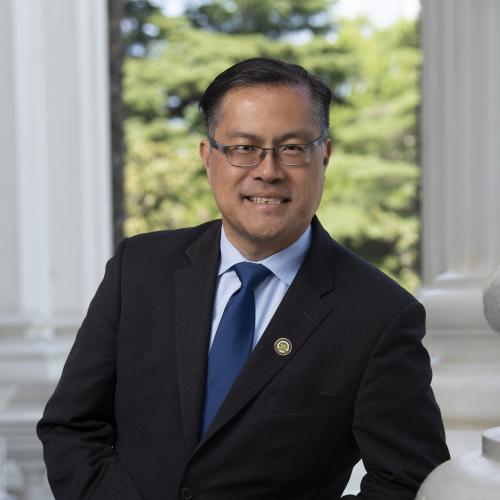
Asm. Mike Fong
Sponsored bills
This measure would call on members of the United States Congress to oppose reductions to funding that negatively impact educational services for students with disabilities and would call on the President of the United States and Congress to ensure that services and funding for students with disabilities are uninterrupted.
This measure would recognize February 2025 as Black History Month, urge all citizens to join in celebrating the accomplishments of African Americans during Black History Month, and encourage the people of California to recognize the many talents of African Americans and the achievements and contributions they make to their communities to create equity and equality for education, economics, and social justice. The measure would also recognize the significance in protecting citizens' right to vote and remedying racial discrimination in voting.
Maddy summaryThis is a ceremonial resolution (not a law) designating August 15, 2025, as "Cantonese Culture Day" in California. It recognizes the cultural significance of Cantonese language and heritage, highlighting its global reach (100 million speakers), historical contributions of Cantonese communities to California (including the Gold Rush, railroad, and agriculture), and notable figures like Wong Kim Ark. The resolution has no legal effect or funding provisions - it serves solely to honor and celebrate Cantonese cultural contributions within the state.
Maddy summaryThis is a commemorative resolution, not a bill with policy changes. It recognizes key historical milestones of transgender people in California, including Indigenous gender diversity documented in 1775, 19th-century transgender figures in San Francisco's Tenderloin, early activism like the 1959 Cooper Do-nuts Riot, and legal precedents such as Sir Lady Java's 1967 employment discrimination case. The resolution has no binding effect and does not create new laws or directly affect any individuals or groups. It serves solely to honor these historical contributions.
Maddy summaryThis House Resolution designates September as "Student Parent Month" in California. It recognizes the approximately 400,000 student parents across the state - over half a million children - and aims to raise awareness of their needs. The resolution does not create new policies or funding but encourages colleges, policymakers, and communities to honor student parents and support their educational success. It follows California’s prior legislative actions (like AB 2881 and AB 2458) that established concrete support mechanisms for student parents.
Maddy summaryThis resolution designates August 2025 as "Chicano Heritage Month" in California. It symbolically recognizes the historical contributions of Chicanos/Chicanas to U.S. society, including their role in cultural, educational, and political movements. The resolution encourages all Californians to acknowledge and celebrate this heritage, without creating new programs, funding, or legal requirements. It directly affects the public by promoting awareness of this cultural identity, aligning with similar declarations like Santa Ana's 2021 adoption. The resolution was unanimously passed by the California Assembly on August 25, 2025.
Maddy summaryThis is a ceremonial House Resolution (not a bill), designating August 2, 2025, as California Disc Golf Day and the month of August 2025 as California Disc Golf Month. It recognizes disc golf's historical origins in California and its community benefits, including physical activity and mental well-being. The resolution has no policy impact, funding requirements, or direct effect on any individuals or organizations. It serves solely as a symbolic acknowledgment of the sport's popularity.
Maddy summaryHouse Resolution 50 designates November 25, 2025, as "Elimination of Violence Against Women Day" in California. It also recognizes the International Day for the Elimination of Violence Against Women on that date and urges policymakers to advance year-round efforts to prevent and eliminate violence against women and girls. This resolution does not create new laws or funding but serves as a symbolic statement of commitment from the California State Assembly. It directly affects the state government and policymakers by formally acknowledging the issue and encouraging ongoing action.
The California Constitution establishes the Citizens Redistricting Commission, which is required to adjust the boundary lines of congressional, Senate, Assembly, and State Board of Equalization districts in the year following the year in which the national census is taken at the beginning of each decade. This measure, which would include a legislative finding that it is in response to redistricting in Texas in 2025, would, notwithstanding the authority of the Citizens Redistricting Commission, require the state to temporarily use the congressional districts reflected in AB 604 of the 2025–26 Regular Session for every congressional election until the new congressional boundary lines are drawn by the commission in 2031.