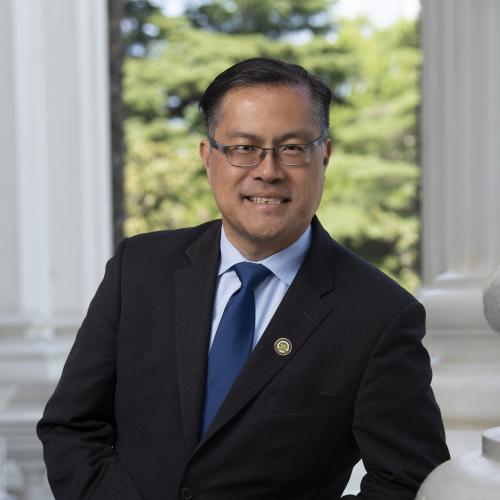
This measure would recognize May 2025 as Head Start Month and call on the Congress and the President of the United States to protect and increase funding for Head Start.
Asm. Mike Fong
Sponsored bills
This measure would call on the state's Representatives in Congress to support legislation to repeal all of the provisions of the federal One Big Beautiful Bill Act that adversely affect Social Security, Medicare, and Medicaid programs, to oppose privatization of these programs, and to protect and improve these programs, and would call on the President of the United States to immediately restore program staffing levels, to work with Congress to protect and improve these programs, and to disavow any efforts to privatize Social Security.
Maddy summaryACR 83 designates May 22, 2025, as California Maritime Day. This symbolic resolution does not create new laws or impose obligations but serves to recognize and honor California's maritime industry and its historical significance. It has no direct impact on individuals, businesses, or policy implementation. The measure is purely commemorative and aligns with the state's tradition of acknowledging key sectors through designated days.
Maddy summaryACR 103 designates the week of July 14-18, 2025, as "California Western Monarch Protection Week." The bill is purely ceremonial, recognizing efforts to protect monarch butterflies in California. It does not create new laws, funding, or obligations. The measure serves to raise public awareness about monarch conservation during that specific week.
Maddy summaryHR 67 designates November 9 as "All California Day" to celebrate California's shared history and cultural ties with Baja California and Baja California Sur. The resolution encourages community events and cultural celebrations across the state to honor this interconnected heritage, including contributions from Indigenous peoples and Mexican heritage communities. As a ceremonial resolution (not a binding law), it has no direct regulatory or financial impact on any specific group or policy. The measure was adopted by the California Assembly on September 4, 2025.
Maddy summaryThis House Resolution (HR 58) declares October 2025 as "California Promotoras Month" to formally recognize the work of promotoras - community health workers who serve as cultural brokers and connect underserved communities (particularly Latino populations) to essential services like health, housing, and disaster response. It acknowledges their role in improving community resilience and access to resources, while highlighting the need for better support, training, and equitable compensation for this workforce. The resolution is symbolic and does not create new laws, funding, or programs; it solely aims to raise awareness and honor promotoras' contributions through a designated month of recognition.
Maddy summaryThis is a symbolic resolution, not a substantive bill. It designates September 7-13, 2025, as "Direct Support Professional Recognition Week" in California. The resolution acknowledges direct support professionals who assist Californians with intellectual and developmental disabilities (IDD) through the state's Lanterman Act system, which serves over 450,000 residents. It formally recognizes their role in enabling community inclusion and independence but does not create new policies, funding, or legal obligations.
Maddy summaryThis symbolic resolution recognizes September 20, 2025, as National Fried Rice Day in California, highlighting the dish's cultural significance to Asian American communities and its connection to California's rice-growing economy (noting the state's status as the second-largest rice producer). It has no legal effect or policy changes - it serves solely to celebrate culinary traditions and community diversity. The resolution was adopted by the California Assembly with no opposing votes.
Maddy summaryThis House Resolution designates a month as Filipino American History Month in California. It recognizes the historical contributions of Filipino Americans to the state, including early settlement (dating to 1587), agricultural labor, community building (such as "Little Manila" in Stockton), and military service during World War II. As a symbolic resolution, it does not create new laws, policies, or direct effects on any specific group.
(1) Existing federal law requires a postsecondary educational institution that offers distance education to students located in a state in which the postsecondary educational institution is not physically located to meet any of that state's requirements for it to offer distance education in that state. Existing federal law authorizes a state to participate in an interstate reciprocity agreement to comply with this requirement. This bill would authorize the Governor, on or before January 1, 2028, to enter into one or more interstate reciprocity agreements for distance education through a compact on behalf of the state upon issuing certain written findings and after certain committees of the Legislature hold a joint hearing on the agreement, as provided. This bill would require the Governor to designate a state agency, department, or office for the implementation of an interstate reciprocity agreement for distance education if the Governor enters into such an agreement, as provided. The bill would authorize postsecondary educational institutions to apply to the designated entity for approval to operate under an interstate reciprocity agreement, as specified. (2) The California Private Postsecondary Education Act of 2009 provides, among other things, for student protections and regulatory oversight of private postsecondary institutions in the state. The act is enforced by the Bureau for Private Postsecondary Education within the Department of Consumer Affairs. The act requires an out-of-state private postsecondary educational institution to register with the bureau, pay a fee, and comply with additional delineated requirements. Existing law provides exemptions from the act for, among others, accredited, degree-granting, nonprofit, higher education institutions and degree-granting public higher education institutions. If the Governor enters into an interstate reciprocity agreement, this bill would subject any accredited, degree-granting, nonprofit, higher education institutions and degree-granting public higher education institutions to the act unless the entity is approved pursuant to an interstate reciprocity agreement.