

Existing law designates specific days as holidays in this state. Existing law designates holidays on which community colleges and public schools are authorized to close pursuant to a memorandum of understanding between the governing board and represented employees, including "Native American Day" on the 4th Friday in September. Existing law entitles state employees, with specified exceptions, and authorizes certain community college and public school employees, to be given time off with pay for specified holidays, as specified. This bill would add "Diwali" to the list of state holidays. The bill would authorize community colleges and public schools to close on "Diwali," as specified. The bill would authorize state employees to elect to take, and would authorize certain community college and public school employees to be given, time off with pay in recognition of "Diwali," as specified. The bill would authorize public schools and educational institutions throughout the state to include exercises acknowledging and celebrating the meaning and importance of Diwali, as specified. Existing law adopts state holidays as judicial holidays, with certain exceptions, including Admission Day and Columbus Day. This bill would add "Diwali" to the list of holidays that are excluded from designation as a judicial holiday. This bill would make related findings and declarations.
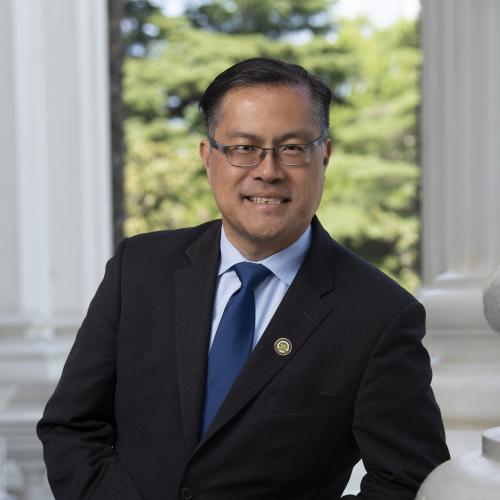
Asm. Mike Fong
Sponsored bills
(1) Existing law, the Ralph M. Brown Act, requires, with specified exceptions, that all meetings of a legislative body, as defined, of a local agency be open and public and that all persons be permitted to attend and participate. This bill would, beginning July 1, 2026, and until January 1, 2030, require an eligible legislative body, as defined, to comply with additional meeting requirements, including that, except as specified, all open and public meetings include an opportunity for members of the public to attend via a 2-way telephonic service or a 2-way audiovisual platform, as defined, and that the eligible legislative body take specified actions to encourage residents to participate in public meetings, as specified. The bill would require an eligible legislative body, on or before July 1, 2026, to approve at a noticed public meeting in open session a policy regarding disruption of telephonic or internet services occurring during meetings subject to these provisions, as specified, and would require the eligible legislative body to comply with certain requirements relating to disruption, including for certain disruptions, recessing the open session for at least one hour and making a good faith attempt to restore the service, as specified. (2) Existing law prohibits a majority of the members of a legislative body, outside a meeting authorized by the act, from using a series of communications of any kind to discuss, deliberate, or take action on any item of business that is within the subject matter jurisdiction of the legislative body. Existing law defines "meetings" for these purposes to mean any congregation of a majority of the members of a legislative body at the same time and location, as specified, to hear, discuss, deliberate, or take action on any item that is within the subject matter jurisdiction of the legislative body. Until January 1, 2026, existing law excepts from the prohibition a member engaging in separate conversations or communications outside of a meeting with any other person using an internet-based social media platform for specified purposes, provided, among other things, that a majority of the members do not use the internet-based social media platform to discuss among themselves business of a specific nature that is within the subject matter jurisdiction of the legislative body. This bill would make the above-described exception related to communications on an internet-based social media platform applicable indefinitely. (3) Existing law requires a legislative body, prior to taking final action, to orally report a summary of a recommendation for a final action on specified forms of compensation for a local agency executive, as defined, during the open meeting in which the final action is to be taken. This bill would also require the legislative body to make that oral report, as provided above, prior to taking final action on those specified forms of compensation for a department head or other similar administrative officer of the local agency. (4) Existing law requires a legislative body of a local agency or its designee, at least 72 hours before a regular meeting, to post an agenda that meets specified requirements, including that the agenda contain a brief general description of each item of business to be transacted or discussed at the meeting, as specified. This bill would, beginning July 1, 2026, and until July 1, 2030, require the agenda for each meeting of an eligible legislative body, as defined, to be translated into all applicable languages. The bill would define "applicable languages" to mean languages, according to data from the most recent American Community Survey, spoken jointly by 20% or more of the applicable population, as specified, provided that 20% or more of the population that speaks that language that in that city or county speaks English less than "very well," as specified, and except as provided. Existing law requires every agenda for regular meetings to provide an opportunity for members of the public to directly address the legislative body on any item of interest of the public, as specified. Existing law specifies that the agenda is not required to provide an opportunity for members of the public to address the legislative body on any item that has already been considered by a committee, as specified, except if the item has been substantially changed since the committee heard the item, as determined by the legislative body. This bill would add certain exceptions to the provision related to an item that has already been considered by a committee, including excepting committees whose primary subject matter jurisdiction focuses on elections, budgets, police oversight, privacy, removing from, or restricting access to, materials available in public libraries, or taxes or related spending proposals, except as specified. (5) Existing law authorizes a legislative body of a local agency to require a copy of the act to be given to each member of the legislative body and specified persons elected to serve as a member of the legislative body, and authorizes an elected legislative body member to require a copy to be given to each member of each legislative body all or a majority of whose members are appointed by or under the authority of the elected legislative body. This bill would instead require a local agency to provide a copy of the act to any person elected or appointed to serve as a member of a legislative body of the local agency. Existing law authorizes legislative bodies of local agencies to impose requirements upon themselves which allow greater access to their meetings than prescribed by the minimal standards set forth in the act, and authorizes an elected legislative body of a local agency to also impose those requirements on those appointed legislative bodies of the local agency of which all or a majority of the members are appointed by or under the authority of the elected legislative body. This bill would remove the above-described requirement that members of an appointed legislative body of a local agency must be appointed by or under the authority of the elected legislative body of a local agency in order for the elected legislative body to impose the above-described requirements on the appointed legislative body. (6) Existing law provides any person attending an open and public meeting of a legislative body of a local agency with the right to record the proceedings with an audio or visual recorder or a still or motion picture camera, as specified. This bill would remove the reference to an audio or visual recorder or a still or motion picture camera for purposes of recording the proceedings, as described above. (7) Existing law authorizes a legislative body of a local agency to use teleconferencing, as specified, and requires a legislative body of a local agency that elects to use teleconferencing to comply with specified general requirements, including that the local agency post agendas at all teleconference locations, identify each teleconference location in the notice and agenda of the meeting or proceeding, and have each teleconference location be accessible to the public. Existing law also requires that, during the teleconference, at least a quorum of the members of the legislative body participate from locations within the boundaries of the territory over which the local agency exercises jurisdiction, except as specified. Existing law authorizes members who are outside the jurisdiction of a health authority, as defined, that conducts a teleconferencing meeting to, notwithstanding the above-described general teleconference provisions, count towards the establishment of a quorum when participating in the teleconference if, among other things, at least 50% of the number of members that would establish a quorum are present within the boundaries of the territory over which the authority exercises jurisdiction. Existing law authorizes, in certain circumstances, the legislative body of a local agency to use specified alternative teleconferencing which include provisions related to, among others, notice of the means by which members of the public may access the meeting and offer public comment and identifying and including an opportunity for all persons to attend via a call-in option or an internet-based service option. Those circumstances in which the legislative body of a local agency is authorized to use the alternative teleconferencing provisions include specified circumstances relating to a state of emergency, as defined, and, until January 1, 2026, subject to specified limitations, a member's need to participate remotely due to just cause, defined to include, among other things, a need related to a physical or mental disability, or emergency circumstances, as defined, if certain quorum and disclosure requirements are met. Existing law also authorizes certain eligible legislative bodies, including neighborhood councils and student body associations and student-run community college organizations to, until January 1, 2026, use alternate teleconferencing if, among other requirements, the city council or board of trustees, as applicable, has adopted an authorizing resolution and 23 of the neighborhood city council or specified student organization, as applicable, votes to use alternate teleconference provisions, as specified. This bill would revise and recast the above-specified teleconferencing and alternative teleconferencing provisions to uniformly apply certain noticing, disclosure, accessibility, and public commenting provisions. The bill would require a legislative body of a local agency that elects to use teleconferencing pursuant to these alternative teleconferencing provisions to comply with, in addition to any other applicable requirements under the act, specified requirements, including that the legislative body provides at least either 2-way audiovisual platform or 2-way telephonic service and a live webcasting of the meeting as a means by which the public may, among other things, remotely hear and visually observe the meeting, and that a member of the legislative body who participates in a teleconference meeting from a remote location pursuant to these alternative teleconferencing provisions and the specific provision of law that the member relied upon to permit their participation by teleconferencing are listed in the minutes of the meeting. The bill would require a local agency to identify and make available to legislative bodies a list of one or more meeting locations that may be available for use by the legislative bodies to conduct their meetings. The bill would specify that nothing in the bill's provisions is to be construed to prohibit a member of a legislative body with a disability, as defined, from participating in any meeting of the legislative body by remote participation as a reasonable accommodation pursuant to any applicable law. The bill would apply certain provisions relative to, among other things, quorum establishment to that circumstance. The bill would instead authorize a health authority, as defined, to conduct a teleconference meeting pursuant to the above-described alternative teleconferencing provisions. The bill would revise and recast the alternative teleconferencing provisions applicable in a state of emergency, as defined. The bill would also include a local emergency, as defined, as a circumstance in which a legislative body of a local agency is authorized to use the alternative teleconferencing provisions. The bill would revise and recast the alternative teleconferencing provisions applicable in cases of a member's need to participate remotely due to just cause or emergency circumstances, as defined, to remove the provision applicable to emergency circumstances, to revise related definitions, including broadening the definition of just cause to include, among other things, a physical or family medical emergency that prevents a member from attending in person, and to require the minutes for a meeting to identify the specific provision of law that each member relied upon to participate remotely, as specified. The bill would extend the authorization to use the alternative teleconferencing provision until January 1, 2030. The bill would revise and recast the alternative teleconferencing provisions applicable to neighborhood councils and student body associations and student-run community college organizations. In regards to the alternative teleconferencing provisions applicable to student body associations and student-run community college organizations, the bill would exempt the California Online Community College from specified requirements for an in-person quorum, a physical location for public participation, and certain accommodations under the authorization, and remove the ability for a person with a disability that requires certain accommodations to count towards the in-person quorum requirement. The bill would specify that the student body associations and student-run community college organizations described above are those in any community college recognized within the California Community Colleges system, and would extend the authorization to the Student Senate for California Community Colleges. The bill would extend the authorization to use the alternative teleconferencing provisions applicable to neighborhood councils and student body associations and student-run community college organizations until January 1, 2030. The bill would, until January 1, 2030, also authorize a specified subsidiary body of local agencies to conduct a teleconference meeting pursuant to the above-described alternative teleconferencing provisions, provided that it complies with the requirements for alternative teleconferencing described above and additional requirements, including that the subsidiary body designates one physical meeting location within the boundaries of the legislative body that created the subsidiary body where members of the subsidiary body who are not participating remotely shall be present and members of the public may physically attend, observe, hear, and participate in the meeting, as specified. The bill would, until January 1, 2030, also authorize specified multijurisdictional bodies of local agencies to conduct a teleconference meeting pursuant to the above-described alternative teleconferencing provisions, provided that it complies with the requirements for alternative teleconferencing described above and additional requirements, including that the eligible multijurisdictional body has adopted a resolution that authorizes the multijurisdictional body to use teleconferencing at a regular meeting in open session. The bill would specify that these teleconferencing provisions are cumulative, and would authorize a legislative body to elect to use any teleconferencing provisions that are applicable to a meeting, regardless of whether any other teleconferencing provisions would also be applicable to that meeting. Existing law defines "teleconference" for purposes of the authorization for a legislative body of a local agency to use teleconferencing to mean a meeting of a legislative body, the members of which are in different locations, connected by electronic means, through either audio or video, or both. This bill would specify that "teleconference" does not include the attendance of one or more members of a legislative body in a meeting of the body solely by watching or listening via webcasting or any other similar electronic medium that does not permit members to interactively speak, discuss, or deliberate on matters. (8) Existing law authorizes a special meeting to be called any time by, among other persons, the presiding officer of the legislative body of a local agency, by delivering specified written notices and posting a notice on the local agency's internet website, if the local agency has one. Existing law requires specified legislative bodies to comply with the internet website posting requirement. The bill would remove the requirement that only specified legislative bodies comply with the internet website posting requirement, thereby imposing that requirement on all legislative bodies. (9) Existing law authorizes a legislative body of a local agency to hold an emergency meeting without complying with specified notice and posting requirements in the case of emergency circumstances, as specified, and imposes various requirements under these provisions applicable to either legislative bodies generally or legislative bodies which are a school board. This bill would remove the school board distinction from the above-described provisions, thereby imposing the same requirements to hold an emergency meeting on all legislative bodies of local agencies. By imposing additional duties on legislative bodies of local agencies, the bill would impose a state-mandated local program. (10) Existing law authorizes, in addition to other related specified authorizations, the presiding member of the legislative body conducting a meeting or their designee to remove, or cause the removal of, an individual for disrupting the meeting. Existing law defines "disrupting" for these purposes to mean engaging in behavior during a meeting of a legislative body that actually disrupts, disturbs, impedes, or renders infeasible the orderly conduct of the meeting, as specified. This bill would specify that a meeting for purposes of that provision includes any teleconferenced meeting. The bill would specify that the existing authority of a legislative body or its presiding officer to remove or limit participation by persons who engage in behavior that actually disrupts, disturbs, impedes, or renders infeasible the orderly conduct of the meeting, as specified, applies to members of the public participating in a meeting via a 2-way telephonic service or a 2-way audiovisual platform, as those terms are defined. (11) The bill would make other updates to references in the act. (12) Existing constitutional provisions require that a statute that limits the right of access to the meetings of public bodies or the writings of public officials and agencies be adopted with findings demonstrating the interest protected by the limitation and the need for protecting that interest. This bill would make legislative findings to that effect. (13) The California Constitution requires local agencies, for the purpose of ensuring public access to the meetings of public bodies and the writings of public officials and agencies, to comply with a statutory enactment that amends or enacts laws relating to public records or open meetings and contains findings demonstrating that the enactment furthers the constitutional requirements relating to this purpose. This bill would make legislative findings to that effect. (14) The bill would include findings that changes proposed by this bill address a matter of statewide concern rather than a municipal affair and, therefore, apply to all cities, including charter cities. (15) The California Constitution requires the state to reimburse local agencies and school districts for certain costs mandated by the state. Statutory provisions establish procedures for making that reimbursement. This bill would provide that no reimbursement is required by this act for a specified reason.
The Donahoe Higher Education Act establishes the segments of postsecondary education in the state, including the University of California and independent institutions of higher education, and sets forth the missions and functions of those segments. Existing law states that the University of California has exclusive jurisdiction in public higher education over, among others, instruction in the profession of law, and that the independent institutions of higher education provide undergraduate and graduate instruction and research in accordance with their respective missions. Provisions of the act apply to the University of California only to the extent that the Regents of the University of California act, by appropriate resolution, to make them applicable. This bill would require, beginning August 1, 2026, each law school, defined to include American Bar Association-accredited or California-accredited law schools at the University of California or an independent institution of higher education, to allow law students to receive compensation from an externship site, as defined, while concurrently earning academic course credit. For purposes of the bill, a requirement on a law school at the University of California would be considered a request on the regents.
Existing law establishes the California Community Colleges, under the administration of the Board of Governors of the California Community Colleges, as one of the segments of public postsecondary education in this state. Existing law establishes the Strong Workforce Program to provide funding to career technical education regional consortia made up of community college districts and local educational agencies, as specified. Existing law requires the office of the Chancellor of the California Community Colleges to, no later than June 30, 2017, bring before the board of governors any policies, regulations, and guidance necessary to accomplish, among other things, providing work-based learning opportunities for students that increase their employability and earning potential, as provided. Existing law requires a percentage of the funds apportioned for community colleges under the program to be apportioned directly to community college districts in the consortia to fund, among other things, student grants to cover fees for third-party certification and licensing. This bill would require the chancellor's office to revise, no later than June 30, 2026, the above-described policies, regulations, and guidance necessary to provide students, employers, or both, with paid work-based learning opportunities, as provided. The bill would authorize a community college district to also use those funds apportioned directly to community college districts to provide direct support to students, employers, or both, for paid work-based learning to increase employability and employment, as provided.
Existing law establishes the California Community Colleges under the administration of the Board of Governors of the California Community Colleges. Existing law authorizes the establishment of community college districts under the administration of community college governing boards, and authorizes these districts to provide instruction at community college campuses throughout the state. Existing law authorizes the governing board of a community college district to terminate the employment of a temporary employee at its discretion at the end of a day or week, whichever is appropriate, as specified. This bill would require, if the governing board of a community college district terminates the employment of a temporary employee, that the procedure for terminating the temporary employee comply with the provisions of the local collective bargaining agreement that pertain to the termination of a temporary employee. The bill would provide that, in all cases, part-time faculty assignments are temporary in nature, contingent on enrollment and funding, and subject to program changes, and no part-time faculty member has reasonable assurance of continued employment at any point, irrespective of the status, length of service, or reemployment preference of that part-time, temporary faculty member. By imposing additional duties on community college districts, the bill would impose a state-mandated local program. The California Constitution requires the state to reimburse local agencies and school districts for certain costs mandated by the state. Statutory provisions establish procedures for making that reimbursement. This bill would provide that, if the Commission on State Mandates determines that the bill contains costs mandated by the state, reimbursement for those costs shall be made pursuant to the statutory provisions noted above.
Existing law establishes the Tribal Nation Grant Fund, administered by the California Gambling Control Commission, for the receipt and deposit of moneys received by the state from Indian tribes pursuant to the terms of tribal-state gaming compacts. Under existing law, moneys in the Tribal Nation Grant Fund are available, upon appropriation by the Legislature, for the discretionary distribution of funds to nongaming and limited-gaming tribes, as specified. Existing law establishes the Tribal Nation Grant Fund Program and authorizes Tribal Nation Grant Fund Panel to award grants from available moneys within the fund and make other distributions from the fund to eligible tribes, as specified. Existing law requires an eligible tribe requesting a grant to submit an application on a form approved by the panel and provided by the commission. Existing law authorizes the panel to distribute of the available moneys in the fund to all eligible tribes that submitted a completed grant application, as specified. Existing law authorizes the panel, in its discretion and based upon the purpose or project set forth in the application, to require an eligible tribe to encumber or expend any or all of a grant within a specified period of time, as described. Existing law requires each eligible tribe and each individual applying on behalf of each eligible tribe to agree to return to the fund any amount of a grant not encumbered or expended, as specified. This bill would additionally establish the fund for the receipt and deposit of moneys received by the state from Indian tribes pursuant to the terms of class III gaming secretarial procedures. The bill would revise the grant distribution provisions described above to authorize the panel to award grants as specific distribution grants to fund a specifically described purpose or project, or as equal shares grants for distribution to eligible tribes in equal amounts, as specified. The bill would require the panel to develop application forms for the specific distribution grants and the equal shares grants, as described, and would require the equal shares grants application form to include, among other things, a certification from the eligible tribe that the funds will be used for specified purposes. The bill would require the panel to distribute as equal shares grants $600,000 per eligible tribe, or at least 85% of the available moneys in the fund, whichever is greater, as specified. The bill would authorize the panel to distribute as specific distribution grants the remaining available moneys in the fund, as specified. The bill would no longer authorize the panel to require an eligible tribe to encumber or expend any or all of a grant within a specified period of time and would make a related conforming change. The bill would no longer require each eligible tribe and each individual applying on behalf of each eligible tribe to return to the fund any amount of a grant not encumbered or expended, as specified. The bill would make a related statement of legislative intent.
This measure would designate November 1, 2025, as Fernando Valenzuela Day, to highlight the positive impact his legacy created in the Latino and Hispanic community.
This measure would recognize the importance of California Native American Day, celebrated this year on September 26, 2025, and the annual California Indian Cultural Awareness Conference, to the enhancement of awareness of California Indian culture.
Existing law requires a mortgage servicer to comply with applicable federal guidance regarding borrower options following a forbearance relating to the COVID-19 emergency. This bill would authorize a borrower who is experiencing financial hardship that prevents the borrower from making timely payments on a specified residential mortgage loan due directly to the wildfire disaster described in the proclamation of a state of emergency issued by Governor Gavin Newsom on January 7, 2025, or the federally declared disaster, declared on January 8, 2025, related to the Eaton Wildfire, the Palisades Fire, and the Straight-line Winds, to request forbearance on their residential mortgage loan, as prescribed. The bill would limit eligibility for that forbearance to loans that are secured by residential real property improved by 4 or fewer residential units. The bill would require the borrower to affirm that they are experiencing a financial hardship due to the wildfire disaster. Because the bill would expand the crime of perjury, the bill would impose a state-mandated local program. This bill would, except as specified, require a mortgage servicer to offer mortgage payment forbearance of a period of up to an initial 90 days, which shall be extended at the request of the borrower in 90-day increments, up to a maximum forbearance period of 12 months. The bill would also prohibit a mortgage servicer from assessing any late fees to the borrower's account or charging a default rate of interest during the forbearance period. The bill would provide that the forbearance period includes any period of forbearance related to the wildfire disaster that a mortgage servicer has provided to a borrower before the effective date of these provisions. The bill would require a mortgage servicer to report the credit obligations of borrowers under a disaster-related forbearance plan in compliance with the federal Fair Credit Reporting Act. For accounts granted disaster-related mortgage payment relief, the bill would prohibit mortgage servicers from furnishing information during the forbearance period indicating that the payments are in forbearance and would require them to report the credit obligation or account as current or delinquent, as specified. The bill would prohibit a mortgage servicer from initiating any judicial or nonjudicial foreclosure process, moving for a foreclosure judgment or order of sale, or executing a foreclosure-related eviction or foreclosure during the period of forbearance. This bill would require the Department of Financial Protection and Innovation to post specified information on its website including links to the provisions of servicing guidelines pertaining to disaster-related forbearance relief for federally backed loans and a dedicated telephone number for borrowers seeking assistance. The California Constitution requires the state to reimburse local agencies and school districts for certain costs mandated by the state. Statutory provisions establish procedures for making that reimbursement. This bill would provide that no reimbursement is required by this act for a specified reason. This bill would declare that it is to take effect immediately as an urgency statute.
(1) Existing law prohibits, except as required by state or federal law or as required to administer a state or federally supported educational program, school officials and employees of a school district, county office of education, or charter school from collecting information or documents regarding citizenship or immigration status of pupils or their family members. Existing law requires the superintendent of a school district, the superintendent of a county office of education, and the principal of a charter school, as applicable, to report to the respective governing board or body of the local educational agency in a timely manner any requests for information or access to a schoolsite by an officer or employee of a law enforcement agency for the purpose of enforcing the immigration laws in a manner that ensures the confidentiality and privacy of any potentially identifying information. This bill would prohibit school officials and employees of a local educational agency from allowing an officer or employee of an agency conducting immigration enforcement to enter a nonpublic area of a schoolsite, as defined, for any purpose without being presented with a valid judicial warrant, judicial subpoena, or a court order. The bill would require school officials and employees of a local educational agency, to the extent practicable, to request valid identification of any officer or employee of an agency conducting immigration enforcement seeking to enter a nonpublic area of a schoolsite. The bill would also prohibit a local educational agency and its personnel from disclosing or providing, in writing, verbally, or in any other manner, the education records of or any information about a pupil or a pupil's family and household without the pupil's parents' or guardians' written consent, a school employee, or a teacher to an officer or employee of an agency conducting immigration enforcement without a valid judicial warrant or judicial subpoena, or court order directing the local educational agency or its personnel to do so. By imposing additional duties on local educational agencies, the bill would impose a state-mandated local program. (2) Existing law requires the Attorney General, by April 1, 2018, in consultation with the appropriate stakeholders, to publish model policies limiting assistance with immigration enforcement at public schools, to the fullest extent possible consistent with federal and state law, and ensuring that public schools remain safe and accessible to all California residents, regardless of immigration status, as provided. Existing law requires local educational agencies, by July 1, 2018, to adopt those model policies developed by the Attorney General or equivalent policies. This bill would require the Attorney General, by December 1, 2025, to update those model policies to ensure that the policies align with the above-described prohibitions on school officials and employees of local educational agencies allowing an officer or employee of an agency conducting immigration enforcement to enter a nonpublic area of a schoolsite without a valid judicial warrant or judicial subpoena, or a court order and from disclosing or providing certain information to those officers or employees, as provided. The bill also would require a local educational agency to update its model policy by March 1, 2026, and to make the policy available to the State Department of Education upon request. By imposing additional duties on local educational agencies, the bill would impose a state-mandated local program. (3) This bill would make these provisions severable. (4) The California Constitution requires the state to reimburse local agencies and school districts for certain costs mandated by the state. Statutory provisions establish procedures for making that reimbursement. This bill would provide that, if the Commission on State Mandates determines that the bill contains costs mandated by the state, reimbursement for those costs shall be made pursuant to the statutory provisions noted above. (5) This bill would declare that it is to take effect immediately as an urgency statute.