

Existing law, the Municipal Water District Law of 1911, provides for the formation of municipal water districts and grants to those districts specified powers. Existing law permits a district to acquire, control, distribute, store, spread, sink, treat, purify, recycle, recapture, and salvage any water for the beneficial use of the district, its inhabitants, or the owners of rights to water in the district. Existing law, upon the request of certain Indian tribes and the satisfaction of certain conditions, requires a district to provide service of water at substantially the same terms applicable to the customers of the district to the Indian tribe's lands that are not within a district, as prescribed. Existing law also authorizes a district, until January 1, 2023, under specified circumstances, to apply to the applicable local agency formation commission to provide this service of water to Indian lands, as defined, that are not within the district and requires the local agency formation commission to approve such an application. This bill, among other things, would extend the above provisions regarding the application to the applicable local agency formation commission to January 1, 2027. By imposing new duties on local officials, the bill would create a state-mandated local program. The California Constitution requires the state to reimburse local agencies and school districts for certain costs mandated by the state. Statutory provisions establish procedures for making that reimbursement. This bill would provide that no reimbursement is required by this act for a specified reason.
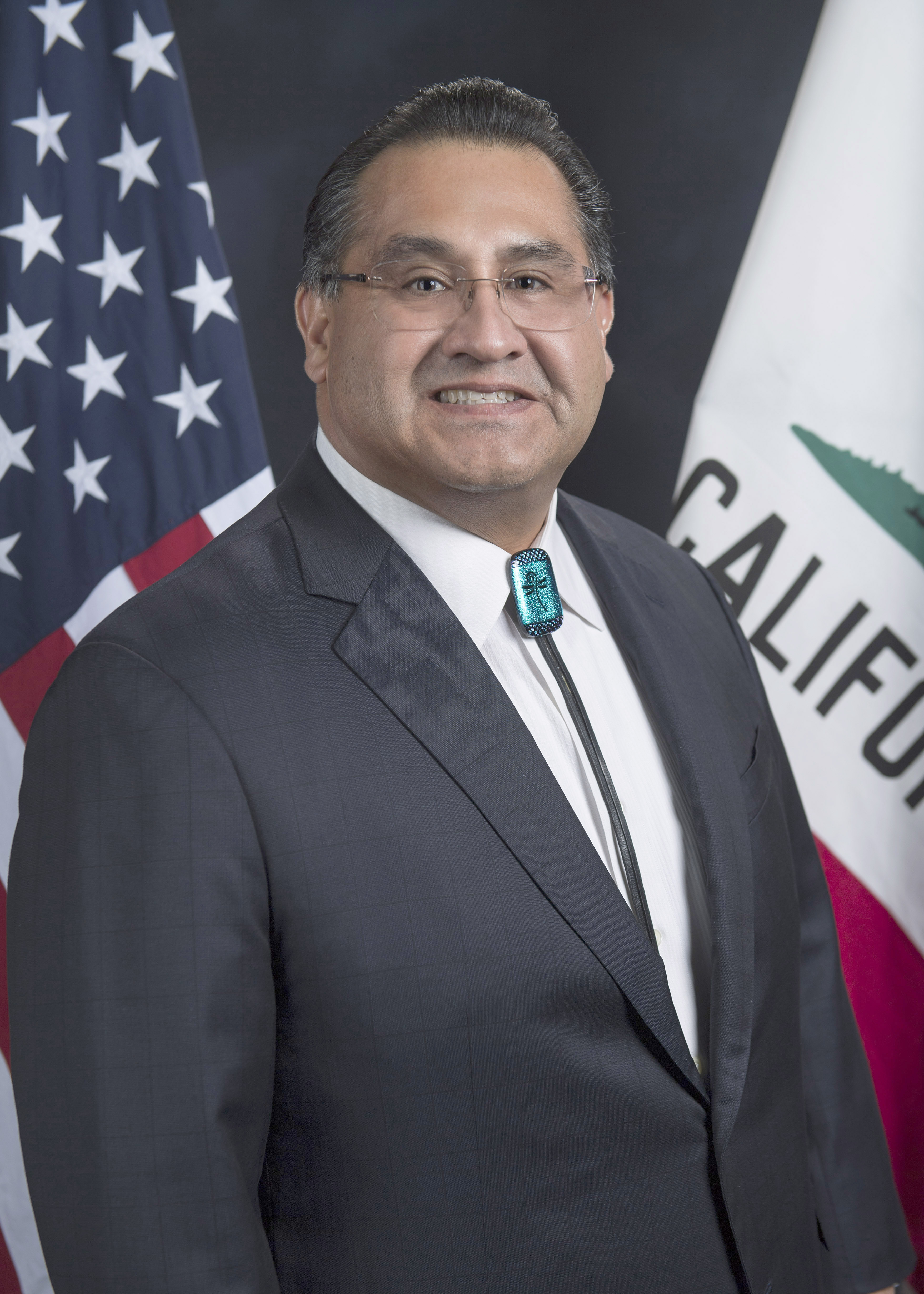
Asm. James Ramos
Sponsored bills
The California Integrated Waste Management Act of 1989 establishes in the California Environmental Protection Agency the Department of Resources Recycling and Recovery with specified powers and duties relating to waste management. This bill would establish the Office of Environmental Justice and Tribal Relations within the department. The bill would prescribe the duties of the office, including, among others, ensuring that the department's programs effectively address the needs of disadvantaged communities, low-income communities, California Native American tribes, and farmworkers.
Existing law, the California Emergency Services Act, authorizes use of the Emergency Alert System to inform the public of local, state, and national emergencies. Existing law requires a law enforcement agency to activate the Emergency Alert System within the appropriate area if that agency determines that a child 17 years of age or younger, or an individual with a proven mental or physical disability, has been abducted and is in imminent danger of serious bodily injury or death, and there is information available that, if disseminated to the general public, could assist in the safe recovery of that person. Existing law also authorizes the issuance and coordination of a Blue Alert following an attack upon a law enforcement officer or a Silver Alert relating to a person who is 65 years of age or older who is reported missing. This bill would authorize a law enforcement agency to request the Department of the California Highway Patrol to activate a "Feather Alert," as defined, if specified criteria are satisfied with respect to an endangered indigenous person who has been reported missing under unexplained or suspicious circumstances. The bill would require the department, if it concurs that specified requirements are met, to activate a Feather Alert within the appropriate geographical area requested by the investigating law enforcement agency and to assist the agency by disseminating specified alert messages and signs. The bill would require the department to create and submit a report to the Governor's Office and the Legislature that includes an evaluation of the notification system established pursuant to these provisions no later than January 1, 2027. The bill would also make related legislative findings and declarations.
The California Constitution provides that the University of California constitutes a public trust, and requires the university to be administered by the Regents of the University of California, a corporation in the form of a board, with full powers of organization and government, subject to legislative control only for specified purposes. Existing law establishes the Hastings College of the Law, under the governance of an 11-member Board of Directors of the Hastings College of the Law, within the University of California. Existing law provides that the college shall forever be known and designated as the Hastings College of the Law. Under existing law, six directors constitutes a quorum for the transaction of all business of the college's board of directors. Existing law requires one of the directors to always be an heir or representative of Serranus Clinton (S.C.) Hastings and all other directors to serve 12-year terms. Existing law requires vacancies occurring in the board of directors other than the death or resignation of the heir or representative of S.C. Hastings to be filled by the Governor and approved by the Senate. This bill would instead provide that the college shall be designated as the College of the Law, San Francisco, as provided. The bill would make conforming changes. The bill would specify that a majority of directors constitutes a quorum for the transaction of all of the board of directors' business, and would require all directors to serve 12-year terms, except as provided. The bill would require all vacancies occurring on the board of directors, including a vacancy of the heir or representative of S.C. Hastings, to be filled by the Governor and approved by the Senate. This bill would incorporate additional changes to Section 67385 of the Education Code proposed by AB 1467 to be operative only if this bill and AB 1467 are enacted and this bill is enacted last.
Existing law establishes the Natural Resources Agency, which consists of various departments and commissions, including the Department of Conservation, Department of Parks and Recreation, and State Lands Commission. Existing law vests in the agency various powers, including those related to conservation of lands. Pursuant to the agency's general authority, the agency established the California Advisory Committee on Geographic Names to be a liaison to the United States Board on Geographic Names. The duties, powers, and responsibilities of the committee are established by its internal charter. Commencing on January 1, 2025, this bill would require the term "squaw" to be removed from all geographic features and place names in the state. The bill would require the Natural Resources Agency to direct the committee to revise its existing charter to perform specified responsibilities, including notifying public agencies, as defined, of each geographic feature and place name that includes the term "squaw." The bill would require the committee to choose a replacement name, under its discretion, and in consultation with advisory bodies, if the local governing body fails to recommend a replacement name within the allotted 180 days. The bill would require the committee to work in formal consultation with California Native American tribes on the list maintained by the Native American Heritage Commission to establish a procedure for receiving name recommendations. This bill would require public agencies to no longer replace signs, interpretive markers, or any other marker or printed material with the discontinued name containing the word "squaw." The bill would require each agency or local governing body to ensure that map updates and sign replacements use the new name. Commencing January 1, 2025, the bill would require the committee to annually report to the Legislature regarding the implementation of these provisions, and would require that report to include specified information, including each geographic feature and place name that uses the term "squaw" in that public agency's jurisdiction and the proposed replacement name. By imposing requirements on local governments to remove the term "squaw" from geographic features and place names and to report specified information to the committee, this bill would impose a state-mandated local program. The California Constitution requires the state to reimburse local agencies and school districts for certain costs mandated by the state. Statutory provisions establish procedures for making that reimbursement. This bill would provide that, if the Commission on State Mandates determines that the bill contains costs mandated by the state, reimbursement for those costs shall be made pursuant to the statutory provisions noted above.
Existing law encourages and authorizes all state agencies to cooperate with federally recognized California tribes on matters of economic development and improvement for the tribes, including providing information on programs available to assist Indian tribes, providing technical assistance on the preparation of grants and applications for public and private funds, and conducting meetings and workshops. This bill would encourage the state and its agencies to consult on a government-to-government basis with federally recognized and, as specified, with nonfederally recognized tribes. The bill would designate state officials authorized to represent the state in government-to-government consultations, as provided. The bill would require the Department of Human Resources, in consultation with state entities experienced in tribal issues and with tribal governments, to develop a training, by June 1, 2024, regarding the required elements of training on government-to-government consultations. The bill would require the designated state officials to complete the training by January 1, 2025, or, for officials appointed after that date, within 6 months of their appointment, as specified, and would require each official to retake the training annually.
Existing law provides for the establishment of California American Indian education centers by any tribal group or incorporated American Indian association to meet specified objectives, and further provides for the administration of grants, upon application, by the State Department of Education for those purposes in accordance with specified provisions. Existing law requires each center to annually submit specified data to the department that reflects each center's ability to meet its stated objectives and any other objectives chosen by the center. Existing law requires the department to enter into a contract with a county office of education or a consortium of county offices of education for the purpose of developing model curriculum related to Native American studies, as provided. This bill would establish the California Indian Education Act and encourage school districts, county offices of education, and charter schools to form California Indian Education Task Forces with California tribes local to their regions or tribes historically located in the region. The bill would encourage task force participants to discuss issues of mutual concern and to undertake certain work. The bill would require California Indian Education Task Forces to submit, within one year of formation and annually thereafter, a report of findings to the department, as provided. The bill would require the department to submit, within one year of receiving task force reports and annually thereafter, a report to certain education committees of both houses of the Legislature regarding the narrowing of the achievement gap and the adoption of curriculum, as provided. The bill would authorize California Indian Education Task Forces to submit curricular materials to the county office of education, or consortium of county offices of education, that contracted to develop the model curricula related to Native American studies. The bill would require the contracted county office of education, or consortium of county offices of education, to consider these submitted materials for inclusion in the model curriculum. To the extent that this bill imposes new duties on the county office of education, or consortium of county offices of education, that contracted to develop the model curriculum, the bill would impose a state-mandated local program. The California Constitution requires the state to reimburse local agencies and school districts for certain costs mandated by the state. Statutory provisions establish procedures for making that reimbursement. This bill would provide that, if the Commission on State Mandates determines that the bill contains costs mandated by the state, reimbursement for those costs shall be made pursuant to the statutory provisions noted above.
The existing federal Indian Gaming Regulatory Act of 1988 provides for the negotiation and execution of tribal-state gaming compacts for the purpose of authorizing certain types of gaming on Indian lands within a state. The California Constitution authorizes the Governor to negotiate and conclude tribal-state gaming compacts, subject to ratification by the Legislature. Existing law expressly ratifies a number of tribal-state gaming compacts between the State of California and specified Indian tribes. The California Environmental Quality Act (CEQA) requires a lead agency to prepare, or cause to be prepared, and certify the completion of, an environmental impact report on a project, as defined, that it proposes to carry out or approve that may have a significant effect on the environment, as defined, or to adopt a negative declaration if it finds that the project will not have that effect. This bill would ratify the tribal-state gaming compact entered into between the State of California and the Santa Rosa Indian Community of the Santa Rosa Rancheria, executed on August 18, 2022. The bill would provide that, in deference to tribal sovereignty, certain actions related to this compact are not projects for purposes of CEQA. The bill would repeal an obsolete provision related to the ratification of a prior compact between the State of California and the Santa Rosa Indian Community of the Santa Rosa Rancheria and make other conforming changes. This bill would declare that it is to take effect immediately as an urgency statute.
Existing law generally provides for the placement of foster youth in various placement settings, and governs the provision of child welfare services, defined to mean public social services that are directed toward the accomplishment of specified purposes, including protecting and promoting the welfare of all children, preventing the unnecessary separation of children from their families, and restoring to their families children who have been removed. Existing law establishes the California Interagency Council on Homelessness, and requires the council to, among other things, set and measure progress towards goals to prevent and end homelessness among youth in California. This bill would, on or before July 1, 2023, require the State Department of Social Services to establish a 5-year pilot program, the Youth Acceptance Project (YAP) , in order to increase permanency outcomes for lesbian, gay, bisexual, transgender, queer, or plus (LGBTQ+) and gender-expansive youth, as defined, in up to 5 counties, to be selected to participate on a voluntary basis in the pilot program, as specified. The bill would set forth qualifying conditions for YAP services, including the youth's receipt of child welfare services or being at risk of entering foster care, or being homeless or at risk of homelessness. The bill would, subject to an appropriation, require the department to work in consultation with the nonprofit organization Family Builders by Adoption and other relevant stakeholders, as specified, to assist participating counties in providing LGBTQ+ and gender-expansive youth, and their families who are struggling with accepting the youth's sexual orientation, gender identity, or gender expression, with advocacy, therapeutic-style support, and other necessary and appropriate intervention services. The bill would require participating counties to provide services that meet certain requirements relating to professional providers, principles, and procedures, including, among other things, any necessary housing and homelessness services, as specified. The bill would require the department to submit a report to the Legislature with an evaluation of the pilot program. This bill would make these provisions inoperative on July 1, 2029, and would repeal them as of January 1, 2030.
Existing law requires an operator of a commercial internet website or online service that collects personally identifiable information through the internet about individual consumers residing in California who use or visit its commercial internet website or online service to conspicuously post its privacy policy on its internet website. Existing law also limits advertising by an operator of an internet website, online service, online application, or mobile application directed to minors. This bill would, until January 1, 2028, and subject to specified exceptions, require a social media platform, as defined, that operates in the state to create and publicly post a policy statement that includes, among other things, the social media platform's policy on the use of the social media platform to illegally distribute a controlled substance, as defined, and a link to the social media platform's reporting mechanism for illegal or harmful content or behavior if one exists. The bill would require a person or entity operating the social media platform to update the policy statement as necessary and consider consulting with specified entities to assist in developing and supporting the policy statement.